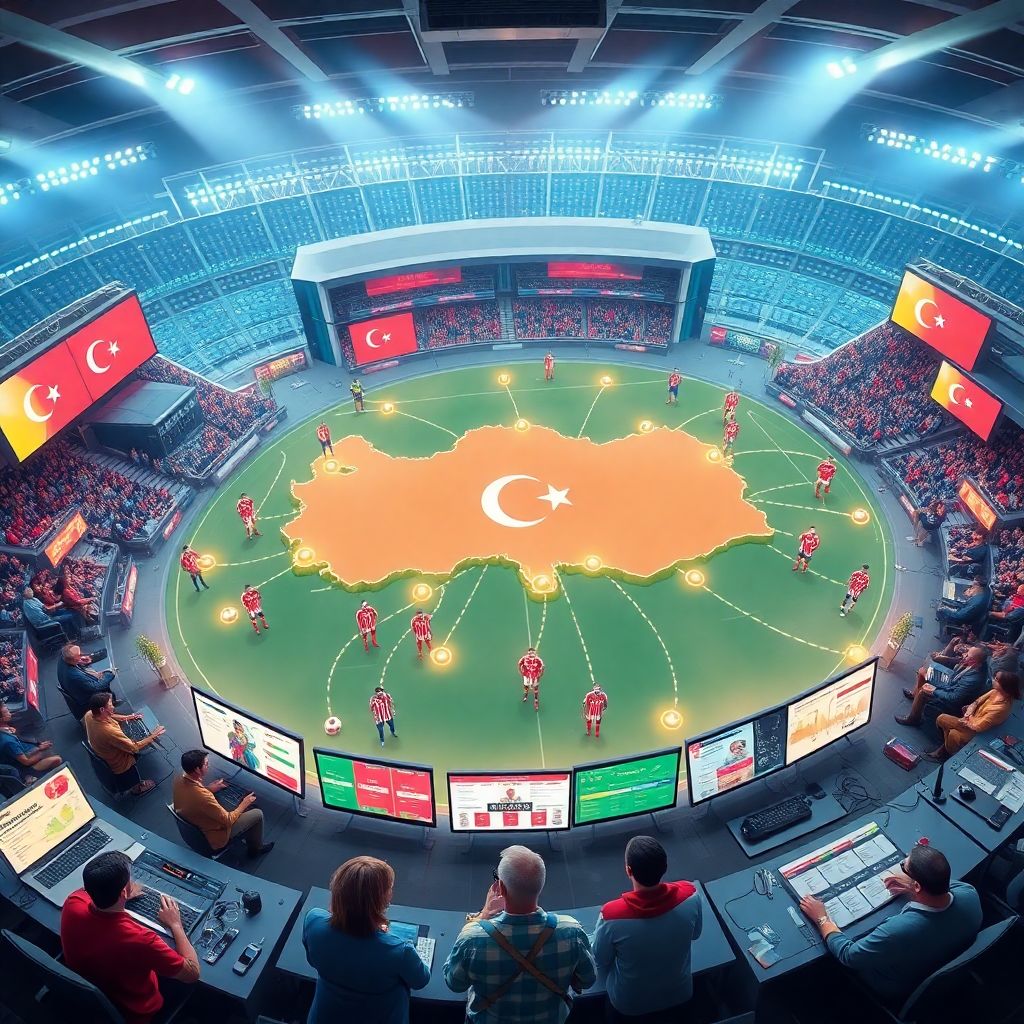
Context: Why Turkish Clubs Are So Active on the Global Transfer Market
When you look at turkish clubs transfer news over the last decade, you see a clear pattern: Turkish sides rarely sit still in the market and almost every window includes at least a few foreign names with big resumes. The Süper Lig has become a kind of hybrid competition: financially smaller than the top‑5 leagues, but still attractive enough to lure Champions League‑tested players in the late prime of their careers. That creates a unique ecosystem where clubs must constantly balance sporting ambition, UEFA Financial Fair Play, and fan expectations. Compared to, say, the Dutch or Portuguese leagues, the Turkish model is less focused on academy exports and more on importing proven quality to compete immediately, which heavily shapes how scouting and signing foreign stars actually works in practice.
Data Snapshot: What the Numbers Say About Foreign Players in Turkey
From a pure data perspective, turkey football transfer market analysis shows just how foreign‑driven the league has become. In recent seasons, foreign players have consistently accounted for around 60–70% of total Süper Lig minutes, depending on the year and regulation changes. The average age of incoming foreigners hovers around 26–28 years, but there is a clear segmentation: top‑brand clubs like Galatasaray, Fenerbahçe and Beşiktaş often sign 28–31‑year‑olds with high market recognition, while mid‑table sides target 22–25‑year‑olds with resale potential. Transfer fees for imported talent have been trending downward in nominal terms for many clubs because of currency depreciation; instead, total package costs shift toward higher wages and signing‑on fees, which in practice alters the risk profile of every foreign deal.
How Turkish Clubs Scout Foreign Players: Classic Eyes vs. Data-Driven Models
If you really want to understand how turkish clubs scout foreign players, you need to separate the “traditional” approach from the more data‑heavy model that only a handful of clubs use consistently. Historically, big Turkish clubs leaned on veteran scouts, agents, and informal networks more than on algorithmic shortlists. Recommendations from trusted intermediaries, plus a few live reports, were often enough to trigger negotiations. That model still exists, especially for older, well‑known names whose quality is easy to understand from TV and European competition. But in parallel, a newer generation of analysts inside some clubs is pushing a performance‑analytics framework that looks closer to what you see in the Bundesliga or Eredivisie, with structured databases, expected goals (xG), and positional data all feeding into a more rational decision‑making pipeline.
Traditional Network-Based Scouting

The more old‑school path is still powerful, particularly around super lig foreign players transfers where reputation and narrative matter. In this workflow, scouts and sporting directors rely on:
– Long‑standing relationships with agents, intermediaries, and ex‑players
– A small circle of “trusted” leagues (especially top European leagues, Brazil, Argentina, and more recently some African markets)
– Subjective evaluations based on live scouting, TV footage, and highlight reels
This approach has benefits. It can move quickly, which is crucial in late‑window situations, and it often brings in high‑profile names that energize fanbases and boost shirt sales. The trade‑off is that deals may be influenced by bias, incomplete data, or short highlight compilations that underrepresent defensive work rate, pressing intensity, or injury risk. Compared to more systematic leagues, Turkish clubs using this model may overpay for brand value while underestimating long‑term performance volatility.
Analytics-Driven and Hybrid Scouting Models
On the other side, there is a gradual shift toward analytics‑backed recruiting. Several Turkish clubs now maintain internal databases that track thousands of players’ event data, physical metrics, and contract situations. In this model, super lig foreign players transfers start with a data filter instead of a suggestion from an agent. Analysts define role‑specific benchmarks—for example, a ball‑playing center‑back with above‑average progressive passes, aerial duel success, and defensive actions per 90—and then query global datasets to find undervalued options. This method doesn’t replace live scouting but reframes it: scouts are sent to validate a shortlist rather than discover players from scratch. The hybrid variant, which is probably the most realistic in the Turkish context, combines both routes: data narrows the field, while networks and “soft factors” like personality, family situation, and adaptation risk influence the final call.
Signing Process: From First Contact to Contract Signature
Once a target is identified, the way contracts get done also follows distinct patterns. For bigger clubs, the signing of foreign stars is almost a parallel process: sporting directors negotiate the football side (role, incentives, duration) while financial directors and legal teams manage currency exposure and tax structuring. Because most wages are denominated in euros or dollars, Turkish clubs must constantly price in lira volatility. This leads to incentives like bonuses tied to appearances, goals, or European qualification, which help share risk between club and player. Smaller clubs, by contrast, skew more toward short contracts or loan deals with options to buy. They cannot carry high fixed wage burdens, so they prioritize flexibility and upside—hoping that a foreign signing overperforms and can be flipped to a bigger league for a fee.
Different Philosophies Among Big Three vs. Emerging Clubs
If we compare the philosophies of the traditional “Big Three” to emergent sides like Başakşehir or Trabzonspor, we see distinct risk‑reward profiles. The Big Three often chase star power: they want the best foreign footballers in turkish super lig not only in terms of performance, but in brand equity. That means they tolerate high wages, slightly older players, and bigger reputational risk if a transfer fails. Emerging clubs are more pragmatic: they prefer undervalued or unknown players from second‑tier European leagues or less‑scouted South American and African markets, betting on development and resale. Both approaches can work, but they require different organizational competencies—PR management and dressing‑room control on one side, scouting depth and player trading discipline on the other.
Comparing Approaches: Short-Term Impact vs. Long-Term Asset Strategy
When you strip it down, Turkish clubs are choosing between two dominant strategic archetypes for foreign stars:
– Short‑term impact model
Focus on immediate sporting gain, older players with big resumes, higher wages, low resale expectations. This is common at title‑chasing clubs under pressure from fans and media.
– Long‑term asset model
Target younger players, moderate wages, clear development plans, and explicit resale strategies. This is more frequent at financially constrained or mid‑table clubs that need transfer profits to survive.
The tension between these models defines a lot of turkey football transfer market analysis. In years when TV revenues are stable and exchange rates are less volatile, more clubs lean into short‑term impact, accepting higher wage commitments. During economic downturns or sharp currency slides, you see a shift toward the asset model, plus an uptick in loans with options and performance‑based contracts. The smartest clubs try to run a portfolio mix: one or two marquee names for instant credibility, balanced by several younger, scalable assets that can appreciate in value.
Economic Aspects: Currency Risk, Wages, and Hidden Costs
Economically, the Turkish transfer game is dominated by macro‑factors. Because most major foreign players want euro or dollar contracts, exchange‑rate risk is baked into every deal. A wage that looks manageable today can become a heavy burden if the lira depreciates. That’s why you increasingly see contract clauses that fix conversion rates, set payment schedules in foreign currency, or add protective triggers. From the club’s perspective, the total cost of ownership includes not just raw wages and transfer fees, but also agent commissions, image rights, taxes, and performance bonuses. In practice, a “free” transfer of a foreign star can easily turn into a multi‑million‑euro package per season when all those elements are added, especially for headline‑grabbing signings that dominate turkish clubs transfer news feeds in the summer.
Market Segmentation and Salary Hierarchies

Financial constraints have forced Turkish clubs to segment their foreign targets quite precisely. Roughly speaking, you can think of three economic tiers. At the top are the marquee foreign stars, netting salaries similar to mid‑table sides in Italy or Spain, justified by commercial value and Europa/Champions League aspirations. In the middle are solid starters drawn from smaller European leagues or top clubs’ benches, who command moderate fees and wages, and often arrive with conditional bonuses. At the bottom tier are developmental gambles—players from under‑scouted markets whose initial wages are comparatively low but loaded with incentives. This layered structure creates complex dressing‑room dynamics: wage disparity between a veteran star and a young local player can be massive, so sporting directors need to design balanced salary hierarchies to avoid friction.
Indirect Economic Impact on Clubs and the Wider Ecosystem
Beyond the direct cost of super lig foreign players transfers, there is a broader economic effect on the ecosystem. High‑profile signings increase international broadcasting interest, boost merchandising, and can drive sponsorship deals, especially with global brands seeking exposure in both European and Middle Eastern markets. However, those positives materialize only if the team reaches European competitions or mounts a domestic title challenge. Failed foreign transfers, on the other hand, produce negative carryover—unusable wage slots, dressing‑room unrest, and sometimes transfer bans or UEFA sanctions for delayed payments. The clubs that manage to treat foreign signings as assets within a risk‑managed portfolio are the ones that gain long‑term financial stability instead of short‑lived hype.
Forecasts: Where Turkish Scouting and Transfers Are Heading
Looking ahead five to seven years, it’s reasonable to expect that Turkish football will continue to globalize its scouting but under stricter financial discipline. The growing availability of advanced data platforms and the normalization of video‑based scouting across dozens of leagues mean that the information advantage of big European clubs is shrinking. Turkish clubs that invest in analysts, data engineers, and integrated scouting software will be able to identify undervalued talent faster, rather than waiting for agents to offer pre‑packaged options. At the same time, continued pressure from UEFA’s financial regulations and domestic fiscal realities will keep wage inflation in check, forcing a pivot from purely star‑driven recruitment to more balanced and analytical frameworks that fit long‑term squad building.
Predicted Shifts in Player Profiles and Source Leagues
One likely shift is in the profile of foreign players arriving in the Süper Lig. Instead of predominantly older names at the end of their European trajectories, we can expect a gradual tilt toward 23–26‑year‑olds who see Turkey as a stepping‑stone. Source leagues may diversify further into Scandinavia, Eastern Europe, and certain African and Asian competitions, where data coverage has improved and player valuations are still relatively low. If these trends hold, future turkey football transfer market analysis will probably show a higher turnover of foreign players, with shorter average stays but more profitable exits to bigger leagues, mirroring models already seen in Portugal and Belgium. The best foreign footballers in turkish super lig may increasingly be those who explode for two seasons and move on, rather than big names winding down their careers.
Regulatory and Structural Factors That Will Shape the Market
Any forecast must also account for regulatory uncertainty. Changes to foreign player quotas, homegrown rules, or tax treatment can quickly alter club strategies. If the federation tightens foreign limits, clubs will prioritize higher‑impact foreigners and demand more tactical flexibility from them; if the rules remain permissive, you’ll see continued experimentation with imported depth players in multiple positions. Additionally, ongoing digitalization—ranging from fan‑token funding to dynamic ticket pricing—may provide new revenue streams that partially offset currency risk. Clubs that professionalize their back‑office operations and treat transfer activity as part of an integrated business plan, rather than a separate “gambling” arm, are best positioned to thrive in this evolving environment.
Impact on the Football Industry: Reputation, Talent Flows, and Competitive Balance
The way Turkish clubs scout and sign foreign stars doesn’t just shape domestic squads; it also influences broader talent flows across Europe and beyond. Turkey has positioned itself as an intermediate hub in the player value chain: not quite a selling league like the Netherlands, but no longer just a destination for semi‑retirement. This in‑between status affects how agents plan career paths for their clients—for many, a successful spell in Istanbul or Trabzon is now a credible launchpad toward England, Italy, or Germany. As a result, the Süper Lig’s bargaining power is slowly improving, with some clubs able to negotiate sell‑on clauses and performance bonuses instead of taking one‑off fees. However, this also raises competitive balance questions: richer Turkish sides can monopolize the best foreign opportunities, leaving smaller clubs to rely on loans, co‑ownership structures, or late‑window scraps.
Comparing the Turkish Model With Other Mid-Tier Leagues
If we compare the Turkish landscape to leagues like Portugal, Belgium, or the Netherlands, some differences are stark. Those leagues lean heavily on youth development and quick resale of prospects to the top‑5 markets, while Turkey historically has banked on immediate performance. That said, a convergence is underway: more Turkish clubs are consciously building “sellable” foreign assets, shortening contract durations, and tying wages to output. In that sense, how turkish clubs scout foreign players is slowly evolving from intuition‑heavy to evidence‑heavy, nudging the whole industry toward more rational capital allocation. Whether this change happens fast enough to close the financial gap with Western Europe is an open question, but the direction of travel is clear.
Conclusion: Balancing Romance and Rationality in the Transfer Market
In the end, the Turkish transfer market lives on a knife‑edge between football romance and financial rationality. The allure of signing a famous name will never fully disappear; fans, media, and even sponsors thrive on the drama of big announcements. Yet sustained success—both on the pitch and on the balance sheet—demands a more methodical approach. Clubs that combine strong networks with robust data, that balance star power with resale value, and that view super lig foreign players transfers as part of a long‑term portfolio rather than one‑off gambles, are likely to set the standard for the next era. As that evolution continues, the Süper Lig could solidify its place as a key waypoint in the global football economy, attracting and exporting talent in a more efficient, sustainable loop.
Комментарии