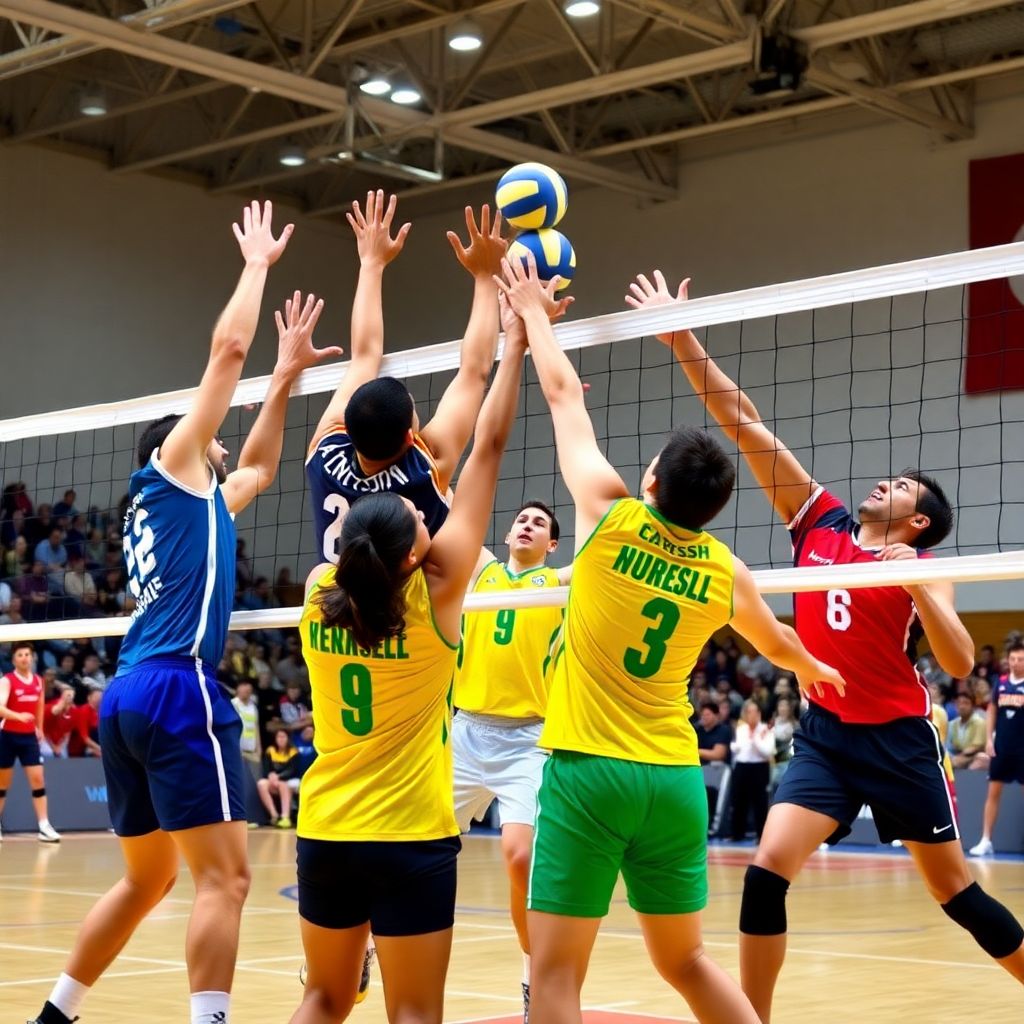
Turkish clubs dominate at the net by combining precise setter reading, disciplined multi-block schemes, and fast-tempo middle attacks rehearsed under match-like pressure. You can adapt these volleyball tactics step by step: train vision on the setter, standardise tempo calls, refine quick attacks, and design practices that overload serve-receive while staying safe and technically clean.
Net Dominance at a Glance
- Build a shared system for reading the setter, with clear verbal cues from backcourt defenders and blockers.
- Use coordinated triple-block and swing-block patterns, not isolated individual efforts at the net.
- Standardise quick-offense tempos so every middle and pipe attacker matches the setter’s rhythm.
- Layer wing combinations and pipe attacks to punish single blockers and late inside help.
- Design serve-receive patterns that quickly create one-on-one or empty-net situations for your best hitters.
- Plan practices around short, intense drills rather than long rallies to keep decisions sharp and safe.
Reading the Setter: How Turkish Teams Anticipate Plays
This approach suits intermediate teams that already have basic blocking form and can maintain simple defensive systems. It is ideal if you watch turkish volleyball league live streaming and want to transfer patterns from top clubs into your gym in a structured, safe way.
Avoid complex setter-reading schemes if your players still struggle with base positions, footwork, or communication. In that case, first stabilise serve-receive and simple line/cross defence before layering detailed anticipations. Overloading athletes with advanced reads too early usually leads to chaos and frustration.
Start by assigning each defender one primary element to read: front-row looks at the setter’s torso and approach path, back-row focuses on attacker approach angles and open space. Borrow simple cue words that many Turkish teams use: for example, a short call for quick middle, another for wide high ball, another for pipe.
Encourage athletes to watch full matches of top clubs, not only highlights. When you buy turkish volleyball clubs tickets or replay past matches, have players focus on the blocker’s first step at the exact moment the setter contacts the ball. That “first step timing” is the foundation of reliable anticipation.
Blocking Architecture: Multi-person Schemes and Shifts
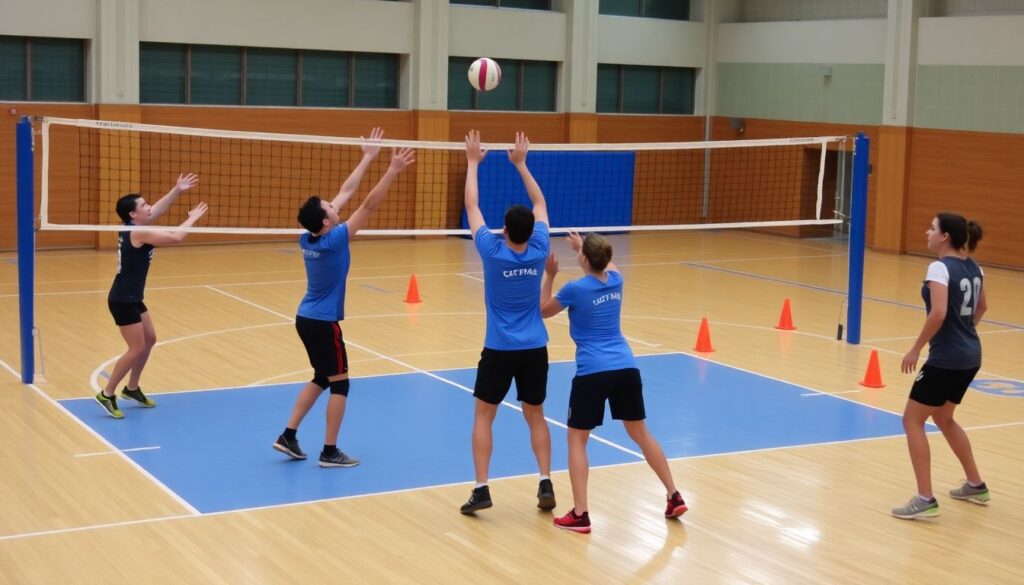
To mirror the blocking architecture of leading Turkish clubs, you need clear roles, simple tools, and reliable access to video. The goal is to turn three individual blockers into a coordinated wall that moves as a single unit.
Prepare the following resources and conditions:
- Court markings and cones: Use tape or cones to mark starting positions, seam responsibility, and max lateral shift for each blocker.
- Video source: Use turkish volleyball league live streaming replays or recorded matches to show how top teams stack triple blocks on key attackers.
- Role cards or whiteboard: Define who is primary on line, seam, and cross in each rotation; keep it visible during practice.
- Agreed communication code: Short calls for “solo”, “double”, “triple”, plus direction words (line, cross, pipe) to avoid confusion during rallies.
- Condition-safe drills: Limit jumps per athlete and add rest cycles so intensive blocking work stays safe for knees and shoulders.
- Development options: If you run volleyball coaching clinics in turkey or your own club workshops, share the exact schemes with assistant coaches so teaching stays consistent.
As your system matures, you can integrate scouting: for example, pre-match notes that specify rotations where your middle commits, your opposite starts wider, or the wing blocker drops to help on tips instead of forming a late triple block.
Quick Offense Mechanics: Middle Timing and Tempo Control
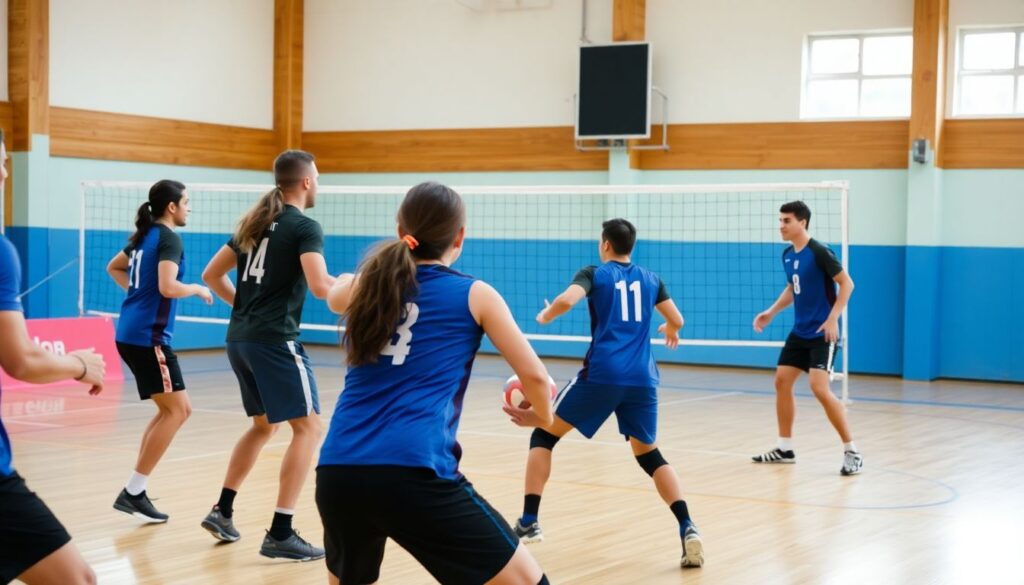
The core of Turkish-style net dominance is a reliable quick offense that forces opponents to respect the middle. Below is a step-by-step method you can implement safely with an intermediate team.
-
Standardise your tempo language
Before jumping, define clear tempo labels (for example: very fast, fast, medium) and connect each with a specific ball height and setter release point. Make sure every hitter and setter can describe each tempo without touching a ball.
-
Sync middle approach with setter footwork
Have middles approach without a ball, matching the setter’s last two steps. The cue is simple: the middle’s last step lands just before the setter contacts the ball, never after.
- Run this dry (no net, no ball) to protect joints and isolate rhythm.
- Add a soft toss only when the approach rhythm is consistent.
-
Train visual triggers, not guesses
Teach middles to jump based on the setter’s shoulder line and release, not on hope. The rule: if the ball leaves in front of the setter’s hitting shoulder and the torso faces you, stay on the quick; if the ball travels past that line, prepare to transition to block.
-
Integrate pipe and wing timing
Once the middle and setter are stable, add a pipe and wing hitter. The pipe runs slightly behind the middle tempo, and the wing runs one clear step later to avoid collisions and confusion.
- Start at reduced jump intensity, focusing on clean approach paths.
- Only allow full-power swings after athletes show control and spacing.
-
Stress-test in serve-receive scenarios
Now bring in passers. Run short waves of serve-receive where the only scoring rule is executing the planned quick offense correctly. This teaches athletes to hold tempo even when the pass is slightly off the net.
-
Measure outcomes and adjust tempo
Track how often quick attacks beat a formed block, get soft touches, or are fully stopped. If middles are late or under the ball, adjust your tempo language or approach starting point rather than forcing them to “go faster” blindly.
Fast-Track Mode: Compressed Quick-Offense Routine
- Agree on two simple tempos (fast and medium) and describe them clearly without balls.
- Run setter-middle shadow reps, focusing only on matching last steps and safe landings.
- Add a pipe behind the middle, keeping approaches separate and controlled.
- Test the system in short serve-receive waves, then review video and tweak starting positions.
Edge Attacks: Wing Combinations and Pipe Integration
Use this checklist to confirm that your edge attacks and pipe combinations mirror the clarity and pressure used by top Turkish clubs.
- Wing hitters know their first option in each rotation: pure line, inside shot, or seam swing, based on block position.
- Pipe runs are clearly called and understood by all players; there is no confusion between back-row and middle approaches.
- The setter consistently looks off the middle blocker with a quick fake or shoulder feint before releasing to the wing or pipe.
- Pipe attacks are used against single blockers or delayed shifts, not blindly into stable triple blocks.
- Left and right wings can execute simple combination patterns, such as inside runs or short crossover moves, without colliding.
- Back-row defenders adjust their base positions when pipe is active so they still cover tips and sharp angles safely.
- In transition, your first instinct is to activate the closest wing or pipe with a clear, fast set instead of sending a high, predictable ball.
- Training footage shows blockers hesitating or shifting late when the pipe threat is present, confirming that your patterns create real doubt.
Serve-Receive to Attack Transition: Creating Net Imbalance
These are frequent mistakes that stop teams from converting serve-receive into the kind of net dominance you see in leading Turkish clubs.
- Passers drift too far from target, forcing high, slow sets that give the block plenty of time to form.
- Setters move without a clear plan, reacting to each pass instead of pre-planning options for perfect, medium, and off-target balls.
- Middles give up on quicks after a few imperfect passes, instead of adjusting approach distance and tempo safely.
- Wings stand and wait instead of using constant small steps to stay available for fast balls inside or outside the antenna.
- Teams never train serve-receive under pressure similar to real matches, for example, simulating noise, tight scores, or must-score rotations.
- Pipe threats disappear in serve-receive, making the attack easy to read and allowing opponents to commit two blockers to the wings.
- Coaches overload players with complex play-calls instead of two or three simple priority options from each rotation.
- There is no video review of early-contact decisions, so athletes repeat the same poor reading of the block and defence.
Practice Design: Drills and Load Planning for Persistent Pressure
If you cannot fully replicate Turkish club conditions, there are still practical alternatives that keep training safe and effective.
- Short high-intensity waves instead of long scrimmages: Use brief, focused sequences that emphasise reading and quick decisions, reducing jump volume while keeping mental load high.
- Themed mini-blocks of practice: Dedicate compact blocks to one topic (for example, quick offense only), then rotate themes across the week instead of mixing everything into one chaotic session.
- Seasonal training camps: Join or organise volleyball training camps turkey wide, focusing each camp day on a single net-dominance theme such as blocking shifts or middle timing.
- External expertise and observation: Attend volleyball coaching clinics in turkey, then bring back two or three specific drills to integrate into your regular schedule rather than trying to copy entire pro programs.
For inspiration and player motivation, visiting matches in person and exploring best turkish volleyball clubs merchandise can help athletes connect emotionally with the style you are teaching, especially if they normally only see the game on screens instead of live.
When your team watches matches together, whether live in the arena after purchasing turkish volleyball clubs tickets or online via official platforms, assign each player a role to observe (for example: middle’s first step, opposite’s block read) so viewing becomes a structured learning tool.
Tactical Clarifications and Rapid Solutions
How can an intermediate team safely start copying Turkish-style quick offense?
Begin with non-jumping shadow work matching setter and middle footwork, then add soft tosses and controlled jumps. Keep landings soft, limit total jumps in one session, and move to full speed only when rhythm and spacing are clearly under control.
Do we need advanced analytics to build effective blocking schemes?
No. For most intermediate teams, simple video review of rotations and tendencies is enough. Focus on a few clear rules about who helps where and in which rotation you commit more heavily to specific attackers.
How often should we train pipe and wing combinations?
Integrate short blocks of combination work into each week instead of one long, exhausting session. Alternate between controlled drills and game-like situations so players keep timing sharp without accumulating unsafe jump loads.
What if our passing is too unstable for quick middle attacks?
Use adjusted quicks that start further from the setter and accept slightly higher sets, then gradually tighten tempo as passing improves. Keep insisting on some middle presence so opponents cannot fully ignore the centre of the net.
How can we use match broadcasts as a teaching tool?
Pick segments from turkish volleyball league live streaming or recorded matches, pause just before setter contact, and ask players to predict the set. Discuss the block’s movement and compare it to your own system in practice.
Is it necessary to attend clinics or camps to learn these tactics?
Not necessary, but very helpful. Well-structured volleyball coaching clinics in turkey or targeted volleyball training camps turkey can give you ready-made drills, safety guidelines, and feedback that are difficult to get when working alone.
How do we keep players motivated while learning complex net tactics?
Set simple, visible goals for each drill, celebrate small improvements, and occasionally connect training to live experiences like matches or merchandise. This keeps the abstract tactical work connected to the excitement of real competition.