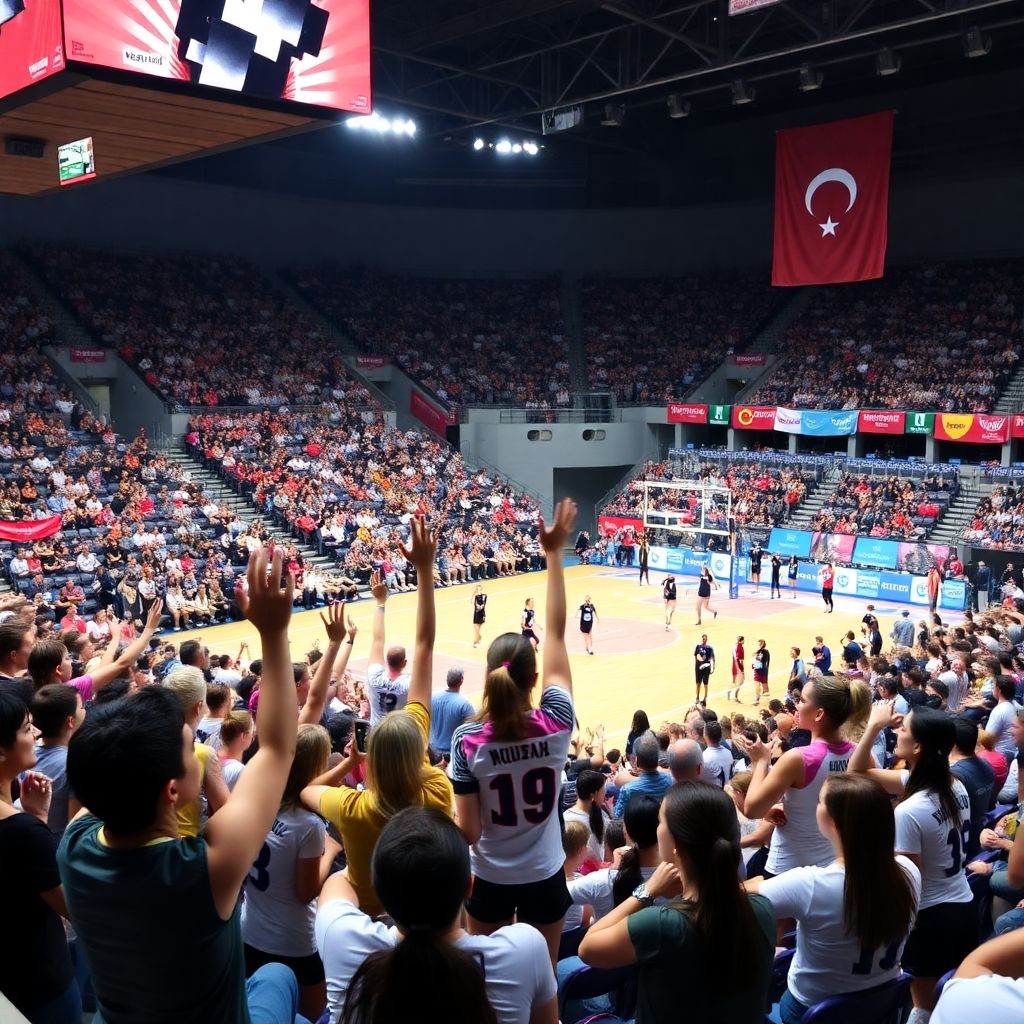
Turkish women’s volleyball clubs dominate European competitions because big multi-sport clubs invest steadily, attract elite international players, run strong academies, and compete in a deep domestic league that simulates Champions League intensity weekly. If you want to understand modern European women’s volleyball power, then you must study how Turkish clubs are built and managed.
Overview: Why Turkish Clubs Lead European Women’s Volleyball
- If a club combines long-term budget stability with clear sporting goals, then it can challenge Turkish women’s volleyball clubs in Champions League; without both, it usually cannot.
- If a league offers high weekly competition and crowded arenas, then local players develop faster and foreign stars want to stay.
- If academies, scouting and data analysis are integrated, then the club can refresh its roster without losing quality.
- If coaches are supported with performance science and modern tactics, then tactical depth matches or exceeds other European powerhouses.
- If transfer and naturalization policies are coherent, then foreign talent complements, not blocks, local Turkish women’s volleyball league top players.
Historical Rise of Turkish Women’s Volleyball
In European terms, Turkish women’s volleyball powerhouses are clubs that consistently reach late stages of continental tournaments, attract world-class players, and shape tactics that others copy. The rise of the best Turkish women’s volleyball teams in Europe is tied to the growth of Istanbul multi-sport clubs, broadcasting deals and increased public interest in women’s sports.
As domestic investment grew, Turkish women’s volleyball clubs in Champions League began to appear regularly in semifinals and finals, often facing each other in all-Turkish showdowns. This performance created a feedback loop: success attracted sponsors, sponsors financed better rosters, and better rosters produced more trophies.
At the same time, traditional volleyball nations in Europe relied more on historical prestige than structural reform. Turkish clubs, entering the elite later, could design professional structures from scratch, focusing on full-time female athletes, strong youth programs and modern sports science rather than semi-professional models.
If a European club or federation wants to benchmark its progress, then it should compare its structures against Turkish models in finance, youth, coaching and league organization, not only against final match results.
| Dimension | Leading Turkish Clubs | Other European Leaders |
|---|---|---|
| Club structure | Often part of big multi-sport entities with shared brand and facilities. | More stand-alone volleyball clubs or small multi-sport organizations. |
| Domestic league intensity | Several title contenders and deep rosters, Champions League level matches weekly. | Frequently one or two dominant clubs, less depth in mid-table teams. |
| Player pipeline | Integrated academies feeding first teams, plus strong university and school links. | More fragmented youth structures, dependence on regional clubs. |
| Fan engagement | Large arenas, strong ultras culture, high demand for tickets for Turkish women’s volleyball matches Istanbul. | Attendance varies widely, often smaller and less vocal home crowds. |
| Media and broadcasting | Professional TV production, regular live coverage, strong online presence. | Uneven coverage; some leagues still limited to local broadcasts. |
Investment Models and Club Financial Strategies

Turkish powerhouses became sustainable by aligning sporting ambition with realistic financial strategies. Instead of chasing one-time European titles, they built recurring revenue streams and long-term partnerships, which made high-salary rosters and elite coaching teams feasible over many seasons.
- If a club is linked to a powerful multi-sport brand, then it can leverage shared sponsors, merchandising and fan loyalty to fund a competitive women’s volleyball budget.
- If management secures multi-year sponsorships rather than short one-season deals, then roster planning and contract negotiations become more stable and strategic.
- If clubs invest in matchday experience and hospitality, then income from home games rises and dependence on a single main sponsor is reduced.
- If digital content, streaming and social media are monetized, then international fans contribute new revenue, especially where people search how to watch Turkish women’s volleyball games online.
- If salary structures are transparent and performance-based, then stars feel valued while the club avoids locker-room tension and financial shocks.
- If budgets allocate a clear share to youth development and sports science, then the club saves transfer costs by promoting its own talent.
If your club’s finances are fragile or overly dependent on one donor, then you should first copy Turkish-style diversified revenue (sponsors, media, tickets, merchandising) before trying to sign global stars.
Scenario Applications of the Financial Model
If a mid-table European club wants to climb into continental competitions, then it should prioritize long-term sponsor deals, fanbase growth and youth investment over short, risky spending bursts on aging stars. If a Turkish club outside Istanbul wants to challenge the giants, then focusing on regional identity and local corporate partners can replicate the big-city revenue effect.
Player Pathways: Academies, Youth Systems and Scouting
Turkish powerhouses treat player development as a continuous pipeline. They run structured academies with age-group teams, partner schools and satellite clubs across the country. Scouting covers both domestic prospects and foreign talent, especially in age categories where local production is thinner.
- If a club builds U-age teams with consistent coaching philosophy, then young players can move into the senior system without tactical shock.
- If schools and universities are aligned with club training, then promising athletes avoid having to choose between education and elite volleyball.
- If regional scouting networks track tall, athletic teenagers early, then the club can sign and develop them before rivals do.
- If statistics from youth tournaments are collected and analyzed, then scouting decisions rely less on intuition and more on evidence.
- If foreign prospects are signed young and loaned into smaller clubs in the same league, then they adapt to the Turkish style while still gaining minutes.
These pathways explain how Turkish women’s volleyball league top players can emerge locally and still share the court with global superstars at club level. If your federation wants more homegrown stars, then invest in club-school partnerships and data-informed youth scouting instead of focusing only on the senior national team.
Coaching, Tactics and Performance Science Innovations
Turkish clubs hire some of the most respected coaches in women’s volleyball, often rotating between top European and South American specialists. These coaches bring advanced systems: fast-tempo offense, complex blocking schemes and detailed opponent analysis, supported by full-time analysts and sports scientists.
Performance science underpins everyday practice: strength and conditioning tailored to position, injury-prevention protocols, video breakdowns and recovery management. The result is fewer lost training days, higher jump quality across the season, and better readiness for the intense Champions League schedule.
Competitive Advantages from the Innovative Model
- If a club funds dedicated analysts and video staff, then coaches receive richer tactical reports and can prepare specific plans for each European opponent.
- If training loads are tracked with modern monitoring tools, then overuse injuries decrease and key players are fresh for decisive matches.
- If tactical systems are practiced across all age levels, then young players can step into the first team with minimal adaptation time.
- If mental skills coaching is part of the program, then players handle noisy away arenas and high-pressure finals more effectively.
Structural Limits and Hidden Risks
- If a club changes head coaches too frequently, then sophisticated systems never stabilize and players lose tactical confidence.
- If performance data is collected but not translated into simple coaching decisions, then staff can drown in numbers without real benefits.
- If foreign stars dominate the court time, then local setters, opposites and middles may not gain enough touches to reach their ceiling.
- If the schedule leaves no real off-season, then even the best sports science cannot fully prevent fatigue-based form drops.
If your program wants Turkish-level tactical sophistication, then you must first ensure coaching stability and a clear game model; without that, technology and analysts will only add complexity, not performance.
Domestic League Design, Calendar and Competitive Balance
The Turkish women’s league is structured to maintain high competition while still protecting clubs playing in Europe. Calendar planning aims to avoid overloading key teams before major Champions League rounds, and television partners are involved early to secure regular exposure.
However, observers often misunderstand how league design supports dominance. Some believe that a few rich clubs make the league predictable, but mid-table depth and relegation battles mean that even matches outside the title race are intense and tactically demanding.
- If a league packs too many matches into short periods, then injuries rise and top teams may underperform in European ties.
- If playoff formats are changed every season, then fans and clubs struggle to plan, reducing engagement and investment.
- If financial rules are not enforced, then ambitious clubs can overspend, later collapsing and weakening league depth.
- If broadcast schedules ignore women’s volleyball peak viewing times, then even strong on-court product stays invisible.
- If everybody assumes that only big-city teams matter, then regional clubs may stop investing, reducing national talent spread.
If your national league wants to challenge Turkish dominance, then design a stable calendar, enforce financial discipline and protect broadcast visibility instead of only adding more matches or changing playoff rules every year.
International Recruitment, Naturalization and Transfer Policy
Turkish powerhouses use foreign recruitment and naturalization to fill specific tactical gaps, not to replace entire positions blindly. They target elite scorers, experienced setters or specialist liberos whose skills complement local core players. Roster rules encourage a mix of domestic and foreign talent, keeping national team players active in high-pressure roles.
Mini case example: if a club identifies that its domestic spikers lack high-ball efficiency against big European blocks, then it may sign one or two experienced foreign outside hitters. If that same club has a strong local libero and setter, then it can keep those roles Turkish, preserving identity and national-team value while still boosting Champions League competitiveness.
If your club wants to emulate Turkish transfer policy, then first define which skills are truly missing locally; only then sign foreign players whose strengths directly solve those gaps instead of collecting big names without a tactical plan.
Common Clarifications About Turkish Club Dominance
Why do Turkish women’s clubs appear so often in European finals?
They combine strong investment, deep domestic competition and elite coaching. If a club trains at a near-European level every week in its own league, then it is naturally more prepared for Champions League knockout rounds.
Are Turkish clubs successful only because they buy foreign stars?
No. Foreign stars matter, but they are placed on top of solid youth systems and smart tactics. If money were the only factor, then clubs without academies and coaching culture would also dominate, which is not the case.
How important are local Turkish players in these powerhouse teams?
They are central. If local players were not competitive, then the national team would not benefit from club success. Turkish women’s volleyball league top players often start in academies and become leaders for both club and country.
How can fans watch and follow these Turkish women’s clubs from abroad?
Most major matches are streamed or broadcast by regional sports channels and league platforms. If you search how to watch Turkish women’s volleyball games online through official broadcasters and club sites, then you will usually find legal options in your region.
Why are Istanbul clubs particularly dominant within Turkey?
They benefit from larger markets, more sponsors and bigger arenas, which drive revenue and attract talent. If a club is based in Istanbul and tied to a famous multi-sport brand, then it generally has more resources than regional rivals.
Is it hard to get tickets for top women’s matches in Istanbul?
High-profile derbies can sell out quickly, but regular-season matches are often accessible. If you plan early and buy tickets for Turkish women’s volleyball matches Istanbul through official club channels, then you rarely face major problems.
Can smaller European clubs realistically copy the Turkish model?

They can adapt core principles rather than copying budgets. If a smaller club focuses on youth, clear tactics and stable finances instead of expensive quick fixes, then it can close part of the gap even without big-city resources.