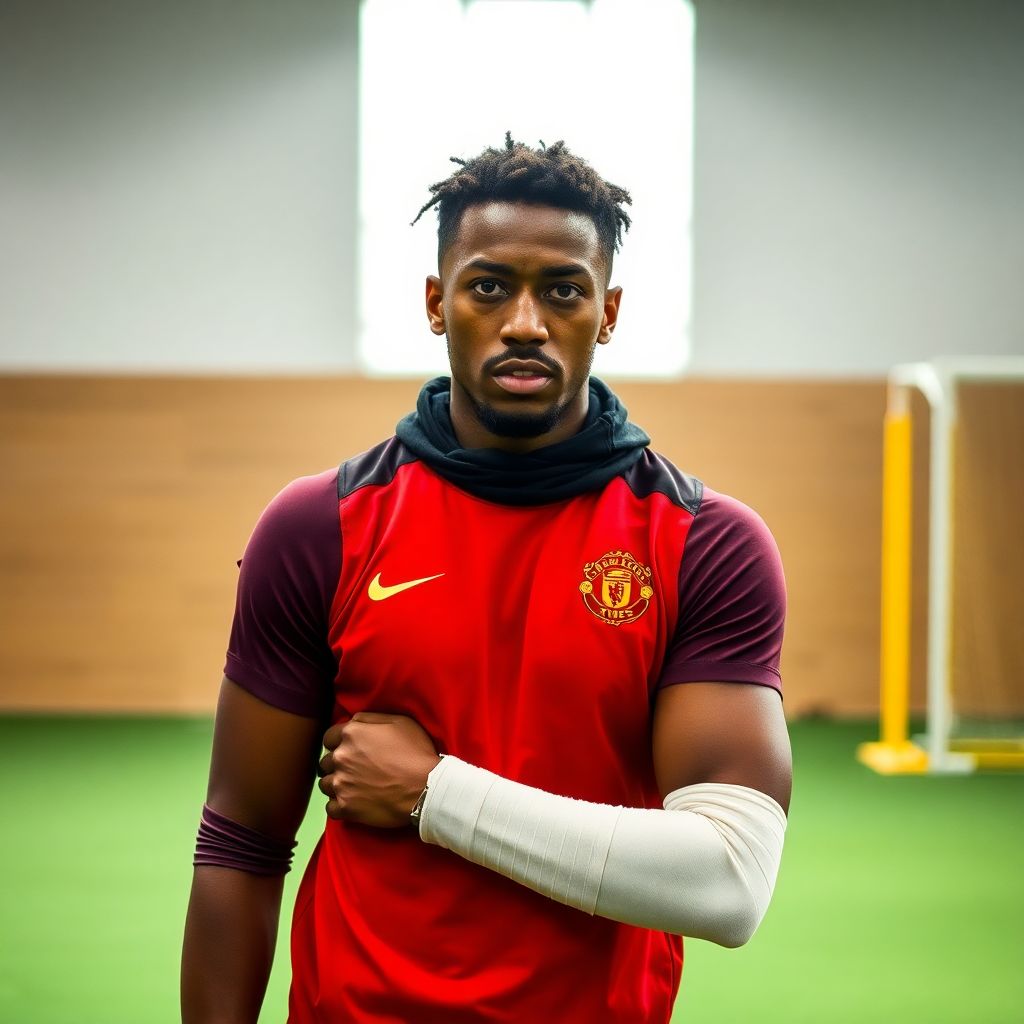
Relentless Professionalism: Victor Osimhen Rejects Home Comforts to Speed Up Comeback
Galatasaray’s star forward Victor Osimhen has once again underlined why he is regarded as one of the most driven professionals in modern football. Fresh from surgery on an arm injury suffered in the intense away clash against Liverpool, the Nigerian striker has chosen an unconventional route to recovery that underlines his total commitment to the club’s title ambitions.
The injury, sustained during a high-tempo European night that demanded maximum physical engagement, required immediate medical attention. Osimhen underwent successful surgery last week, with doctors satisfied that the procedure went according to plan. Under normal circumstances, a player in his position would be encouraged to return home soon after, recover in a familiar environment and gradually reintegrate into training.
Osimhen, however, refused to follow the comfortable script. Instead of heading back to his home and leaning on routine post-surgery rest, he reportedly asked to remain at the club’s sponsor hospital in Istanbul. This decision, surprising even to some inside the game, was made with one clear objective in mind: to accelerate his recovery and eliminate every possible distraction ahead of the decisive phase of the season.
Derby First, Comfort Later
Discharged from the surgical ward only a day after his operation, Osimhen chose to stay in Istanbul under close medical monitoring until Sunday. His decision was not driven by fear or uncertainty about his condition, but by meticulous planning. With the Intercontinental Derby against Fenerbahçe scheduled for April 26, the striker is determined to remove avoidable risks such as travel fatigue, disruptions in physiotherapy routines, or inconsistency in treatment.
By turning his recovery into a tightly controlled process, Osimhen is effectively treating this period as a dedicated mini-camp. At the medical facility, he has instant access to physiotherapists, club doctors, and rehabilitation equipment. This allows for multiple short therapy sessions throughout the day rather than a limited number of longer ones, which can be crucial when racing against the clock to be fit.
The environment also offers a stable climate and controlled conditions, reducing the chance of minor complications that can arise from changes in temperature, stress, or even daily logistics. For a player whose game thrives on explosiveness, timing, and physical duels, every hour of optimized recovery can make a difference.
A Message to the Dressing Room
Inside Galatasaray, Osimhen’s choice is being read as far more than a medical or logistical decision. It is being interpreted as a strong leadership signal at a critical moment in the season. With the Süper Lig title race reaching its decisive stage, the 27-year-old’s refusal to “switch off” is being used as a reference point for the rest of the squad.
Club sources suggest that his attitude has energized the dressing room. Younger players, in particular, are said to be watching closely how a global star handles adversity and pressure. By rejecting a comfortable break at home and instead voluntarily submitting himself to a strict routine, Osimhen is setting a standard of professionalism that coaching staff can point to in team talks and meetings.
“Victor is fully aware of the responsibility he carries,” one insider explained. “He understands how much the supporters expect from him and how crucial these upcoming matches are. His only concern is the title. He doesn’t want to waste a single day on anything that doesn’t directly help him return to the pitch.”
Psychological Edge and Champion Mentality
Beyond the physical benefits, Osimhen’s decision carries a significant psychological dimension. For elite footballers, injuries can disrupt rhythm, confidence, and mental sharpness as much as they affect the body. By remaining in a high-performance environment rather than retreating to a more relaxed home setting, Osimhen is keeping himself mentally locked into competition mode.
Staying in Istanbul, close to the club’s medical team and within easy reach of the training ground, allows him to maintain daily contact with staff, follow tactical discussions from a distance, and stay tuned to the mood of the squad. This reduces the sense of isolation that injured players often feel and helps ensure that, once he is cleared to train, he will not be rejoining a group that has emotionally moved on without him.
For his teammates, knowing that their main striker is pushing himself to this extent while injured can provide a subconscious boost. It reinforces the idea that everyone must give a little extra, particularly at a time of the season when fatigue, suspensions, and minor knocks start to build up. When a leading figure refuses to relax, it becomes much harder for others to do so.
Custom-Made Protection and Return Plan
Medical consensus around arm surgeries stresses caution, particularly in a contact sport where falls, tussles, and aerial challenges are constant. Nevertheless, Galatasaray’s medical staff have reportedly drawn up an aggressive but controlled plan to bring Osimhen back as quickly and safely as possible.
By the end of the week, the Nigerian is expected to initiate light, individual training. This will likely focus on cardiovascular work, running patterns, and non-contact ball exercises that preserve match fitness without exposing the injured arm to unnecessary danger. Strength and conditioning specialists are also expected to design sessions that keep his explosiveness and acceleration intact.
One of the key innovations in his comeback strategy is a customized carbon-fiber brace being prepared specifically for his arm. This high-tech protective equipment is designed to shield the injured area during training and, later, competitive matches. Lightweight yet extremely durable, the brace should help disperse impact forces while allowing him enough mobility to play his natural game.
The introduction of such a brace will not only bring forward his return to full team training but also provide him and the coaching staff with psychological reassurance. Knowing that the injury is structurally protected can encourage more natural movements, sharper duels, and full commitment in 50-50 challenges once he is medically cleared.
The Tactical Importance of Osimhen’s Return
Osimhen’s push to be ready for the Fenerbahçe derby is not just about personal pride; it is deeply tied to Galatasaray’s tactical structure. His presence up front changes the entire dynamic of the team. With his pace in behind, strength in duels, and relentless pressing, opposition defenders are forced to drop deeper and make quicker decisions on the ball.
This, in turn, frees up space between the lines for Galatasaray’s creative midfielders and wingers. It allows the full-backs to join attacks with greater confidence, knowing that the striker will both occupy central defenders and trigger the press when possession is lost. In high-stakes derbies, where small margins often decide games, having such a focal point can dictate the rhythm and territory of the match.
If Osimhen manages even partial fitness in time for the derby, his mere inclusion in the matchday squad could alter Fenerbahçe’s game plan. Managers are wary of leaving too much space in behind when facing him, which can lead to more conservative defensive lines and fewer risks in build-up play.
Professionalism as a Standard for the Modern Footballer
Osimhen’s conduct around this injury highlights a broader shift in what is expected from top athletes today. Gone are the days when talent alone could carry a career. Modern professionals are judged on their dedication to recovery, nutrition, mental resilience, and day-to-day habits as much as on their performances on matchdays.
Electing to stay in a hospital environment, foregoing the comfort of home, shows an understanding of marginal gains: the idea that championships are often decided not by one big moment but by dozens of smaller, less visible decisions made throughout a season. For young players watching from the academy to the first-team fringes, this example provides a living blueprint of how a top-level career is built and maintained.
It also demonstrates respect for the club and its investment. By taking every possible step to be available as soon as is safely possible, Osimhen is effectively telling decision-makers, supporters, and teammates that he views himself as a central part of the project and is willing to suffer to see it succeed.
Impact on Fan Perception and Club Culture
Supporters typically respond strongly to visible signs of sacrifice and commitment, and Osimhen’s actions are likely to strengthen the emotional bond between him and the fanbase. Injuries often trigger anxiety among fans, especially when a key player is involved. News that he has chosen a more intensive, professional route for his recovery can ease fears and foster admiration.
Within the club, this episode has the potential to become one of those internal reference stories that staff and players recall for years: an example cited in team talks when the group needs to be reminded what it takes to fight for titles. Moments like this help build an identity around hard work, discipline, and unity under pressure.
Over time, consistent acts of professionalism from star players contribute to shaping a culture that outlives individuals. Young signings and academy graduates who walk into a dressing room where such standards are normal quickly learn what is expected of them if they want to succeed at the highest level.
Balancing Ambition with Caution
Despite Osimhen’s evident determination, the final decision on when he returns will rest with the medical staff and coaching team. They must carefully balance his desire to play with the long-term risks of rushing him back into full contact too soon. Arm injuries, if aggravated, can lead to complications that may sideline a player for far longer than the initial prognosis.
For that reason, training data, pain responses, and regular medical checks will be closely monitored. Even if he appears ready, the staff may decide to manage his minutes or adjust his role initially, perhaps using him off the bench rather than as a 90-minute starter. The protective brace, while offering added security, does not eliminate risk completely.
Osimhen’s professionalism includes trusting the experts around him. Accepting medical guidance, even when it contradicts his competitive instincts, will be just as important as his current drive to recover quickly. A smart comeback is one that preserves both the player’s health and the club’s long-term objectives.
A Defining Moment in a Title-Chasing Season
As the Süper Lig campaign enters its decisive phase, every choice made by key figures can tip the balance. Victor Osimhen’s refusal to retreat into a comfortable recovery and his commitment to an intensive, controlled rehabilitation program perfectly capture the mentality needed at this stage of the season.
If his plan succeeds and he steps onto the pitch for the Intercontinental Derby or shortly after, his return will feel less like a routine comeback and more like the culmination of a carefully executed personal mission. Regardless of the exact date he is declared fit, his current actions are already influencing the squad, the fans, and the narrative around Galatasaray’s title push.
In a sport where professionalism is often praised in abstract terms, Osimhen is providing a concrete demonstration: sacrificing comfort, maximizing preparation, and placing the team’s ambitions above his own ease. For a club chasing trophies, there are few messages more powerful.