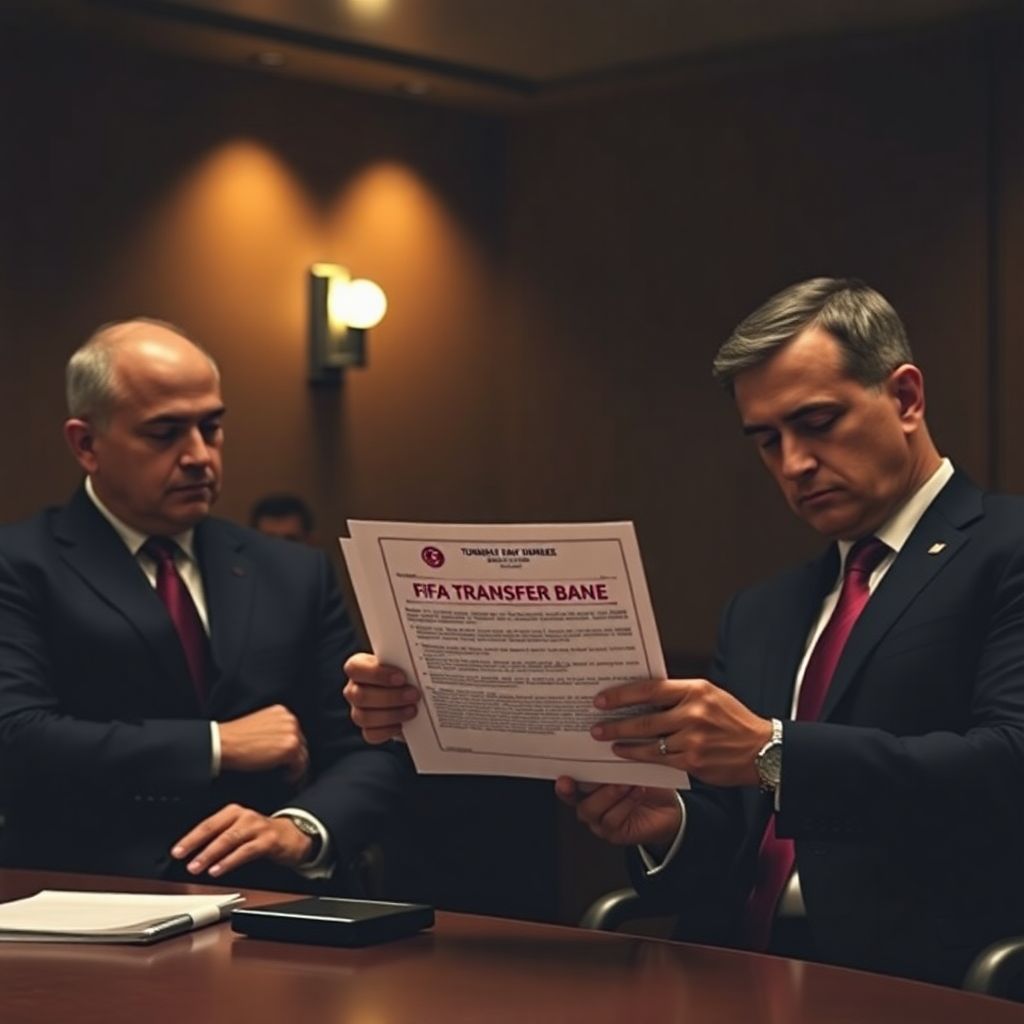
FIFA Issues Transfer Bans to Four Turkish Clubs
FIFA has introduced significant transfer sanctions against four Turkish clubs, updating its official registration ban list and immediately reshaping their short-term sporting prospects. The punishments affect teams across three professional tiers of Turkish football, blocking them from adding new players until strict conditions are met.
The bans apply to Süper Lig side Gençlerbirliği, Antalyaspor and Pendikspor from the TFF 1. Lig, and Hatayspor from the TFF 2. Lig. All four clubs are currently barred from registering any new players, whether domestic or foreign, until their cases are resolved to FIFA’s satisfaction.
—
Three Clubs Hit with Three-Window Bans
According to FIFA’s official disciplinary records, three of the clubs have been given fixed transfer bans spanning three consecutive registration periods:
– Gençlerbirliği – The Ankara-based Süper Lig club is prohibited from registering new signings for three transfer windows.
– Antalyaspor – Competing in the TFF 1. Lig, the Mediterranean club also faces a three-window registration ban, covering successive transfer periods.
– Pendikspor – The Istanbul side in the TFF 1. Lig has been handed an identical three-window transfer block.
These sanctions do not prevent the clubs from selling players or terminating contracts, but they will not be able to officially register any incoming players – including loans, permanent signings, free agents, or youth players from other clubs – while the bans remain in place.
—
Indefinite Ban for Hatayspor
The most severe punishment is reserved for Hatayspor, currently competing in the TFF 2. Lig. Unlike the other three clubs, whose bans have a fixed duration, Hatayspor is facing an open-ended, indefinite registration ban.
FIFA’s disciplinary notice makes clear that Hatayspor’s embargo will stay in force until the club fully settles its outstanding financial obligations and complies with all regulatory requirements related to its case. In practice, this means there is no automatic expiry date: the ban will only be lifted once FIFA is satisfied that every pending liability has been resolved.
—
Immediate Consequences for Summer Recruitment
The rulings take effect immediately, which means the current summer transfer window is directly affected. All four clubs are now blocked from registering new players for the duration of their bans, unless they resolve their financial disputes and obtain clearance from FIFA’s Disciplinary Committee.
This timing is particularly damaging. The summer window is the primary period for rebuilding squads, strengthening weak positions, and planning for the upcoming season. Without access to new signings, the affected clubs will be forced to rely heavily on their existing rosters, academy graduates, and players returning from loan, assuming those returns do not require new registrations under FIFA rules.
—
What These Bans Actually Mean in Practice
A registration ban is broader than many fans assume. In most cases, the following restrictions apply:
– Clubs cannot register new players, whether purchased, loaned, or signed as free agents.
– Youth players already under contract with the club may still be promoted internally, depending on domestic federation regulations.
– Existing contracts can be renewed or extended, as this does not usually count as a new registration.
– Outgoing transfers and contract terminations are generally allowed.
The greater challenge is not simply the inability to buy, but the impossibility of replacing departures. Any key player sold or injured during the ban cannot be replaced from outside, putting squad depth and flexibility under severe strain.
—
Financial Disputes at the Core
While the detailed case files are not publicly laid out in full, FIFA’s transfer bans of this type typically stem from:
– Unpaid transfer fees owed to other clubs
– Overdue wages or compensation to former players or staff
– Breaches of contractual or regulatory obligations in previous deals
The reference in FIFA’s records to “outstanding financial disputes” and “pending regulatory liabilities” strongly suggests that at least some of the cases involve failure to comply with earlier disciplinary decisions. In such situations, a transfer ban is one of FIFA’s most powerful enforcement tools to compel clubs to pay what they owe.
—
Sporting Impact on Each Club
The sporting consequences of these bans could be considerable:
– Gençlerbirliği – Competing in the top flight, the club must face high-level opposition without the ability to strengthen areas of weakness in the short term. Injuries or poor form in key positions could be especially costly.
– Antalyaspor – Aiming for promotion or at least a stable campaign in the TFF 1. Lig, the club now enters the season with limited flexibility to react to on-pitch problems.
– Pendikspor – As an ambitious Istanbul-based side, Pendikspor’s medium-term project may be set back, especially if key players attract interest and leave during the ban.
– Hatayspor – Already in the TFF 2. Lig and now facing an indefinite embargo, Hatayspor’s ability to rebuild and compete effectively is seriously compromised until it resolves its financial issues.
For all four, squad management becomes a strategic puzzle: coaches must extract maximum value from existing players, while club executives focus less on incoming transfers and more on financial restructuring and legal compliance.
—
How and When the Bans Can Be Lifted
For the three clubs with fixed three-window bans, the basic rule is clear: the punishment applies across three successive registration periods. However, in many cases, if the underlying financial disputes are fully resolved and FIFA confirms compliance, there is scope for sanctions to be mitigated or lifted earlier, depending on the exact wording of the decision.
For Hatayspor, the situation is more straightforward but harsher:
– There is no set end date.
– The ban will continue as long as unresolved debts or regulatory violations remain.
– Only once all obligations are met, and FIFA formally acknowledges compliance, can the club hope to see the ban removed.
This structure effectively places the timing of Hatayspor’s return to normal transfer activity in the club’s own hands – but only if it can generate the financial capacity to satisfy its obligations.
—
Pressure on Youth Academies and Internal Resources
With external signings off the table in the short term, internal resources become more valuable than ever:
– Academy prospects may be fast-tracked to the first team to cover gaps in the squad.
– Players returning from loan could be given more prominent roles, depending on registration rules.
– Tactical systems may be adjusted to fit the existing player pool, not the other way around.
This can have both positive and negative effects. On one hand, young players receive more opportunities. On the other, the lack of competition for places and limited depth may hurt performance in long, physically demanding seasons.
—
Broader Message to Turkish Football
Beyond the immediate impact on the four clubs, these sanctions send a wider signal to the Turkish football ecosystem. FIFA’s disciplinary action reinforces several key points:
– Financial discipline is no longer optional: ignoring payment obligations or regulatory decisions now carries direct sporting penalties.
– Clubs operating on fragile budgets face a clearer risk of ending up in similar situations if bills go unpaid.
– Transparent financial planning and timely settlement of debts are essential to avoid transfer-related punishments.
This reflects a global trend: football’s governing bodies are increasingly using transfer bans as a means to enforce financial and contractual responsibility, not just to sanction high-profile rule-breaking.
—
What Comes Next for the Sanctioned Clubs
In the coming months, the focus for Gençlerbirliği, Antalyaspor, Pendikspor, and Hatayspor will likely divide into two parallel tracks:
1. On the pitch – trying to remain competitive with frozen recruitment, maintaining morale in the dressing room, and avoiding further destabilizing departures.
2. Off the pitch – negotiating settlements, restructuring debts, and working with legal and financial teams to satisfy FIFA’s requirements and, where possible, accelerate the lifting of sanctions.
The speed at which each club can resolve its situation will depend on the scale of its liabilities, access to funding, and willingness to prioritize long-term stability over short-term gains.
—
FIFA’s decision to enforce these transfer bans marks a decisive intervention in Turkish club football. For the affected teams, the message is unmistakable: until financial and regulatory obligations are fully honored, the door to new signings will remain firmly shut.