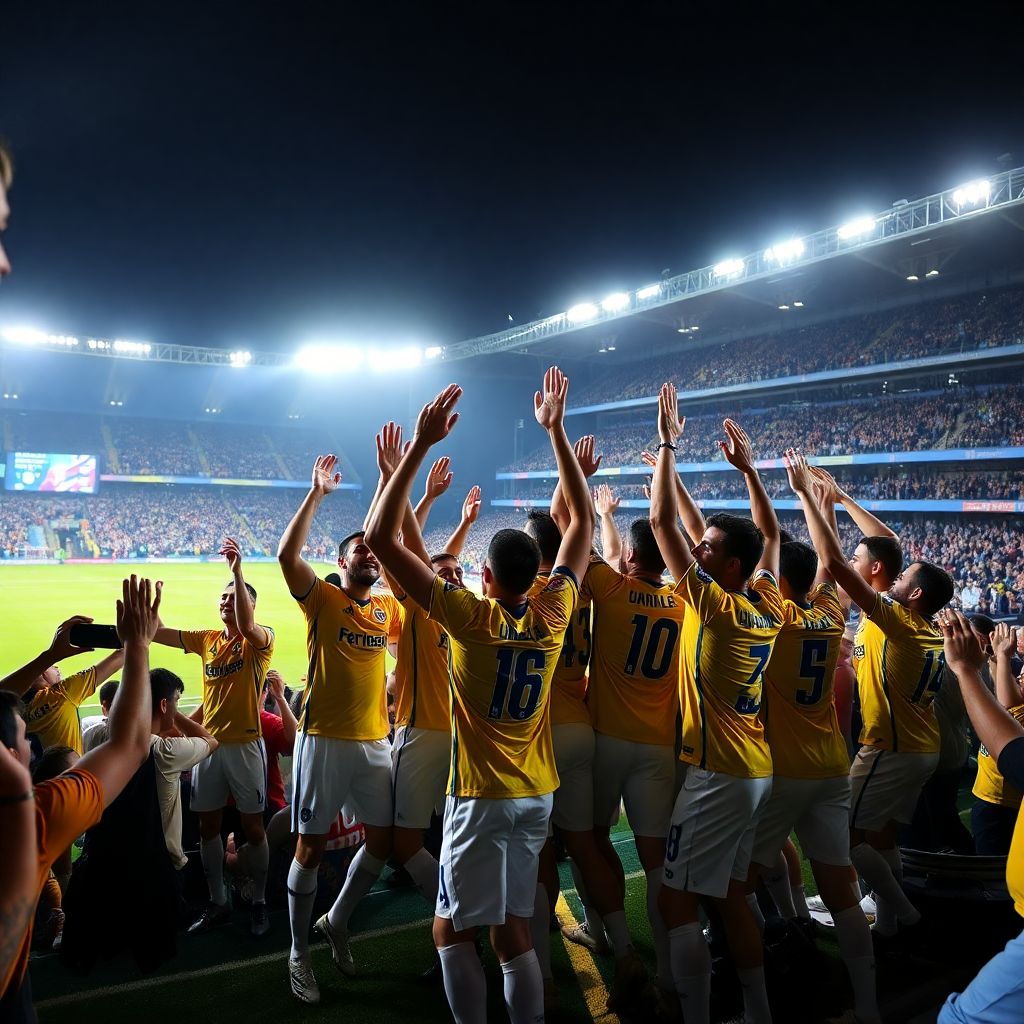
UEFA coefficient table reshuffled as Fenerbahce win cements Türkiye’s top‑10 status
Türkiye has tightened its grip on a coveted top‑10 place in the UEFA country coefficient rankings after Fenerbahce’s 2-0 home victory over Sturm Graz in the third qualifying round of the UEFA Champions League. The result at Istanbul’s Şükrü Saracoğlu Stadium delivered valuable bonus points, lifting Türkiye’s overall tally to 47.375 and solidifying 9th spot in the European standings.
Fenerbahce’s win and its direct impact on the rankings
The first-leg success against the Austrian side was more than just a step toward the next qualifying round. In coefficient terms, it served as a high-impact result:
– Bonus points added: The win increased Türkiye’s points total, widening the gap to chasing nations just outside the top ten.
– Pressure on rivals: Czechia, currently 10th with 43.825 points, and Poland, 11th with 43.025 points, lost more ground on Türkiye, which now enjoys a more comfortable cushion.
Because UEFA’s country coefficient is calculated based on the performances of all clubs from a given nation over a rolling five‑year period, every win, draw, and progression through qualifying rounds is magnified. Fenerbahce’s ability to secure a clear two‑goal advantage in the first leg therefore carries both sporting and strategic significance.
Current UEFA country coefficient picture
With the latest update, the situation around Türkiye looks as follows:
– 8th – Netherlands: 51.229 points
– 9th – Türkiye: 47.375 points
– 10th – Czechia: 43.825 points
– 11th – Poland: 43.025 points
Türkiye remains some distance behind the Netherlands, but the gap is no longer unbridgeable-especially with several Turkish clubs still active in European qualifying rounds. At the same time, the breathing space over Czechia and Poland has become more reassuring, reducing the immediate risk of dropping out of the top ten.
Why a top‑10 ranking matters so much
Holding onto a top‑10 position is not just a matter of prestige; it has very real consequences for the structure of future European campaigns:
– Champions League access: A top‑10 finish protects direct qualification spots for the Trendyol Süper Lig champion into future Champions League league‑stage formats. Falling outside this bracket could mean more clubs starting from earlier qualifying rounds, with greater risk and fewer guarantees.
– Number of European spots: Higher‑ranked countries typically enjoy more places across the Champions League, Europa League, and Conference League, increasing the chance to accumulate further coefficient points.
– Financial and sporting growth: Direct access to the Champions League phase brings substantial broadcasting and prize money, which can reshape club budgets, attract better players, and improve infrastructure across the league.
In other words, results like Fenerbahce’s win over Sturm Graz have a compounding effect: they secure points now and help safeguard routes to even more points in the seasons ahead.
Fenerbahce’s two-goal cushion and its wider implications
Taking a 2-0 lead into the return leg gives Fenerbahce a strong platform to finish the job. Progression to the next qualifying round would offer at least two more high‑stakes fixtures, each carrying additional coefficient opportunities:
– Each win or draw adds to the national total, which is then divided by the number of participating clubs from Türkiye to calculate the season’s contribution.
– Reaching playoff or league‑stage rounds often comes with bonus points on top of match results, making qualification itself a significant objective, not just the matches within the group phase.
From the perspective of Turkish football, every further step Fenerbahce takes in the Champions League pathway helps to anchor the country firmly inside the top 10, especially in seasons where margins between neighboring nations are tight.
The role of Beşiktaş and Trabzonspor in the coefficient race
Fenerbahce is not alone in carrying the national flag in Europe. Beşiktaş and Trabzonspor are also engaged in their own qualification campaigns, and their performances will be just as critical for Türkiye’s coefficient outlook.
– Beşiktaş: Traditionally strong in European competitions, Beşiktaş often delivers consistent group‑stage results. Any wins or deep runs this season would provide crucial support to the points added by Fenerbahce.
– Trabzonspor: As a club that has recently re‑established itself in European competitions, Trabzonspor’s success could add depth to Türkiye’s coefficient, especially if they reach the later qualifying rounds or group stages.
The cumulative effect of multiple teams progressing simultaneously cannot be overstated. While one club might have an exceptional season, the stability of a country’s ranking usually depends on at least two or three sides regularly picking up wins and bonus points.
Chasing the Netherlands: realistic or distant goal?
With the Netherlands sitting 8th on 51.229 points, Türkiye faces a gap of nearly four points. That difference may not sound enormous, but in coefficient terms it represents a significant volume of wins, progressions, and bonuses.
However, the race is far from over:
– Dutch clubs also carry risk: If representatives from the Netherlands fall early in European competitions, their ability to extend the lead weakens.
– High‑yield opportunities: Deep runs by any Turkish club into the latter stages of the Europa League or Conference League can quickly generate a burst of extra points.
– Rolling five‑year cycle: As older seasons drop out of the calculation, previous strong years for rival nations can disappear from the table, opening space for climbing.
For now, Türkiye’s more immediate priority is to secure and consolidate 9th place, but a sustained run of positive results this season could put pressure on the Netherlands and bring 8th position into realistic view.
Strategic importance for the Trendyol Süper Lig
Beyond the raw numbers, the present coefficient battle has long-term strategic implications for the Trendyol Süper Lig and its clubs:
– Planning and recruitment: Clubs can plan transfer strategies more confidently if they know the champion is likely to enter Europe at a later stage, with higher guaranteed revenue.
– League attractiveness: Stronger European access helps convince ambitious players and coaches to join Turkish clubs, improving overall competitiveness and visibility.
– Investment in infrastructure: Better prospects in Europe encourage stadium upgrades, youth academies, and training facilities as clubs chase sustainable success rather than one‑off campaigns.
For club administrations and the league’s organizers, maintaining top‑10 status is now a structural objective, influencing decisions far beyond any single matchday.
What needs to happen to secure top‑10 through 2026/27
The current ranking is particularly relevant for the 2026/27 European campaign, since today’s performances feed into the coefficient that will define access for that season. To stay safe in the top 10 across this period, Turkish clubs must focus on:
1. Avoiding early exits – Eliminations in the first qualifying rounds are damaging because they lower the average points per club.
2. Targeting group stages – Reaching any European group phase is hugely valuable, thanks to the combination of matchday points and qualification bonuses.
3. Maximizing home advantage – Strong home records, like Fenerbahce’s 2-0 win at Şükrü Saracoğlu, often underpin successful European seasons.
4. Consistency over glamour – Regular wins against mid‑level opposition often contribute more to the coefficient than occasional shocks against giants, especially if those shocks are followed by early exits.
If these elements come together, Türkiye will not only protect its prized ranking but may also push toward even stronger positions.
The psychological boost for Turkish football
Beyond the statistics, Fenerbahce’s victory delivers a psychological lift. Seeing a major club win convincingly in a Champions League qualifier:
– Reinforces belief among players and fans that Turkish teams belong in Europe’s elite competitions.
– Generates momentum across the league, as rival clubs are spurred to match or exceed that performance.
– Helps restore reputation after seasons where Turkish clubs may have exited earlier than expected.
A strong collective mindset often translates into better performances in tight European ties, where composure and experience are just as important as tactical quality.
Outlook: a critical season with high stakes
With Fenerbahce holding a two-goal advantage before the return leg against Sturm Graz and with Beşiktaş and Trabzonspor continuing their campaigns, Türkiye is well placed to defend its 9th position in the UEFA country coefficient table. The coming weeks will be decisive:
– If multiple Turkish clubs reach the group stages, the current margin over Czechia and Poland could grow into a secure buffer.
– If results falter, the battle to stay inside the top 10 could quickly tighten, especially if rivals pick up surprise wins.
For now, though, the trajectory is positive. Fenerbahce’s 2-0 triumph did more than move them closer to the next round-it reinforced Türkiye’s European standing, safeguarded key Champions League prospects for the Trendyol Süper Lig, and set the tone for a season in which every European night will carry national significance.