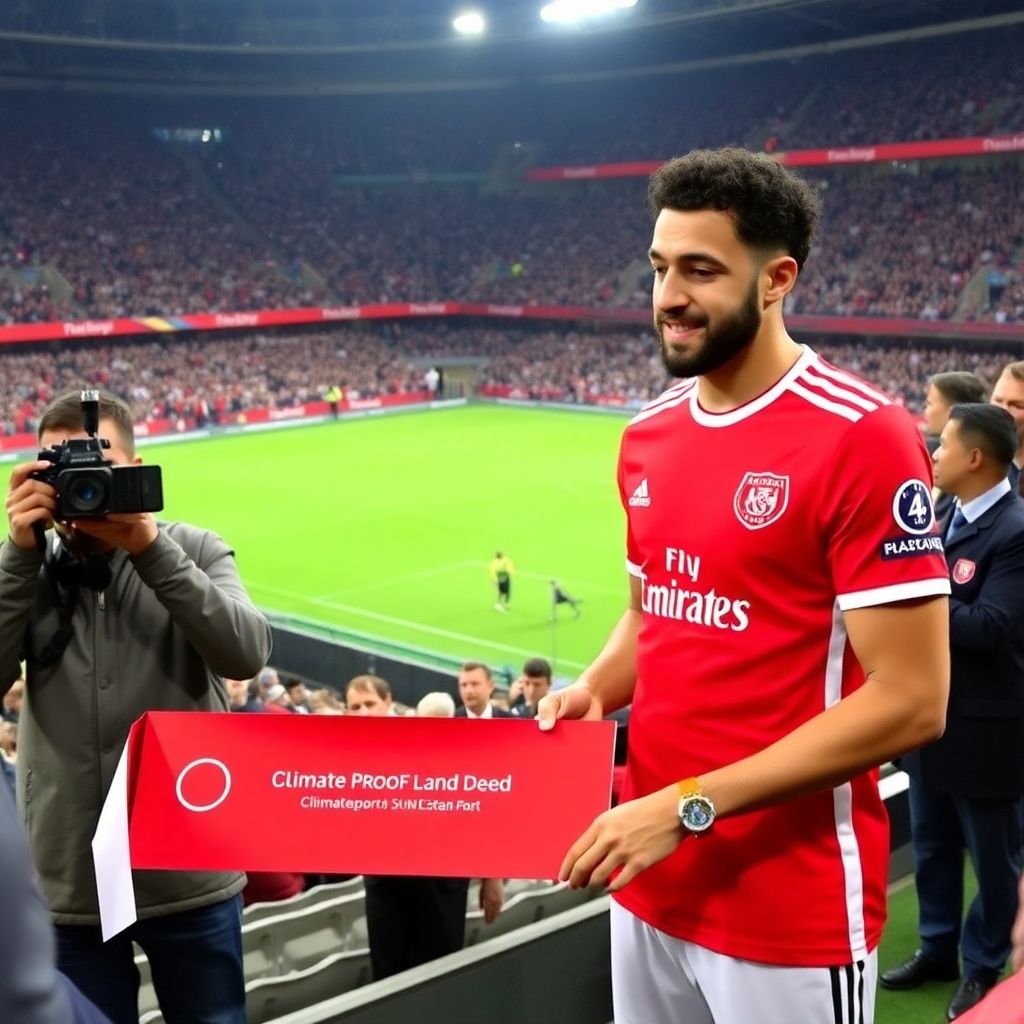
Mohamed Salah Stunned by Unusual “Climate-Proof” Gift After Completing Trabzonspor Transfer
Mohamed Salah’s unveiling as a Trabzonspor player has already produced one of the most surreal moments of the football summer – and it had nothing to do with tactics, transfer fees or shirt numbers. Instead, the former Liverpool star found himself at the centre of an unexpected environmental pitch, capped by a highly unconventional welcome present: a plot of land in Türkiye.
The 34-year-old Egyptian forward, who brought an end to a glittering nine-year spell at Anfield, has swapped the Premier League for the Trendyol Süper Lig in a move that has electrified Turkish football. More than 25,000 euphoric Trabzonspor fans flooded the local airport and Papara Park, igniting red flares and turning the city into a sea of colour to welcome their new icon.
But while the scenes of celebration around his arrival were dramatic enough, it was a subsequent promotional event that produced the most talked‑about moment. What had been scheduled as a routine media shoot quickly turned into a lecture about climate change and a symbolic gesture about the future of the planet.
During the event, local district mayor Hüseyin Avni Coşkun Çebi took the microphone and, rather than sticking to the usual football clichés about ambition, goals and trophies, pivoted to the topic of global warming. Addressing Salah directly, he framed the star’s move to the Black Sea city as not only a football decision but potentially a long-term climate refuge for his family.
“Global warming is threatening the world,” Mayor Çebi told the visibly surprised winger. “In the future, it will become difficult to live in Egypt during the summer. Our district will be very liveable in those years. It will be among the places least affected by global warming.”
To drive home his point, the mayor went beyond words and offered Salah something rarely, if ever, seen in modern football welcomes: a piece of land in the region. The plot, he explained, was not just a symbolic gift but a tangible asset, somewhere Salah’s children and grandchildren could one day live in comfort, away from severe water shortages and extreme heat.
The camera captured Salah’s reaction – a mixture of confusion, amusement and genuine disbelief. For a player accustomed to golden boots, trophies and global awards, being handed a “climate-secure” parcel of land as a signing gift clearly fell outside any normal script. Yet the gesture also revealed just how significant his arrival is for Trabzonspor and how deeply the city wants to bind him to its future.
Behind the bizarre optics lies a serious subtext. Egypt, Salah’s homeland, is considered one of the countries most vulnerable to rising temperatures and water scarcity. Long, intense summers are already a reality along the Nile, and projections suggest conditions could worsen in the coming decades. By contrast, the Black Sea region of Türkiye, including Trabzon, enjoys a milder climate, higher rainfall and lush greenery, making it relatively less exposed to some of the harshest impacts of global warming.
For Mayor Çebi, intertwining football stardom with climate messaging was a calculated move. In using Salah’s global profile to highlight environmental concerns, he not only amplified a local political talking point but also cast Trabzon as a safe, hospitable destination in an increasingly unstable climate. The gift of land functions both as a warm welcome and a piece of soft environmental diplomacy.
From a football perspective, this extraordinary episode underlines the scale of expectation surrounding Salah’s move. Trabzonspor, historically one of Türkiye’s most passionate and successful clubs outside Istanbul’s traditional giants, view the Egyptian as a transformational signing. Under head coach Fatih Tekke, the club is rebuilding with an eye on challenging for the Süper Lig title and returning to the European stage – and Salah is expected to be the centrepiece of that project.
The intense reception at the airport and stadium reflects Trabzon’s unique football culture. The city is known for its fervent, almost tribal support, where players who commit to the badge are elevated to near-mythical status. By gifting Salah land in the region, local officials are effectively saying: you belong here, not just as a player on a contract, but as part of the community’s long-term story.
For Salah himself, the move to Türkiye marks the beginning of a new chapter in a career already filled with historic milestones. At Liverpool, he became a modern legend: a Champions League winner, a Premier League champion and one of the most prolific forwards in the club’s history. Leaving that behind was always going to be emotionally significant, and the choice of Trabzonspor – a club with an intense local identity but a smaller global footprint – suggests he is embracing a different kind of challenge.
The unusual climate-themed gift also opens the door to a broader conversation around footballers and their off-pitch influence. As one of the most recognisable Muslim athletes in the world, Salah has often been associated with social causes, charity projects and community work. While he did not initiate this particular environmental message, his presence instantly magnified the mayor’s words. It would not be surprising if, over time, local authorities and organisations seek to involve him more formally in campaigns on sustainability, youth awareness or climate resilience.
In practical terms, owning land in the region also adds a layer of personal connection that goes beyond the typical apartment or hotel stay footballers use when they arrive in a new country. Even if the plot of land never becomes a family home, it stands as a physical symbol that ties Salah’s name to Trabzon’s landscape. For supporters and officials alike, that matters: it suggests permanence and roots in a profession often defined by short contracts and quick exits.
The episode also captures how far football has evolved into a stage for wider cultural and political narratives. A generation ago, a big signing might have been welcomed with a shirt presentation and a press conference focused solely on goals and trophies. Today, transfers can double as platforms for cities and regions to promote their image, their values and even their stance on global issues like climate change. Trabzon’s leaders seized that opportunity in the most literal way possible – by linking their new star to the soil itself.
As Trabzonspor prepare for the new Süper Lig campaign under Fatih Tekke, all eyes will naturally shift back to the pitch. Supporters will judge Salah primarily by what he produces in the final third: the goals, assists and moments of magic that have defined his career. Yet the memory of his bewildered expression as he was handed a long-term “climate refuge” will linger as one of the defining images of his arrival.
In the short term, the story serves as a reminder of the sheer excitement his signing has generated. In the long term, it may come to symbolise a broader truth about modern football – that elite players are no longer just athletes, but lightning rods for conversations about identity, community and the future of the planet. For now, though, Mohamed Salah’s Trabzon adventure begins with a contract, a new shirt and, remarkably, a plot of land promised as a safe haven for generations to come.