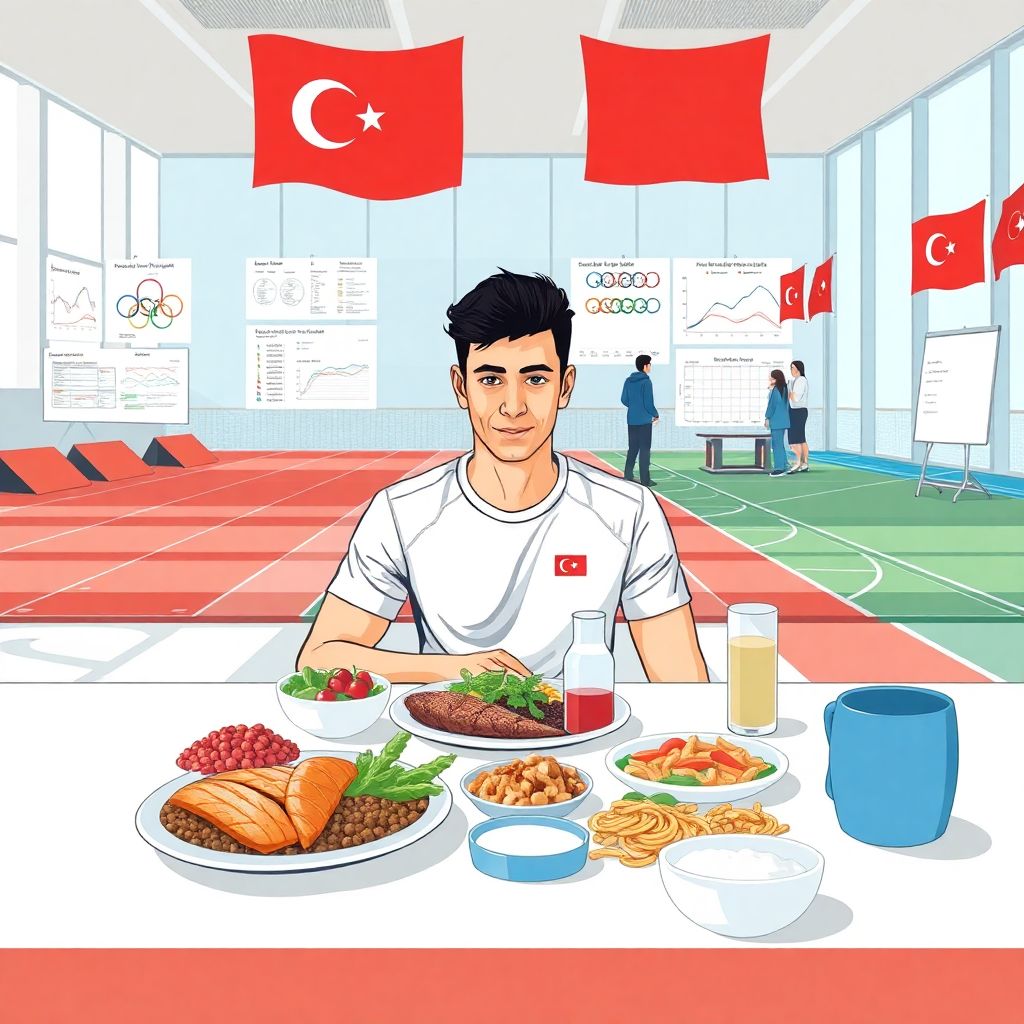
Why Turkey’s Olympic Dreams Now Start at the Dining Table
For a long time, preparing олимпийских спортсменов in Turkey meant three things: more volume, more sweat, more repetition. Eat “well,” train “hard,” and hope for the best. Today этот подход уже не работает. When hundredths of a second or a single successful lift decide medals, the role of nutrition and sports science stops being “supportive” and becomes central to performance strategy.
In other words, what’s on a Turkish Olympic athlete’s plate — and how their training is measured, adjusted, and recovered from — can be the difference between national hero and “almost made it.”
—
From “Eat Big, Train Big” to Precision: What Actually Changed
Let’s start with the problem. Traditional preparation in many Turkish sports, especially wrestling, weightlifting and middle-distance running, was built on a few persistent beliefs:
– Big training loads build champions
– Heavier meals mean more strength
– Rest is a sign of weakness
These ideas worked… until the rest of the world got smarter. Countries that integrated a detailed sports nutrition program for elite athletes with data-driven training pulled ahead. Turkish teams started seeing a pattern: same or greater effort, but fewer podiums.
Case Study: Turkish Weightlifting’s Quiet Revolution
One national-level weightlifter (let’s call him “Emre”) had plateaued for three seasons. Volume went up, but results stayed the same. Classic response? “Train even more.”
Instead, a new support team dug into three angles:
– Micronutrient status (iron, vitamin D, B12)
– Timing of carbohydrates and protein around key sessions
– Sleep and recovery biomarkers (heart rate variability, morning resting HR)
They didn’t change his total weekly tonnage dramatically. They changed how he fueled: lighter, more frequent meals, targeted carbs before heavy sessions, higher protein and omega‑3s in the evenings, plus iron correction under medical supervision.
Result? Within 9 months he added 6 kg to his competition total without moving up a weight class. Not magic — just precision.
—
What “Sports Science” Actually Means in Turkey Now
It’s easy to think sports science is just fancy lab equipment. In Turkey, the more effective programs use it as a decision-making system, not a gadget museum.
Inside High-Performance Centers: More Than Just a Gym
Modern high performance training centers for athletes in Turkey typically blend these disciplines under one roof:
– Exercise physiology (lactate testing, VO₂ max, power profiling)
– Biomechanics (video and sensor analysis of technique)
– Sports psychology (focus, anxiety, confidence, routines)
– Sports nutrition (performance fueling, body composition, recovery)
The key shift: coaches no longer rely only on “feel.” They use numbers to ask better questions:
– Is this runner under-recovering or just under-fueled?
– Is this swimmer’s drop in speed due to technique fatigue or glycogen depletion?
– Is the athlete’s irritability from pressure, overtraining, or an energy deficit?
When data and coaching experience collide, better decisions are made — especially about food, rest, and training load.
—
Nutrition: The Hidden Infrastructure of Olympic Results
Beyond Calories: What Turkish Teams Are Finally Optimizing
High-level Turkish squads increasingly treat nutrition as infrastructure, like stadiums or funding. Three areas stand out:
– Energy availability: Ensuring athletes not only eat enough, but have enough usable energy left after training for hormonal health, immune function, and adaptation.
– Body composition strategy: Reaching weight or body fat targets gradually, without last-minute extreme cuts that wreck performance.
– Recovery nutrition: Systematic, not random — carbs, protein and fluids are planned like training drills.
For example, in athletics, олимпийский спортсмен might have three different day-types:
– Heavy track + gym day → high-carb, high-protein, aggressive hydration
– Technical/light day → moderate-carb, adequate protein, more vegetables and healthy fats
– Recovery day → controlled carbs, focus on micronutrients and gut health
Where before, meals were mostly “three squares a day,” now they follow the training, not the clock.
—
Real Case: Turkish Middle-Distance Runner Overhauls Fueling
A Turkish 1500 m runner kept fading in the last 300 m of races. Lab tests showed good VO₂, strong lactate tolerance, and solid training volume. On paper, she was ready. On the track, she wasn’t.
A closer nutrition audit found she was training in a semi-fasted state, thinking it would keep her lean. Her pre-session meals were tiny, and she feared carbs. After a structured change — small carbohydrate snacks 60–90 minutes before intervals, electrolyte support in hot conditions, and a consistent post-session recovery shake — her last-lap splits improved within weeks.
No change in total training time. Just smarter timing and better fueling.
—
Comparing Approaches: “Old School,” “High-Tech,” and “Hybrid”
Approach 1: Old School Volume
This is still common in some regional clubs:
– Big, monotonous workloads
– Generic, often heavy traditional meals
– Weight management via drastic short-term cuts
Pros:
– Simple to implement
– Works reasonably well for genetically gifted, highly resilient athletes
Cons:
– High injury and burnout risk
– Poor consistency at world level
– Last-minute dieting destroys performance in weight-class sports
—
Approach 2: Purely High-Tech (Data Without Context)
Some programs overcorrect and chase every possible metric:
– Constant lab tests and wearables
– Endless dashboards and graphs
– Frequent plan changes based on small data swings
Pros:
– Great insight into physiology
– Early warning signs for overtraining and illness
Cons:
– Athletes can feel like lab rats, not competitors
– Coaches drown in information, miss the big picture
– Expensive, not scalable across all sports and regions
—
Approach 3: The Emerging Hybrid Model in Turkey
The most promising олимпийские центры now use a hybrid approach:
– Keep the cultural strengths — work ethic, resilience, training tradition
– Add structured olympic athlete training and nutrition plans guided by data
– Use tests not to micromanage, but to calibrate coaching intuition
In practice, this means: old-school passion plus new-school precision. For Turkey, that’s a powerful combination: athletes still train “with heart,” but no longer sabotage themselves with poor fueling or chaotic loads.
—
Not-So-Obvious Solutions That Actually Matter
1. Fixing Breakfast and Sleep Before Supplements
Many Turkish athletes (like athletes everywhere) want fast solutions: “Which supplement should I take?” Yet performance plateaus often trace back to:
– Skipped breakfasts before early training
– Poor sleep due to late-night screen time or caffeine
– Inconsistent meal timing on travel days
Programs that pause the supplement talk and first lock down basic routines often see the biggest jumps. A solid 8-week block of:
– Regular pre-training meals
– Minimum 7.5 hours of quality sleep
– Fixed post-training recovery snacks
can unlock adaptation that years of “just training harder” never achieved.
—
2. Using Local Foods Strategically, Not Just Imported Products
A non-obvious advantage in Turkey: access to nutrient-dense local foods — lentils, chickpeas, yogurt, fish, nuts, fresh vegetables. Instead of building everything around imported sports products, smart dietitians are:
– Turning traditional soups into pre-training carb sources
– Using ayran and yogurt as quick protein-electrolyte combos
– Leveraging nuts and seeds for healthy fats and satiety
This reduces cost, improves cultural acceptance, and makes plans easier to follow for athletes from diverse backgrounds.
—
3. Individual Response Tracking, Not One-Size-Fits-All Plans
Two athletes on the same team, same training plan, same menu — yet performance diverges. The better programs watch for individual response:
– Who gains weight fast on modest calories?
– Who struggles with digestion on high-fiber days?
– Who crashes on low-carb, who thrives?
They tweak, re-test, and adjust. That’s where professional sports dietitian services in Turkey become pivotal: not to create “perfect” menus, but to run a continuous experiment on what works for each person.
—
Alternative Methods: When the Textbook Isn’t Enough
Low-Tech Solutions in Resource-Limited Settings
Not every club has access to full labs or national centers. Some coaches in Anatolian towns use clever low-tech tools:
– Run “talk tests” instead of lactate to gauge intensity
– Use bodyweight trends and performance logs instead of DEXA scans
– Observe mood, appetite, and training enthusiasm as early fatigue indicators
Combine that with simple nutrition rules — like “no hard session on an empty stomach” and “protein in every main meal” — and they can approximate many benefits of advanced setups.
—
Periodized Nutrition Without Complex Software
You don’t need apps to periodize nutrition. A pen-and-paper method some coaches apply:
– Red days (hard): max carbs, strict post-training recovery
– Yellow days (medium): moderate carbs, focus on veggies and protein
– Green days (easy/off): lowest carbs, more focus on fats and micronutrients
Printed calendars with colored dots help athletes match their plates to their training — a surprisingly effective analog hack.
—
Alternative Recovery Strategies: Beyond Ice Baths
Instead of chasing every trendy recovery gadget, some Turkish teams lean on:
– Structured, low-intensity movement (walks, light mobility) in the evenings
– Consistent hydration protocols adjusted for humidity and altitude
– Evening routines to wind down — stretching plus breathing drills instead of just scrolling phones
These “boring” methods frequently outperform expensive but inconsistently used tools.
—
How Education is Shaping the Next Generation of Support Staff
From Degree Programs to Real-World Impact
The backbone of all this progress is better education. University-level sports science degree programs in Turkey are expanding their focus from pure theory to applied performance. Graduates now understand not only how to test athletes, but how to:
– Integrate lab findings into weekly training microcycles
– Communicate with coaches who think in drills, not data
– Translate complex nutrition concepts into cafeteria menus
The most effective graduates are those who can walk into a wrestling gym, a swimming pool, or a track and actually help the head coach solve a problem, not just hand over test results.
—
Pro Tips and “Insider” Life Hacks for Professionals
For Coaches
– Start with one small habit, not a total overhaul. For example, “Every athlete must have a post-training snack within 30 minutes.”
– Use observable metrics. Note how many reps stay high-quality in a session — if that number drops after diet changes, adjust.
– Align messages. Make sure what you say about weight and body composition doesn’t conflict with what the dietitian is trying to protect (health, energy, long-term development).
—
For Sports Dietitians and Sport Scientists
– Speak the coach’s language. Replace “glycogen resynthesis” with “tomorrow’s quality reps.” The goal is buy-in, not vocabulary.
– Build “good enough” solutions. A plan athletes follow at 80% consistency beats a perfect plan they abandon after a week.
– Be in the training environment. Lab and office time are useful, but insights often come from simply watching how athletes actually train, eat, and interact.
—
For Administrators and Federation Leaders
– Invest in systems, not just stars. Nutrition and science support that only follows medal favorites is short-sighted; depth is built when juniors get access too.
– Measure outcomes, not only activities. Track injury rates, days lost to illness, and performance consistency — not just “number of tests done.”
– Encourage cross-sport learning. What works in weightlifting for making weight safely may help combat sports; endurance recovery strategies might benefit team sports’ conditioning blocks.
—
Where Turkey Goes From Here

Turkey sits at an interesting crossroads. The country has a strong sporting culture, passionate coaching traditions, and improving infrastructure. When a well-designed sports nutrition program for elite athletes is tightly integrated with coaching, psychology, and physiology, Turkish athletes can not only reach Olympic finals, but stay there consistently.
The deeper shift is mindset: from “nutrition and sports science as add-ons” to “nutrition and sports science as the operating system” of preparation. As more teams embrace hybrid models, leverage local food culture intelligently, and scale practical methods from high-performance hubs to smaller clubs, Turkey’s Olympic preparation will become less about heroic effort — and more about reliably repeatable excellence.
Комментарии