Psychological Defeat: How VAR and Second-Half Fatigue Undid Galatasaray Against Barcelona
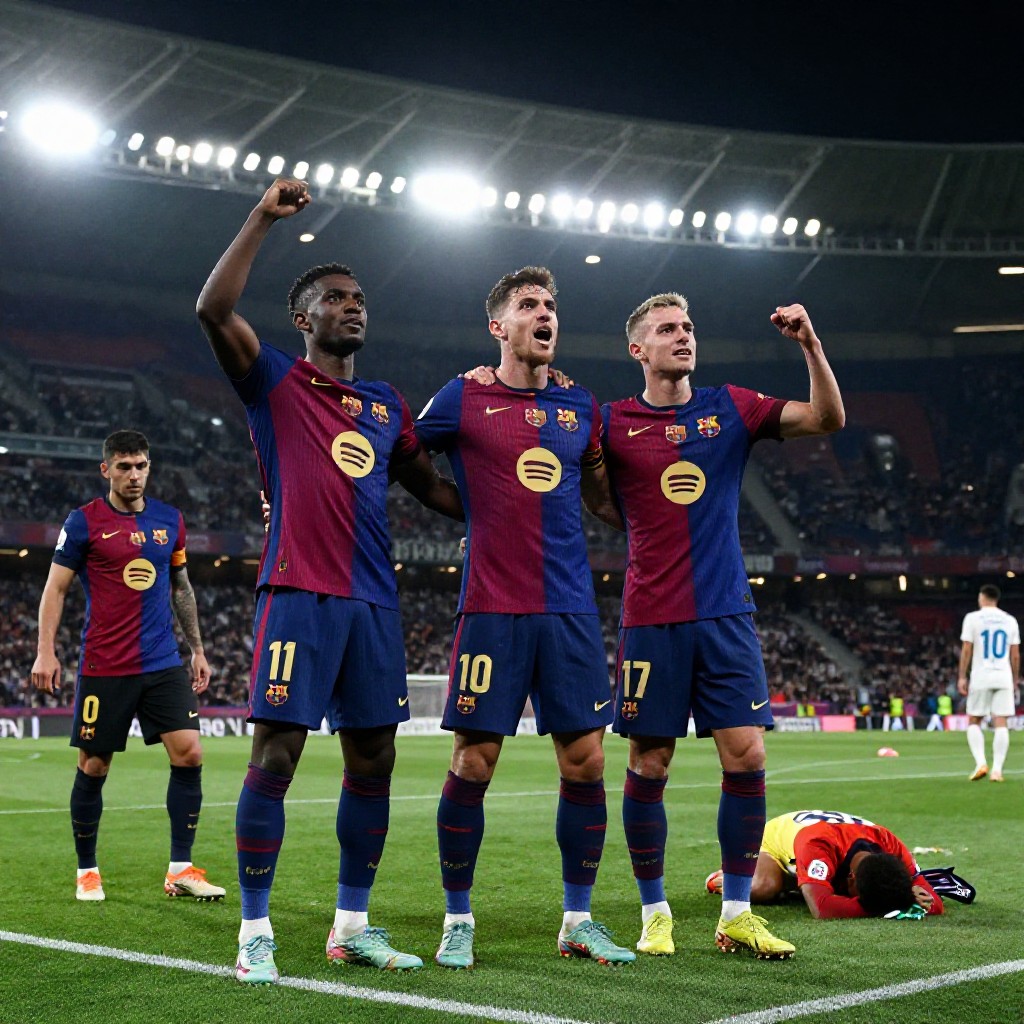
Galatasaray’s Champions League night at RAMS Park began with promise but ended in a 4-1 defeat to Barcelona. Okan Buruk’s team spent much of the first half executing its plan effectively, matching the visitors’ intensity and creating a platform to challenge Hansi Flick’s side. Yet a disallowed goal, followed by a dramatic drop in energy after the break, changed the course of the match.
Aleksey Batrakov was among Galatasaray’s standout performers in the opening period, capping his display by putting the hosts 1-0 ahead. The goal rewarded the team’s disciplined start and appeared to confirm that its approach could trouble Barcelona. For a time, Galatasaray looked capable of turning home advantage into a genuine result.
The decisive psychological blow came when a second Galatasaray goal was ruled out for offside following a VAR review. Rather than extend their lead, the hosts were left with the feeling that an important opportunity had slipped away. The decision gave Barcelona a reprieve at a crucial moment and shifted the mood before halftime. Galatasaray’s response after the interval suggested that the setback had affected more than the scoreline: the team struggled to recover its earlier confidence and composure.
Barcelona, by contrast, emerged with renewed momentum. Flick’s players pressed aggressively, forced Galatasaray to defend for longer spells and made better use of the spaces that opened as the home side’s shape became less compact. Once the visitors found a way through, the match quickly moved beyond Galatasaray’s control.
The second half also exposed structural weaknesses that had been less visible before the break. Victor Osimhen was left isolated up front, managing only 12 touches during his time on the pitch. Galatasaray could not supply him consistently, while Barcelona’s high defensive line repeatedly caught him offside. Without reliable support reaching their striker, the hosts had few ways to relieve pressure or threaten a comeback.
Defensive positioning became another major concern. Davinson Sánchez endured a difficult evening, and individual errors contributed to Barcelona’s scoring run. Against a side capable of turning a misplaced step or delayed decision into a dangerous attack, those lapses proved costly. Galatasaray’s defensive line had already been working hard to contain the visitors; as fatigue set in, maintaining distances and reacting quickly became increasingly difficult.
The exchanges between Mario Lemina and Lamine Yamal also failed to produce the intended effect. Lemina’s confrontations did not unsettle the young Barcelona winger. Instead, Yamal appeared to grow into the contest and went on to influence the second half, using his confidence and attacking ability to challenge Galatasaray’s defence.
Energy levels were central to the collapse. Galatasaray had spent much of the opening period matching Barcelona’s tempo, an effort that demanded intense pressing, rapid transitions and constant defensive concentration. After halftime, the hosts could no longer sustain that pace. The three goals conceded in quick succession reflected both Barcelona’s quality and Galatasaray’s physical decline: tired players were slower to close down space, less precise in possession and more vulnerable to pressure.
The disallowed goal should not be treated as the sole explanation for the result. It was a pivotal moment, but the second-half performance showed that Galatasaray also needed greater depth, more effective support for Osimhen and a clearer plan for managing the game when its initial energy began to fade. A stronger response after the VAR decision might have helped the team preserve its structure, even if the call itself was difficult to accept.
For Buruk, the defeat raises practical questions ahead of the next Champions League fixture. Galatasaray will need to balance an aggressive start with more efficient energy management, particularly against opponents who can maintain a high press throughout the match. The team must also find ways to connect its midfield with Osimhen, rather than leaving the striker to battle Barcelona’s defensive line without sufficient support.
The loss is damaging, but Batrakov’s performance offers a positive point to build on. Galatasaray showed in the first half that it could compete with Barcelona when its pressing, positioning and movement worked together. The challenge now is to sustain that level after setbacks, avoid the defensive lapses that accelerated the collapse and turn promising spells into a result that lasts for the full 90 minutes.