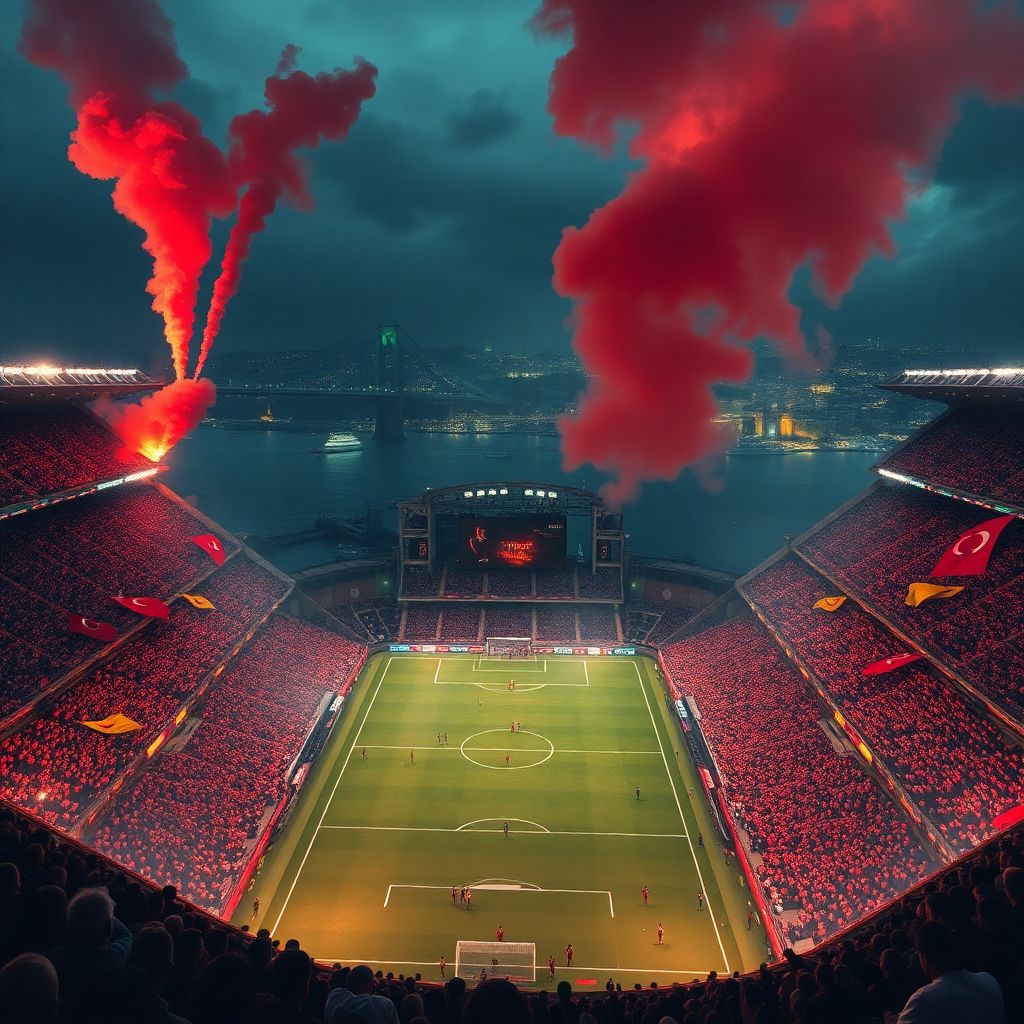
The beating heart of Turkish derbies
Ask any local in Istanbul what really stops the city, и they won’t mention elections or holidays. They’ll tell you about Galatasaray–Fenerbahçe, Beşiktaş–Fenerbahçe, Beşiktaş–Galatasaray – those high-voltage days when the derby fever makes the Bosphorus feel like it’s boiling. These aren’t just fixtures; they’re arguments about identity, class, history and even geography. In a country where football has long been a social outlet and a pressure valve, the biggest rivalries work like a mirror: they reflect politics, economics and everyday frustrations back to society, ninety minutes at a time.
How the rivalries were born
From imperial port to football cauldron
The modern story starts in late Ottoman Istanbul, when British expats brought football to port districts and schoolyards. Galatasaray emerged from an elite high school on the European side; Fenerbahçe grew out of a more modest Asian-side neighborhood. That split between “old establishment” and “people’s club” quickly framed the Galatasaray vs Fenerbahce narrative. Beşiktaş, rooted in a working-class, militarily linked district, added a third pole. Over decades, these identities hardened, so by the time Turkey became a republic, choosing a club was almost a sociological statement as much as a sporting preference.
Key turning points and legendary clashes
Ask veterans of the terraces and they’ll list certain derbies as historical landmarks rather than mere matches. Brawls in the 1960s pushed authorities to tighten security; dramatic title deciders in the 1980s and 1990s made live broadcasts feel like national referendums. Some games are remembered more for flares and choreography than for goals, others for last-minute penalties that rewrote league tables. Analysts often point out that each explosive derby led to a tactical evolution: one season zonal marking, another deep blocks and counterattacks, then high pressing as coaches tried to manage emotion with structure.
What really drives derby madness
Identity, class and neighborhood borders
On paper, derbies are about three points in the league. In reality, they’re shorthand for “who we are” versus “who we are not”. Historically, Galatasaray symbolized a Western-oriented, upper-middle-class Istanbul; Fenerbahçe spoke for the Asian-side majority and a more nationalist tone; Beşiktaş embodied rebellious, left-leaning, working-class pride. These lines are blurred today – you’ll find every social group in every stand – but the old stereotypes still color banter. Sociologists describe the arena as a controlled battlefield where arguments about privilege, marginalization and belonging play out through chanting instead of public debates.
Media, social networks and emotional escalation
Contemporary derby culture is amplified by 24/7 coverage and social media algorithms that reward outrage. Pundits dissect every referee decision, fan accounts recycle controversial clips, and transfer rumors become moral crusades. This constant noise heightens the sense that each match is a once-in-a-generation event, even if it’s the third meeting that season. Psychologists who work with clubs note that players now enter derbies under a magnifying glass, aware that one mistake will loop endlessly on highlight reels. Managing anxiety has become as crucial as set-piece routines in pre-match preparation.
Necessary tools for experiencing a Turkish derby
Practical kit for matchday immersion
Let’s shift from theory to practice. If you’re planning to feel this rivalry up close, treat it like a project that needs the right tools. First is a secure route to tickets: many visitors underestimate how fast turkey football derby tickets galatasaray fenerbahce sell out, so having a registered account on club platforms and ID ready is essential. Next comes connectivity: a local SIM, a reliable maps app and translation tools make navigation and safety updates smoother. Finally, think comfort and discretion: neutral-colored clothing, portable power bank, earplugs if you’re noise‑sensitive, and a copy of your documents stored digitally.
Digital resources and expert suggestions
Seasoned travel and security consultants who work with clubs insist on one digital habit: centralize your information. Save stadium rules, gate numbers, and transport options in one offline note. When using turkey super lig tickets online booking platforms, they recommend logging in via secure networks only and taking screenshots of QR codes in case turnstile scanners glitch. Football analytics specialists also suggest pre-watching recent derbies and formations; it sounds nerdy, but understanding likely in-game patterns helps you interpret the emotional waves around you and recognize when tension is tactical, not personal.
Step-by-step process: planning your derby trip
Before you book: timing, tickets, accommodation
Step one is calendar discipline. Check fixture lists months in advance, but remember dates can move due to European competitions or security concerns. Step two is your ticket strategy; register with both clubs, follow official channels, and avoid third-party resellers without clear licensing. When considering istanbul derby vip hospitality packages, experts advise comparing not just seats but also security cordons and private entrances, which can significantly reduce stress. Step three is lodging: the best hotels in istanbul for football derby fans are usually central yet away from the most hardcore gathering points, balancing atmosphere with rest.
Matchday choreography: getting there and back
On game day, think like a logistics manager. Leave early, but not absurdly early; security perimeters often open three hours before kick-off, which is a sweet spot. Use public transport lines recommended by the clubs or city authorities; crowd patterns are deliberately engineered to separate opposing fans. Safety experts advise sticking to main streets, avoiding impromptu marches unless you’re with locals you trust, and keeping your route flexible in case of roadblocks. After the final whistle, wait a bit; staggered exits are standard, and patience at the concourse usually means calmer rides home and fewer flashpoints.
Troubleshooting: handling common derby issues
Dealing with ticket, tech and access problems
Even with meticulous planning, hiccups are normal. A frequent issue is digital ticket failure at the turnstile. Security consultants recommend having both the app open and a screenshot ready, plus a backup ID; calmly ask stewards for the designated help desk instead of arguing on the spot. If mobile data collapses under stadium congestion, switch briefly to airplane mode, then back, or move toward less crowded access points. When a galatasaray vs fenerbahce live stream fails in your hotel due to geo-blocking, legal expert advice is simple: use licensed local broadcasters rather than risky mirror sites.
Navigating crowd tension and cultural missteps
The other troubleshooting layer is social. If chants turn aggressive or flares start flying near you, the guidance from security officers is straightforward: move diagonally away toward stewards or family areas, not straight through the densest part of the stand. Avoid filming confrontations; cameras can escalate anger. Culture-wise, keep scarves discreet in mixed areas and never mock club symbols or national icons, even as a joke. Local ultras leaders interviewed by researchers often stress that respectful curiosity is welcomed; what triggers hostility is arrogance or the sense that someone is treating their passion as a circus.
Watching from afar: remote derby experiences
Smarter viewing parties and digital fandom
If you can’t travel, you can still plug into the emotional current intelligently. Choose reliable broadcasters for your galatasaray vs fenerbahce live stream, ideally with English commentary that understands local nuances rather than stereotypes. Analysts suggest syncing your viewing with Turkish social media hashtags, but muting key words if the noise gets overwhelming. When organizing a viewing party, set expectations: neutral space, respect for both sides, and a plan for leaving if tempers rise. The aim is to borrow some of the intensity without importing the entire risk profile of a packed Istanbul terrace.
Ethical merchandising and data awareness
Remote fans increasingly participate through merchandise and online memberships. Economist–consultants advise buying directly from club stores or verified partners, since unofficial outlets often feed counterfeit markets that clubs publicly fight against. When you sign up for news or turkey super lig tickets online booking alerts, be aware of data usage terms; ticking every promotional box can invite a flood of low-quality offers. Fans’ associations now talk about “digital footprint etiquette”: support your team loudly, but think twice before amplifying unverified rumors or incendiary clips that fuel toxic cycles around already heated derbies.
Expert recommendations for staying safe and sane
Sports psychologists and security pros weigh in
Sports psychologists working with Super Lig clubs emphasize one principle for fans: regulate, don’t suppress. Allow yourself to cheer, shout, even groan, but check in with your body: if breathing becomes shallow or you’re shaking long after a missed chance, step out to the concourse for a reset. Stadium security advisors suggest three golden rules – plan your route, stay with your group, and listen to stewards even when you disagree. They underline that most derby-related incidents involve alcohol, impulsive decisions, and poor spatial awareness rather than premeditated violence.
Local fan scholars on how to truly appreciate derbies
Academics who study Turkish fan culture often argue that the best way to “win” derby day as a visitor is not to pick a side, but to observe. Their advice: arrive in the city a day early, walk near but not inside fan zones, talk to café owners about what derbies mean to them, and watch how the city’s tempo changes. They encourage reading a bit of club history beforehand to decode flags and chants. Above all, they say, remember that for locals this isn’t exotic entertainment but a living ritual – approach it with humility, curiosity and a willingness to listen.
Balancing passion and perspective
Why these rivalries still matter
Turkey’s biggest football rivalries endure because they offer something rare: a legal, structured space for massive collective emotion. From the first whistle to the last flare, they let millions project pride, frustration and hope onto a patch of grass. Yet the same energy that animates the stadium can overflow if not channeled responsibly. The most insightful experts – from sociologists to stewards – converge on one conclusion: derbies are healthiest when fans treat them as intense chapters, not total identities. Savor the spectacle, analyze the tactics, feel the noise – then walk back into the city as a guest, not a conqueror.