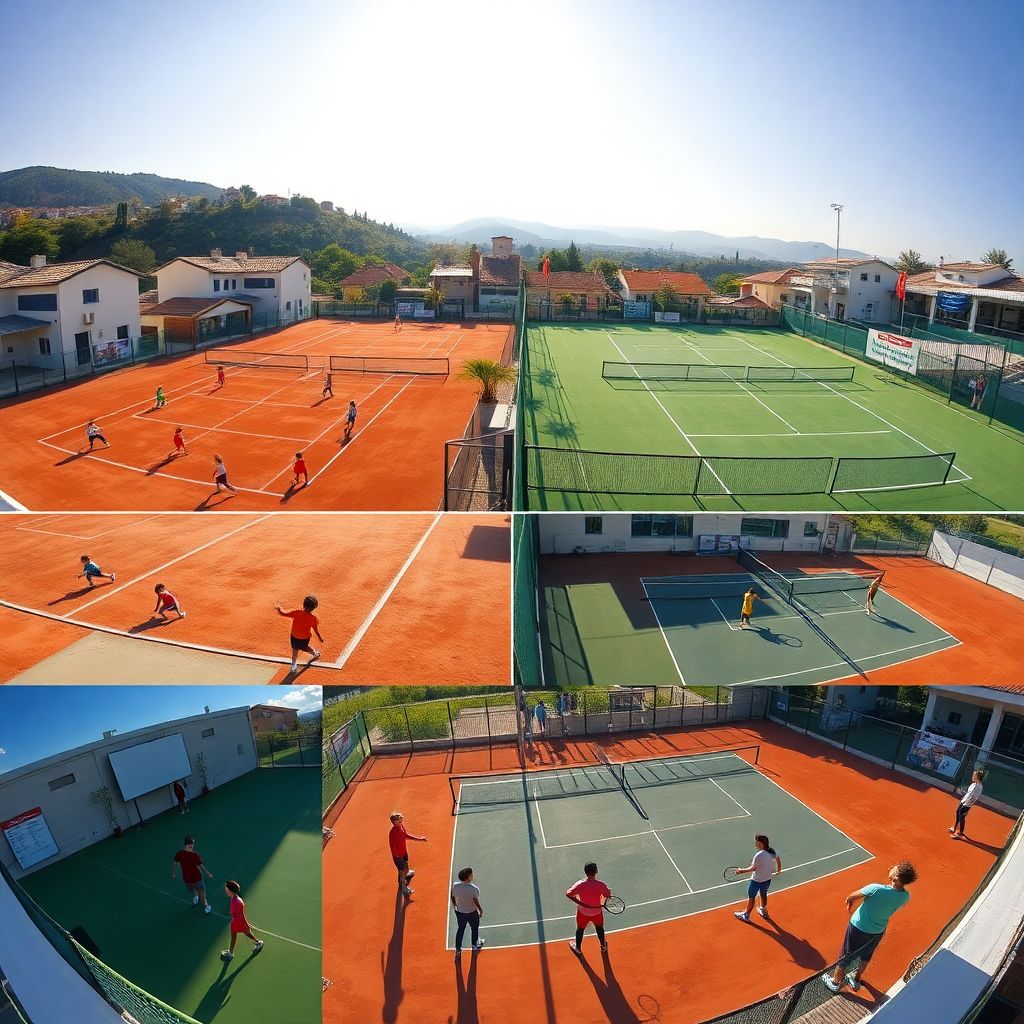
The Quiet Revolution in Turkish Tennis: What’s Actually Going On?
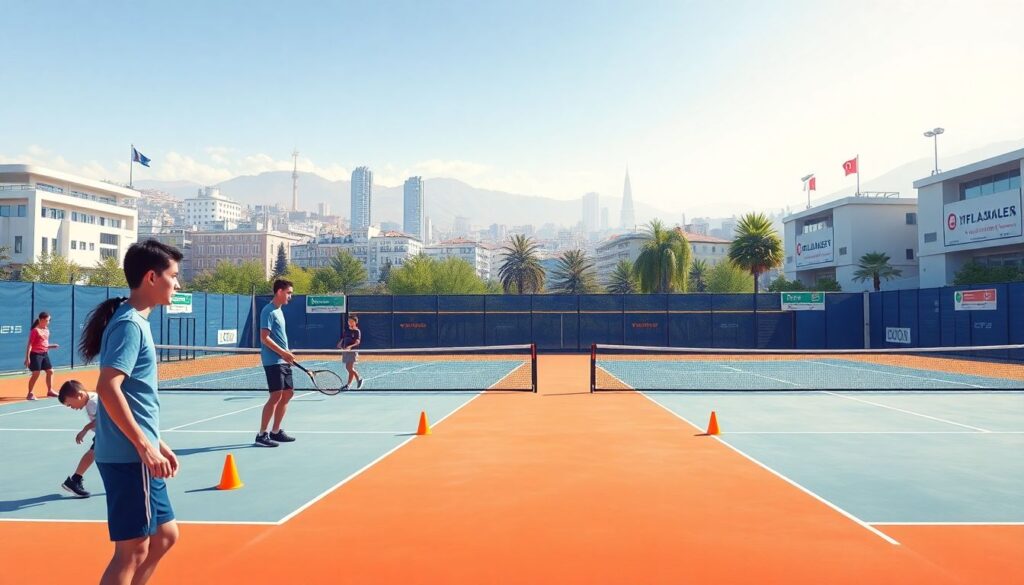
If you’ve been casually following tennis, Turkey might not be the first country that comes to mind. Yet, over the last decade and especially by 2026, something very steady and very deliberate has been happening behind the scenes: a quiet build‑up of tennis academies, structured coaching, and grassroots projects in schools and municipalities.
This isn’t a flashy, top‑down “let’s buy a superstar” story. It’s a boring‑on‑the-surface, infrastructure‑driven, metrics‑obsessed evolution. And that’s exactly why it’s important.
—
Key Terms: Getting the Vocabulary Straight
What Is a Tennis Academy in This Context?
In this article, when we talk about tennis academies in turkey, we mean permanent training centers that combine:
– Year‑round court access (often clay + hard, sometimes indoor)
– Structured weekly schedules (group and individual sessions)
– Fitness, physio, and at least basic sports science support
– Competition planning (national and ITF junior events, sometimes pro events)
They sit somewhere between a regular club and a full‑on boarding sports school. Some are local and modest; others actively market themselves as turkey tennis training camps for international players, pulling in athletes from Europe, Central Asia, and the Middle East.
Grassroots Programs: The Bottom of the Pyramid
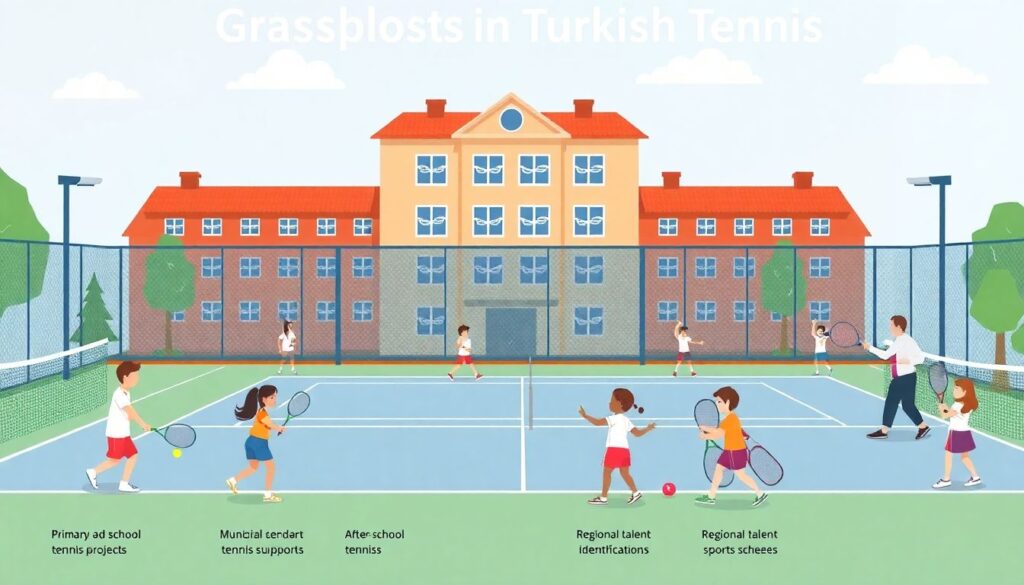
“Grassroots” in Turkish tennis usually covers:
– Primary and secondary school tennis projects
– Municipal or federation‑supported low‑cost programs
– After‑school clubs that provide a first contact with the sport
– Regional talent ID schemes linked to academies or clubs
So when we say tennis grassroots programs and schools in turkey, we’re talking about this wide base: kids hitting a ball for the first time with borrowed rackets, not just high‑performance pipelines.
Coaching Programs: From Hobby to Profession
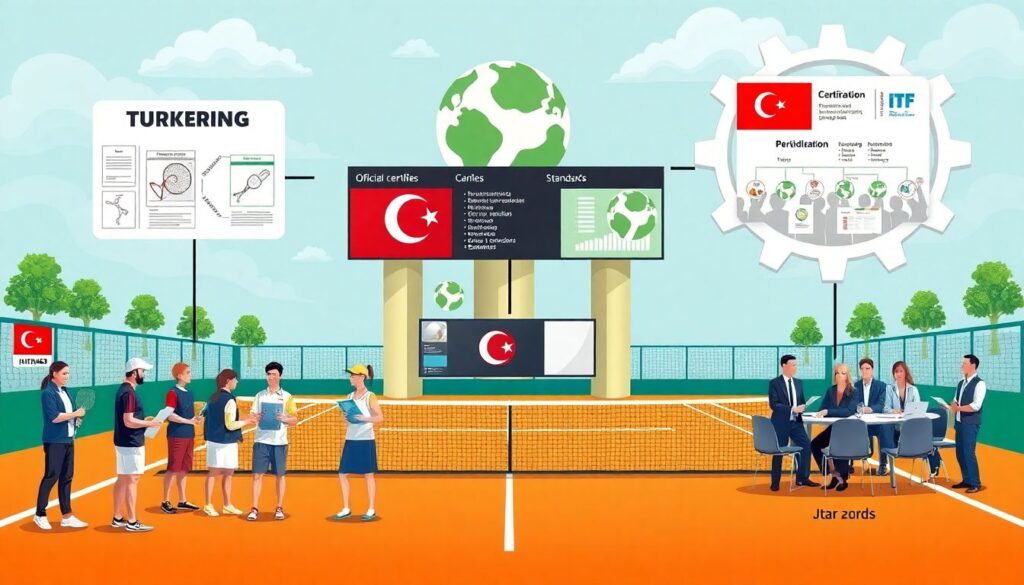
Finally, professional tennis coaching programs in turkey are the structured pathways that:
– Train and certify coaches
– Offer continuing education (biomechanics, analytics, periodization)
– Interface with the national federation and ITF standards
They’re what keep the whole machine from collapsing into chaos as participation grows.
—
Why Turkey, and Why Now?
Over the last 15 years, Turkey has invested heavily in sports tourism and facilities: think football camps in Antalya, golf resorts in Belek, and indoor arenas in big cities. Tennis was initially a secondary beneficiary of this trend, but around 2015–2020 you can see a pivot: more courts, more regional tournaments, and incentives for private investors to develop tennis‑centered complexes.
By 2026, the country is effectively using tennis as a bridge between three goals:
– Attracting foreign visitors outside classic beach season
– Building a healthier, more active youth population
– Creating a niche where Turkish players can realistically break into higher levels of the sport
This is not a one‑off project; it’s a slow accumulation of capacity.
—
How the System Is Structured: A Simple Text Diagram
To picture the ecosystem, imagine a layered diagram. In text form, it roughly looks like this:
– Level 1 – Mass Participation
– Public courts, school PE, municipal programs
– Focus: fun, basic skills, inclusion
– Level 2 – Grassroots + Local Clubs
– School‑club partnerships, weekend training, city‑level competitions
– Focus: skill consolidation, early talent spotting
– Level 3 – Regional Academies
– More courts, higher‑level coaches, better S&C
– Focus: structured training, national rankings, first ITF junior events
– Level 4 – High‑Performance / “Elite” Academies
– Boarding options, dedicated fitness & physio teams, sports psychology
– Focus: pro pathway, WTA/ATP ranking points, exposure to international competition
– Level 5 – International Integration
– Players travel abroad; foreign players come to Turkey for camps
– Focus: benchmarking against global standards
You can think of Turkish tennis in 2026 as being somewhere between Levels 2 and 3 on average, with a few pockets already nudging into Level 4.
—
Inside the Academies: What Actually Happens Day to Day
Training Blocks and Structure
A typical mid‑tier academy might run a weekly microcycle like this:
– 3–5 on‑court sessions for U12/U14
– 6–9 sessions for U16/U18, mixing drilling, patterns of play, and matchplay
– 2–3 strength and conditioning blocks (often still basic, but improving)
– Tournament blocks mapped out monthly or quarterly
The best tennis academy in turkey for juniors isn’t necessarily the one with the flashiest website, but the one that:
– Tracks session loads
– Logs match statistics
– Reassesses individual plans every 8–12 weeks
That shift from “let’s just hit” to “let’s measure and adjust” is the technical revolution under the radar.
From Local to International: The Camp Model
A second, quieter trend is the growth of turkey tennis training camps for international players. Think of it as:
– 1–3 week packages in resort regions
– Morning and afternoon sessions
– Shared accommodation, nutritional plans, and optional tournament entries
For players from colder climates or countries with limited court access, these camps offer relatively affordable volume training. For Turkish academies, they bring in revenue that can cross‑subsidize local juniors and facility upgrades.
—
Grassroots: The Real Engine of the Revolution
Schools as the First Filter
Most of the growth since 2020 has come from simple interventions:
– Loaning mini‑tennis nets and soft balls to schools
– Training PE teachers in basic tennis delivery
– Setting up inter‑school festivals instead of only traditional tournaments
These aren’t headline‑grabbing initiatives, but they dramatically increase the number of kids who try tennis at least once. From a systems perspective, you’re enlarging the top of the funnel.
What a Typical Grassroots Program Looks Like
In 2026, a “standard” grassroots setup in a medium‑sized city might include:
– 6–10 schools with introductory tennis in PE once a week
– 1–2 local clubs or academies offering discounted starter packages
– Municipal support for court construction or refurbishment
– An annual city tennis festival with fun formats, not only knock‑out draws
The smartest tennis grassroots programs and schools in turkey now build a direct bridge: interested kids get a simple, low‑cost path from school courts to a club environment, often with scholarships for those showing promise and financial need.
—
How Turkey Compares to Other Tennis Nations
Versus Traditional Powers (France, Spain, Italy)
Compared to European tennis heavyweights:
– Turkey has fewer indoor facilities per capita
– Coaching depth is thinner, especially outside big cities
– Long‑term tennis culture is still catching up
However, Turkey is gaining ground in:
– Climatic advantage for outdoor training for much of the year
– Lower costs for court time and living expenses
– Flexibility of a “younger” system that can adopt modern methods quickly
Spain and France built wide club networks across decades; Turkey is trying to compress this process into a 15–20 year window, learning from others’ mistakes in real time.
Versus Emerging Peers (Egypt, Morocco, Balkan Countries)
Against regional peers in 2026:
– Facility quality in major Turkish centers is generally higher
– Access to international flights and tourism infrastructure benefits camp models
– The volume of ITF junior and lower‑tier pro events hosted in Turkey is notably larger
On the other hand, some neighbors have already produced higher‑profile stars. Turkey’s bet is that once the base is broad enough, those breakthrough players will emerge more consistently rather than sporadically.
—
Coaching: The Bottleneck and the Opportunity
From “Hitting Partner” to Modern Coach
One of the most significant internal shifts is how coaching is viewed. In the early 2010s, many coaches were essentially high‑level sparring partners. Today, the more advanced professional tennis coaching programs in turkey emphasize:
– Periodization and planning
– Technical frameworks, not just “tips”
– Match analysis using video and basic data
– Communication and pedagogy, especially with kids
This is not yet universal. There’s still a visible divide between coaches exposed to international education and those working off old habits. But the trajectory is clear: coaching is becoming a profession underpinned by standards, not just experience.
Continuous Education and International Input
You increasingly see:
– Foreign experts brought in for clinics and workshops
– Coaches traveling abroad for short study visits to top European academies
– Online courses and webinars being integrated into licensing requirements
That flow of knowledge smooths out the learning curve that older tennis nations had to navigate mostly by trial and error.
—
What Makes an Academy “Good” in the Turkish Context?
Since you can’t rank quality only by “famous pro graduates” yet, a more realistic framework is to look at process quality. Indicators that an academy is functioning well in Turkey in 2026 include:
– Clear yearly plans for each age group
– Consistent coach‑to‑player ratios
– Systems for tracking attendance, injuries, and match results
– Cooperation with schools to manage academic load
– Transparent communication with parents about goals and expectations
Parents searching for the best tennis academy in turkey for juniors are gradually becoming more informed. They ask about coaching teams, schedules, competition plans, and support staff — not just “how many champions have you produced?”
—
Case‑Style Examples: Different Academy Profiles
To make this less abstract, think of three typical models you can now find across the country:
– A city‑center club that upgraded
– Started as a social club with two courts
– Added a performance coach, junior squads, and S&C partner
– Hosts regional tournaments and collaborates with 3–4 local schools
– A coastal resort academy
– Built alongside a hotel complex
– Runs year‑round programs for locals and seasonal camps for foreigners
– Invests heavily in marketing to international players and teams
– A federation‑linked regional center
– Receives partial public funding
– Acts as a hub for talent ID and training in several neighboring provinces
– Sends players and coaches regularly to national camps
Each of these plays a different role within the larger system, and that diversity is actually a strength.
—
Challenges That Are Still Holding Things Back
It’s easy to talk about growth and forget constraints. By 2026, several friction points remain:
– Unequal distribution of facilities between major cities and smaller towns
– Limited indoor courts, which can stall winter training in some regions
– Cost barriers for families once kids move from grassroots to performance level
– A shortage of specialized staff (sports psychologists, advanced S&C coaches)
– Pressure on young players to choose between education and intensive training
Solving these is less about one big reform and more about incremental improvements: better policy, smarter subsidies, and closer links between schools, universities, and clubs.
—
Forecast: Where Turkish Tennis Is Likely Headed (2026–2035)
Short Term (2026–2029): Consolidation and Quality Control
Over the next three to four years, expect:
– Slower but steadier growth in the number of academies (less “boom,” more “upgrade”)
– A stronger push for licensing and monitoring of coaching standards
– More integrated school‑academy pathways in large cities
– Incremental improvements in data usage: tracking loads, monitoring injuries, basic performance analytics
You probably won’t see a sudden wave of top‑100 ATP/WTA players, but you’ll notice:
– More Turkish names in ITF junior draws
– A broader layer of players hovering in the pro rankings
– A rising baseline of tactical and physical quality in domestic tournaments
Medium Term (2030–2032): First Fruits of the Grassroots Era
Kids who started tennis in structured school environments around 2020–2022 will be hitting late teens by 2030. That’s when the effects of today’s tennis grassroots programs and schools in turkey should really show.
Reasonable expectations:
– 1–3 players per cohort capable of pushing into top‑200/300 with proper support
– A more competitive domestic environment that makes “going abroad” less mandatory at U14/U16
– Better integration between university studies and continued tennis for non‑elite but solid players
This is also when Turkey’s reputation as a training hub will be tested. If the ecosystem matures, turkey tennis training camps for international players will shift from being mostly “sun and courts” to “sun, courts, and real high‑level sparring.”
Longer Term (2033–2035): A Mature, Recognizable Tennis System
By the mid‑2030s, the quiet revolution will either:
– Crystallize into a stable, mid‑tier tennis nation with regular representation in Grand Slam main draws and a dense junior pipeline, or
– Plateau if investment, coaching quality, or policy support stagnate.
The more optimistic — yet realistic — scenario looks like this:
– A handful of Turkish players consistently in top‑100/150
– Strong representation in doubles, where tactical and net skills can be leveraged
– Academies recognized abroad not just for facilities, but for player development track records
– A culture where picking up a racket at school is as normal as playing football or basketball
The key variable is continuity. If public and private actors keep nudging in the same direction — facilities, coaching, competition structure, and affordable access — the system compounds.
—
Why This “Quiet Revolution” Matters Beyond Tennis
At first glance, all of this might sound like inside baseball (or inside tennis). But expanding tennis academies and grassroots programs in Turkey has broader implications:
– It diversifies the sports ecosystem, reducing the dominance of just football and basketball
– It creates new service‑sector jobs: coaches, physios, event managers, sports data analysts
– It strengthens Turkey’s position in the global sports tourism market
– It provides a concrete framework for how to build a high‑skill sport from the ground up in a relatively short timeframe
In other words, the story of tennis academies in turkey is less about a single sport and more about how a country can quietly engineer capacity, step by step, without relying on miracles or overnight success.
If the current trends hold through the 2030s, what looks like a modest reshaping today may, in hindsight, be seen as the decade when Turkish tennis quietly moved from the margins into the global conversation.