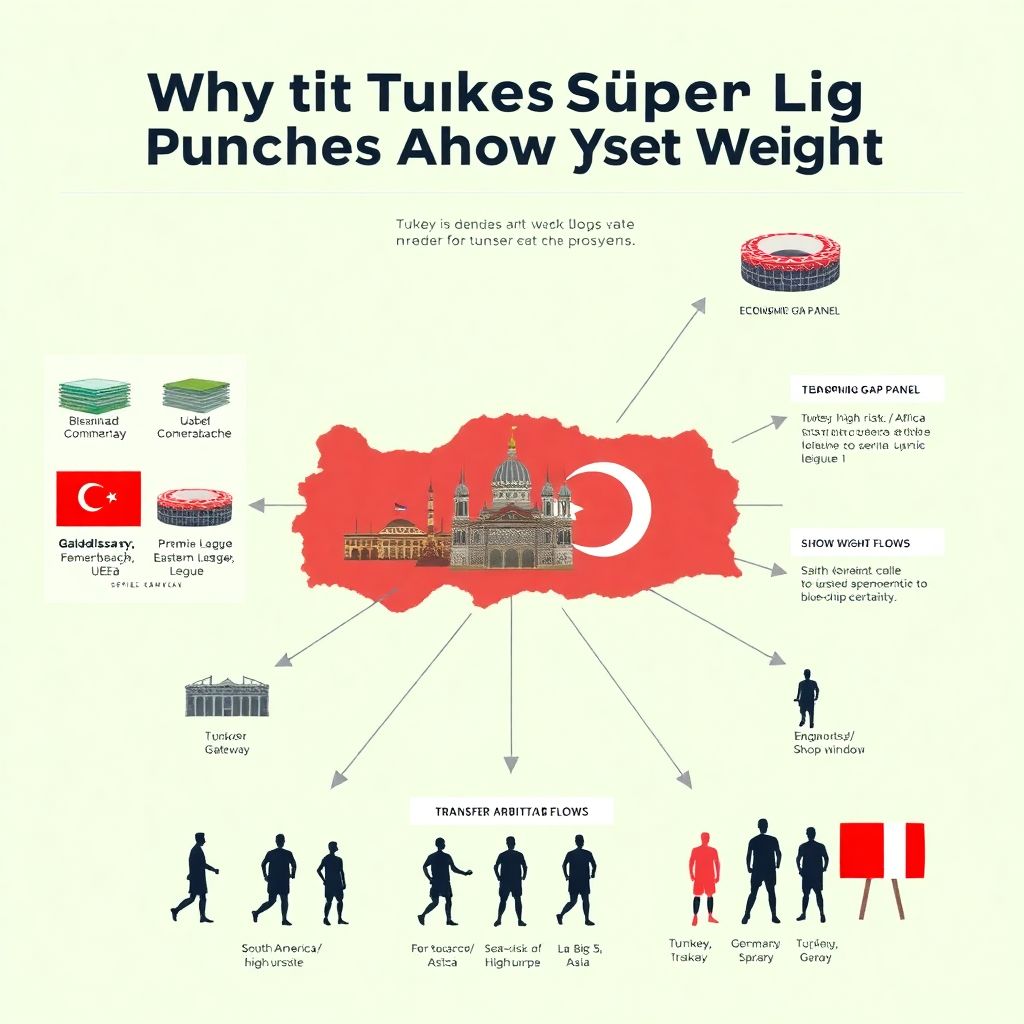
Why the Turkish Süper Lig Punches Above Its Weight
On paper, Turkish clubs shouldn’t be close to Europe’s elite. Broadcast income is smaller, commercial deals are weaker, and UEFA prize money is less reliable because of frequent coefficient swings. Yet every summer we see turkish super lig transfers 2024 type headlines where Istanbul clubs fight directly with Serie A or Ligue 1 for the same players. The secret is not magic; it’s an ecosystem built around arbitrage, risk‑taking, and a very specific transfer market economy that turns Turkey into both a gateway and a shop window between Europe, South America and the Middle East.
Short version: Turkish clubs can’t outspend the giants, so they out‑optimize them.
—
Step 1. Map the Economic Gap with Europe’s Giants
The first step is understanding the structural disadvantage. Premier League and top La Liga teams operate with revenue levels that Turkish sides simply can’t match. For context, a mid‑table English club can run a wage bill higher than most of the Süper Lig combined, while Galatasaray or Fenerbahçe still wrestle with legacy debt and volatile currency risk. That shapes everything: contract length, salary structure, even which markets they scout. When you compare turkish football transfers vs european leagues, you’re basically watching one side use “venture capital” logic (Turkey) against “blue‑chip” logic (Big 5 leagues).
In simple terms: English clubs buy certainty; Turkish clubs buy upside.
—
Key Revenue Drivers You Need to Know
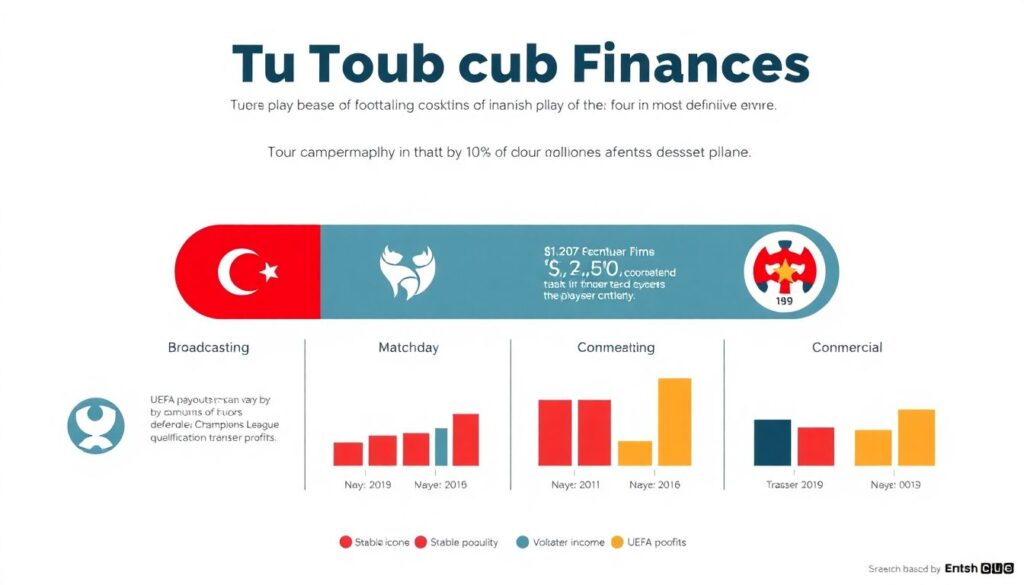
Turkish football finance rests on four pillars: broadcasting, matchday, commercial, and player trading. The last one is often the most decisive. UEFA payouts can swing by tens of millions depending on Champions League qualification, so transfer profits become a hedge against sporting volatility. This is why you often see aggressive late deals and short‑term loans with options; they’re tools to manage cash flow and football risk at the same time. When you track turkish super lig transfer market value analysis over a few seasons, the pattern is clear: clubs build a portfolio of assets (players) they hope to flip at a premium into Europe.
In other words, transfers are not just about goals and assists; they’re a financial instrument.
—
Step 2. Scouting for Mispriced Assets
Once you see the gap, next comes the model: Turkey survives by targeting mispriced players. These can be youngsters blocked at big clubs, veterans whose wages scare mid‑tier Europeans, or talents from under‑scouted regions such as Africa, Eastern Europe, or second‑tier South American leagues. Data analytics are increasingly used to screen candidates, but the human network still matters; agents, intermediaries and personal relationships often open doors that statistics alone can’t. Turkish clubs look for players whose “true” value is higher than their current market fee or whose profile fits the league perfectly, even if their reputation has dipped elsewhere.
If a player is too safe and fully priced, he usually ends up in England, Germany or Spain, not Istanbul.
—
Case Study: Icardi and the High-Profile Rebound
Take Mauro Icardi’s move to Galatasaray. At PSG he was a non‑core asset with a huge wage, low minutes and falling reputation. For most European sporting directors, that’s a red flag. For Galatasaray, it was a calculated bet: loan structure to de‑risk, partial wage coverage negotiation, and a clear on‑pitch role as central finisher in a dominant attacking system. The result? Massive spike in goals, shirt sales, media attention, and European visibility. This is the “rehabilitation” strategy in action—turning distressed assets into stars again, then either extending them smartly or using the buzz to attract more players and sponsors.
The lesson: Turkey often buys players’ last big narrative, not just their last big season.
—
Step 3. Engineering Contracts for Resale
The next layer is contract design. Because Turkish clubs rarely win bidding wars on wages, they compete via structure: sell‑on clauses, release clauses calibrated to specific markets, performance bonuses paid in lira vs euros, and layered contract lengths. Financial Fair Play pressure forces clubs to think like traders—limiting long, heavy deals and building multiple exit routes. A typical Süper Lig deal might include a relatively low base salary, energetic bonuses for European qualification, plus a pre‑agreed fee if a Premier League or Bundesliga side comes calling. That way, the player sees Turkey as a launchpad, not a cul‑de‑sac.
Done correctly, the contract itself becomes your competitive weapon against richer leagues.
—
Case Study: Kim Min-jae and the Value Chain
Kim Min‑jae is a textbook example. Fenerbahçe signed him from Beijing Guoan at a price European clubs considered “non‑urgent” risk. In Istanbul he got European visibility, intense match rhythm, and tactical development in a back line under pressure every week. Napoli then activated a release clause reportedly below his true sporting value, and a year later Bayern Munich moved in at a much higher fee. Fenerbahçe didn’t capture the whole value chain, but they still achieved a strong multiple on their initial investment. This is how the Süper Lig competes: by inserting itself into the journey from Asia or minor leagues to Europe’s very top.
The upside for the player and agents keeps this pipeline self‑sustaining.
—
Step 4. Using the Süper Lig as a Shop Window
Think of the league as a high‑visibility showroom. TV audiences are passionate, derbies are globally broadcast, and European qualifiers offer a direct comparison against continental opposition. Young or undervalued players know that two strong seasons in Istanbul or Trabzon often lead to a move to a top 5 league, especially when they perform in UEFA competitions. That’s why turkish super lig transfer news and rumors move quickly: every good performance can immediately be leveraged in negotiations. Clubs lean into this dynamic by giving key prospects big‑club minutes earlier than they would get in England or Italy.
For many players, “come to Turkey, become a star, then move to a bigger league” is a credible career script.
—
Case Study: From Local Prospect to European Asset
Look at the pattern with names like Cengiz Ünder or Merih Demiral. Basaksehir bought Ünder cheaply from Altınordu, gave him major minutes, then sold him on to Roma for a significant profit, while Demiral’s trajectory from Alanyaspor onward showed how quickly a defender can jump from Turkish exposure to Serie A relevance. These aren’t accidents; they’re system outputs. Clubs build a portfolio of such cases, accepting that not every prospect will explode in value. The wins pay for the losses. For agents, Turkey offers a stage; for clubs, these outbound transfers are the lifeblood that balances risky incoming deals.
It’s venture investing, just with footballers instead of startups.
—
Step 5. Managing Risk and Avoiding Classic Mistakes
Now the warnings. The same high‑risk, high‑upside model can wreck a club if executed badly. Overpaying for aging stars with no resale value, giving them euro‑denominated contracts during currency depreciation, or stacking short‑term loans without building a core squad are recurring strategic errors. Another common trap is chasing fan‑driven “name signings” that raise social media metrics but don’t fit the tactical model, leaving coaches to patch around expensive misfits. Debt‑funded “all‑in” seasons to chase Champions League qualification can backfire for years if the team underperforms. Each mistake compounds financial fragility in a league already exposed to macroeconomic volatility.
The red flag for beginners: if a deal only makes sense emotionally, it probably doesn’t make sense economically.
—
Practical Safeguards Used by Smart Clubs

The more disciplined Süper Lig teams now deploy internal risk rules: maximum contract length by age, caps on squad wage‑to‑revenue ratios, insisting on options rather than obligations to buy, and using performance triggers instead of guaranteed add‑ons. They also invest in medical and performance analytics to avoid signing players with chronic injury profiles. Some smaller sides even build relationships with analytics firms that benchmark their deals against turkish football transfers vs european leagues norms, checking whether a proposed fee is inline with comparable players abroad. The idea is simple: be brave but never blind.
If you’re analyzing a club as a fan or potential investor, watch whether they follow these types of internal rules.
—
Step 6. Tips for Beginners: How to Read Transfer Noise
If you’re new to this ecosystem, the first thing is to separate narrative from numbers. Media coverage around the summer window is intense, but not every shiny headline signals a smart move. When you follow turkish super lig transfers 2024 stories, focus on three checkpoints: age and resale window, contract structure, and tactical fit. Ignore most “salary figures” in the media; they’re frequently inflated or incomplete. Instead, ask: does this player increase the club’s probability of European qualification or future transfer profit? If the answer is no, long‑term sustainability might be at risk.
Beginners who chase buzz instead of fundamentals usually misread which club is actually winning the window.
—
How to Use Rumors Without Getting Tricked
Transfer gossip isn’t useless; it’s raw data. turkish super lig transfer news and rumors can reveal which positions a club is prioritizing, which agents they’re working with, or whether they’re exploring a specific market (for example, Brazil, Portugal, or the Balkans). The trick is to watch patterns, not single stories. If the same profile of player keeps getting linked—a left‑footed centre‑back, a high‑pressing winger—that’s a strategic signal. Constantly shifting targets with no clear profile often indicate internal chaos or boardroom pressure rather than a coherent recruitment plan.
The smarter you are at reading patterns, the easier it becomes to predict which squad will outperform expectations.
—
Step 7. Investment Angle: Which Clubs Are Structurally Interesting?
From an economic perspective, the best turkish super lig clubs to invest in (whether emotionally as a fan, or financially via listed shares where applicable) are the ones aligning sporting and financial strategy. You’re looking for consistent youth development, intelligent foreign recruitment, and a clear, repeatable sales pipeline to bigger leagues. Historically, the Istanbul giants—Galatasaray, Fenerbahçe, Beşiktaş—capture the most upside when they get it right because of brand power and stadium revenues. But agile “second tier” clubs like Başakşehir, Konyaspor or Trabzonspor can sometimes outperform in transfer ROI thanks to lower pressure and more patience with young talent.
For any would‑be investor, the core metric is not one big sale but a steady series of profitable, well‑timed exits.
—
What a Healthy Transfer Portfolio Looks Like
A robust club strategy usually mixes three asset types: resale‑oriented youngsters, peak‑age spine players, and a limited number of older leaders with short contracts. In financial jargon, that’s your growth, core, and hedge buckets. When you run your own turkish super lig transfer market value analysis, you should see that the overall squad has more players who can rise in price than those destined to decline. Occasional marquee veterans are fine if they elevate performance and commercial income enough to justify their amortization. The danger starts when the squad skews too old, too expensive, and too illiquid.
A club that can’t sell players when it needs cash will end up selling its best youngsters too early and too cheap.
—
Step 8. Looking Ahead: 2024 and Beyond
Going forward, several structural trends shape turkish super lig transfers 2024 and the coming windows. Gulf leagues are now competing for the same aging stars Turkey once monopolized, forcing Süper Lig clubs to pivot harder toward development and arbitrage rather than retirement‑home signings. UEFA’s evolving financial regulations push everyone toward sustainability, which actually levels the field a bit for smart mid‑tier markets. At the same time, rising data sophistication means Turkey can scout more efficiently in South America, Africa and Asia, widening the funnel of prospects who might use the league as a bridge to the top.
In this environment, the winners will be clubs that treat each transfer as part of a portfolio strategy, not a standalone gamble.
—
How Turkish Clubs Can Keep Competing with Europe’s Giants
The competitive formula is clear: leverage emotional intensity and big‑club atmospheres to attract talent, use intelligent scouting and contract engineering to capture value, and manage risk ruthlessly. When you benchmark turkish football transfers vs european leagues, the best Turkish operations won’t match Manchester City’s stability or Real Madrid’s brand, but they don’t have to. Their job is to identify the player before those clubs do, develop him quickly, and sell at the right moment. If they keep refining that model, Turkish sides will remain essential nodes in the global talent supply chain—and continue to land blows far above their financial weight.
For fans and analysts alike, watching how they navigate each window is like seeing a live case study in football economics.