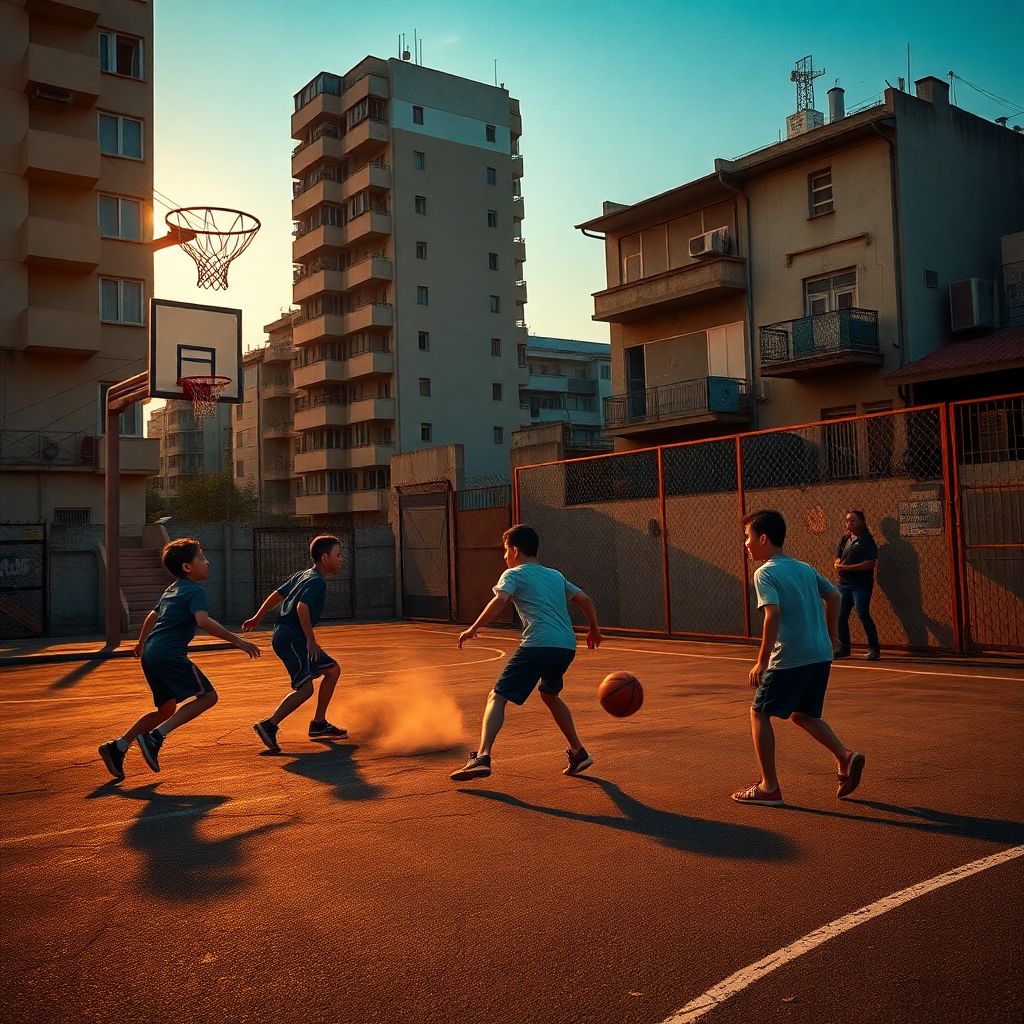
Step 1: From Backstreets to Bosphorus – How Turkey Fell for Basketball
Before packed arenas and TV deals, Turkish basketball lived on cracked asphalt, under broken rims, with kids playing until the lights of nearby apartments went out. In the 1980s and 1990s, football ruled every neighborhood, yet basketball quietly slipped into schoolyards and municipal parks. It appealed to kids who didn’t have eleven friends or a full-size field; three players and a half‑court were enough. This “small scale, big dream” logic still drives the sport’s growth: minimal space, cheap equipment, and a clear visual payoff when the ball snaps the net or bangs off the backboard. Those early informal games created a culture of experimentation and improvisation that formal structures are only now learning to respect instead of erase.
As satellite TV brought the NBA into Turkish living rooms, the contrast between street courts and global arenas became a source of motivation rather than frustration. Teenagers watched playoff games at night and tried to copy the moves the next afternoon. Coaches like to pretend development starts inside the club system, but for most Turkish players the real first coach was a cousin, an older neighbor, or simply trial and error on hot concrete. Understanding this street DNA is crucial: if you design training programs that ignore spontaneity and creativity, you cut off the exact energy that made basketball attractive in Turkey in the first place. That is the first big lesson for anyone trying to support or join this grassroots growth.
Step 2: Mapping the Ecosystem – From Street Hoops to Structured Pathways
Today, the journey from park pickup games to professional basketball leagues in Turkey looks more like a network than a straight line. You’ve got public school teams, municipal sports centers, private clubs, university squads, semi‑pro leagues, and full‑time pro organizations. The most dangerous misconception—especially for parents—is believing there’s only one “correct” route, usually imagined as an early entry into an elite club followed by constant tournaments. In reality, late bloomers are common, and many players arrive at the top after zigzag paths that mix academics, regional teams, and even breaks away from organized sport. The ecosystem is messy, but that messiness is an advantage if you know how to navigate it.
The practical way to view this ecosystem is as layers: playground, local coach, community club, regional competition, and finally the national pyramid. For a newcomer, the smartest move isn’t to ask “Which club is the best?” but “Which environment keeps me playing, improving, and curious?” That might be a modest neighborhood team instead of a famous badge. When you de‑romanticize brand names and focus on daily reps, supportive coaches, and realistic travel time, you tap into the true power of Turkey’s basketball infrastructure: its sheer density of courts and teams across different income levels and cities. The grassroots engine is not prestige; it’s accessibility plus repetition.
Warning: The Prestige Trap and Over-Organized Childhood
One common error in youth basketball training programs Turkey offers is pushing kids into ultra‑structured schedules too early. Parents, eager to “not miss the window,” overload children with club practices, private skills coaches, strength work, and extra leagues, all before the basics feel fun. The result is burnout at 14 and boredom at 16. The player might become technically decent yet emotionally detached from the game. The irony is brutal: the more adults try to optimize, the less kids actually want to touch the ball on their own time, which is where most long‑term skill and feel for the game truly develop. Over‑organization kills the joyful chaos that made those street courts magical.
If you’re a beginner or a parent of one, reverse the usual order: safeguard play first, then add structure gradually. Make sure there are uncoached pickup sessions every week, even if the kid is in a serious program. If a coach insists that every minute must be “under supervision,” treat it as a red flag rather than a sign of professionalism. Grassroots growth depends on players choosing the game daily, not just attending it like another class. The non‑standard but highly effective solution is to deliberately leave blank space in the schedule, trusting that curiosity and social bonds will pull players back to the court without adult pressure.
Step 3: Camps and Academies – Using the System Without Becoming Its Prisoner
When you hear about basketball camps in Turkey, it’s easy to assume they’re all the same: intense drills, loud whistles, and a group photo at the end. In reality, the quality spectrum is huge. Some camps are glorified daycare with a ball; others are high‑level laboratories that blend physical prep, game understanding, and mental skills. The smartest way to use camps is not as status symbols but as controlled experiments. Try different environments for a week and watch how the player reacts: Do they come back energized and talk about what they learned, or just complain about being tired? Energy after the camp is more informative than any brochure or Instagram video.
In Istanbul especially, the competition between private programs has produced both hype and genuine excellence. The best basketball academies in Istanbul tend to share a few traits: small group sizes, visible progress tracking, and coaches who can explain “why” instead of just shouting “again.” Less obvious but equally important is how they treat non‑elite kids. If a program only cares about the top two players in each group, it’s not grassroots; it’s just talent extraction. A truly developmental academy helps average players find their role and rhythm, understanding that broad participation feeds the future fan base and deepens the culture around the sport.
Tips for Newcomers: How to Choose a Program That Actually Fits You
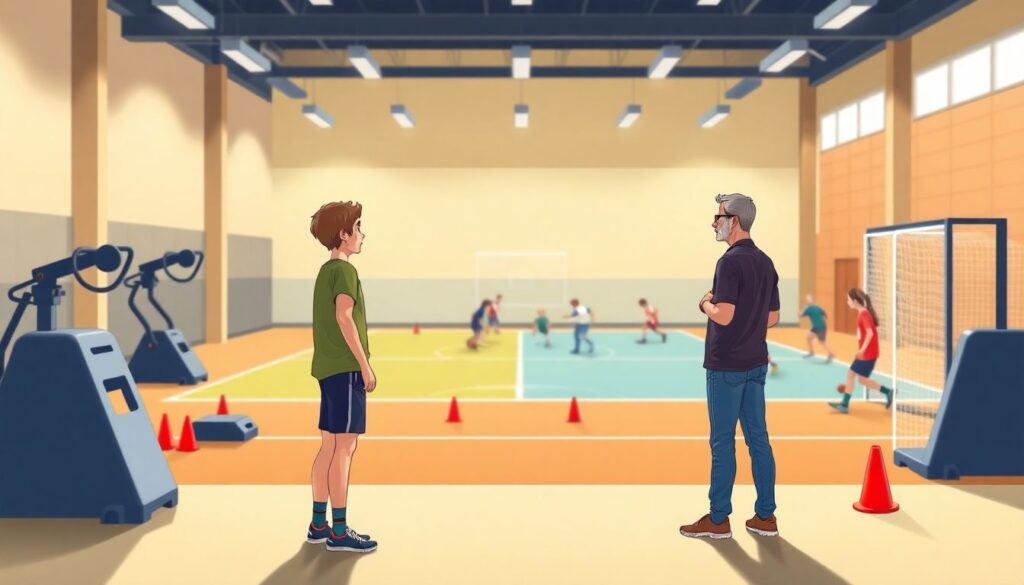
If you’re new to all this, begin with three questions before joining any academy or camp. First: How much actual game play versus cone drills will you get? Too many programs hide behind fancy equipment while offering very little live decision‑making. Second: How often do coaches communicate with parents or players about progress in concrete terms, like footwork, spacing, or defensive habits? Vague praise such as “working hard” usually means there’s no real teaching plan. Third: Is the court location realistically easy to reach several times a week, or will traffic slowly destroy your motivation? Consistency beats “elite” branding every time.
For a non‑standard approach, don’t hesitate to mix environments. You might train twice a week with a structured academy, play a weekly pickup game at a local park, and join a short seasonal camp for variety. This patchwork approach mirrors how many pros actually grew up: piecing together time on different courts instead of following one rigid curriculum. The key is to stay honest about your goals. If you mainly want health, friends, and confidence, you don’t need the most intense or expensive option. If you’re chasing high‑level competition, you still shouldn’t sacrifice joy; sustainable motivation is your only real competitive edge over the years.
Step 4: Youth Pathways – Turning Raw Talent into Sustainable Progress
Youth basketball training programs Turkey has developed in the last decade are far more sophisticated than earlier generations enjoyed. Strength and conditioning, nutrition guidance, video analysis, even sports psychology are now part of many serious clubs. The risk is that these tools are copied from NBA or EuroLeague settings without adjusting for biological age, emotional maturity, or school demands. A 14‑year‑old whose week looks like a pro’s schedule is not “ahead”; they’re overloaded. Growth spurts, exam periods, and social changes all affect performance and should be factored into training intensity.
A more nuanced strategy is to divide development into “seasons within the season.” During exam months, reduce physical load and focus on film study, shooting form, and light ball handling. In summer, when academic pressure drops, you can safely experiment with extra volume—tournaments, camps, and specialized skill work. Coaches who understand these cycles tend to produce players who stay healthy and engaged longer. They accept temporary dips in performance as part of a long arc rather than crises. At the grassroots level, this flexible mindset is a competitive advantage, because the player isn’t punished for having a life outside basketball.
Common Mistakes: Copy-Pasting NBA Routines and Ignoring Context
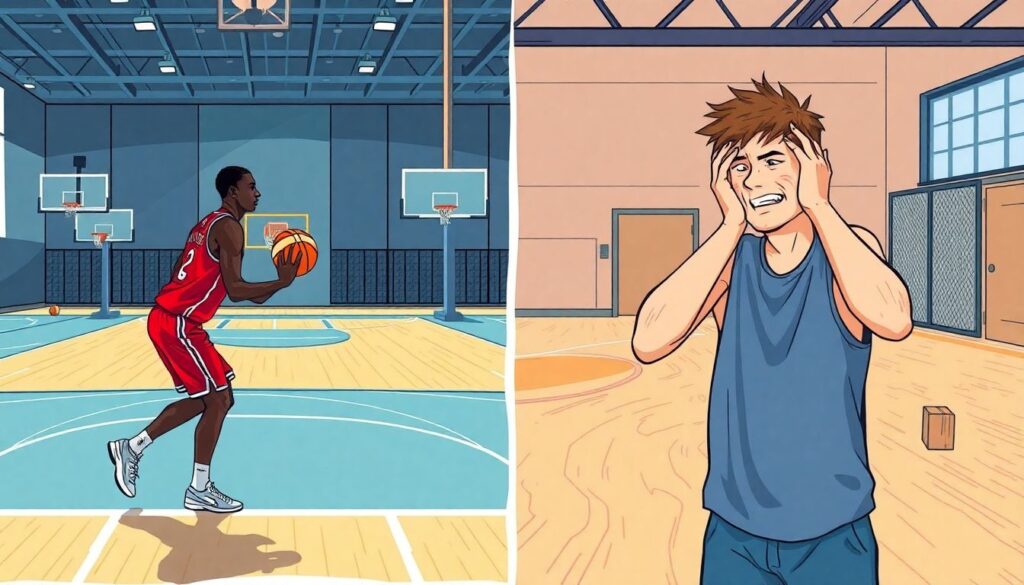
A classic mistake is trying to imitate the routines of star professionals without understanding their context. You see a highlight video of an NBA guard doing advanced dribble combinations on a private court and try to replicate the same intensity every day, even though you’re juggling school, limited sleep, and a body still growing. Over time, knees and ankles start complaining, but players and parents often read this as “not tough enough” instead of a signal to adjust. Ignoring pain, boasting about playing through injuries, and refusing rest days are not signs of commitment; they’re warning signs of a short career.
Beginner‑friendly rule of thumb: if your body hurts in the same place for more than a week, downgrade intensity and ask a qualified coach or physiotherapist to assess your movement patterns. Another under‑discussed error is specializing too early in one position. Coaches sometimes lock tall kids into pure post roles, even though modern basketball rewards big players who can dribble and pass like guards. A smarter, non‑standard plan for tall youngsters is to spend entire off‑seasons working on guard skills, then use their size only as a bonus. That way, street‑court creativity blends with professional requirements, preserving versatility instead of squeezing players into outdated templates.
Step 5: The Leap to Professionalism – Learning from the Arena Without Losing the Street
As players climb toward the top, the Turkish pro scene becomes both a destination and a powerful influence on grassroots culture. The leading clubs in professional basketball leagues in Turkey showcase not just talent, but also systems of scouting, analytics, and sports science that filter downward over time. Young players watch EuroLeague games and start valuing defensive rotations, spacing, and shot selection more than just flashy moves. This is a healthy shift, but it comes with a subtle danger: over‑respect for structure can make players afraid to improvise. The best pros keep a piece of the playground alive inside their game.
Fans, too, play a role in this transformation. Buying tickets for Turkish basketball league games is more than entertainment; economically, it funds youth programs, and psychologically, it validates basketball as a serious career path. A teenager who sits courtside and sees a packed arena reacting to every possession suddenly realizes that the sport they play in a dusty park belongs to a bigger story. Yet, the leap from street to arena should not be seen as a full identity change. The most impactful Turkish players often talk about specific neighborhood courts where they learned to compete; they carry those mental images onto the polished floors of global arenas.
Unconventional Advice: Design Your Own “Micro Career” Before Chasing a Contract
Instead of obsessing over turning pro, an unusual but effective exercise is to design a three‑year “micro career” for yourself. Choose concrete milestones: a league level you want to reach, a role you want to master (e.g., on‑ball defender, secondary playmaker), and off‑court habits you aim to build. Then act as if you already are a professional inside that small window, without waiting for external validation. This approach reclaims control from unpredictable factors like selection politics or club finances. Whether or not you land a contract later, you’ve lived a meaningful, self‑directed basketball journey.
For grassroots organizers, a parallel non‑standard move is to use pro‑level storytelling techniques in community settings. Stream local games with simple commentary, track advanced stats for youth leagues, or invite analytics students to share findings with teenage players. When kids see their box scores, shot charts, and highlight clips treated with respect, they start to internalize the idea that their development matters. That sense of significance, more than any single drill, keeps them investing effort year after year, tightening the link between cracked street courts and the bright lights of major arenas.
Step 6: Building a Sustainable Culture – What Players, Parents, and Coaches Can Do Now
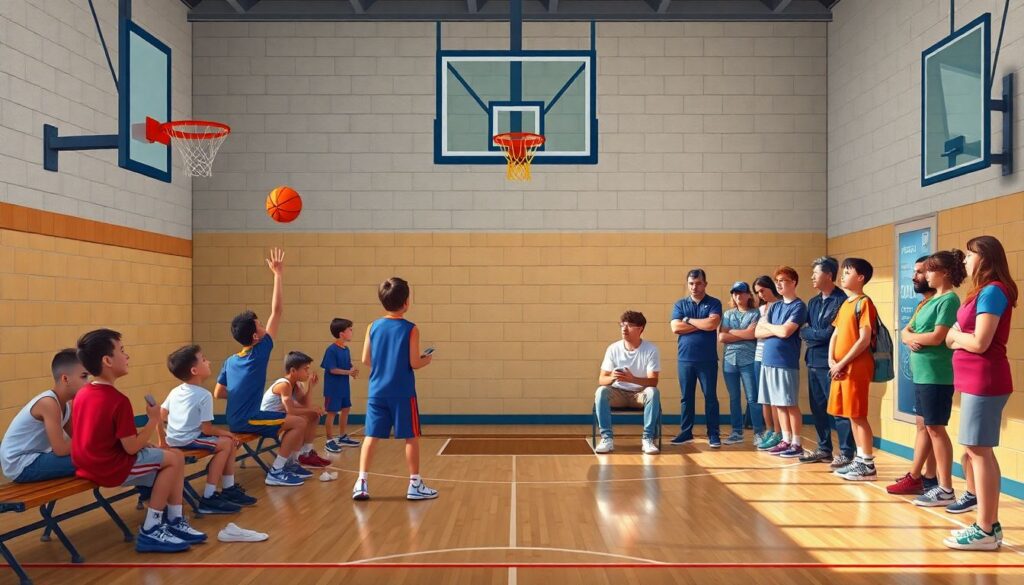
Grassroots growth is not a mysterious historical force; it’s the sum of thousands of small daily choices. Players choose whether to show up early and shoot, or to scroll their phones until practice starts. Parents choose whether to measure success only by scores and selections, or also by resilience, friendships, and problem‑solving under pressure. Coaches choose whether to chase short‑term wins with overcomplicated plays, or to invest in spacing, passing, and decision‑making that might cost games now but pay off in two years. Over time, these micro‑decisions either create a deep basketball culture or a shallow results‑only scene that burns people out.
For newcomers, a simple but powerful guideline is to anchor your basketball life around three verbs: explore, connect, and reflect. Explore different courts, roles, and training methods instead of assuming you already know your ceiling. Connect with teammates and coaches as real people, because social bonds keep you in the game when motivation dips. Reflect regularly—after games, seasons, or even injuries—on what you’ve learned and what you want next, rather than drifting along. Turkey’s journey from street courts to global arenas shows that structures matter, but individual agency matters just as much. The sport’s future will be shaped not only by big clubs and federations, but by how you, right now, choose to dribble, pass, and think on whatever court you call home.
Комментарии