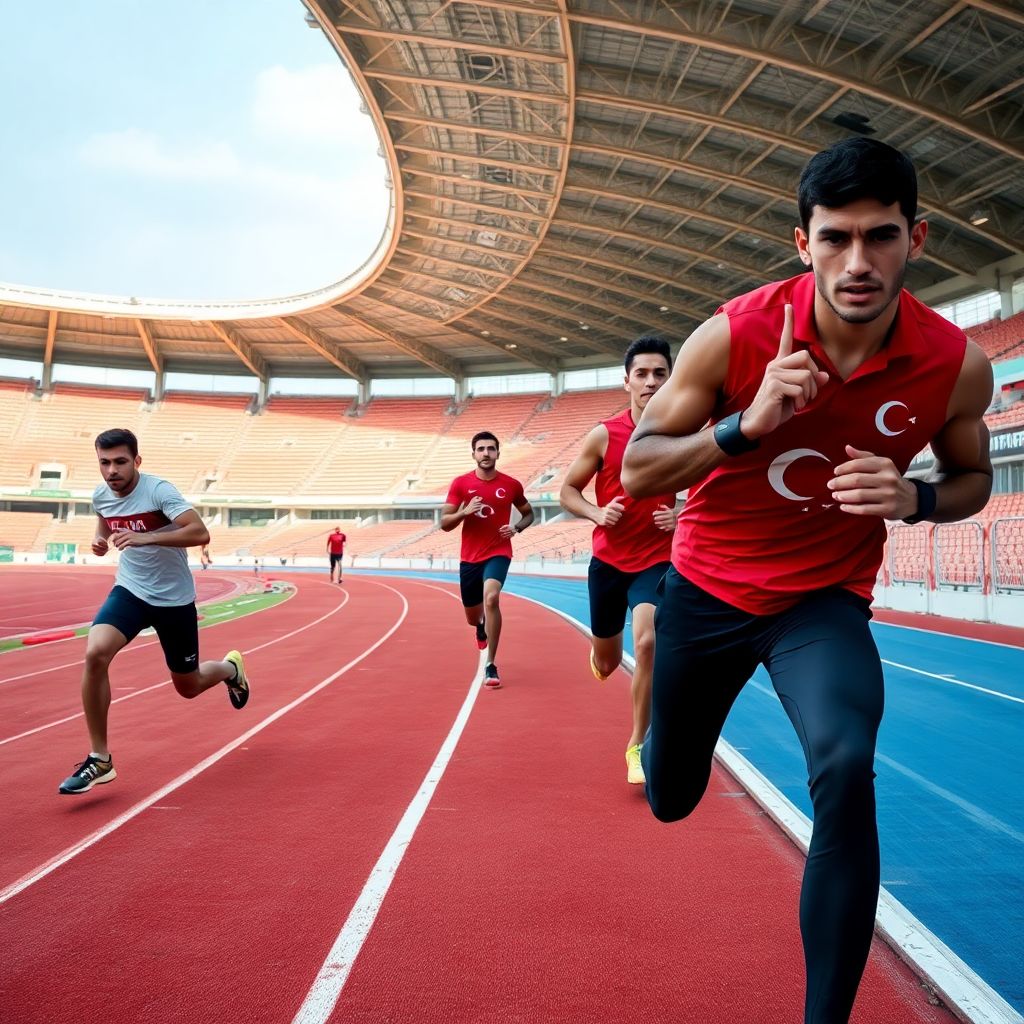
Turkish track and field athletes are rising globally thanks to long‑term federation policy, better coaching, scientific training, and targeted investment in facilities and competition schedules. A deeper grassroots pipeline, smarter selection for international meets, and more professional support around athletes are steadily turning Turkey into a consistent contender across multiple disciplines.
Core advancements driving Turkey’s rise in track and field
- Clearer national strategy and long‑term federation planning instead of ad‑hoc decisions.
- Expansion of regional clubs and academies that identify talent earlier and keep it in the sport.
- Systematic adoption of sports science, data tracking and periodized training plans.
- Improved funding, facilities and stable support for professional athlete preparation.
- Growing access to the best Turkish athletics coaches for elite training, including foreigners.
- Smarter targeting of international competitions that match athletes’ development stages.
- More structured support around athletes: medical, psychological, educational and sponsorship guidance.
Legacy and policy turning points: how past decisions set the stage
Turkey’s current rise in track and field is best understood as the outcome of policy decisions taken over several decades. Early efforts focused on basic participation and hosting occasional meets, with success depending heavily on individual talents and motivated local coaches rather than a national model.
A turning point came when the federation and government started treating athletics as a strategic sport, not a side activity. This meant clearer performance targets, multi‑year plans, and linking funding to development goals like building indoor facilities, upgrading tracks and supporting national youth programs.
Another key policy shift involved international integration: sending more athletes to training camps abroad, inviting foreign experts, and aligning domestic calendars with major championships. This gradually raised expectations and showed Turkish athletes they could compete with global rivals, not just regionally.
Implications for coaches and policymakers in Turkey:
- Protect long‑term plans from short political cycles; keep development goals stable.
- Align youth, club and national‑team calendars with major international competitions.
- Evaluate policies by athlete progression across age categories, not by single‑season medals.
Grassroots pipelines: regional academies, clubs and talent ID
The grassroots system is where Turkey’s current generation of athletes is built. Regional clubs, school competitions and municipal sports centers feed into specialized academies and high‑performance groups linked to the federation or universities.
- School and municipal programs: PE teachers and local coaches identify children with promising speed, coordination or endurance and direct them to athletics clubs.
- Regional clubs: Clubs offer regular training, basic technique work and local competition, often using shared facilities at stadiums or universities.
- Regional academies: Selected athletes train in more structured environments with better coaching, exposure to sports science, and more travel to competitions.
- National youth and U23 squads: Standout athletes join national squads, attend centralized camps and get more individual planning.
- Transition to professional groups: The most successful talents move into professional training groups, sometimes supported by turkish track and field athletes sponsorships, clubs or public institutions.
- Integration of foreigners: turkey athletics training camps for foreigners and mixed training groups expose Turkish athletes to different training cultures and competition standards.
For this pipeline to work, data must flow both ways. Local coaches need clear criteria for talent ID, while national staff must regularly review progression, injuries and education status to avoid losing athletes during school or university transitions.
Implications for coaches and policymakers:
- Formalize cooperation between schools, municipalities, clubs and regional academies.
- Use simple, repeatable testing (sprints, jumps, endurance) to spot talent early and track progress.
- Support families with information about academic and financial pathways so athletes can stay in the sport.
Applied grassroots scenarios from local track to national squad
Scenario 1 (Sprinter from a small city): A 14‑year‑old wins regional school races with minimal training. The PE teacher contacts a nearby club, where she trains twice a week. After measured improvements and local wins, she is invited to a regional academy, where sprint tests and competition results qualify her for a national youth camp.
Scenario 2 (Middle‑distance runner at university): A student joins a university club, running local road races. A federation talent ID event spots his potential at 1500-3000m. He enters a national U23 group, receives a structured training plan and races in domestic meets before debuting at a regional championship.
Scenario 3 (Foreign athlete training in Turkey): A European 400m hurdler joins turkey athletics training camps for foreigners on the Mediterranean coast. Sharing facilities and sessions with Turkish hurdlers raises the intensity for all athletes and helps local coaches benchmark standards against international competition.
Coaching evolution: adopting sports science and periodization
Turkey’s coaching landscape has shifted from instinct‑based programs to more systematic periodization using sports science. Many coaches now blend traditional methods with structured macrocycles, mesocycles and microcycles, focusing on peaking for national trials and key international championships.
Scenario A – Sprint group: A coach builds a yearly plan with general strength and acceleration work in early phases, advancing to maximum velocity and speed endurance closer to national championships. Regular testing (flying sprints, jump tests) informs adjustments, while recovery is better managed through planned deload weeks.
Scenario B – Distance squad: Middle‑ and long‑distance coaches integrate lactate‑threshold sessions, controlled tempo runs and altitude camps. Data from heart‑rate monitors and GPS helps manage total load, reducing overtraining while still increasing quality work before major road and track events.
Scenario C – Technical events: In throws and jumps, coaches now combine technical drills, video analysis and targeted strength work. Shorter, higher‑quality sessions reduce injury risk, while competition simulations improve psychological readiness for finals.
Scenario D – Mixed‑level training groups: The best Turkish athletics coaches for elite training often manage groups mixing national‑team athletes and strong juniors. Carefully staggered intensities and individualized volumes ensure that younger athletes progress without copying the full elite workload.
Implications for coaches and policymakers:
- Invest in ongoing coach education focused on periodization, load management and injury prevention.
- Encourage simple performance testing protocols that any club can implement, not only national centers.
- Support collaborations between academic sports science departments and local athletics programs.
Quick practical tips for coaches and club managers in Turkey
- Plan seasons around two or three priority meets; do not chase every competition on the calendar.
- Keep simple training logs for all athletes to spot overuse patterns early.
- Schedule at least one joint camp per year with a stronger club or national group.
- Teach athletes basic warm‑up, cool‑down and self‑monitoring routines to reduce injury risk.
- Help top performers prepare short profiles and results summaries to approach potential sponsors.
Funding, facilities and partnerships shaping elite preparation
Funding for Turkish track and field comes from public institutions, clubs, sponsorships and, in some cases, municipal or military teams. Elite athletes often rely on a mix of federation support, club contracts and turkish track and field athletes sponsorships, which can cover travel, equipment and living costs.
Facilities have improved, with more modern tracks, indoor arenas and strength‑and‑conditioning spaces. Partnerships with universities and private centers expand access to sports medicine, rehabilitation and testing. International links also matter: joint camps with foreign federations and professional groups give athletes exposure to different training models.
Advantages of the current funding and facility model
- More athletes can train year‑round on proper track surfaces and in all‑weather conditions.
- Access to physiotherapy and sports medicine reduces time lost to preventable injuries.
- Sponsorships and club contracts allow athletes to focus more on training and less on side jobs.
- Joint camps with foreign groups raise technical standards and competitiveness.
Limitations and structural challenges to address
- Support can be unstable for athletes between junior and senior levels, leading to dropout.
- Some regions still lack high‑quality tracks or indoor options, limiting talent development.
- Dependence on a few big clubs or institutions can create bottlenecks for promising athletes.
- Many athletes lack guidance on managing contracts, sponsorships and long‑term financial planning.
Implications for coaches and policymakers:
- Prioritize facility upgrades in regions with strong school participation but weak infrastructure.
- Design clear support tiers so athletes know what performance level unlocks which benefits.
- Offer basic financial and career education to national‑team members and top club athletes.
Athlete profiles: training models, milestones and performance data
Athlete profiles in Turkey often mix strong natural talent with uneven early guidance. As athletes reach higher levels, profiles become more organized, but several recurring mistakes and myths still slow progression and contribute to burnout or inconsistent results.
- Myth: More volume always equals more success. Many athletes and some coaches still over‑value massive training volume, underestimating quality, recovery and individual load tolerance.
- Mistake: Copying elite workouts too early. Juniors try to mirror the exact sessions of national‑team stars, ignoring years of gradual build‑up behind those programs.
- Myth: Strength work makes athletes “heavy” and slow. This leads to underdeveloped power and poor injury resilience, especially in sprints, jumps and throws.
- Mistake: Ignoring competition data. Splits, lap times and technical errors from races often go unrecorded, so lessons from each meet are lost.
- Myth: International success must come quickly. Pressure to deliver fast results can push athletes into too many competitions and unrealistic targets instead of building steady progression.
Implications for coaches and policymakers:
- Educate athletes on long‑term development so they embrace gradual progression.
- Encourage routine video and data review after key sessions and races.
- Protect younger athletes from over‑racing and over‑specializing too early.
Global competition strategy: event targeting, selection and diplomacy
Turkey’s impact on the global stage increasingly depends on targeted event strategies, not just sending large squads. Selecting the right athletes for the right competitions at the right time is now a central performance lever alongside training quality.
Federation staff and coaches analyze where athletes are relative to qualification standards and ranking systems. They then build calendars that combine domestic meets, European or regional competitions, and carefully chosen international events that maximize points, experience and confidence without excessive travel fatigue.
Diplomacy also matters. Maintaining good relationships with meet organizers helps secure lane assignments, pacemakers and invitations for emerging athletes. Hosting events at home raises the profile of the sport, encourages local fans to buy tickets for international athletics competitions in turkey, and provides more high‑level opportunities on familiar tracks.
Mini‑case: Strategic build‑up for a championship 1500m runner
- Base phase: The athlete prepares through domestic indoor races and controlled training meets to work on tactics and closing speed.
- Qualification push: The calendar includes a small number of fast European races to chase qualification marks and ranking points.
- Championship sharpening: The final block prioritizes race‑specific sessions and simulation races at altitude or in heat, mirroring expected championship conditions.
- Post‑season: A short road‑race block maintains visibility and can attract additional sponsorship interest.
Implications for coaches and policymakers:
- Coordinate athlete calendars centrally to avoid clashes and over‑racing.
- Invest in relationships with international meet directors and regional federations.
- View each season as part of a multi‑year path toward global finals, not a standalone campaign.
Practical answers about development, selection and performance
How are young Turkish athletes usually selected for higher‑level squads?
Selection combines championship results, testing data and coach recommendations. Athletes who consistently perform well at national youth or U23 competitions, demonstrate progression in key tests and show good training discipline are typically invited to regional academies or national squads.
What should sponsors know about supporting Turkish track and field athletes?
turkish track and field athletes sponsorships work best when they are multi‑year and linked to clear goals, such as international qualification or participation in specific championships. Sponsors should coordinate with clubs and the federation so support complements, rather than duplicates, existing funding.
Is betting on Turkish track and field events common and what are the risks?
betting on turkish track and field events does exist but should never involve athletes, coaches or officials, to avoid conflicts of interest and integrity breaches. Anyone involved in the sport must follow national and international regulations and prioritize fair play over any potential betting gains.
How can foreign athletes or clubs access training opportunities in Turkey?
Many coastal and altitude centers host turkey athletics training camps for foreigners, often in collaboration with local clubs or the federation. Interested groups should contact facilities or clubs well in advance, especially before peak seasons, to secure accommodation, lane access and medical support.
Where can fans find and buy tickets for major athletics events in Turkey?
Fans can usually buy tickets for international athletics competitions in turkey through official event websites, ticketing platforms and sometimes directly from stadium box offices. Federation and host‑city social media channels typically share links and on‑sale dates in advance of major meets.
How can an athlete find the best Turkish athletics coaches for elite training?
Athletes should look for the best turkish athletics coaches for elite training by checking their experience with national‑team athletes, coaching education level and recent results. Visiting training sessions, asking current athletes and coordinating with the federation helps ensure that the coaching style and group environment are a good fit.
What is the smartest way to plan a competition season for developing athletes?
Focus on a limited number of priority meets and build the training plan backward from those dates. Include enough lower‑stakes competitions to practice tactics and routines, but protect recovery weeks and avoid constant travel that undermines long‑term development.