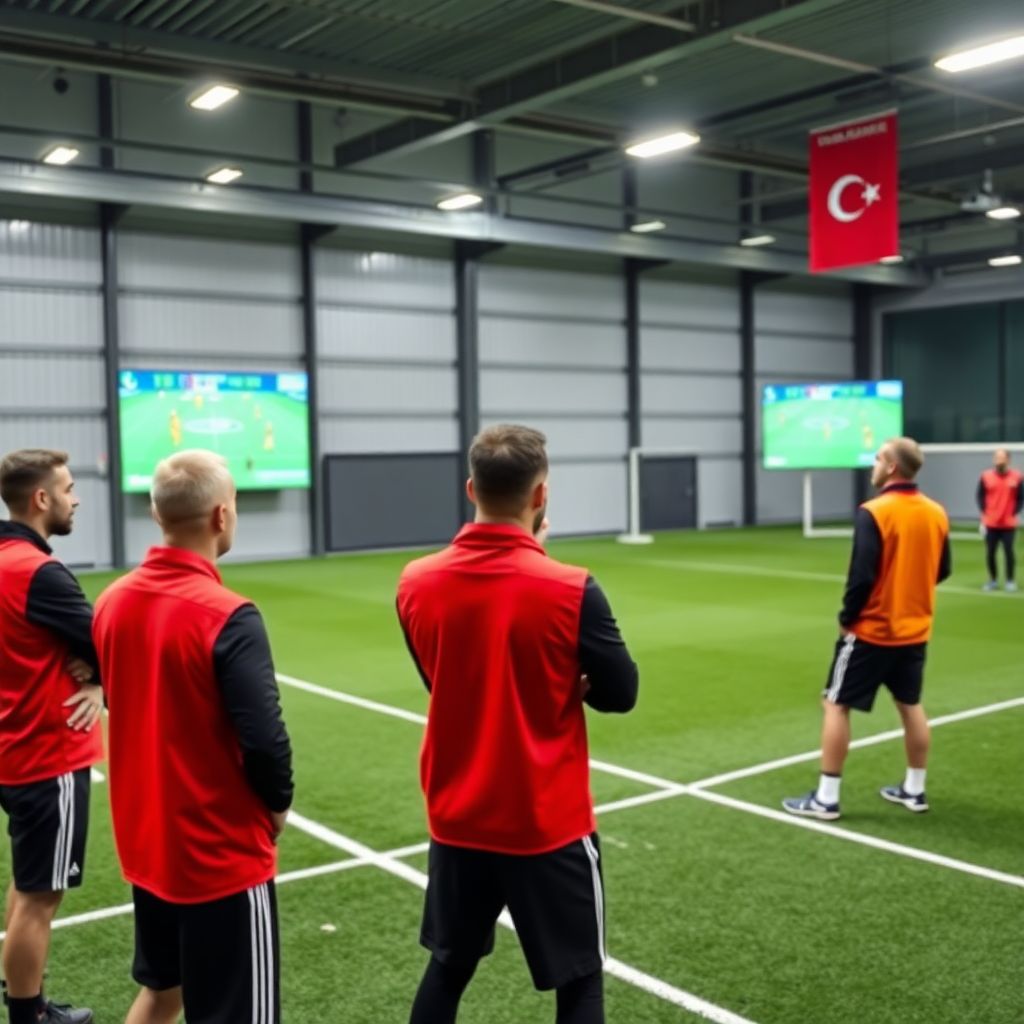
Turkish teams preparing for European competitions focus on three pillars: opponent-specific analysis, smart training periodization between Süper Lig and UEFA games, and strict travel-recovery routines. Added to this are mental preparation, detailed logistics for visas and stadium facilities, and full compliance with UEFA rules so players only think about performance.
Pre-match Essentials: What Coaches Emphasize in Briefings
- Clarify 2-3 key threats from the opponent and exactly who is responsible for each zone or runner.
- Reiterate game model: how to press, how to build up, and what to do immediately after losing the ball.
- Fix rest-defense structure on set pieces and in transition to avoid simple goals.
- Define special roles for leaders (captain, goalkeeper, pivot) in difficult phases of the match.
- Remind players of travel, sleep and nutrition rules for the next 48 hours.
- Align expectations with the club: result target, away-goal mindset (where relevant), and risk level after 60-70 minutes.
Scouting and Opponent Analysis Specifics for European Matches
This preparation suits professional or semi-professional Turkish clubs that regularly face European opposition or aim to qualify. It is most effective when staff have access to video platforms and basic performance data, plus at least one assistant fully dedicated to analysis during European weeks.
It is less appropriate to over-complicate analysis for youth teams or amateur squads with limited training time; in those cases, 2-3 clear principles work better than a 30-page report. Likewise, avoid massive tactical overhauls between domestic and European games if your squad struggles with cognitive load.
For European nights, scouting should answer three questions: how they build up, how they press, and where they suffer under pressure. Use recent matches from their league and European games with similar profiles to your team. Many Turkish Super Lig clubs blend internal analysts with external consultants for this phase.
Practical flow for analysts inside Turkish locker rooms:
- Collect 4-6 full matches of the opponent, including at least one away game.
- Tag recurring patterns: preferred build-up lanes, set-piece routines, pressing triggers.
- Prepare short video edits: 8-12 minutes for staff, 5-7 minutes for players.
- Summarise in one-page briefing with simple language and clear diagrams.
Clubs also consider commercial and fan aspects during scouting weeks, because demand for turkish football teams european competitions tickets often spikes once the draw is known. Analysts sometimes provide basic travel advice to the club’s media and operations team so they can coordinate fan communications and safe stadium sections.
Training Periodization: Balancing League and Continental Calendars
To balance Turkish Super Lig fixtures with European nights, staff need a shared calendar, GPS or at least heart-rate monitoring, and open communication with medical and fitness departments. One coach usually owns the “load map” so there is a single source of truth for intensities and minutes.
Basic requirements for effective periodization around UEFA matches:
- Access to past workload data for players (minutes played, travel hours, injury history).
- Training pitch availability that allows for shorter but more frequent sessions when travel is heavy.
- Close cooperation with nutritionists for recovery days after late-night kick-offs.
- Video and meeting rooms to keep tactical work off the pitch when legs are heavy.
When turkish super lig clubs europa league champions league packages are sold to fans, match days can become more congested with media and sponsor activities. Periodization must protect players from extra off-field load: limit commercial obligations on -2 and -1 match days, and move sponsor events to early in the week.
Typical weekly model for a Thursday-Sunday schedule: recovery and meeting on Friday, tactical and set-pieces on Saturday at reduced intensity, domestic match on Sunday, then a light “flush” on Monday. For Tuesday-Wednesday Champions League, this shifts back by one day but the hierarchy stays the same: health first, freshness second, intensity third.
Tactical Sessions: Adjusting Formations to UEFA Opponents
Use this process to adapt your base system (4-2-3-1, 4-3-3, 3-4-3, etc.) to European rivals without confusing players. The aim is to keep 70-80% of your domestic identity while fine-tuning pressing heights, full-back behaviour, and midfield distances for faster or more structured opponents.
- Define the non‑negotiable game model – Start by stating what will not change: principles in possession, rest defense, and pressing cues. Players must feel stability before you introduce tweaks.
- Write these principles on the dressing-room board for the full European week.
- Use the same terminology you use in Süper Lig games to avoid confusion.
- Identify 2-3 opponent-specific adjustments – Link scouting to tactical choices. Decide, for example, if your winger will track their attacking full-back, or if your pivot will jump to their No. 10.
- Keep it to a maximum of three clear tactical changes per line (defence, midfield, attack).
- Assign a responsible leader for each adjustment on the pitch.
- Run position-specific rondos and pattern drills – Use small-sided games that simulate European pressure intensity.
- Centre-backs and pivots: 4v2 or 6v3 rondos where pressers close like top European opponents.
- Full-backs and wingers: wide 3v2 channels to rehearse overlapping and underlapping under pressure.
- Simulate away-game conditions – On at least one day, train with crowd noise, referee constraints, and tighter space to mirror a UEFA away fixture.
- Shorten the pitch length to force compactness and transition reactions.
- Introduce “unfair” decisions to build emotional control and leadership.
- Rehearse all set-pieces with European refereeing in mind – Emphasise body use in the box, offside lines on free kicks, and reactions to VAR delays.
- Defensive corners: fix marking (zonal, hybrid, or man) and second-ball structure.
- Attacking corners: 2-3 rehearsed routines based on opponent’s marking style.
- Freeze-play corrections and micro-video review – In the last tactical session, stop play to correct spacing and angles. Then show a 5-minute recap video in the locker room after training.
- Highlight “good examples” from your own training footage, not only from rivals.
- End with clear reminders of roles in first 10 minutes after kick-off.
Fast-Track Tactical Adjustment Routine
- State three non‑negotiable principles and write them where everyone sees them.
- Choose exactly two adjustments: one in pressing, one in build-up.
- Run a 20-25 minute high-intensity game that forces those two behaviours to appear.
- Finish with 10 minutes of set-pieces tied to those same principles.
- Show a 5-minute video clip to anchor the desired images before match day.
Sample Compact Tactical Drill for European Weeks
- Game: 7v7+3 neutrals in a 50x40m space to train compactness against structured possession.
- Rule: team out of possession must win the ball and find a target within 8 seconds.
- Objective: teach Turkish teams to stay short and narrow when facing technically stronger midfields.
Travel, Recovery and Nutrition Protocols for Away Fixtures
European away games bring long flights, time-zone differences and late kick-offs. Recovery and nutrition planning need to start as soon as the draw is made, not the week before travel. The medical and performance staff should own a simple, repeatable protocol that players know by heart.
Below is a practical check-list Turkish clubs can apply for each away UEFA trip:
- Confirm travel times and local time zone; adjust sleep schedules gradually 2-3 nights before departure.
- Plan meals around departure and arrival; avoid heavy, spicy foods close to travel and late kick-offs.
- Ensure hydration starts 24 hours before flights, not only on the plane.
- Use compression garments and simple mobility exercises during and after flights.
- Schedule an activation session (15-25 minutes) shortly after arrival to “wake up” muscles safely.
- Agree on strict screen-time limits late at night in hotels to protect sleep quality.
- Prepare individual recovery plans after the match: cold/contrast water, light cycling or jogging, and stretching.
- Monitor players for minor issues immediately after the game; treat small problems early to avoid missing league fixtures.
- Coordinate return-flight timing so players can sleep as normally as possible before the next domestic match.
Clubs that arrange best tours to watch turkish teams in european cups for VIP guests must keep players separated from hospitality obligations on travel and recovery days. Stadium walks, sponsor events and fan meetings should be scheduled so they do not cut into activation, meals, or rest periods.
Mental Preparation: Building Composure for High-stakes Games
Mental work for Europe is about routine, not speeches. Turkish teams that cope best with noise, pressure and foreign environments usually use consistent pre-match rituals and simple focus tools. Mental skills can be developed in regular league weeks so they feel natural on European nights.
Frequent mistakes that damage composure before and during European fixtures:
- Changing too many pre-match habits only because it is a “big European night.”
- Allowing meetings to run too long on match day, leaving players mentally fatigued before warm-up.
- Focusing staff talks on the opponent’s strengths instead of players’ own weapons and identities.
- Ignoring individual routines: some players need silence, others need music and interaction.
- Failing to rehearse pressure scenarios in training (late penalty, red card, bad refereeing call).
- Not designating a clear on-field “calmer” who slows the game down when emotions spike.
- Overloading young players with responsibilities or criticism in their first European matches.
- Skipping debriefs after big wins, which can create overconfidence before the next tie.
Simple tools like brief breathing exercises, visualization of first actions (first touch, first duel), and “reset words” agreed with sports psychologists help create shared mental language in the locker room.
Operations and Compliance: Visas, Matchday Facilities and UEFA Rules
Operational planning for European matches combines legal, logistics, and commercial work. The goal is to arrive at the stadium with all registrations, visas and stadium checks finished so coaches can use the full pre-match window for football, not bureaucracy.
Clubs and fans consider different options depending on budget and risk appetite; below are common alternatives and when they are appropriate:
- Club-managed full travel packages – The club organises flights, hotels, and transfers for staff, players, and selected fans. This works well when there is significant demand for travel packages for galatasaray fenerbahce besiktas european matches and the club wants control over safety and scheduling.
- Partnered agency solutions – Trusted agencies sell turkish football teams european competitions tickets bundled with flights and hotels. This is useful for smaller clubs or early-round ties where internal staff are stretched by sporting and administrative tasks.
- Premium VIP hospitality setups – For sponsors and high-end clients, clubs cooperate with UEFA and host venues to secure vip hospitality tickets turkish clubs european fixtures that include lounges, pitchside access and curated experiences. Choose this when sponsorship revenue is a key priority and when stadium infrastructure supports it.
- Lean “football-first” operations – For difficult or remote away games, some clubs trim delegations and commercial activities to focus on performance. This alternative suits riskier ties where travel conditions are unpredictable or where security demands a lower profile.
Regardless of the model, operations staff must track UEFA regulations on squad registration, kit approvals, media duties, and stadium advertising to avoid fines or distractions. Regular coordination calls with host clubs before travel help remove surprises from the match day schedule.
Practical Concerns Coaches and Players Raise Before Europe Fixtures
How far in advance should we start specific preparation for a European opponent?
Start light opponent monitoring as soon as the draw is made, but intensive team-wide preparation works best from five to three days before the match. Earlier than that, keep the focus on your domestic games while analysts quietly gather information in the background.
How much should we change our formation for stronger European teams?
Keep your base structure and identity, making only a few targeted adjustments in pressing height, spacing, or one player’s role. Large formation changes are risky unless you have already tested them in domestic matches or pre-season friendlies.
What is a safe way to handle long flights without harming performance?
Prioritise sleep, hydration and light movement. Plan meals around travel, use compression and simple stretching, and schedule an activation session after arrival. Avoid heavy tactical or commercial activities immediately after long trips to protect energy levels.
How can we protect players from mental fatigue before big European nights?
Keep meeting times short, repeat key ideas instead of adding new ones, and respect individual routines. Use short visualization or breathing exercises and appoint leaders to manage emotions on the pitch when the atmosphere becomes intense.
How should we coordinate with fans and sponsors traveling for the match?
Separate sporting and commercial calendars. Assign a dedicated staff member to manage fan tours, ticketing and sponsor events so coaches focus on football. Ensure that sponsor and media duties do not clash with meals, recovery, or sleep times.
What if we lack advanced data tools for opponent analysis?
Rely on high-quality video from recent matches and focus on a few core patterns: build-up, pressing, transitions, and set-pieces. Clear, simple clips with targeted coaching points are more valuable than complex data that staff and players cannot easily interpret.
How do we balance minutes for players between league and European games?
Track cumulative minutes, recent injuries and travel loads. Rotate selectively in positions where you have depth, and communicate early with players about your plan so they understand why their playing time might change around European ties.