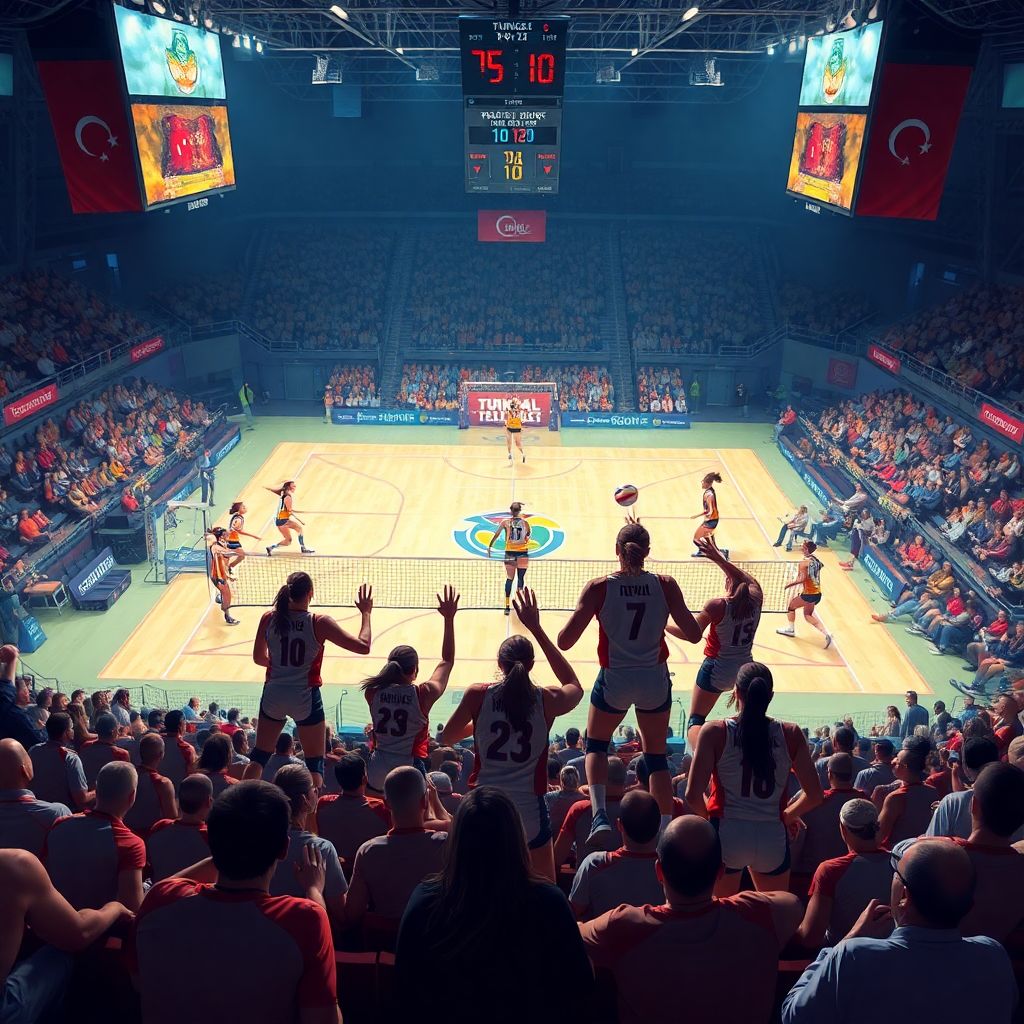
Why Turkish Clubs Keep Winning When Others Plateau
If you watch enough Champions League games, you start to feel the same thing: Turkish teams just refuse to break. You can outplay them for a set and still walk away with a 3:1 loss. To really understand why Turkish volleyball teams are so strong, you have to look deeper than “they buy stars” or “they have money.” The secret lives in structure, daily habits, and some very uncomfortable coaching decisions that most clubs in Europe and Asia simply avoid.
This is where a real Turkish volleyball clubs tactics analysis becomes interesting: the magic is not in one superstar opposite or one legendary coach, but in a system that makes it extremely hard to exploit weaknesses for more than a few rallies in a row. Let’s break down what that actually looks like in the gym and in matches – and how you can borrow parts of it even if your budget is nowhere near VakıfBank or Eczacıbaşı level.
—
Case Study: How Turkish Clubs Turn Chaos into Control
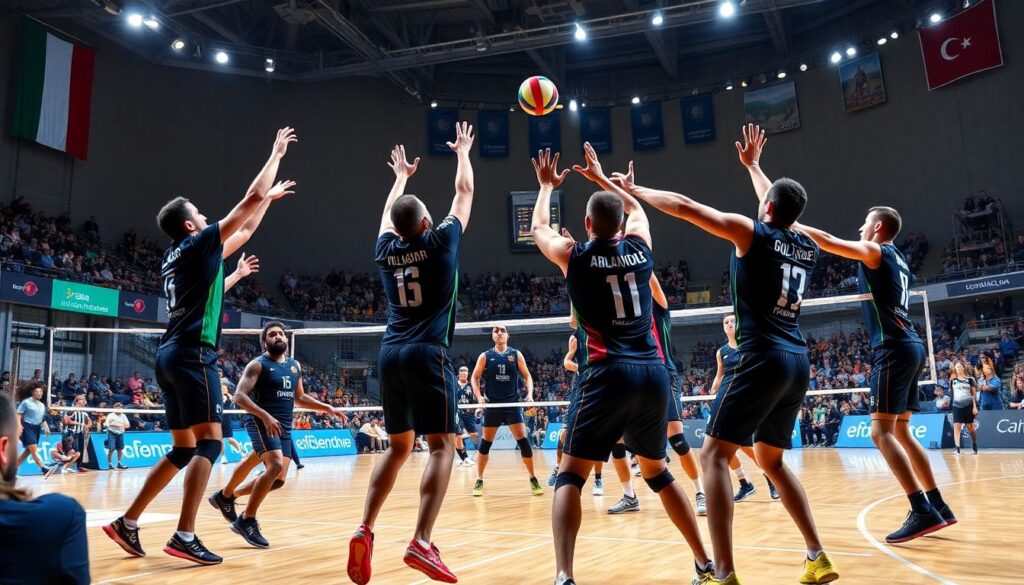
Let’s start with a concrete example. In a Champions League match, a top Italian club came out bombing serves against one of the best Turkish volleyball clubs in Europe. First set: they dominated. Turkish reception was shaky, their star outside was targeted mercilessly, side-out efficiency dropped below 45%, and the Italian team looked totally in charge. By the middle of the second set, everything flipped: the same servers stopped scoring aces, Turkish block-defense suddenly “read” every option, and out-of-system attacks from Turkey started landing inside the block like clockwork.
What changed wasn’t some magic pep talk in the timeout. The Turkish bench quietly rotated passing responsibilities, hid the weakest receiver in smart patterns, and altered the setter’s tempo to neutralize the jump serve timing. At the same time, the block adjusted their starting positions by half a step to take away cross-court angles that had been killing them. This tiny cocktail of micro-adjustments turned a match that was slipping away into a tactical strangulation. The Italian team didn’t collapse; they simply ran out of ways to score easily.
—
Hidden Strength #1: Training for “Ugly Volleyball”
One of the most underrated reasons why Turkish clubs are so hard to beat is their obsession with “ugly volleyball.” Many teams train perfect side-out, clean transitions, textbook systems. Turkish giants spend a serious chunk of time in the opposite direction: broken plays, off-balance contacts, bad sets, and emergency swings. In those conditions, star players are forced to develop a toolbox, not just one or two signature hits.
During professional volleyball coaching in Turkey, you often see drills where setters intentionally toss low, wide, or too tight on purpose. Attackers aren’t allowed to complain; they must still attack with full intent and a clear tactical choice. Liberos receive serves from shortened distances or with distraction cues. The point isn’t cruelty – it’s inoculation. When the match goes crazy, they’re not panicking; they’re basically “back at practice.”
– A typical “ugly volleyball” session might include:
– Side-out only from off-the-net passes (2.0–2.5 pass zone).
– Mandatory attacks from non-dominant angles (sharp line from position 4, long cross from position 2).
– No tips allowed for 10 minutes: every bad set must be swung hard and tactically placed.
This focus means that when pressure hits, Turkish squads don’t need the system to be perfect. They can still score when everything is slightly wrong – and that’s exactly when opponents usually crumble.
—
Hidden Strength #2: Role Clarity That Feels Almost Brutal
Another real differentiator is how clearly defined roles are on court. While many European teams say “we share responsibility,” Turkish staffs are often brutally specific. One outside might be told: “You are a 70% reception player and a 60% attack player. Your job is to stabilize the first contact and make smart swings. We will not build the system around you in transition.” That sounds harsh, but it gives everyone a mental anchor.
In the Turkish volleyball league strategy and training methods, it’s common that one athlete sacrifices personal stats for system stability. For example, a high-level middle might know they’ll get only 10–12 sets per match but are expected to be almost perfect on fast slides and to dominate blocking reads. This narrow, focused demand lets players specialize deeply, while the coaching staff carefully builds a puzzle where each piece is maximized.
For opponents, this creates a nightmare. Scouting reports become less useful because “stop their star” isn’t enough; the Turkish team has three or four different role players who are elite at one or two specific things, and the system funnels the right ball to the right person at the right time.
—
Non-Obvious Tactical Choices That Flip Matches
Let’s talk about those moments where you think: “Why are they doing that?” and five rallies later you realize it was genius. Turkish benches are surprisingly willing to make moves that look wrong on paper but make complete sense from a risk–reward standpoint.
1. Sacrificing Serve Power for Defensive Structure
Many leagues obsess over aces. Turkish powerhouses, in key phases of a match, will sometimes deliberately reduce serving risk to secure a stable block-defense formation. They accept that their serve might become more predictable, but in return they guarantee that the middle blocker gets fully set on time and the libero can hold preferred positions.
This is especially visible in fifth sets. Instead of “all-in” serving, servers are told to hit very specific zones that won’t necessarily produce aces but will push the opponent away from their best combination plays. They’re thinking three touches ahead: “If I serve here, I know where the attack will go, and my block will be sitting there waiting.”
2. Targeting Psychology, Not Just Technical Weaknesses
Here’s a non-obvious tactic many miss when they watch why Turkish volleyball teams are so strong. Sometimes the serve isn’t going to the technically weakest passer, but to the captain or star who’s just made an error. The goal is to test leadership under pressure. Will that player still call for the ball confidently? Or will they start hiding?
You’ll also see Turkish clubs delay substitutions until the exact moment a rival is mentally vulnerable – for instance, right after they’ve made a big comeback but then miss a chance to close the set. A fresh server comes in, drops a tough float, and the emotional pendulum swings back. It’s not random; it’s applied psychology as part of the tactical package.
—
Alternative Methods You Rarely See Outside Turkey
While everyone else drills standard 6v6, Turkish elites add layers to practice that simulate strategic scenarios instead of generic rallies. These are not just “creative drills” for social media; they’re deliberate experiments to stress-test tactics.
Scenario-Based Scrimmages with Asymmetric Rules
Instead of playing normal sets, coaches might say:
– Team A only scores when they win rallies after a first-tempo attack.
– Team B only scores when they side-out from a poor pass.
– Bonus points are awarded for blocks that touch the ball, even if the rally continues.
Suddenly, players are forced to overuse certain tactics. Middles get hundreds of real-game first-tempo reps under pressure. Outsides receive constant imperfect balls. Blockers learn that even a soft touch is valuable because the scoreboard rewards it. These alternative methods build habits that are hard to replicate with “play another set to 25.”
—
Micro-Adjustments in Blocking That Don’t Show on TV
On broadcasts you see big stuff: double blocks, triple blocks, huge roofs. What you don’t notice is the way Turkish middle blockers change their starting positions based on subtle cues: who’s in the back row, how the setter’s shoulders line up, or even how the libero shades behind the block.
A non-obvious solution used in some best Turkish volleyball clubs in Europe: pre-agreed “micro-shifts.” For example, when the opponent’s opposite is hot, the middle is allowed to start half a step closer to position 2 without calling a special signal. The wing blocker knows this automatically and adjusts their line responsibility. No shouting, no drama – just tiny rebalancing that gradually suffocates the attacker’s options.
This means that what looks like “a good read” is often a rehearsed micro-pattern. Opponents feel like they’re being read, while in reality they’re running straight into a defensive funnel that was programmed days ago in practice.
—
Pro-Level Hacks You Can Actually Steal
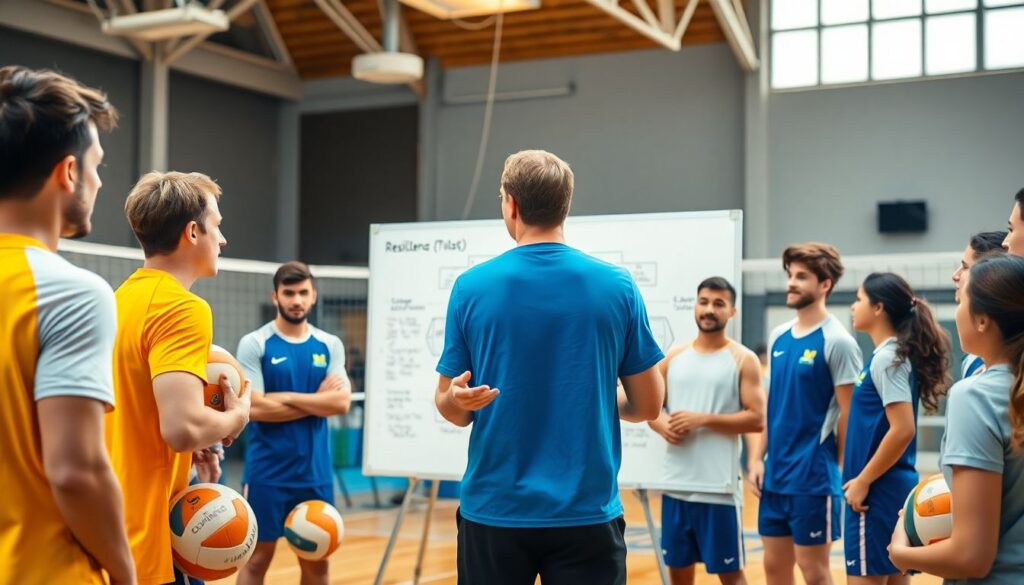
You might be thinking: “Fine, but my club doesn’t have their budget, foreign stars, or staff size.” Fair. But you can still borrow some of the underlying concepts that make these teams so resilient. Here are some practical hacks that come directly from observing professional volleyball coaching in Turkey and translating it to more modest environments.
Hack #1: Designate a “Tactical Captain” Separate from the Emotional Leader
Many teams rely on one captain for everything: motivation, talking to the ref, adjusting tactics. Turkish staffs sometimes separate these roles informally. The emotional leader fires people up. The tactical leader’s job is simple: during every timeout, they say one tactical sentence the whole team must follow for at least the next 5–10 points.
You can copy this easily:
– Choose one player to call a single focus:
– “For the next five serves, we attack high hands only.”
– “Every free ball goes to the middle on first tempo.”
– “Serve only zone 5 until further notice.”
This constraint keeps the team from fragmenting into six personal gameplans and creates the feeling of a coherent, Turkish-style system even without a big staff.
—
Hack #2: Weekly “Ugly Practice” Session
Steal the ugly volleyball mindset on a smaller scale. Once a week, run a session where perfection is banned and chaos is the norm. No one gets benched for errors; they get benched for being conservative.
Ideas you can adopt:
– Force setters to play from position 1 or 5 for an entire drill.
– Start every rally with a deliberately terrible free ball (too low, too far from the net).
– Award extra points only for rallies won after a broken play (overpasses, scramble defenses).
Very quickly, you’ll see who can think like Turkish players: improvising without panicking, still making tactical decisions under stress instead of just “getting the ball over.”
—
Hack #3: Role Cards for Clarity Under Pressure
One big reason Turkish clubs stay calm in tight sets is role clarity. You may not have the same depth, but you can create “role cards” for each player:
– Primary task (what must never drop below a certain standard).
– Secondary task (what you aim to do when things are stable).
– Emergency behavior (what you do when the system breaks).
For example, your opposite’s card might say:
– Primary: Be the bailout in bad plays. Always be ready for high balls.
– Secondary: Pressure serve down zone 1.
– Emergency: If we can’t score, start using smart tips to zone 3 to reset the rally.
Print these, discuss them, and remind players during timeouts. It’s a small, non-obvious solution that mirrors the way big Turkish clubs script their systems without needing their infrastructure.
—
Pulling It Together: What Really Makes Turkish Clubs So Hard to Beat
When you zoom out, the success of Turkish powerhouses is less about flashy signings and more about a philosophy: embrace chaos, narrow roles, and turn every training into a test of decision-making, not just technique. Turkish volleyball clubs tactics analysis shows a consistent pattern: they prepare for the types of points that usually decide sets – broken, emotional, uncomfortable rallies.
They aren’t unbeatable because they always play better volleyball; they’re hard to beat because they stay functional when others start improvising blindly. Their players know exactly who they are on court, their coaches aren’t afraid of non-obvious trade-offs, and their systems are robust enough to survive bad days.
If you’re building your own program, you don’t need to copy everything. Start with three simple questions inspired by the Turkish model:
– Do our players know their roles as clearly as Turkish starters do?
– Do we ever train the ugly, chaotic scenarios that decide real matches?
– Do we make deliberate, sometimes uncomfortable tactical choices – or just safe ones?
Answer those honestly, adjust your training, and you’ll already be closer to the mindset that keeps Turkish clubs dominating international competitions.