Historical context: from marginalization to high‑performance systems
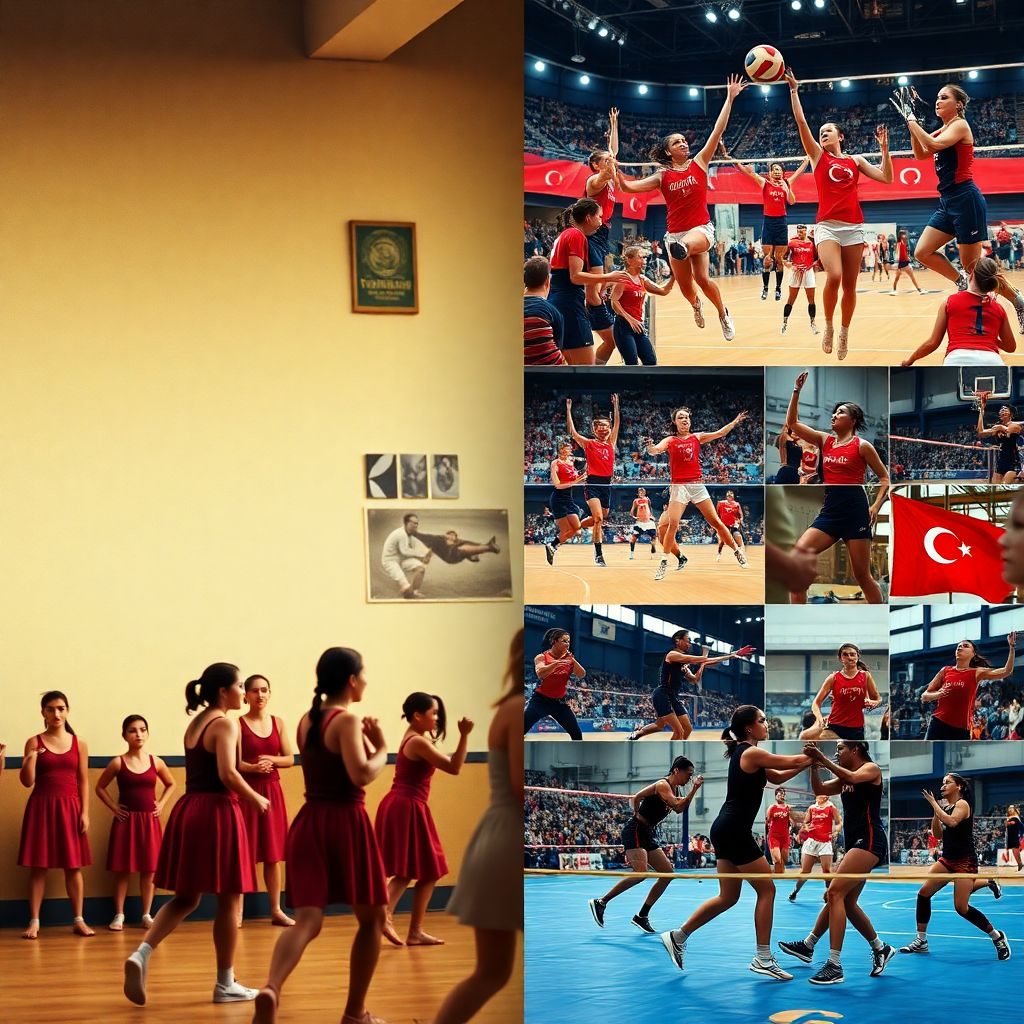
When you zoom out and look at turkish women in sports history and achievements, you see a slow but steady transition from symbolic participation to structured high‑performance programs. In the early Republican period, women’s physical activity was framed more as public health and nation‑building than as elite competition, so you had school gymnastics and basic athletics but almost no professional pathways. Up to the 1980s, institutional bias, limited media coverage and weak club infrastructure meant that only a few outliers could break through. The turning points were the professionalization of volleyball and athletics, the rise of university sports, and later the investment of big multi‑sport clubs like Fenerbahçe, Galatasaray and VakıfBank in women’s sections. That’s the soil from which many turkish women athletes success stories grew: once funding, coaching education and competition calendars became more systematic, medals at European and world level stopped being anomalies and started to look like outputs of a real performance pipeline rather than lucky exceptions.
Core principles behind modern women’s sport in Türkiye
Even if the public often focuses on medals, the engine behind famous female turkish sports stars is a set of technical principles that most successful programs now share. First is long‑term athlete development: early multi‑sport exposure, then gradual specialization, instead of pushing a 10‑year‑old into year‑round single‑sport load. Second is evidence‑based training: periodization, monitoring of training load with GPS or heart‑rate systems, and basic sports science metrics like VO₂max, strength ratios, and recovery indices. Third is integrated support teams; elite clubs now routinely combine head coaches with strength‑and‑conditioning specialists, sports psychologists and nutritionists, which is crucial in weight‑sensitive sports such as taekwondo, wrestling and gymnastics. Finally, there is an emerging, though still uneven, emphasis on safeguarding and gender‑aware coaching, where staff are trained to handle issues like Relative Energy Deficiency in Sport (RED‑S), menstrual‑cycle‑informed planning and harassment prevention protocols. Without these structural principles, individual talent rarely converts into sustainable high‑level performance.
Stars and disciplines: what “across all sports” really looks like
When people talk about the best turkish female athletes across all sports, they tend to name check the obvious: volleyball icons, Olympic taekwondo and wrestling champions, and the new wave of sprinters and middle‑distance runners. But the ecosystem is wider and more diverse than highlight reels suggest. Team sports such as women’s volleyball and basketball operate on professional club models with deep rosters, foreign imports and dense European schedules, which create an environment where young Turkish players train daily at world‑class intensity. Combat sports like boxing, taekwondo and wrestling rely more on centralized national‑team camps in places like Ankara and Erzurum, with strong links to regional talent hubs. Then there are technically demanding individual sports—archery, shooting, gymnastics, sailing—where long time‑to‑peak performance and high equipment or facility costs mean that federation strategy and targeted scholarships can make or break careers. The mosaic of inspiring stories of women in turkish sport only makes sense if you see how each discipline’s competition calendar, talent‑ID system and financial model interact.
Implementation examples: how clubs and federations turn talent into medals
Behind many famous female turkish sports stars there is usually a club–school–federation triangle that functions reasonably well. Take volleyball: big Istanbul and Ankara clubs run youth academies that recruit from school tournaments, apply objective screening (height, reach, basic motor tests), and then offer multi‑year training plans with clear progression from junior leagues to the Sultanlar Ligi. In combat sports, regional sports high schools cooperate with local municipalities to provide mats, equipment and travel budgets for domestic ranking events; the federation then uses performance data from these events to feed centralized national camps, where workload is individualized based on sparring scores, injury history and physiological testing. Athletics and swimming increasingly use talent‑ID protocols such as 30‑m sprint tests, vertical jump, stroke efficiency assessments and age‑graded performance indices to detect outliers early. Over time, this system has produced clusters of turkish women athletes success stories in specific training centers, showing how geographic concentration of expertise can accelerate development when combined with scholarship schemes and university partnerships.
Frequent misconceptions about Turkish women in sport
A persistent misconception is that international results by women are “recent miracles” driven only by a few extraordinary individuals; in reality, many turkish women in sports history and achievements come from decades of incremental infrastructure improvements, coach education and policy reforms. Another myth is that women’s events are inherently less competitive, so medals are somehow “easier”; performance analytics—world rankings, depth of fields, qualifying standards—show that in sports like volleyball, taekwondo, boxing and wrestling, Turkish women often navigate denser, more globalized fields than their male counterparts. There is also a media‑driven belief that only urban, middle‑class athletes can succeed, while a large share of elite wrestlers, boxers and weightlifters actually emerge from smaller Anatolian towns where sport functions as a social‑mobility mechanism. Finally, people often assume that the same support structures exist across all disciplines; in practice, there is a sharp disparity between highly professionalized sports and those where women still fight for basic access to facilities, regular leagues or even safe training environments, which shapes the distribution of high‑profile titles and limits visibility for less‑funded disciplines.
Typical beginner mistakes in the Turkish women’s sport pathway

At the grassroots level, novice athletes and their families repeat a similar set of errors that can derail even promising careers. A common issue is early, rigid specialization—pushing a young girl into year‑round single‑sport training at 8–10 years old based on anecdotal talent, which increases overuse injuries and psychological burnout while limiting the motor‑skill diversity that underpins elite performance. Another mistake is ignoring load management: many beginners in clubs and school teams double up on sessions without structured rest, no monitoring of acute‑to‑chronic workload ratios, and little attention to sleep hygiene or basic nutrition, leading to stress fractures, recurrent tendinopathy and iron‑deficiency anemia. Parents and some coaches also underplay the impact of puberty and the menstrual cycle; they treat temporary performance dips as “lack of discipline” instead of adjusting intensity, which can push girls out of sport altogether. On the career‑planning side, families often chase short‑term results—age‑group medals, social media visibility—rather than long‑term development, so athletes jump between clubs, change coaches too frequently or overcompete in minor tournaments, disrupting continuity. Courses that narrate inspiring stories of women in turkish sport try to correct these patterns by emphasizing process over instant success, but the cultural pressure for quick wins remains a structural challenge for sustainable female talent development.