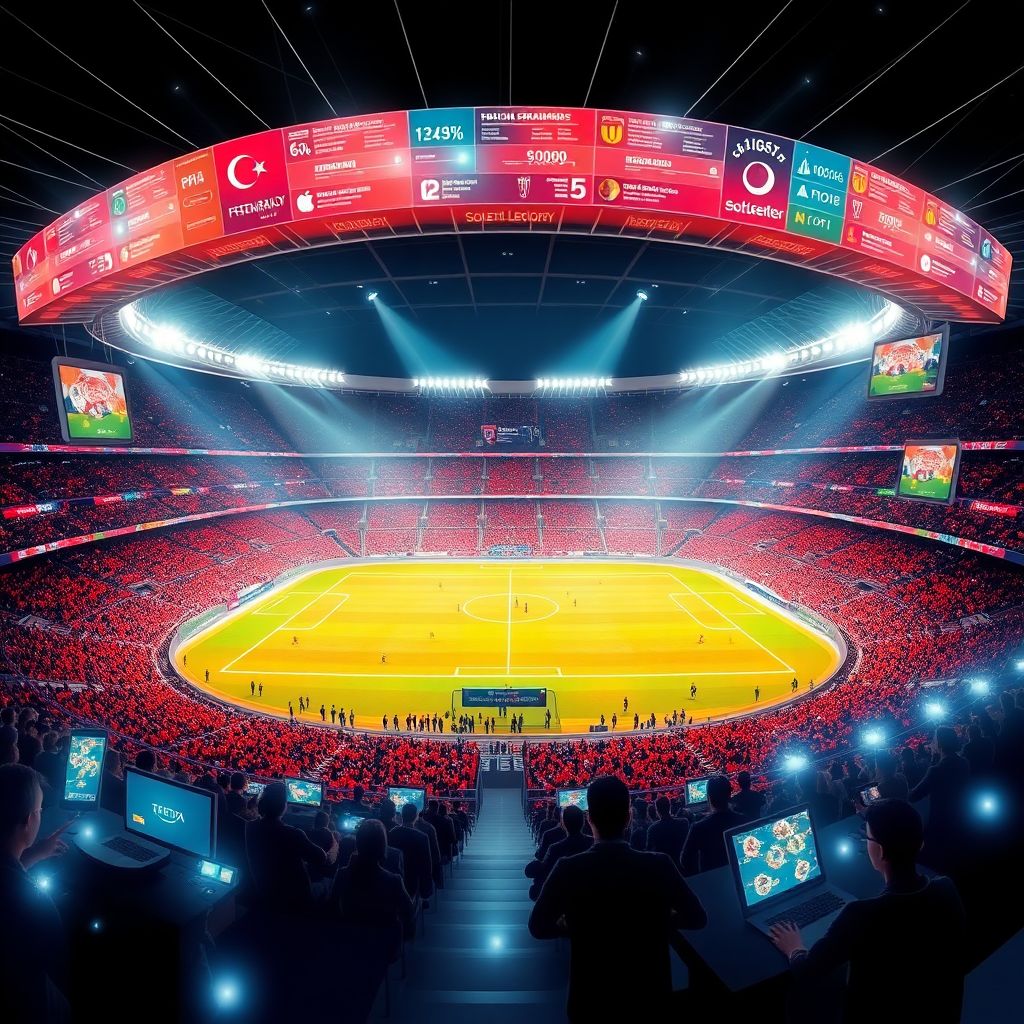
The changing face of the sports business in Turkey
Over the past decade, the business of sports in Turkey has shifted from a fairly traditional sponsorship‑plus‑TV model to a much more complex ecosystem driven by data, regional expansion and digital consumption. Clubs, federations and broadcasters that once depended almost entirely on matchday revenue and a few long‑term sponsors now operate in a market where social media reach, fan engagement metrics and cross‑border media rights deals define bargaining power. In this environment, sports sponsorship deals in Turkey have become more performance‑driven, Turkey sports broadcasting rights market is more fragmented and competitive, and digital sports streaming platforms Turkey are no longer “experimental” add‑ons but central pillars of strategy. Understanding how these three pillars interact is crucial for anyone planning to invest in Turkish sports media rights, enter as a sponsor, or build a digital product aimed at local fans and the Turkish diaspora.
Sponsorships: from logo placement to performance marketing
Sponsorship in Turkey used to be dominated by big banks, telecoms and construction firms whose main goal was visibility on shirts and stadium boards. Today, sponsors behave more like technology and consumer brands: they want data on fan behavior, measurable conversions and access to the club’s digital channels. When people ask how to sponsor football clubs in Turkey now, the answer rarely starts with “buy the shirt front” and ends there. Instead, conversations quickly turn to naming rights, content co‑creation, branded mobile apps, loyalty programs and even joint ventures in e‑commerce. For mid‑tier clubs, the shift is especially important: they cannot compete with the “Big Three” (Galatasaray, Fenerbahçe, Beşiktaş) on pure reach, but can offer much more targeted sponsorship packages built around niche communities and regional fan bases.
Different approaches to sponsorship: traditional vs data‑driven
If we compare different approaches on the Turkish market, three main sponsorship models emerge. The traditional exposure‑based model still exists: large companies pay for logos on shirts, LED boards, and hospitality packages, expecting mainly brand awareness and prestige. The second model is activation‑centric, where sponsors invest in fan zones, social media campaigns, influencer collaborations and community projects tied directly to the club. The third and fast‑growing model is data‑driven partnership, in which brands integrate their CRM systems with club databases, co‑own fan engagement platforms and track KPIs like app registrations, coupon redemptions or subscription sign‑ups. This layered landscape means that even within one club, different sponsors may operate under very different assumptions about what success looks like, which can cause internal friction if rights and territories are not clearly defined or if fan communications feel cluttered and inconsistent.
Pros and cons of current sponsorship technologies
Technologies that support modern sponsorships—fan engagement apps, digital wallets, in‑stadium Wi‑Fi tracking, augmented reality activations—offer clear advantages but also hidden costs. On the plus side, clubs and federations finally gain direct data on who their fans actually are, rather than relying on TV ratings. This makes it easier to segment offers, design loyalty tiers, and prove ROI to sponsors who want clear attribution. It also opens up new types of assets: push notifications, in‑app banners, personalized offers and even co‑branded digital collectibles. On the downside, many Turkish clubs lack mature data governance practices and underestimate GDPR‑aligned consent management, cybersecurity needs and ongoing maintenance costs of these systems. Vendors tend to oversell immediate revenue potential, while internal teams struggle to create enough quality content to keep fans engaged year‑round, not just on match days. That imbalance often leads to underused platforms that look impressive in pitch decks but deliver modest actual returns.
Expert recommendations for sponsors entering Turkish sports

Industry consultants working with both local and foreign brands usually converge on a few practical recommendations. First, before signing any long‑term deal, sponsors should audit the club’s digital assets: size of genuine (not purchased) social media audiences, email database quality, app usage, and CRM capabilities. Second, they advise avoiding over‑reliance on vanity metrics like follower counts; instead, ask for historical data on campaign conversion, merchandise sales during past activations, and growth of owned channels. Third, they emphasize the need to negotiate data access clauses early—who owns the data generated by a campaign, how it can be used in future retargeting, and what happens if the partnership ends. Finally, experts suggest structuring deals with a significant performance‑based component linked to clear KPIs instead of paying fully fixed fees up front; this aligns incentives and gives sponsors more leverage to demand strategic collaboration rather than just logo exposure.
TV rights: consolidation, pressure and new players
The Turkey sports broadcasting rights market has historically been shaped by one or two dominant pay‑TV players that acquired central league rights and built subscription packages around them. This model still matters—domestic football remains the premium content driver—but its economic foundation is under pressure. Cord‑cutting, piracy and price‑sensitive consumers put ceilings on subscription revenue growth, just as player salaries and club expectations keep rising. As a result, broadcasters seek to share risks via revenue‑sharing deals, longer payment schedules and more sophisticated sublicensing arrangements. At the same time, international platforms look at Turkey as a relatively affordable entry point to a passionate market, especially for European competitions and niche sports, pushing incumbents to reconsider their bidding strategies and portfolio mix.
Different approaches to monetizing TV rights
Rights holders in Turkey currently juggle several approaches to monetization. The classic approach is centralized league deals: one broadcaster pays a large guaranteed fee for domestic and sometimes international rights, then recoups via subscriptions and advertising. A second, more flexible approach is segmented rights packages—weekend vs weekday matches, linear vs digital, domestic vs diaspora markets—sold to different partners, with varying degrees of exclusivity. A third, still experimental approach is direct‑to‑consumer streaming, where leagues or clubs launch their own OTT platforms alongside existing TV deals, providing extra camera angles, behind‑the‑scenes content or youth games. Each model has its trade‑offs: central deals maximize short‑term certainty but may under‑monetize niche audiences; segmentation can increase total revenue but adds complexity and coordination challenges; direct platforms can boost margins but require technical capabilities and strong marketing that many federations currently lack.
Pros and cons of TV and OTT technologies
On the technology side, the transition from pure linear broadcasting to hybrid models introduces both scale and fragility. High‑quality HD and 4K production, cloud‑based distribution and dynamic ad insertion open fresh revenue opportunities and allow more flexible packaging of content. However, they also require heavy up‑front investment in production infrastructure, redundancy and real‑time monitoring. Traditional broadcasters in Turkey are generally strong in satellite and cable distribution but less nimble in personalization, viewer analytics and multi‑device user experience, areas where global streaming players excel. At the same time, smaller local OTT platforms confront bandwidth variability, customer service expectations and fierce competition from unofficial streams. Piracy remains a structural issue: as quality of illegal streams improves, any technical failures on official feeds translate almost immediately into user churn and social media backlash, limiting the room to experiment with aggressive pricing or blackout windows.
Expert guidance for those who want to invest in Turkish sports media rights
Media rights specialists typically recommend that investors take a disciplined, scenario‑based approach rather than chasing headline numbers. They stress that anyone planning to invest in Turkish sports media rights should start with a realistic demand model that distinguishes between hardcore, casual and “event‑only” fans, then stress‑test ARPU assumptions against local income levels and price elasticity. They advise looking beyond the Süper Lig: women’s football, volleyball, basketball and combat sports enjoy strong domestic followings and can deliver attractive cost‑per‑viewer metrics relative to rights fees. Experts also suggest negotiating flexible digital rights clauses, including options for pop‑up channels, multi‑language commentary and international sub‑licensing, to hedge against future consumption shifts. Crucially, legal advisors warn new entrants to pay close attention to regulatory requirements, advertising rules and must‑carry obligations, which can materially affect both distribution strategy and profitability.
Digital platforms: the new battlefront for fan attention
If TV rights define the core economic engine of Turkish sports, digital platforms determine how that engine is perceived and extended. digital sports streaming platforms Turkey now compete not only with legacy broadcasters but also with social networks, gaming and short‑form video. Fans—especially under 30—often experience sports through highlight clips, memes, watch‑along streams and fantasy games rather than full‑length live broadcasts. This behavior forces clubs and leagues to rethink what “content” actually means and how to monetize attention that may be fragmented across devices and time zones. For Turkish rights owners, the diaspora in Europe and the Middle East is a particularly important audience: they often have higher purchasing power and are willing to pay for high‑quality streams and localized experiences if access is simple and reliable.
Approaches to building digital sports presence
Three dominant strategic approaches to digital are visible in Turkish sports today. Some organizations adopt a “platform‑first” mindset: they invest heavily in their own apps and OTT offers, seeking to own the full user journey from registration to payment and support. Others prioritize “audience‑first” distribution: they flood YouTube, TikTok, Instagram and emerging platforms with short‑form content, using them as marketing funnels that drive traffic to ticketing, betting partners or merchandise. A smaller but growing group experiments with community‑centric models, relying on Discord‑style servers, membership clubs, NFTs or token‑based governance to create a sense of belonging and co‑ownership among fans. Each strategy reflects different assumptions about where value will accumulate in the next five years—on proprietary platforms, on global social networks or within semi‑closed fan communities—and each requires different competencies in content production, UX design, moderation and data analysis.
Technological pros and cons in the digital realm
Digital tools offer capabilities that traditional media simply cannot match. Real‑time statistics overlays, multi‑language commentary options, personalized highlight reels, micro‑subscriptions and in‑stream commerce make it possible to tailor experiences at scale. From a business perspective, first‑party data collected through logins, preferences and behavior is invaluable, enabling predictive analytics around churn, upsell and cross‑selling. However, these same technologies create risk: algorithm changes on global platforms can suddenly cut reach; payment integration failures or data breaches can severely damage trust; and constant content demand can stretch club media teams to burnout. Furthermore, not all fans have stable high‑speed internet or modern devices, so over‑engineered experiences may alienate portions of the audience. Digital fatigue is another concern—fans increasingly differentiate between content they truly value and the endless stream of low‑effort clips, rewarding only the former with attention and loyalty.
Expert recommendations for clubs and leagues on digital strategy

Digital strategists who work with Turkish clubs tend to offer a set of grounded, priority‑driven recommendations rather than grand visions. First, they insist on clarifying the primary role of digital channels: Is the immediate goal ticket and merch revenue, sponsorship value, media rights leverage, or long‑term brand equity? Without that clarity, metrics become confusing and strategies inconsistent. Second, they advocate for building a modest but robust tech stack—reliable CRM, analytics and content management—before launching ambitious apps or OTT services. Third, they recommend starting with formats that match internal production capacity: weekly behind‑the‑scenes shows, coach talks, or supporter‑generated content can be more sustainable than daily over‑edited videos. Finally, experts highlight the importance of integrating commercial partners organically into digital narratives rather than through intrusive ads, using storytelling and added utility (discounts, exclusive access, contests) to make sponsors part of the fan experience rather than interruptions to it.
How sponsors, broadcasters and digital platforms intersect
In practice, these three pillars—sponsorships, TV rights and digital platforms—are increasingly interdependent rather than separate revenue streams. A strong sponsorship portfolio can boost the value of TV rights by financing better production quality, star signings and infrastructure upgrades. Attractive broadcasting deals, in turn, raise a club’s or league’s profile and make it easier to close premium partnerships. Meanwhile, digital channels act as both amplifier and testing ground: successful formats on social media or OTT can be repackaged for TV, while reaction data helps adjust sponsorship messages and rights packaging. The most sophisticated actors in the Turkish market now design “ecosystem deals” where the same brand appears across broadcast, in‑stadium experiences and digital touchpoints with consistent creative, common KPIs and shared attribution models, rather than isolated one‑off campaigns.
Practical recommendations for brands choosing between options
For companies deciding how to enter Turkish sports, the choice is not strictly either‑or between sponsoring a club, buying TV spots or investing in digital. Seasoned consultants suggest starting with a matrix of objectives and constraints. Typical recommendations include:
- Clarify whether the main goal is national awareness, targeted regional impact, B2B relationship building or direct consumer sales, as this will dictate whether top‑tier football, secondary leagues or niche sports offer better value.
- Assess internal capabilities for content creation and campaign management; if these are weak, leaning on established broadcasters and leagues with robust media teams may be safer than ambitious direct digital plays.
- Consider multi‑year partnerships with built‑in review points; abrupt one‑year deals rarely allow time to calibrate messaging, learn from data and optimize activation tactics.
What clubs and federations should prioritize when negotiating
On the rights holder side, negotiation priorities should also evolve. Rather than maximizing headline cash in the short term, experts urge Turkish clubs and federations to weigh offers based on access to technology, data and cross‑promotion capabilities. They recommend:
- Insisting on transparent reporting dashboards from broadcasters and digital partners, covering viewership, engagement and demographic breakdowns.
- Protecting some inventory—especially behind‑the‑scenes and training content—for their own channels to maintain direct relationships with fans.
- Structuring step‑up clauses tied to performance, allowing rights fees and sponsorship payments to grow with verified success instead of being locked in at static levels.
Trends shaping the Turkish sports business by 2026
Looking toward 2026, several trends are expected to shape the Turkish sports business landscape if current trajectories continue. First, we are likely to see further unbundling of rights: instead of single mega‑contracts, more properties will slice their inventory by platform, territory and format (live, highlights, archives) to maximize flexibility. Second, fan data will increasingly become a strategic asset: entities able to convert raw profiles into actionable insights and personalized offerings will command higher sponsorship valuations and more favorable media rights terms. Third, regulatory and political scrutiny of large broadcasting deals may grow, influencing who can hold exclusive rights and under what conditions. At the same time, women’s sports and under‑represented disciplines should gain more structured commercial frameworks, helped by global visibility and relatively lower entry costs for sponsors and digital broadcasters.
Expected evolution of sponsorships by 2026
By 2026, sponsorship conversations in Turkey will likely revolve less around surface visibility and more around integrated campaigns that link stadium, broadcast and digital touchpoints into coherent customer journeys. Variable pricing models based on performance, attribution‑friendly mechanics (unique promo codes, trackable links, geo‑targeted offers) and outcome‑based bonuses should become more common. Brands entering the market will be more educated about local fan culture, insisting on collaborative storytelling instead of generic, centrally produced global assets. Clubs that invest in better audience segmentation and creative capacities will be in a stronger position to set terms. Conversely, organizations that ignore data governance and treat fan information casually may struggle, facing mistrust from both regulators and sophisticated sponsors who do not want to be associated with potential privacy issues.
Likely changes in media and digital consumption
On the media front, hybrid consumption patterns are expected to intensify: many fans will continue to watch key matches live but consume most of their sports content through on‑demand highlights, creator commentary and interactive formats. This will push both broadcasters and digital platforms to experiment more with flexible viewing options—shorter subscription windows around key fixtures, match‑specific passes, and ad‑supported free tiers. Artificial intelligence will increasingly be used behind the scenes to auto‑generate personalized highlight packages, translate commentary, and support dynamic pricing for ads and inventory. Rights holders in Turkey that embrace these tools early, while staying transparent about their use, can carve out competitive advantages in both domestic and international markets. Those that cling to purely traditional models may find themselves relegated to a shrinking slice of audience attention and sponsor budgets.
Conclusion: navigating a complex but promising market
The business of sports in Turkey sits at a crossroads: legacy structures around sponsorships and TV rights are still powerful, yet digital platforms and data‑centric strategies are clearly redrawing the map. For brands, broadcasters, technology firms and investors, this is both a risk and an opportunity. Success will depend less on securing any single “big deal” and more on building resilient portfolios that connect sponsorship assets, media rights and digital engagement into mutually reinforcing systems. Those who do their homework—understand fan segments, negotiate smart data provisions, invest in solid technology but avoid unnecessary complexity—stand to benefit from a passionate, growing and increasingly global Turkish sports audience over the next few years.