
Data analytics is transforming coaching in Turkish football and basketball by turning match, training and medical data into concrete decisions: better lineups, match plans, load management and scouting. You do not need a big-budget department: start with clear questions, a simple data pipeline, low-cost tools and one person responsible for coordination.
Core insights for coaching staff
- Start from coaching questions (selection, tactics, physical load), then choose data and tools, not the opposite.
- Combine event data, video, GPS and wellness information into a simple, consistent weekly report for staff.
- Use analytics to support, not replace, your eye test and football or basketball intuition.
- Differentiate between match analysis, scouting and injury risk monitoring; build small workflows for each.
- In Turkish conditions, prioritize low-cost video and spreadsheet solutions before advanced tracking systems.
- Use external sports analytics consulting services turkey when you need specific models or temporary projects.
Data pipelines: from match feeds to usable metrics
This approach is suitable for clubs and academies that already film matches and store basic stats but struggle to turn them into clear insights for coaches in Turkey. It is not recommended if your staff cannot consistently record matches or if you lack someone with basic spreadsheet skills.
For most professional teams exploring sports data analytics turkey, a minimal data pipeline can look like this:
- Data capture – video from TV, club cameras or league feeds; event data from providers or manual tagging.
- Storage – organized folders for video and a shared spreadsheet or simple database for stats.
- Processing – cleaning, standardizing names, calculating per-90 or per-possession metrics.
- Reporting – weekly or per-match slides with 10-20 key numbers and selected clips.
Where possible, choose tools and services that integrate with common football analytics software turkey and basic basketball performance analytics tools, so that you can scale later without rebuilding everything.
Player evaluation and scouting powered by analytics
To use analytics for player evaluation and scouting, you need a minimal stack of tools, clear access to competition data and a disciplined way of rating players.
Core requirements for Turkish clubs and academies
- Data sources
- League or federation statistics, including minutes, goals, assists, shooting and passing numbers.
- Public or paid scouting data for foreign leagues if you recruit internationally.
- Internal tracking of training attendance, wellness and physical test results.
- Tools and platforms
- Spreadsheet (Excel, Google Sheets) as a central scouting database.
- At least one video analysis platform to tag and save clips by player.
- Optional specialized scouting or football analytics software turkey if your budget allows.
- Rating framework
- Define 5-8 key metrics per position (for example, progressive passes, duels, expected goals).
- Use the same definitions and scales across all scouts and seasons.
- Combine quantitative scores with written qualitative notes, never one without the other.
- Decision process
- Require both statistical red flags and video confirmation before rejecting a player.
- For shortlists, create simple comparison dashboards rather than long reports.
- Schedule regular meetings where scouting staff explain numbers to coaches and sporting director.
This structure makes data driven coaching in sports practical: numbers filter and prioritize, while video and live scouting confirm the final decision.
Tactical analysis: modeling opponent patterns in football and basketball
This section offers a safe, step-by-step tactical workflow that Turkish coaching staffs can adopt with limited resources.
-
Define the tactical questions before opening any software
List 3-5 concrete questions for the next match, such as where the opponent presses or how they defend side pick and rolls. This keeps your analysis focused and time-efficient.
-
Collect and prepare match video and basic stats
Download or record the last three to five matches of the opponent. Ensure videos start from the broadcast beginning and that you have basic match stats like shots, possessions and set pieces.
- Store all files in a single folder named with team and date.
- Create a small log with opponent formations and key players for each match.
-
Tag key tactical situations in video
Using your video tool, tag events relevant to your questions: build-up, high press, defensive block, set plays or specific actions like horn sets in basketball. Work in short, focused sessions.
- For football, tag zones where they progress and where they lose the ball.
- For basketball, tag offensive sets, transition attacks and baseline or sideline out of bounds.
-
Convert tagged events into simple, stable metrics
Count how often each tactical pattern appears and how effective it is. Keep the metrics simple and repeatable, so that different analysts get similar numbers.
- Examples: number of times they press high, success rate of long balls, number of side pick and rolls.
- Use per-possession rates in basketball and per-90 minutes or per-possession in football.
-
Identify exploitable patterns and risk areas
From metrics and clips, highlight two to three patterns you can attack and two to three risks you must control. Avoid overloading coaches with marginal details.
- Football: weak fullback under pressure, slow center backs, poor set piece marking.
- Basketball: slow closeouts, poor low-post help, bad offensive rebounding coverage.
-
Translate findings into concrete training tasks
Turn each main pattern into a training exercise or small-sided game. The goal is for players to feel familiar with opponent behavior before the match.
- Design game-like drills that replicate the opponent’s pressing or spacing.
- Limit the number of key messages to what players can remember under pressure.
-
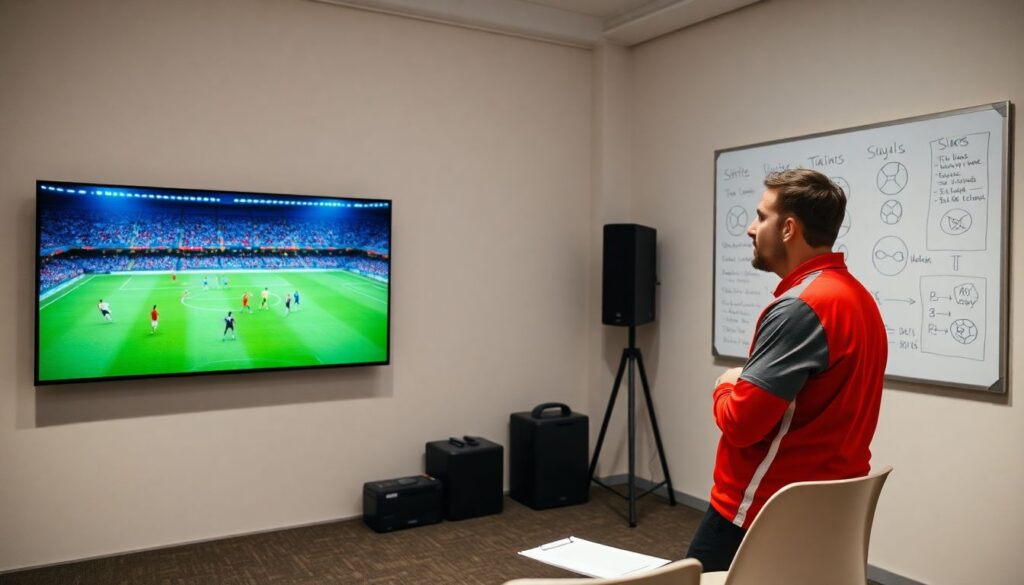
Brief staff and players with clear, visual summaries
Create a short presentation with 10-15 clips and a one-page metric summary. Focus on one main theme in and out of possession, plus set pieces or special situations.
-
Review after the match and refine your model
Compare what you expected to what actually happened in the match. Adjust your tagging rules and metrics so that your tactical model becomes more accurate over time.
Быстрый режим: condensed tactical workflow
- Write down three tactical questions for the next match.
- Tag only the situations linked to those questions in the last three opponent games.
- Count basic frequencies and effectiveness, then select 10-12 illustrative clips.
- Design two to three training drills that mirror the main patterns.
- After the match, update your notes to improve the next opponent analysis.
Physical load, injury prevention and recovery monitoring
Use this checklist to verify whether your physical load and injury monitoring process is working as intended in your Turkish football or basketball environment.
- You track player minutes and high-intensity actions across matches and training sessions consistently.
- You use at least one simple wellness scale (sleep, soreness, stress) reported regularly by players.
- There is a visible link between high load weeks and adjustments in training volume or intensity.
- Return-to-play decisions combine medical clearance, physical testing and position-specific drills.
- Injury reports are stored centrally and reviewed regularly by coaching and medical staff.
- Training drills are categorized by intensity so that you can plan progressions objectively.
- Communication between fitness coach, head coach and medical staff happens at planned times, not only after problems appear.
- You monitor cumulative load for high-risk players, such as older starters or those with previous soft-tissue injuries.
- In basketball, you pay special attention to back-to-back games and travel, adjusting court time and practice length.
- For academy players, growth and maturation are considered when planning load and competition schedules.
Integrating video, tracking and wearable data for practice design
When combining video, tracking and wearables to shape training, coaches often repeat similar mistakes. Avoid these to keep players safe and focused.
- Collecting huge amounts of GPS and wearable data without deciding which metrics actually guide training changes.
- Designing drills from software dashboards instead of from tactical and technical goals on the pitch or court.
- Ignoring that basketball performance analytics tools often use possession-based metrics, which require different interpretations than football GPS data.
- Sending complex numeric reports to players instead of using simple visuals and clear language.
- Comparing data from different devices or providers as if they were identical without calibration.
- Neglecting context such as travel, match importance or weather when reading load and performance numbers.
- Overreacting to single-day spikes in load instead of tracking longer trends.
- Failing to synchronize video timestamps with tracking data, which makes clip interpretation confusing.
- Letting only performance staff see the data while technical coaches remain uninvolved in decisions.
- Skipping validation with simple field tests to confirm what the data suggests about fitness or fatigue.
Roadmap for adopting analytics in Turkish clubs: budget, personnel, KPIs
Different Turkish clubs require different adoption paths depending on budget, staffing and competition level. Here are practical alternatives and when they make sense.
Option 1: Internal basic analyst with low-cost tools
Suitable for second division and many youth academies. Hire or assign one person with strong spreadsheet skills and basic tactical understanding. Use free or low-cost software, plus a structured workflow for match and training reports.
Option 2: Hybrid model with external consultants
Ideal for clubs that want deeper models or specific projects but cannot hire a full team. Combine an internal coordinator with external sports analytics consulting services turkey for tasks like expected goals models, opposition reports or recruitment frameworks.
Option 3: Full analytics department with integrated systems

Best for top-flight teams with stable budgets and European ambitions. Invest in tracking systems, advanced databases and dedicated analysts for performance, scouting and medical support. Prioritize integration with existing platforms and clear KPIs linked to club strategy.
Option 4: Shared services at federation or multi-club level
Useful for regional clubs and academies with very limited resources. Share analysts and tools via federation programs, university partnerships or multi-club groups, making professional data driven coaching in sports accessible beyond elite budgets.
Practical concerns and solutions for coaches
How can a small Turkish club start with analytics on a low budget?
Focus on consistent video recording, basic stats in spreadsheets and one staff member responsible for reports. Use free tools and public data, and improve your processes before investing in expensive platforms.
Do I need coding skills to benefit from analytics as a coach?
No, most benefits come from clear questions, structured observation and simple metrics. Coding becomes useful only when you already have stable workflows and want to automate or scale them.
How often should we present data to players without overloading them?
Link data communication to your weekly cycle: short feedback after matches, focused metrics before the next opponent and occasional deeper reviews. Keep sessions short and prioritize video clips over long tables.
What is different between football and basketball analytics in practice?
Football uses more continuous tracking and per-90 metrics, while basketball relies heavily on possession-based and play-type stats. Design your KPIs and reports according to how each game flows and how often key events repeat.
How can we avoid conflicts between the analyst and head coach?
Define roles early, agree on key questions and keep communication regular. Analytics should support the coach’s game model; disagreements are resolved by testing ideas in training and matches, not by winning arguments in meetings.
When is it worth investing in paid analytics software?
Consider paid platforms once you already use video and basic stats consistently and feel limited by manual work. Evaluate cost against time saved, quality of insights and how well the tool fits your existing workflows.