Mental Toughness in Elite Athletics: Why It Matters More Than Ever
When people talk about elite sport, they still default to VO₂ max, strength tests and GPS numbers. But if you sit in an Olympic village dining hall or at a Diamond League warm‑up track, the conversations among champions are increasingly about something else: nerves, focus, fear and how to keep your head when everything is on the line. Mental toughness isn’t a motivational cliché anymore; it’s a performance variable, measured, trained and budgeted for.
By 2026, very few world‑class setups treat mental preparation as optional. Federations and pro clubs now build it into their performance models the same way they do nutrition or biomechanics. Turkey is a good example: in less than two decades, the country shifted from a handful of medal hopes to a steady pipeline of combat‑sport, weightlifting and team‑sport champions, and behind that rise is a quiet revolution in how athletes think, regulate emotions and handle pressure.
—
From Grit Myths to Measurable Skill: A Short Historical Detour
If you go back to the 1970s and 1980s, mental toughness was mostly framed as “being naturally tough” or “having heart.” Soviet and Eastern Bloc systems experimented with structured mental training, but in most countries the norm was simple: if you could handle brutal training and competing while injured, you were tough. If you broke down, you “weren’t made for it.”
Turkish sport in that era fits this pattern. Wrestling and weightlifting legends like Yaşar Doğu and later Naim Süleymanoğlu were celebrated for heroic resilience, but the process behind it was opaque—coaches trusted volume, discipline and national pride more than any formal psychological method. Mental strength was assumed to emerge from hardship, not from design.
Things changed in the 1990s and 2000s as sports psychology became more empirical. Olympic teams started to embed psychologists; cognitive‑behavioral tools, attentional control training and biofeedback entered daily practice. By the time athletes like Michael Phelps, Novak Djokovic or Eliud Kipchoge were dominating their sports, they openly discussed visualization, routines and psychological support as non‑negotiables rather than secrets.
In the 2010s and early 2020s, Turkish elites followed the same curve. You can see it in modern wrestling champions like Taha Akgül, in taekwondo, and especially in the women’s volleyball “Sultans of the Net,” whose rise to European supremacy came with a visible shift in how they talk about mindset, composure in fifth sets and the deliberate use of sports psychology support.
—
What Mental Toughness Actually Is (and Isn’t)
From Vague Idea to Operational Definition
In high‑performance environments, “mental toughness” today is broken down into specific, trainable constructs:
– Stress tolerance: ability to maintain technical and tactical execution under physiological and psychological stress.
– Attentional control: switching and sustaining focus on the right cues, especially under distraction.
– Emotion regulation: modulating anxiety, anger, and over‑excitement before and during competition.
– Confidence under uncertainty: sustaining self‑belief when the outcome is in doubt or recent results are poor.
– Task persistence and rebound: recovering quickly from errors or setbacks within a match or season.
Instead of telling an athlete “be tougher,” modern coaches ask: “Which component is breaking down?” A Turkish freestyle wrestler melting in the last 30 seconds of tight matches doesn’t need generic motivation; they may need specific cognitive re‑framing and breathing protocols to prevent attentional collapse when lactate and scoreboard pressure spike.
Common Misconceptions
– Mental toughness is not permanent personality. It fluctuates with fatigue, environment and skill development.
– It is not the same as ignoring pain or pushing through injury; that’s sometimes recklessness.
– It is not built only by suffering; it improves when athletes master tools to manage stress, not just endure it.
This more technical approach is exactly what underpins any serious mental toughness training program for athletes in 2026, whether you’re talking about a Turkish national team or a global powerhouse like USA Track & Field.
—
Lessons from Turkish Champions: Context‑Specific Toughness
Combat Sports and Controlled Aggression
Turkey’s traditional strengths—wrestling, weightlifting, later taekwondo and boxing—are ideal case studies in how culture, coaching and psychology interact.
Elite Turkish wrestlers historically grew up in emotionally intense environments: noisy local tournaments, national expectations, and direct coach communication that could oscillate between harsh criticism and deep loyalty. That fosters competitiveness, but it can also create volatility.
Over the last decade, Turkish federations have increasingly paired this cultural edge with structured mental skills:
– Short, repeated match‑simulation drills with score deficits to practice late‑match decision‑making.
– Pre‑match routines to standardize arousal levels (for example, specific breathing sequences and cue words).
– Video‑assisted “pressure reviews,” where athletes rewatch their own high‑stress moments to reconstruct better cognitive responses.
The lesson for global sport is clear: mental toughness is most effective when tailored to the sport’s “stress signature” and the country’s motivational culture, not applied as a generic motivational speech.
Women’s Volleyball: Collective Mental Resilience
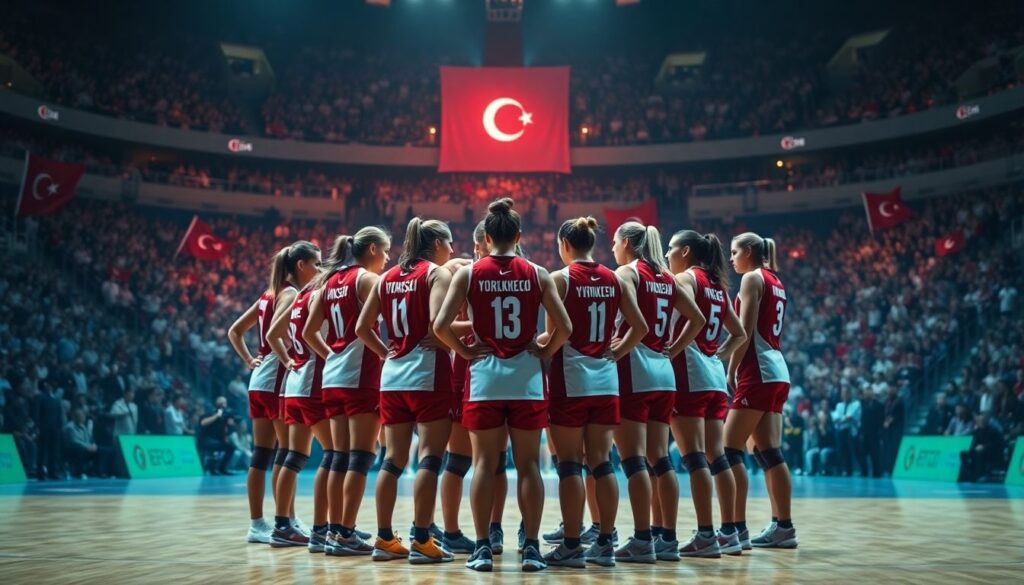
Team sports add another layer: shared emotional states. The Turkish women’s volleyball team that conquered Europe did not just serve harder; they learned to buffer momentum swings, crowd noise and the emotional weight of representing a country experiencing rapid sporting expectations.
Notice their visible behaviors: tight huddles after every point, clear role clarity, and quick re‑focusing after errors. Those are practical outputs of:
– Work on communication under fatigue.
– Agreed “reset rituals” after lost points.
– Training blocks where coaches deliberately create hostile scenarios—loud crowd noise, bad calls, scoreboard adversity—so athletes can rehearse responses.
Here, mental toughness is less about the solitary hero and more about distributed resilience across the lineup.
—
Global Champions and Transferable Mental Models

While cultural details differ, the mental operating systems of world champions share common architecture. If you listen to Kipchoge talk about the marathon, Djokovic about tie‑breaks, or Simone Biles about returning after setbacks, you’ll hear a convergence on three principles:
1. Deliberate coping strategies, not vague hope.
2. Repetition of mental reps just like physical ones.
3. Long‑term identity that isn’t destroyed by a bad day.
These principles are exactly what modern sports psychology coaching for elite athletes tries to systematize. For example, in endurance sports, athletes learn:
– Pre‑race planning that includes “if–then” scripts for stomach issues, pace disruptions or weather shifts.
– On‑the‑move cognitive cues (“relax the shoulders,” “one more lamppost”) to keep thoughts functional when fatigue spikes.
– Post‑race debriefs that convert disappointment into information, rather than into self‑attack.
The practical lesson for Turkish and other developing sporting nations is that the mental methods used by global superstars are not mystical; they are replicable processes, if there is institutional will to install them.
—
Where Data Meets Mindset: Statistics on Mental Training
Adoption and Performance Correlations
Quantifying mental training is tricky, but several trends since the early 2010s are consistent across Olympic programs:
– In many Olympic teams, 60–80% of athletes report regular use of some form of mental skills training (from basic goal‑setting to structured psychological sessions).
– Studies in endurance and team sports commonly show small to moderate performance gains (for example, tighter performance variability, better execution under pressure) linked to systematic psychological interventions.
– Injury‑return timelines and “time lost to non‑contact issues” (burnout, motivational drop‑off) often improve when mental health and mental performance are integrated.
In Turkey, internal federation audits (where they exist) tend to show that athletes who engage consistently with psychologists or mental skills coaches have higher retention rates between junior and senior levels. That’s critical in a country trying to turn youth success into sustainable elite output.
Demand for Professional Support
On the service side, demand has accelerated. By the mid‑2020s:
– More than half of top European football and basketball clubs have at least one full‑time or retained performance psychologist.
– Olympic‑level national teams in combat and endurance sports typically include mental performance staff in major championship delegations.
– Private athletes in individual sports are increasingly willing to hire performance psychologist for professional athletes as a strategic investment, on par with hiring a specialist sprint or strength coach.
The key shift is that psychology is no longer viewed solely as a remedial service for “problems,” but as another marginal gain.
—
Economics of Mental Toughness: A Quiet but Growing Market
Direct Spending and Return on Investment
The business side of mental performance has evolved fast. Global estimates suggest that the broader sports psychology and mental performance market—services, apps, consulting—reached the low single‑digit billions of dollars by the early 2020s and is projected to keep growing as more federations, clubs and individual athletes professionalize.
Why are stakeholders willing to pay?
– Talent protection: Losing one elite prospect to burnout or chronic anxiety can cost a federation years of investment.
– Performance margins: In sports where podium places are separated by hundredths of a second or one successful attempt, a small psychological edge has disproportionate value.
– Brand and media value: Stable, mentally robust stars are more reliable for sponsors and broadcasters.
For Turkish sport, the calculation is similar. Funding is finite, so federations ask: is it better to invest in another training camp, or in a dedicated mental toughness specialist who can elevate the yield of existing camps? Increasingly, the second option wins.
New Business Models and Services
The mid‑2020s have seen an explosion of:
– Independent consultants offering niche elite athlete mindset coaching services to small, highly specialized groups.
– Hybrid roles in clubs where one professional straddles mental performance, leadership development and cultural design.
– Subscription platforms where young athletes in Turkey or emerging markets can access structured mental skills curricula at a fraction of the cost of full‑time staff.
This is also where the line between “sports” and “well‑being” industries starts to blur, creating both ethical and commercial questions.
—
Digital Transformation: Online Coaching and Global Access
Remote Performance Support
Technology demolished the old constraint that an athlete and a psychologist had to be in the same city. Video calls, asynchronous messaging and wearable data streams allow ongoing psychological coaching across continents.
That’s particularly impactful for sports where travel is constant and budgets are limited. For example, online mental skills coaching for runners and triathletes now often includes:
– Pre‑race video consults to refine strategy and coping plans.
– Real‑time check‑ins from training camps at altitude or in remote locations.
– Data‑informed debriefs where GPS and heart‑rate traces are matched with subjective stress logs to map psychological responses to pace or terrain.
For Turkish distance runners trying to compete with East African powerhouses, this remote support can mean consistent mental training even when they’re moving between domestic meets, European circuits and high‑altitude camps.
Scalability and Risks
Digital delivery has clear economic upsides: a single expert can work with more athletes, at more price points. But there are caveats:
– Quality control: Not every “mindset coach” is licensed or experienced enough for elite environments.
– Cultural nuance: Text‑based or short calls can miss contextual cues, especially across cultures.
– Data privacy: Performance diaries and stress logs are highly sensitive; breaches can hurt reputations and competitive advantage.
The systems that win in the long term will be those that combine scalability with rigorous standards and deep contextual understanding of each sport and country.
—
Designing Effective Mental Toughness Programs
Core Components
Across Turkish and global high‑performance environments, robust mental programs tend to include:
– Assessment: Baseline profiles of attentional style, coping preferences, and current stressors.
– Education: Teaching athletes, coaches and sometimes parents the basic “mechanics” of stress, focus and motivation.
– Skills training: Concrete tools—breathing, self‑talk, imagery, pre‑performance routines, de‑brief protocols.
– Integration: Working with technical and physical coaches so mental drills are embedded in normal sessions.
– Review and iteration: Tracking how psychological tools hold up under real competition stress and adapting.
A well‑structured mental toughness training program for athletes doesn’t sit in a separate classroom. For example, a Turkish sprinter learning to handle false starts might:
– Practice re‑set breathing after simulated gun malfunctions.
– Use specific cue words during acceleration phases in training.
– Review training blocks with the psychologist to link emotional spikes with start consistency.
Collaboration with Coaches and Staff
The days when a psychologist operated in a silo are fading. The most effective setups build interdisciplinary trust. Strength coaches know the athlete’s stress profile; head coaches understand basic psychological principles; psychologists understand the tactical language of the sport.
In practice, that might look like:
– Pre‑season workshops where all staff align on vocabulary (for example, what “pressure training” actually means).
– Shared planning documents where mental objectives are listed next to technical ones.
– Joint debriefs after major competitions to avoid contradictory messages to athletes.
Without this integration, mental interventions can be diluted or even undermined by conflicting coaching styles.
—
Forecasts to 2030: Where Mental Toughness Is Headed
Trends in Elite and Turkish Sport
Looking out toward 2030, several trajectories seem likely, based on current trajectories up to 2024:
– Normalization of psychological staff: It will be unusual for a top‑20 athlete in any Olympic sport not to have some form of structured mental support.
– Data‑enhanced mental training: Wearables and AI will be used not just to track physical output but to infer stress and cognitive load, feeding back into psychological interventions.
– Earlier start in development pathways: Federations, including Turkey’s, will introduce mental skills training at cadet and junior levels, not just once athletes reach senior national squads.
– More cross‑pollination with military, aviation and corporate performance science, sharing methods for decision‑making under stress.
For Turkey specifically, as the country continues to invest in hosting events and building pro leagues (volleyball, basketball, football), the commercial incentive to maintain mentally robust domestic stars will only grow.
Regulation and Professional Standards
As the economic stakes increase, so will scrutiny. Expect:
– Stricter certification requirements for those marketing themselves as high‑performance psychologists.
– Ethical guidelines for working with youth and for managing dual roles (for example, one practitioner serving both club and national team).
– Clearer boundaries between mental performance work and clinical mental health treatment, especially where issues like depression or trauma arise.
This maturation will be crucial to protect athletes from inadequate or harmful services, while still encouraging innovation.
—
Industry Impact: Beyond the Track and the Mat
How Mental Toughness Shapes the Wider Sports Ecosystem
Mental performance work now influences:
– Broadcast narratives: Commentators talk openly about pressure, coping and confidence, moving away from shallow “choke” stories.
– Sponsorship messaging: Brands highlight resilience, vulnerability and comeback arcs; they want ambassadors who can articulate their psychological journey.
– Fan expectations: Audiences have become more literate about mental health and performance, especially after high‑profile withdrawals and disclosures from global stars.
This feedback loop reinforces the value of credible elite athlete mindset coaching services, as athletes who can self‑regulate and communicate their inner game become media and commercial assets as well as podium threats.
Spillover into Amateur and Youth Sport
What happens at the top trickles down. Young Turkish athletes now grow up seeing national heroes talk about psychologists and mindset in mainstream interviews. Parents and local coaches—who once equated “toughness” with stoicism and punishment—are slowly updating their models.
We see:
– Youth academies incorporating basic mental skills modules.
– Amateur runners using adapted tools from high‑performance playbooks.
– Schools inviting performance psychologists to talk about exam stress using sports metaphors.
This democratization has its risks (oversimplification, pseudo‑expertise) but overall raises the cognitive and emotional literacy of the sporting ecosystem.
—
Practical Takeaways: Applying the Lessons
For Athletes and Coaches

If you’re an elite or aspiring elite athlete—whether in Turkey or anywhere else—the main practical lessons from Turkish and world champions are straightforward:
– Treat mental training like strength training: scheduled, progressive, and evaluated.
– Build sport‑specific routines and coping strategies rather than generic motivation.
– Involve your coach early; alignment reduces friction and amplifies gains.
– Recognize that recovery of the nervous system (sleep, off‑field stress management) is inseparable from mental toughness.
Many athletes still only seek help when something is “broken.” The champions you admire usually invested in mental skill building while things were already going well.
For Performance Systems and Federations
Federations, clubs and national institutes that want a sustainable competitive edge should:
– Budget consistently for psychological services, not just in Olympic years.
– Ensure that when they hire performance psychologist for professional athletes, they integrate that role structurally, rather than tacking it on.
– Respect cultural context: Turkish athletes, for example, may benefit from different communication styles and metaphors than athletes from Nordic countries.
– Evaluate impact not just in medals but in athlete retention, burnout rates and quality of decision‑making under pressure.
As mental toughness becomes more central to performance models, simply “having a psychologist on staff” won’t be enough; the question will be how intelligently that expertise is deployed.
—
Conclusion: Mental Toughness as a Strategic Asset
Mental toughness in elite athletics has evolved from a romantic myth into a strategic asset you can design for. The stories of Turkish champions—from wrestling mats to volleyball courts—mirror global trends: those who systematically train their minds, with qualified support, outperform equally talented peers who rely only on raw grit.
In 2026, the competitive gap is no longer just about who trains hardest physically, but who has built the most robust, context‑sensitive mental architecture around that training. Nations, clubs and athletes who understand this—and who combine culturally grounded toughness with scientifically informed methods, from in‑person work to sophisticated remote support like sports psychology coaching for elite athletes and specialized online services—are the ones most likely to define the podiums of the next decade.