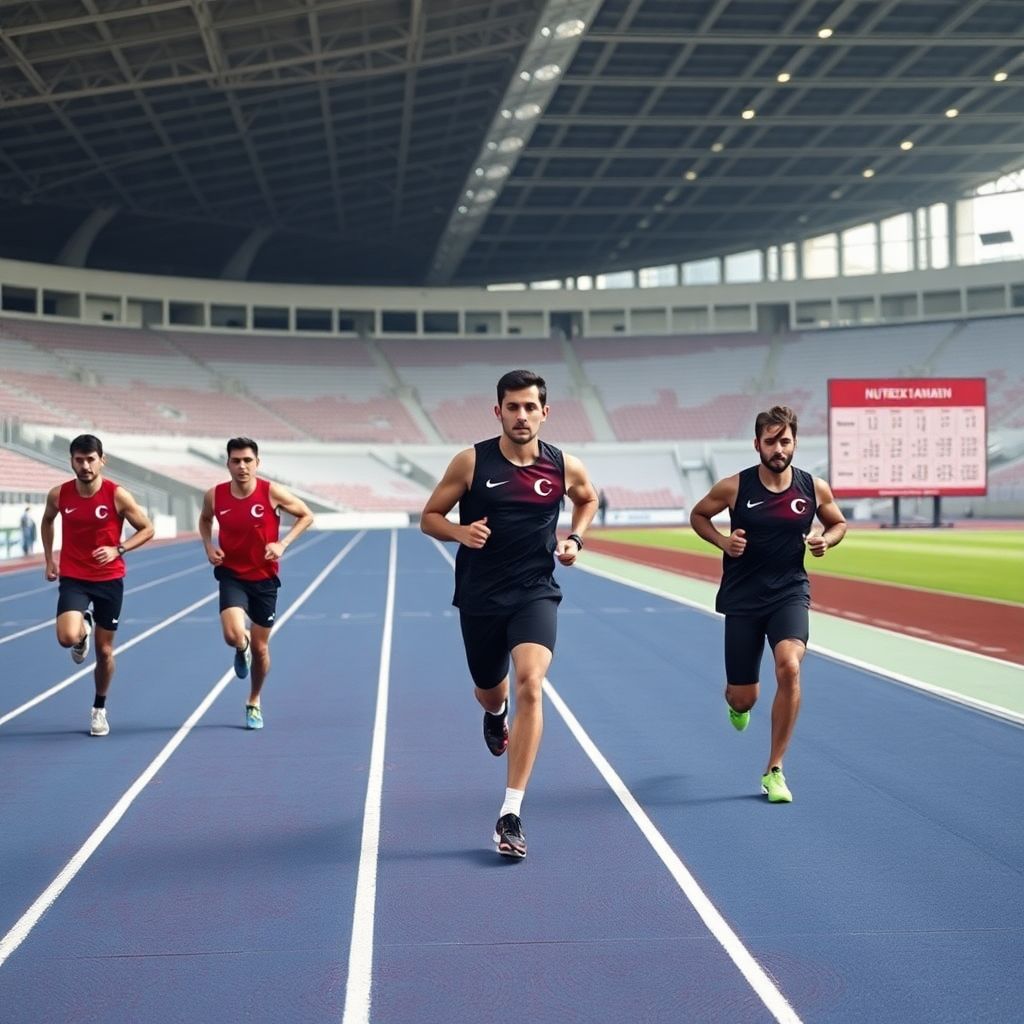
Elite Turkish track & field athletes use periodized nutrition and training: higher carbs and power work in intense phases, more protein and technical focus in lighter phases, plus strict hydration and sleep routines. You can adapt these principles safely by planning meals around sessions, tracking recovery, and adjusting volume gradually under professional supervision.
Core Principles of Elite Turkish Track & Field Nutrition
- Match daily carbohydrate intake to training load so sprint and interval days get more fuel than recovery days.
- Keep protein evenly spread across 3-5 meals to support muscle repair and strength development.
- Use mostly whole Turkish foods (legumes, rice, bulgur, yogurt, olive oil, vegetables, fruit) before considering supplements.
- Time pre‑ and post‑workout meals to protect performance: light, low‑fat carbs before; mixed carbs and protein after.
- Stay ahead of dehydration with planned drinking, not just thirst, especially in hot Turkish summer conditions.
- Monitor body weight, energy, sleep and soreness weekly; adjust food or training instead of making drastic changes.
- Consult an elite athlete nutrition coach turkey or sports physician before advanced strategies like rapid cutting or new supplements.
Periodized Macronutrient Strategies for Sprinters and Middle-Distance Runners
This approach suits healthy sprinters and middle‑distance runners training consistently within a structured turkey athletics high performance training program. It is not appropriate for athletes with unmanaged medical conditions, eating disorders, or growing children without medical and dietitian supervision.
Sprinters and 400 m runners usually combine very high‑intensity but shorter sessions with heavy power lifting, while 800-1500 m runners combine speed with more aerobic work. A safe macronutrient plan reflects both discipline and phase of the season.
How to align carbs, protein, and fats with training phases
- General preparation (off‑season base)
Focus on building work capacity and basic strength. Training is mixed but not yet highly specific.- Emphasize balanced meals with moderate to high carbohydrates from grains, potatoes, and fruit.
- Prioritize lean protein (chicken, fish, eggs, yogurt, legumes) at each meal.
- Use healthy fats (olive oil, nuts, tahini) without chasing extremes like “very low‑fat” or ketogenic diets.
- Specific preparation (pre‑season)
Intensity and speed of sessions go up; weight training becomes more explosive.- Increase carbohydrates on hard track days (sprint sessions, long intervals) with extra bread, rice, or pasta.
- Keep protein steady to protect muscle while volume may start to fall.
- Avoid large fat loads close to sessions to reduce stomach discomfort.
- Competition phase
Quality and speed matter more than volume.- Use light, easily digested carb‑based meals pre‑race (white rice, toast, bananas, yogurt).
- Maintain protein spread across the day, not in one huge dinner.
- Keep fats moderate; focus on foods you have already tested in training.
- Transition and recovery
After the season, training load and intensity drop.- Reduce carbohydrates in line with lower training volume to avoid unnecessary weight gain.
- Maintain adequate protein to help heal small injuries and preserve lean mass.
- Include plenty of vegetables, fruit, and fluids to support overall health.
Safe daily structure for a professional sprinter diet and workout plan
A practical day during a turkish track and field training camp or home training might look like this (adjust portion sizes to body size and hunger):
- Pre‑morning session: light snack 60-90 minutes before (e.g., toast with honey and a small yogurt, plus water).
- Post‑morning session: mixed meal within 1-2 hours (rice or bulgur, chicken or fish, salad, fruit, water).
- Pre‑gym or afternoon track: small carb‑focused snack (banana, grilled simit portion, or rice cakes).
- Post‑gym: protein‑rich meal again with some carbs; avoid going to bed under‑fed after heavy lifting.
- Evening: lighter meal if needed; include vegetables and healthy fats for recovery and satiety.
Strength and Power Training Cycles: Turkish Practice and Progressions
High‑performance Turkish sprinters and jumpers typically organize strength work into cycles that match the track focus. To follow similar patterns safely, you need basic equipment and clear limits to avoid overuse injuries.
Essential requirements and tools
- Facility access
- Standard 200-400 m track with safe surface for sprints, strides, and plyometrics.
- Well‑equipped gym: power rack, barbells, bumper plates, dumbbells, adjustable bench, pull‑up bar.
- Minimum monitoring tools
- Training log (paper or digital) to record sets, reps, loads, and session RPE (how hard it felt).
- Simple stopwatch and, if possible, timing gates or a reliable smartphone timing app.
- Body mass scale for weekly weight and a tape measure for simple girths if body composition is a focus.
- Support staff and medical clearance
- Initial check‑up from a sports physician, especially if you have cardiovascular, joint, or metabolic issues.
- Guidance from a qualified strength coach or olympic track and field coaching clinics turkey if you are new to Olympic lifts or heavy squats.
- Foundational movement capacity
- Ability to perform bodyweight squats, lunges, push‑ups, planks, and controlled landings from small jumps without pain.
- If any movement causes sharp pain, stop and seek professional assessment before adding load.
Simple progression model for strength and power
- Accumulation phase: 3-4 weeks of moderate loads, 3-5 sets of 6-10 controlled reps, focused on technique.
- Intensification phase: 3-4 weeks of heavier loads, 3-5 sets of 3-6 reps, longer rest, more neural focus.
- Power phase: 3-4 weeks of lighter loads moved explosively, jumps and throws with full recovery between sets.
- Taper week: reduce sets and loads, keep some speed and low‑volume power work to stay sharp.
Hydration, Supplementation, and Recovery Protocols Used by Turkish Nationals
Before you follow the step‑by‑step routines below, consider these safety limitations and risks:
- Avoid new supplements without clearance from a sports doctor; some products can be contaminated or interact with medications.
- Do not overhydrate; excessive drinking in a short time can be dangerous for sodium balance.
- If you have kidney, heart, or blood pressure issues, hydration and electrolyte strategies must be individualized.
- Intense heat at summer competitions in Turkey increases dehydration risk; adjust workload and clothing accordingly.
- Painkillers should not be used to “push through” injuries; rest and assessment are safer long‑term.
- Establish a basic daily hydration pattern
Most elite Turkish athletes spread fluid intake evenly from morning to evening.- Drink a glass of water soon after waking.
- Sip fluids regularly instead of large, infrequent intakes.
- Use urine color as a simple guide: very dark suggests you need more, completely clear all day can mean overdoing it.
- Plan session‑specific hydration for heat and humidity
Track sessions at a turkey athletics high performance training program in coastal cities can be very hot.- Arrive at the track already hydrated; do not try to catch up during warm‑up.
- For sessions longer than about an hour in significant heat, include water plus a source of electrolytes (sports drink or homemade salty drink).
- After training, continue drinking small amounts until urine has returned to a light straw color.
- Use supplements conservatively and legally
National‑level athletes in Turkey follow anti‑doping rules strictly.- Rely first on food: dairy, meat, fish, legumes, grains, vegetables, and fruit.
- If you consider protein powders, electrolyte tablets, or caffeine, choose products with independent quality testing where possible.
- Keep a list of everything you use and review it regularly with a sports physician or dietitian.
- Protect sleep as your primary recovery tool
Even at a busy turkish track and field training camp, top athletes protect their sleep window.- Aim to go to bed and wake up at roughly the same time daily, including weekends.
- Keep the bedroom dark, quiet, and cool; avoid screens for at least 30 minutes before sleep.
- Finish heavy meals 2-3 hours before bed to reduce digestive discomfort.
- Layer in soft‑tissue and mobility work safely
Foam rolling and light stretching are used to support, not replace, rest.- After key sessions, spend 5-15 minutes on gentle rolling of quads, hamstrings, glutes, and calves.
- Use relaxed stretches, holding 20-30 seconds, without bouncing and without pain.
- If something feels sharper after mobility work, reduce intensity or stop and seek advice.
Integrating Track Sessions with Gym Work: Weekly Microcycle Templates
Below is a simple reference table showing how a week can be structured for a sprinter and a middle‑distance athlete. This reflects how a professional sprinter diet and workout plan might align sessions and recovery days.
| Day | Sprinter Focus | Middle-Distance Focus |
|---|---|---|
| Monday | Acceleration + Heavy Lower Body Strength | Interval Session + General Strength |
| Tuesday | Tempo Runs + Core & Mobility | Easy Run + Core & Mobility |
| Wednesday | Max Velocity + Olympic Lifts | Threshold or Fartlek + Light Strength |
| Thursday | Recovery Jog or Off + Mobility | Recovery Run or Off + Mobility |
| Friday | Speed Endurance + Mixed Strength | Intervals + Strength or Hills |
| Saturday | Easy Running / Drills + Jumps | Long Run |
| Sunday | Off or Very Light Activity | Off or Very Light Activity |
Checklist to see if your weekly integration is working
- You can complete key track sessions with stable times and technique from week to week.
- Heavy gym days are paired with or followed by easier running days, not additional maximal sprint work.
- You have at least one clearly low‑load day per week, and ideally one full rest day.
- Joint pain (knees, hips, lower back) does not increase steadily across the week.
- You wake up most days feeling ready to train, not chronically exhausted or sore.
- Nutrition supports the hardest sessions: higher carbs are eaten on heavy track and gym days.
- Morning body weight and resting heart rate are reasonably stable over several weeks.
- You can maintain quality in warm‑up drills; if drills feel sloppy, the weekly load may be too high.
- Coaches or training partners notice speed and power improving, not just “working harder”.
Body Composition Management: Safe Approaches to Peaking and Weight Changes
Elite athletes sometimes fine‑tune body mass around major competitions, but extreme or rushed changes can harm performance and health. Common mistakes to avoid include:
- Dropping food intake suddenly in the final weeks before key races, leading to heavy fatigue and higher injury risk.
- Skipping breakfast regularly to “save calories”, then overeating late at night.
- Using dehydration (saunas, sweat suits, excessive clothing) to lose weight rapidly before an event.
- Copying another athlete’s cutting plan from an olympic track and field coaching clinics turkey without considering your own event and history.
- Relying on unverified fat‑burner supplements instead of adjusting training and daily habits.
- Weighing yourself multiple times per day and reacting emotionally to small fluid shifts.
- Eliminating entire food groups without clear medical reasons or professional guidance.
- Ignoring signs of low energy availability: missed or irregular periods (for women), persistent low mood, or frequent illnesses.
- Trying to change body composition aggressively in the middle of the most intense training block.
Safer strategies are slow, steady changes, regular meals, a slight energy deficit or surplus as needed, and planning adjustments in the general preparation phase, not right before championships.
Monitoring, Testing, and Data-Driven Adjustments for Training and Diet
When you do not have access to a full sports science lab, you can still use simpler alternatives to guide adjustments used in a typical turkey athletics high performance training program.
Practical alternatives for tracking progress
- Field performance tests instead of lab testing
Use consistent 30 m, 60 m, or 150 m times with the same warm‑up, track, and timing method. For middle‑distance, track regular time trials over standard distances at controlled effort. - Simple wellness and training log instead of advanced monitoring systems
Each day, record sleep length and quality, perceived fatigue, muscle soreness, mood, and appetite. Note what you ate around sessions and any stomach issues; this helps refine your professional sprinter diet and workout plan. - Periodic coach review instead of continuous analytics
If you attend an elite athlete nutrition coach turkey consultation or structured olympic track and field coaching clinics turkey, bring your logs. Review patterns every 4-6 weeks to adjust volume, intensity, and nutrition. - Home body composition tracking instead of DEXA
Combine stable morning body weight (once or twice per week) with simple circumference measurements (waist, hip, thigh). Do not obsess over daily fluctuations; look at trends over several weeks.
Practical Clarifications and Safety Considerations
How should a teenager adapt these routines safely?
Teen athletes should focus on technique, consistent meals, and enjoyment, not strict body composition or maximal loads. Heavy lifting and advanced dieting should be supervised by qualified coaches and medical professionals familiar with youth development.
Can I follow these guidelines without a full team of coaches?
You can apply the basic structures-balanced meals, planned hydration, gradual training progression-on your own. However, for high‑intensity sprinting and heavy lifting, periodic check‑ins with an experienced coach significantly reduce injury risk.
What if I train during Ramadan or have other fasting periods?
Adjust session timing toward periods when you can fuel and hydrate, and reduce the highest‑intensity or longest workouts if necessary. Work with a knowledgeable coach or sports dietitian to plan pre‑dawn and evening meals around religious practices.
Are contrast baths, massage, or ice baths necessary for recovery?
They are optional tools, not requirements. Most benefit comes from good sleep, appropriate training load, and adequate nutrition; use additional methods only if they help you feel better and do not replace the basics.
How fast should I change my body weight before an important meet?

Rapid changes are risky; aim for very gradual adjustments planned well before the main season. If you feel weak, irritable, or your performance drops, stop the change and restore a more comfortable intake level.
What signs suggest I am overtraining or under‑recovering?
Persistent fatigue, loss of speed, poor sleep, repeated illnesses, and loss of motivation are warning signs. In this case, reduce training load for at least a week and increase rest and fueling; see a sports physician if symptoms persist.
Is it safe to copy an elite Turkish athlete’s exact diet?

No. Elite diets are built around their specific body, schedule, and medical history. Use the patterns and principles, but adapt foods, timing, and portions to your own needs and seek individual advice when possible.