
Over the last few seasons, Turkey has quietly turned from a “hosting country” into a producing country. Instead of just staging ITF events in Antalya and Istanbul, it’s starting to send real contenders onto the tour. If you work with juniors, are picking a base for pre-season, or simply follow turkish tennis players rising stars, Turkey has become a case study in how a non‑traditional tennis nation can build a pipeline fast, on a realistic budget and with smart scheduling.
At the same time, the picture is not fairy‑tale perfect. Funding is patchy, indoor courts are limited in many cities, and players often patch together their support teams. Precisely this mix of progress and constraint makes Turkey especially interesting from a practical, developmental point of view: you can see which habits and structures actually move the needle when resources are not unlimited.
Why Turkey is suddenly on the tennis radar
The turning point came when domestic infrastructure caught up with ambition. A dense calendar of $15k–$25k ITF events in Antalya, Istanbul and Mersin has given local players a “home circuit” where they can chase points without burning money on flights. Add a few higher‑level events—like the former Istanbul WTA event and several ATP Challenger tournaments—and you get an ecosystem where a teenager can test themselves against veterans almost every month. For coaches, this is golden: you can periodise training around known events instead of gambling on wildcards abroad.
For juniors and parents, this means you can now build a three‑year plan without leaving the region. Instead of waiting for one or two wildcards a year, Turkish players can rack up 70–80 professional matches annually at home, with familiar coaches in the stands and less travel fatigue. That’s a major reason why we’re seeing the best young tennis players from turkey crack the Top 200 earlier than the previous generation.
Zeynep Sönmez: controlled aggression and efficient patterns
Among the new wave, Zeynep Sönmez stands out as the most “tour‑ready” profile. She has already broken into the WTA Top 200 and is steadily pushing towards Grand Slam qualifying draws. Her game is built around heavy topspin from the forehand side, a compact two‑handed backhand and excellent court coverage. What matters for practitioners is not just her weapons, but how clearly she plays to patterns: inside‑out forehand from the ad side, then inside‑in to finish; backhand line change only when her base position is stable. This pattern discipline is teachable, and it shows in her low unforced‑error stretches in long rallies.
From a coaching standpoint, Sönmez is a textbook example of development without “artificial” firepower. She is not six feet tall, her serve is solid rather than explosive, yet she holds routinely against bigger hitters by hitting first serves above 60% and placing them with predictable, rehearsed targets. Juniors watching her should focus less on highlight winners and more on how many times she plays the same first‑ball pattern after serve or return. That replicable structure is something even a 13‑year‑old can copy in practice.
Technical focus – Sönmez’s baseline template
– Serve: around 170–180 km/h max, but with a clear three‑target system (wide, body, T) on both sides; very little “hope tennis”.
– First ball: forehand from the middle, aiming deep cross first, then only going line when balanced.
– Movement: small, frequent adjustment steps before contact; almost no lunges off‑balance on neutral balls.
Practical takeaway: run serve + first‑ball drills where the player is allowed only two patterns for an entire session. Track not winners, but how many times they execute the chosen pattern cleanly in a row. This mimics the way Sönmez builds reliability instead of variety.
İpek Öz: lefty patterns and transition instincts
İpek Öz offers a completely different case study. A left‑hander who has also been inside the WTA Top 200, she leverages the classic lefty serve wide on the ad side and a high‑spinning forehand to pull opponents off court. She’s particularly interesting for coaches who want to teach juniors how to transition to the net without being serve‑volley specialists. Öz often uses a heavy cross‑court forehand to open the court, then takes the next ball early up the line and moves forward behind it, cutting off angles with simple, compact volleys.
For right‑handed juniors, copying a lefty might sound odd, but it’s really about learning “mirror” principles: create width first, then attack the open space. Watching Öz, you also see the importance of second‑serve aggression. Instead of “just starting the point”, she looks to attack second‑serve returns with early contact and depth through the middle, taking time away even if she’s not hitting a winner. That’s a behavioural choice that can be coached from the 12‑and‑under level.
Technical focus – Öz’s lefty serve strategy
– Ad‑side priority: wide slider to pull the returner off court, then open forehand into the opposite corner.
– Deuce side: more T serves than many right‑handers, using the natural lefty swing to jam the body.
– Net transition: clear rule—if she gets a short ball after a wide serve, she goes line and closes; no “maybe”.
Practical takeaway: build serve + 2‑ball patterns where your player must either (a) hit wide and then go line, or (b) hit T and then attack the middle. Score only when the serve and both groundstrokes hit pre‑set targets; this installs the kind of automatic decision‑making you see in Öz’s matches.
Ergi Kırkın and Yankı Erel: contrasting blueprints for the men’s side

On the men’s side, Ergi Kırkın and Yankı Erel illustrate two very different paths that still come from the same system. Kırkın is a grinder‑plus: strong legs, high rally tolerance, and a heavy forehand that he uses to push opponents back rather than blow them off the court. He’s made steady progress on the Challenger tour, collecting multiple ITF titles and wins over established Top‑200 players. Erel, in contrast, came up with more visible “junior credentials”, including success at the boys’ Wimbledon doubles, and displays a more aggressive mindset: bigger cuts on the forehand, more willingness to flatten out the backhand, and a serve that can produce free points when the percentage is there.
For development coaches, these two should be watched side by side. Kırkın shows what you can get from physical robustness, structured defence and percentage tennis: hold your depth, play heavy to the opponent’s weaker wing, and ask questions physically. Erel shows the cost‑benefit of attacking tennis on slower clay: more winners, but also more volatility in results. Working with ambitious juniors, you can use their match footage to discuss style identity: “Are you guided more by Kırkın’s ‘stay one more ball’ or Erel’s ‘take it on the rise’?” This kind of concrete comparison is more effective than abstract talk about “being aggressive”.
Technical focus – men’s baseline identities
– Kırkın: deeper contact point, more net clearance, and a clear bias towards cross‑court exchanges before changing direction.
– Erel: earlier contact, especially on the rise off second serves; backhand line change used as a surprise weapon.
– Shared foundation: both rely heavily on first‑step explosiveness and fitness built on long clay‑court blocks in Antalya.
Practical takeaway: design two separate micro‑cycles in training—one “Kırkın‑style” (long drills, higher net clearance, rally tolerance tests) and one “Erel‑style” (shorter, intense blocks with strict on‑the‑rise hitting). Rotate juniors through both, then decide which micro‑cycle becomes their main identity.
Inside the system: academies, coaching, and camp culture
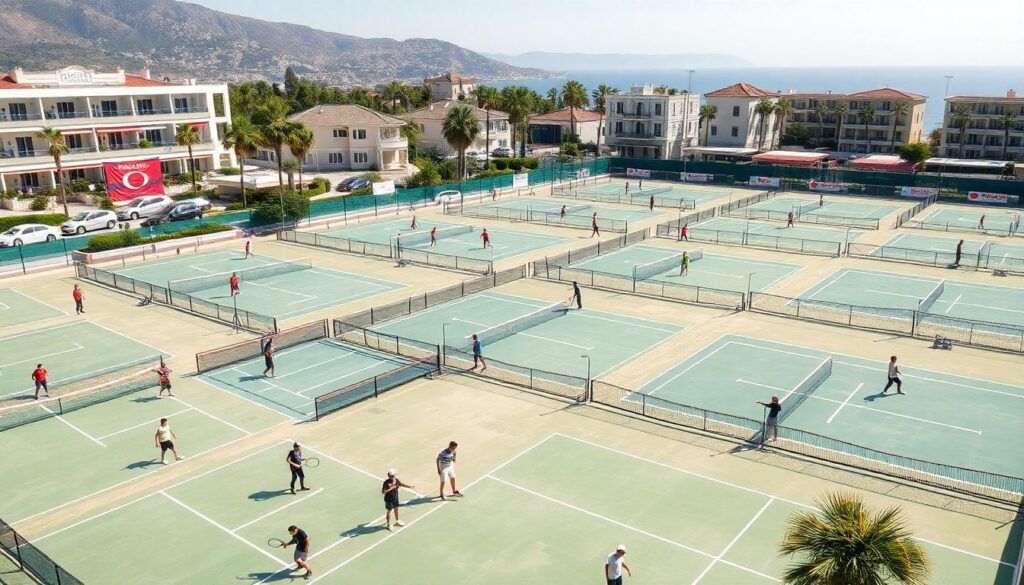
The structural backbone behind these careers is the cluster of turkey tennis academies for juniors anchored around Istanbul, Ankara and the Antalya resort belt. Many of them grew out of simple club programs attached to hotel complexes that hosted Futures events; over time, they brought in foreign sparring partners and fitness staff and evolved into year‑round high‑performance centres. What sets them apart is their integration with the local pro tournament calendar: it’s common for a 15‑year‑old to train mornings and then go sit courtside at ITF matches in the afternoon, scouting live and sometimes even hitting with main‑draw players on off‑days.
This link between practice courts and “real tennis” is a crucial lesson for any developing federation. Rather than isolating juniors from the pro game, Turkey feeds them into qualifying draws early, often as hitting partners first. You see the same coaches working with U14 groups at 9 a.m. and then sitting in a pro player’s corner by 3 p.m. That kind of continuity means technical messages are consistent from childhood to the first ATP or WTA points, which is exactly what professional tennis coaching in turkey has been criticised for lacking a decade ago, and is now steadily improving.
Technical focus – structural advantages in Turkey
– Climate: long outdoor season, especially on clay and hard courts in Antalya, allows for volume without expensive indoor time.
– Calendar: stacked ITF schedule reduces travel overhead and lets players “spend” energy on matches, not on airports.
– Coaching continuity: many head coaches wear multiple hats—academy lead, travelling coach, sometimes even Fed Cup or Davis Cup roles.
Practical takeaway: if you’re planning development in another country, study how Turkish academies marry local events with training blocks. Try organising your own circuits (even at club level) so that juniors regularly see and feel the demands of the next level instead of prepping in a vacuum.
What visiting players can actually gain from Turkey
For foreign juniors and young pros, Turkey is more than a cheap tournament destination. The combination of weather, court availability and opponent diversity makes tennis training camps in turkey for youth a realistic way to simulate tour life. A typical two‑week block in Antalya might include 8–10 intense hitting sessions on clay, 4–6 structured fitness sessions, and 6–8 official matches across one or two ITF events, all with minimal travel in between. That density is hard to replicate in many Western European cities without a much higher budget.
From a practical planning angle, Turkey is especially useful for players transitioning from junior to pro tennis. They can schedule back‑to‑back $15k events to get used to three‑set grind matches, then jump into a Challenger qualifying draw without changing time zones. The mix of local counter‑punchers and travelling big‑hitters also forces tactical adaptation. If you’re coaching a 17‑year‑old who crushes everyone at home, dropping them into this environment for a month can be a reality check that still feels manageable rather than overwhelming.
Technical focus – designing a Turkey block for your player
Week 1: high‑volume training (2 on‑court + 1 fitness daily), plus practice sets vs local players with specific tactical themes (e.g., “win 70% of points under 5 shots”).
Week 2: reduce training load, enter ITF event, keep one technical focus per day only (serve targets, return position, or one rally pattern).
Metrics: track not only wins and losses, but hold percentage, break‑point conversion, and unforced errors by pattern—just as Turkish academies increasingly do for their own rising players.
Future potential: what to expect from this generation
Projecting careers is risky, but some trends are clear. With several men and women already hovering around the Top 200 and a broad base of players with ATP/WTA points in their early twenties, Turkey has moved out of the “one‑off talent” stage. The core question now is whether it can consistently produce Top‑100 regulars. Given the current structure, it’s realistic to expect at least one or two Turks in each main draw of Grand Slams within the next five years, especially if support for physios and travelling coaches expands.
For practitioners, the bigger lesson is methodological: Turkey shows that you don’t need a superstar facility to build a wave of solid pros. You need tournaments, coherent coaching messages, and early exposure to real competition. Whether you’re building a program in Eastern Europe, Central Asia or North Africa, analysing these best young tennis players from turkey and the ecosystem around them is more actionable than copying the blueprints of already‑dominant tennis nations. The players mentioned here are not just names; they are living case studies in how to convert local opportunity into global relevance.