Context: Why Turkish Tactics Are Evolving Right Now
Turkish football has quietly shifted from chaos-first to structure-first. Money from European campaigns, access to tracking data and a new wave of analytically minded coaches have pushed clubs to rethink how they press, build and rest in possession. When people talk about modern football tactics in Turkey today, they mean coordinated pressing triggers, zonal occupation of half‑spaces and planned rest-defense, not just “fight and win”. This evolution is most visible in the Super Lig, where mid‑table squads copy ideas from Champions League powerhouses but adapt them to local player profiles and intense fan pressure.
Key Tactical Terms Without the Jargon Fog
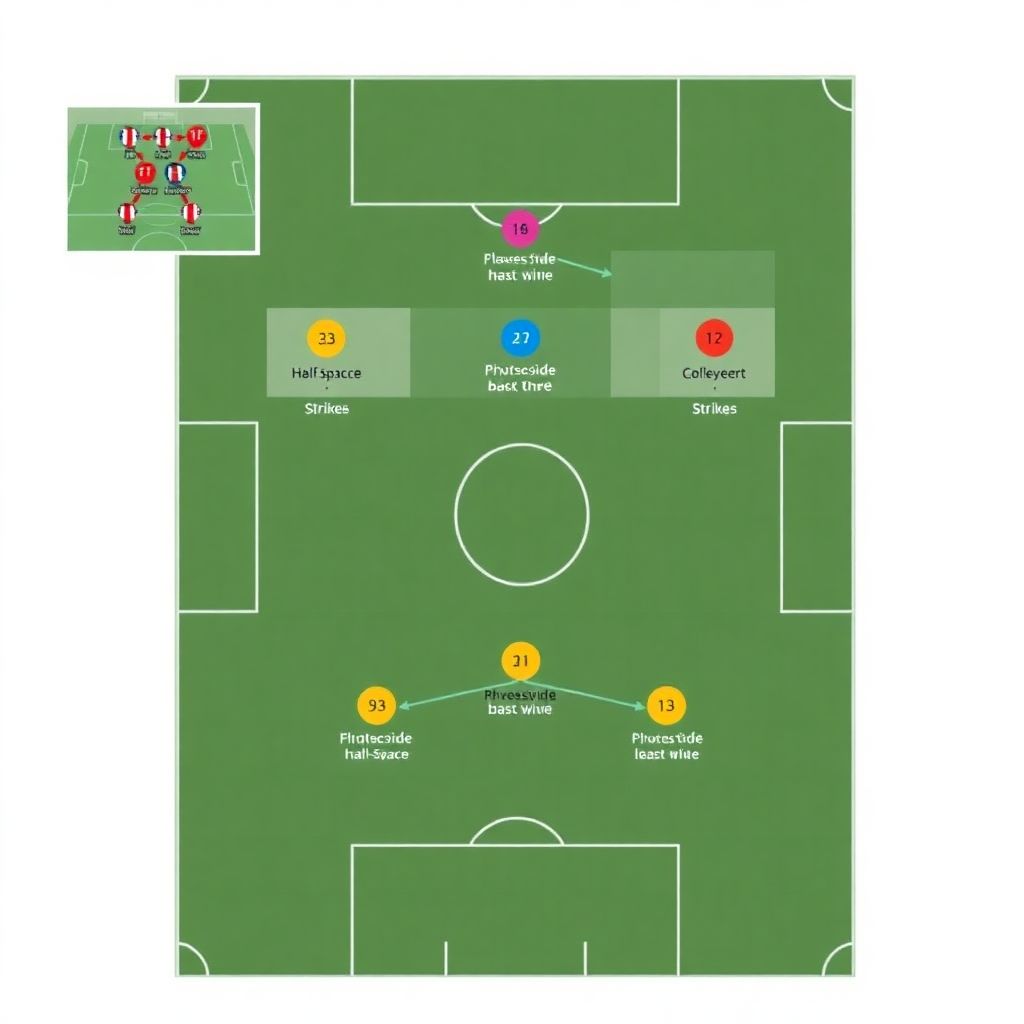
To follow Turkish Super Lig tactics, it helps to lock down a few definitions. “Rest‑defense” is your team’s defensive structure while attacking, basically the safety net behind the ball. “Half‑space” is the vertical lane between wing and center, prized because defenders hate deciding who owns it. “Pressing trigger” is a pre-agreed cue to start collective pressure, like a back‑pass to a nervous keeper. Compared with older Turkish setups based on man‑to‑man duels, the new vocabulary signals a shift toward space‑oriented defending, passing lanes control and numerical superiority zones.
Visualizing Structures: Diagrams in Words
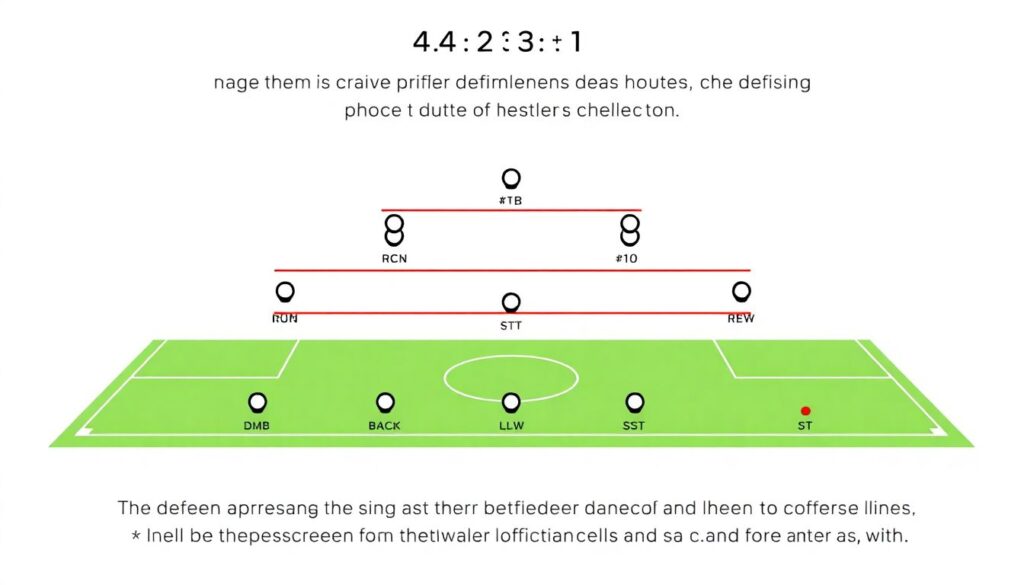
Imagine a simple diagram in text. Draw a 4‑2‑3‑1 as: GK – [RB, RCB, LCB, LB] – [DMR, DML] – [RW, #10, LW] – [ST]. Now add a high press: push RW, ST, LW onto the opposition back three, slide #10 to screen their holding mid and squeeze the back line to the halfway line. Conceptually: three horizontal lines compress into two, reducing vertical space. A second sketch: think of five vertical lanes (wide – half‑space – center – half‑space – wide). Modern Turkish coaches design rotations so at least three lanes are always occupied, keeping passing angles alive.
Pressing and Defensive Structures in the Super Lig
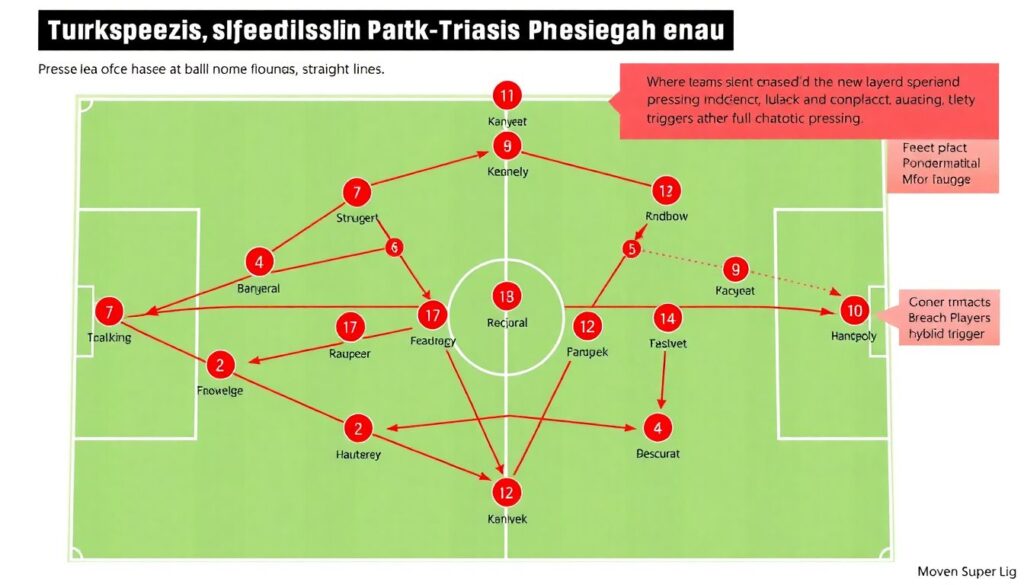
Pressing has probably changed more than anything. Where teams once chased the ball in straight lines, they now build layered pressing schemes that look closer to Bundesliga models. The best tactical teams in Turkish Super Lig rarely go full chaos press; instead they use hybrid mid‑blocks, springing traps near the touchline. For instance, a nominal 4‑4‑2 can morph into a 4‑2‑3‑1 press, with one striker dropping to block the pivot. Compared to Italy’s more patient blocks, Turkish sides accept higher volatility, banking on transitions and crowd‑boosted energy to turn recovered balls into shots.
Attacking Patterns and Build-Up Play
With the ball, you increasingly see three‑man first lines in build‑up: either full‑back inverting into midfield or dropping alongside the center‑backs. In “diagram mode”, think CB–CB–FB with the opposite full‑back high and wide to stretch the last line. Many Super Lig clubs copy positional play concepts but simplify them: fewer fixed automatisms, more freedom for the #10 and wingers. Compared with Spanish sides, circulation is faster but riskier; switches of play and early crosses still matter. You’ll notice that even classic counter teams have at least one rehearsed pattern to progress through the half‑space under pressure.
Data, Turkish Super Lig Analysis and Statistics
Under the hood, Turkish Super Lig analysis and statistics are finally guiding decisions instead of just decorating presentations. Clubs track pressing intensity with passes allowed per defensive action, use expected goals to judge shot quality and analyze set‑piece conversion like mini‑games. The difference from Premier League setups is scale: fewer analysts, smaller budgets, but similar concepts. Some staffs run “post‑match maps” showing zones where pressing died or build‑up stalled. Think of a heatmap overlaid with arrows; coaches ask why arrows disappear in certain corridors, then adjust rest‑defense or overload plans for the next match.
Turkish Football Coaching and Tactics Culture
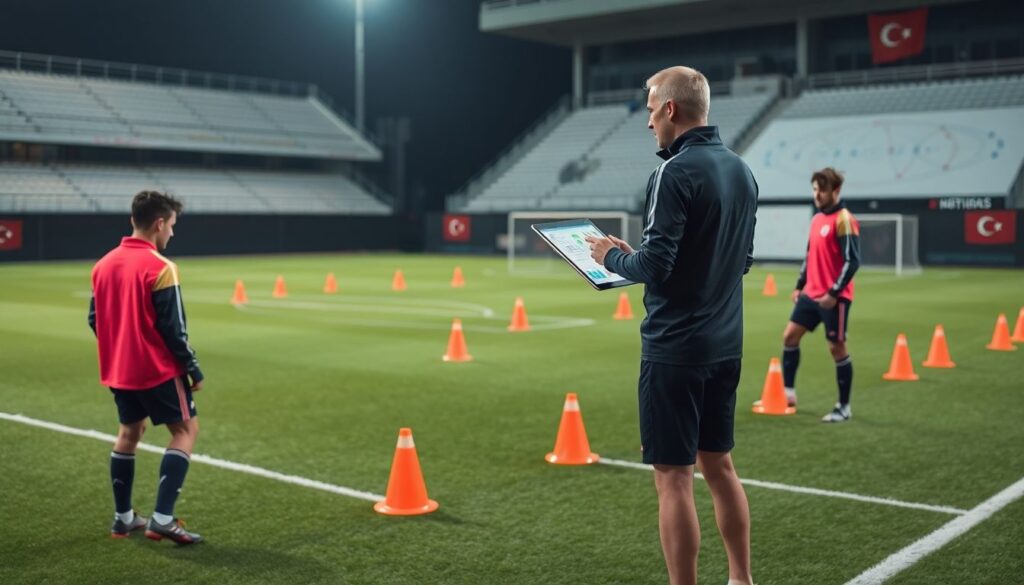
A big driver of change is the new generation of local coaches who studied abroad or in data‑heavy environments. Turkish football coaching and tactics no longer rely solely on charisma and motivation; there is more session design around game models, phase‑of‑play drills and constrained games to teach specific rotations. Where veteran managers might focus on “heart” and duels, the modern wave speaks of occupation, staggering and timing. Compared with German academies, the pipeline is still uneven, but the influence is visible: assistant coaches handling analysis, individualized video for players and periodized tactical themes across the week.
Common Rookie Mistakes When Learning Tactics
New fans and young coaches run into the same traps when they start decoding Turkish Super Lig tactics. To keep it concrete:
1. They obsess over formations and ignore principles, thinking 4‑3‑3 alone explains everything.
2. They judge teams on goals only, not chance quality or build‑up stability.
3. They confuse “high press” with simple running and forget about compactness.
4. They copy European giants without adapting to local player strengths.
5. They overlook rest‑defense, so their teams look great in attack and awful after losing the ball.
Novice Errors on the Pitch: Player Perspective
At player level, beginners often chase the ball instead of managing space, breaking the team’s block and opening vertical lanes. Wingers drop too deep in fear, turning a 4‑4‑2 into an accidental 6‑2‑2 and killing transition threats. Young midfielders commit another classic mistake: they ask for the ball with their back closed to the field, so they can’t play forward on the first touch. Diagram this mentally: instead of a triangle with two forward options, you get a flat line, easy to press. Over time, coaches try to rewire these habits via small‑sided constraints.
Comparing Turkey’s Tactical Curve to Other Leagues
Compared with the Premier League, where pressing schemes are hyper‑refined, Turkey is in a transitional phase: principles are known, execution is uneven. Versus Serie A, you see less extreme low‑block mastery but more willingness to exchange punches. La Liga still leads in structured positional play, yet modern football tactics in Turkey have closed the gap in rest‑defense and transitional control. The interesting part is the hybrid identity: Turkish teams mix European structure with local aggression and emotional momentum, leading to matches where a well‑drilled press can suddenly turn into a wild, end‑to‑end brawl.
How to Actually Study These Tactical Shifts
If you want to really understand how Super Lig clubs are changing the game, start simple. Pick two or three teams and rewatch matches focusing only on one phase: press, build‑up or rest‑defense. Mute commentary, pause often and sketch rough “stick‑figure” diagrams of lines and distances. Note when pressing triggers happen: bad touches, back‑passes, wide traps. Then check public data to see if your eye test matches underlying numbers like PPDA or xG conceded. Over time you’ll spot patterns, and the noisy chaos of a Turkish match will start to look like a planned, if volatile, system.