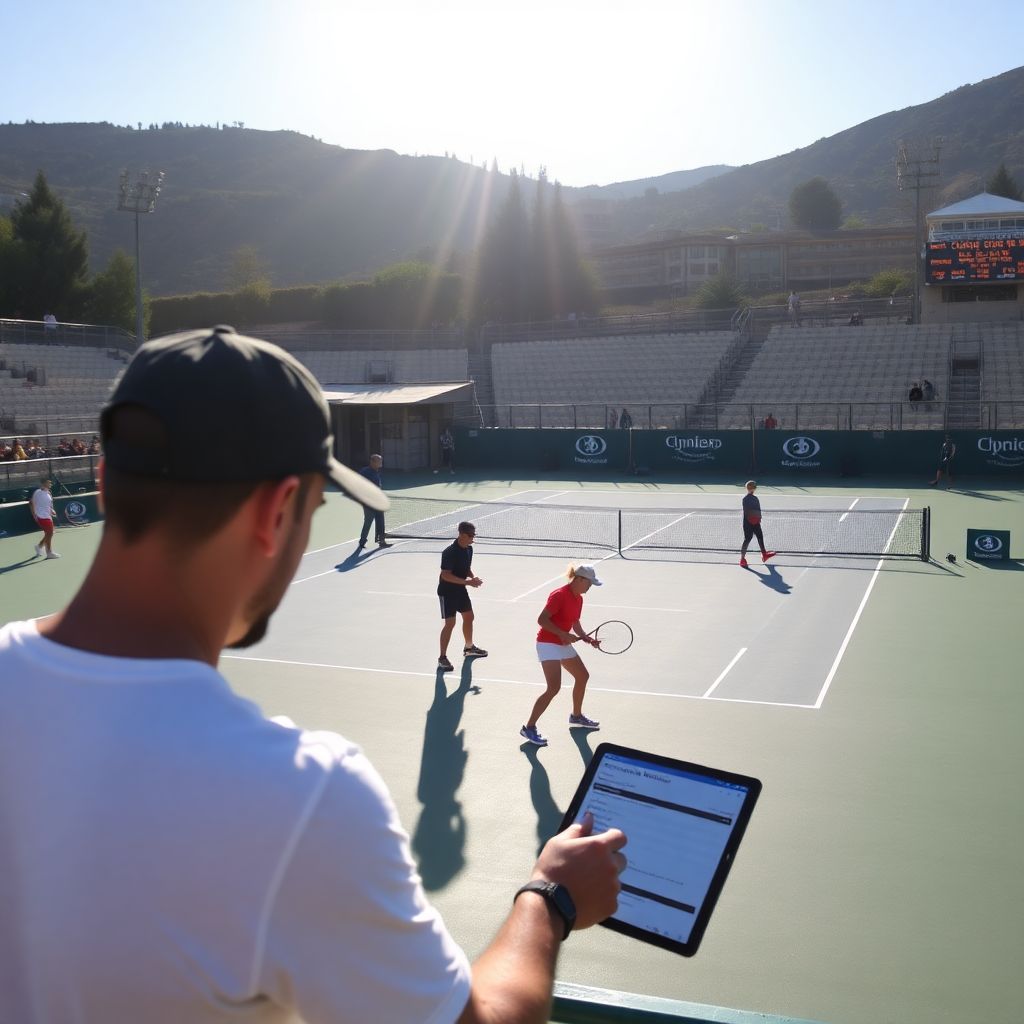
Challenger tournaments in Turkey give ambitious players affordable, high‑quality match experience on familiar surfaces, with strong draws but manageable travel and costs. To benefit, you must plan around the ATP Challenger Turkey schedule, adapt training to local climate, and manage logistics, recovery, and data tracking with the discipline of a professional team.
Core Lessons from Turkey’s Challenger Circuit
- Turkey’s Challenger events are ideal bridges between ITF Futures and full ATP Tour, especially for regional players.
- Success depends more on planning, surfaces, and climate adaptation than on raw talent alone.
- Using professional tennis academies in Turkey strategically shortens the learning curve.
- Careful scheduling of tennis tournaments in Turkey 2024 can significantly reduce travel fatigue and costs.
- Systematic match review and ranking tracking matter more than chasing individual “big wins”.
- Combining events with turkey tennis holidays with coaching is useful only if training intensity stays professional.
Overview of Turkey’s Challenger Tournament Landscape
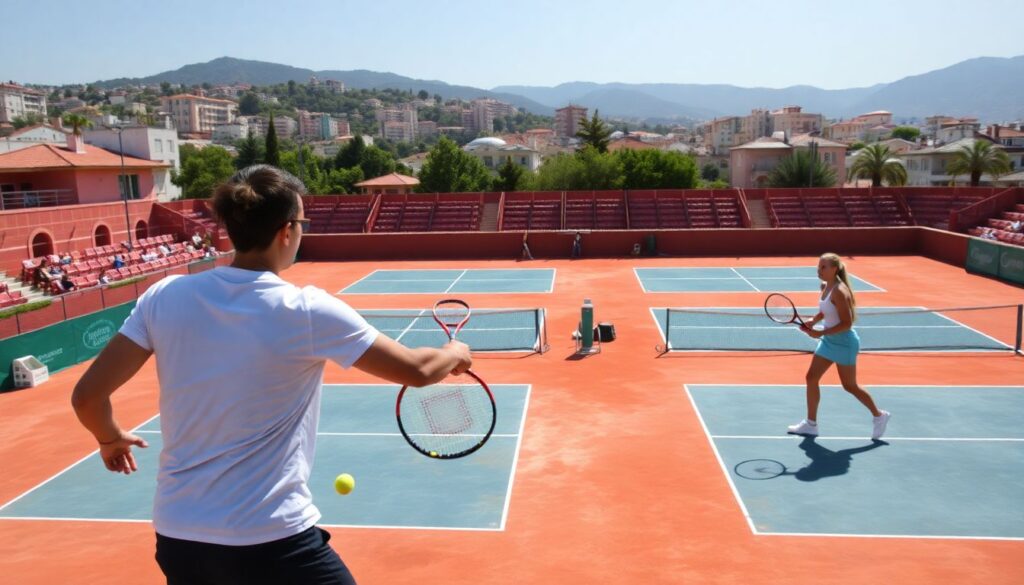
Turkey hosts a compact but influential series of ATP Challenger events on both hard and clay courts. Most are clustered in well‑equipped coastal or major-city venues, often close to resorts, academies, and strong practice bases.
These tournaments suit players who already compete regularly in ITF events and can handle best-of-three-set intensity week after week. They are especially useful for players from Europe, the Middle East, and Central Asia looking to minimise long‑haul travel while raising their level.
You should avoid committing to a full swing on this circuit if you lack consistent match fitness, have no budget buffer for several weeks of expenses, or are still developing basic weapons (serve, first-attack patterns, and reliable patterns on second serve). In such cases, additional time in national events or lower ITF tiers is usually safer and more productive.
Pathways for Young Players: From Futures to Challenger Events
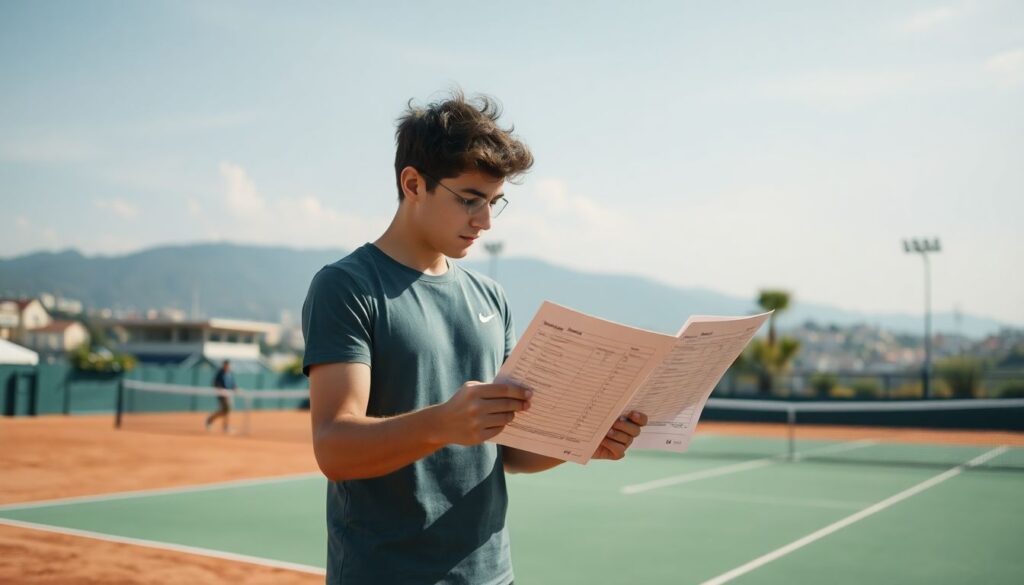
Moving from Futures to the Challenger level in Turkey requires both formal prerequisites and practical tools.
- Ranking and entry requirements – You generally need:
- ATP ranking (even modest) to enter directly or gain acceptance into qualifying.
- Solid ITF World Tennis Number / national ranking to justify wild card requests.
- A clear tournament plan built around the ATP Challenger Turkey schedule to sequence events logically.
- Technical and tactical foundation
- Reliable first serve and a second serve that survives pressure on faster coastal courts.
- One clear offensive pattern (for example: serve + forehand, or return + early backhand) that you can repeat under stress.
- Competence on both hard and clay, as surfaces in Turkey vary across the calendar.
- Support team and training base
- Access to professional tennis academies in Turkey or in your home country for periodised work.
- At least part‑time coach support on site, or remote video-based guidance.
- Physical trainer (even online) to manage loads around tournaments.
- Planning tools and information sources
- Updated calendars listing all tennis tournaments in Turkey 2024 and beyond.
- Booking tools for flights and apartments close to venues.
- Simple spreadsheet or app to track costs, points earned, and match stats.
- Preparation environments
- Tennis training camps in Turkey for adults and juniors to simulate match weeks on identical surfaces.
- Practice sessions with higher-ranked players ahead of events, where possible.
- Occasional turkey tennis holidays with coaching, used intentionally to rebuild confidence and fitness.
Coaching and Training Adjustments for Turkey’s Surfaces and Climate
Use this step-by-step framework to adapt your training plan specifically for Turkish Challenger conditions while keeping everything safe and manageable.
- Map your target events and likely conditions – Start by identifying which Challenger stops you will play across the season.
- Check each venue’s typical surface (indoor hard, outdoor hard, or clay) and expected temperatures.
- Align this with the ATP Challenger Turkey schedule so you know when to peak on each surface.
- Discuss with your coach how many weeks in a row you can safely compete without overloading.
- Adapt volume and intensity to heat and humidity – Conditions in Turkey can be hot, especially at coastal events.
- Shift the heaviest on‑court work to morning and late afternoon when possible.
- Use shorter, high-quality drills (interval hitting, point play) instead of long grinding sessions at midday.
- Increase hydration planning: water plus electrolytes, practiced in training, not just in matches.
- Fine‑tune movement patterns for local courts – Court speeds in Turkey can vary within the same category.
- On faster hard courts, practice shorter split steps, aggressive first strikes, and quick forward transitions.
- On clay, rehearse controlled sliding and deeper recovery positions after wide balls.
- Use match‑play sets in similar conditions, such as at tennis training camps in Turkey for adults, to store “automatic” footwork responses.
- Build tournament-proof physical conditioning – Your body must tolerate back‑to‑back matches.
- Include 2-3 weekly strength sessions in the pre‑tournament phase, then reduce to lighter maintenance work during events.
- Prioritise core, hips, and shoulder stability to reduce common overuse risks.
- Use safe progressions: gradual increases in sprint and change-of-direction work, not sudden jumps in volume.
- Install heat and travel recovery routines – Recovery is a skill, not an afterthought.
- Standardise post‑match routines: cool‑down jog or bike, dynamic stretching, light snack, then proper meal.
- Use simple tools (foam roller, massage ball) instead of relying only on on‑site physio.
- Plan sleep hygiene for travel days: limit screens late at night, hydrate, and avoid heavy meals before bedtime.
- Practice match‑specific Turkish scenarios – Simulate realistic conditions you will face.
- Play practice sets at the same time-of-day as scheduled matches to adapt to light and temperature.
- Train tie‑breaks and long deuce games to prepare for momentum swings.
- If you use turkey tennis holidays with coaching, ask the staff to set up Challenger-style match formats and opponent types.
- Coordinate with your academy or home base – Ensure continuity between training blocks and tournaments.
- Share your full event list with any professional tennis academies in Turkey or elsewhere that you work with.
- Ask them for micro‑plans: last 10-14 days before each event, including tapering and surface-specific work.
- Agree in advance how you will send match videos or stat sheets back for feedback.
Fast-Track Mode for Turkey Challenger Preparation
When time is limited, use this condensed process while keeping workload safe:
- Pick 2-3 key events that fit your ranking entry chances and travel budget.
- Do a 10-14 day mini‑block on the same surface and at similar daily temperatures.
- Run match‑play first (sets and tie‑breaks), then add specific drills only for your biggest weaknesses.
- Standardise one recovery routine you repeat after every intense session and match.
- Review one metric per week (first‑serve percentage, break‑point conversion, or unforced errors under pressure) to keep improvement targeted.
Match Preparation: Tactical, Physical and Mental Routines for Challengers
Use this checklist the day before and on match days at Turkish Challenger events.
- Confirm match time, court, and transport; plan to arrive at the venue 60-90 minutes early.
- Scout opponent basics: handedness, patterns, and recent results; set two simple tactical priorities.
- Run a 20-30 minute hit that matches expected court pace and bounce, not a full match rehearsal.
- Pack match bag systematically: rackets, grips, towels, snacks, drinks, cap, sunscreen, and any necessary medication.
- Design pre‑match warm‑up: general (jog, mobility), specific (shadow swings, mini tennis), then full intensity.
- Use a short mental routine: breathing pattern plus 2-3 cue words describing how you want to play.
- Agree communication rules with coach: when and what kind of signals or notes you will use, within regulations.
- Visualise key situations on Turkish courts: serving in the wind, closing sets, playing after medical timeouts.
- Schedule post‑match debrief within 2-6 hours to record statistics and quick notes while memory is fresh.
Tournament Logistics: Scheduling, Travel, Accommodation and Recovery
Avoid these common mistakes when organising your Turkish Challenger swing.
- Entering too many consecutive weeks without realistic evaluation of physical tolerance and budget.
- Ignoring total travel time between cities and underestimating how long domestic transfers actually take.
- Booking accommodation far from the venue, forcing long commutes and reducing rest windows.
- Choosing apartments or hotels without reliable practice court access on rest and travel days.
- Skipping insurance and not having a plan for injuries, illness, or last‑minute withdrawals.
- Failing to pre‑check racket stringing services and string availability at specific tournaments.
- Relying on random restaurants instead of planning safe, predictable meals around match times.
- Not adjusting sleep schedules after late-night matches, leading to cumulative fatigue across the swing.
- Overspending in early weeks and then feeling financial pressure exactly when you reach better form.
Measuring Progress: Using Results, Rankings and Performance Data to Advance
Challengers in Turkey are only useful if they move you forward. When they do not, consider alternatives that still support long‑term growth.
- ITF and national events with targeted goals – Drop back temporarily to Futures or strong national tournaments with a clear plan:
- Specific ranking target over a defined period.
- Focused technical objectives (for example, return depth or net approaches per set).
- Rebuilding confidence by converting more match‑point and break‑point chances.
- Intensive academy training blocks in Turkey – Use periods at professional tennis academies in Turkey to:
- Repair weak patterns identified in Challenger matches.
- Upgrade physical base and movement without match-pressure stress.
- Practice pressure situations via controlled competition days.
- Themed training camps and coaching holidays – Well‑structured tennis training camps in Turkey for adults and juniors, or turkey tennis holidays with coaching, can:
- Provide varied sparring partners away from ranking-pressure.
- Allow safe experimentation with new tactics or rackets.
- Serve as mental reset weeks in a familiar tennis culture.
- Mixed schedule: limited Challengers plus regional events – Combine a few key tennis tournaments in Turkey 2024 and 2025 with:
- Regional money tournaments or leagues for extra match volume.
- Short training blocks between events to digest lessons.
- Clear review checkpoints every 8-12 weeks to decide whether to scale up, hold, or step back.
Practical Concerns Raised by Players and Coaches
How many Turkish Challenger events should an intermediate pro aim for in a season?
Plan a small cluster first, such as 2-4 events around one base, and review after each swing. Volume should follow your physical readiness, budget, and entry chances, not the full number of tournaments available.
Is it realistic to combine work or studies with a Challenger swing in Turkey?
It is possible but demanding. If you must combine, choose tournaments near one city, minimise travel days, and schedule online work or study blocks only on rest days, never right before or after matches.
Do I need a full-time coach on site at every event?
No, but you need consistent guidance. A hybrid model works: occasional on‑site weeks plus remote support via video, stats, and calls. Make sure responsibilities are clear before the season starts.
Are tennis training camps in Turkey for adults useful for serious competitors?
They are useful when structured like a pro pre‑season: high-intensity, match‑play focused, and led by experienced coaches. Avoid camps marketed mainly as holidays if your main goal is ranking progress.
How early should I arrive in Turkey before my first Challenger match?
Arriving at least two full days before your first match is a practical minimum to adjust to weather, courts, and time zone. If you are coming from a different climate or time zone, add an extra day when possible.
What is the safest way to manage heat during summer events?
Train your hydration and cooling strategies before tournaments, not just during them. Use shade whenever available, wear light clothing, and be ready to adjust tactics-shorter points and more aggressive play-to avoid excessive physical strain.
How do I know when I am ready to step up from national events to Turkish Challengers?
Look for consistent success at your current level: frequent deep runs, competitive matches against higher‑ranked players, and stable physical recovery between matches. Discuss objective data with your coach before committing to the step up.