
For Turkey, the most resilient strategy is not choosing esports or traditional sports, but designing a controlled convergence: classic clubs remain core for mass loyalty and physical activity, while esports becomes the digital growth engine, capturing young audiences, data-rich sponsorship, and new revenue formats that traditional structures cannot reach alone.
Strategic Summary for Turkey’s Sports Ecosystem
- Position esports as a complementary vertical inside existing club brands rather than a separate rival.
- Prioritise youth pipelines that connect grassroots football and basketball with esports academies and digital skills.
- Use shared infrastructure: arenas on match-free days for LAN, fan events, and mixed tournaments.
- Align regulation early around integrity, betting, data, and minors to avoid future restrictions.
- Build bundled sponsorship offers across esports vs traditional sports sponsorship in Turkey for higher value.
- Create joint governance forums between federations, esports tournament organizers in Turkey, and broadcasters.
- Treat esports as a testbed for innovative formats, then transfer what works back into traditional competitions.
Current Market Landscape: Audience, Revenue, and Growth Trajectories
When comparing the future of esports and traditional sports in Turkey, decisions should be based on clear criteria rather than hype or legacy power. The following selection criteria help clubs, investors, and policymakers decide how aggressively to invest in one side or aim for convergence.
- Audience age and digital behaviour — which option best reaches under-25 fans who live on streaming platforms and social media.
- Engagement depth — time spent, chat participation, co-creation, and content sharing around matches or events.
- Monetisation diversity — tickets, media rights, microtransactions, in-game items, subscriptions, and regulated betting channels.
- Operational cost profile — player salaries, venue costs, travel, production, and technology infrastructure.
- Regulatory predictability — clarity of rules for competition integrity, gambling, youth protection, and taxation.
- Brand and sponsor fit — how easily local brands understand and activate in each ecosystem, and how sports marketing agencies for esports in Turkey can support them.
- Scalability — how quickly events, leagues, and content can expand beyond city or national borders.
- Data and analytics potential — availability of real-time, fan-level data to optimise performance and commercial deals.
- Community impact — contribution to physical health, social cohesion, and digital literacy in Turkish cities and regions.
The table below summarises some of these criteria at a high level to compare esports and traditional sports in Turkey.
| Aspect | Esports in Turkey | Traditional sports in Turkey |
|---|---|---|
| Audience profile | Younger, highly digital, overlapping with gaming culture and streaming platforms. | Broader age range, strong family and local community attachment, especially in football and basketball. |
| Engagement style | Always-on, chat-driven, interactive, with fans often also being players of the title. | Event-focused, stadium-centric, with strong ritual but less real-time two-way interaction. |
| Monetisation channels | In-game items, sponsorship, streaming revenue, and regulated partners such as esports betting sites Turkey where legally compliant. | Tickets, traditional sponsorship, media rights, and established betting and hospitality ecosystems. |
| Cost structure | Lower facility costs per event, higher tech and production demands, flexible remote operations. | High venue and security costs, physical logistics, but more stable long-term planning. |
| Regulation level | Evolving; a mix of gaming, media, and sports rules, with future changes likely. | Structured through sports federations and ministries, with known processes and stakeholders. |
Talent Development: From Grassroots Football to Esports Academies
Turkey needs an integrated view of talent that covers both physical and digital competition. Below are main development models that stakeholders can choose, combine, or phase over time.
| Variant | Best suited for | Pros | Cons | When to choose |
|---|---|---|---|---|
| Classic club academies (football, basketball, etc.) | Established clubs, municipalities, and federations focusing on physical sports pathways. | Deep expertise, clear progression to pro teams, strong community visibility, proven governance models. | Limited digital skill development, slower innovation, weaker appeal to purely digital-native youth. | When your core mandate is physical sport performance and you need predictable structures. |
| Independent esports academies | Private investors, game publishers, and esports team management services in Turkey. | Fast iteration, direct alignment with specific titles, strong online coaching, scalable nationwide reach. | Fragmented standards, risk of burnout, weaker physical conditioning, and less integration with schools. | When you want aggressive growth in esports talent and flexibility without legacy constraints. |
| University-led programs and clubs | Universities and colleges aiming to attract students with modern sports and gaming offers. | Balanced focus on education and competition, access to venues and labs, natural research partnerships. | Limited reach to younger age groups, slower decision cycles, dependence on academic calendars. | When your priority is combining education, research, and competitive ecosystems under one roof. |
| Hybrid club-esports academies | Traditional clubs adding esports divisions under one brand and governance. | Shared brand equity, unified fanbase, cross-selling of tickets and merchandise, easier sponsor activation. | Internal resistance, need for new expertise, risk of confusing fans if messaging is unclear. | When you already run strong traditional academies and want to extend into digital competition. |
| Community gaming centres and LAN hubs | Local entrepreneurs, municipalities, and NGOs focusing on safe youth spaces. | Low barrier to entry, strong community building, feeder system for higher-level esports academies. | Inconsistent coaching quality, limited funding, potential regulatory scrutiny around youth protection. | When the goal is mass participation and discovering talent rather than elite performance only. |
For Turkey, the strongest long-term approach is usually a hybrid: classic club academies remain the backbone, while club-linked or partner esports academies and university programs handle digital performance and analytics skills.
Physical and Digital Infrastructure: Arenas, LAN Hubs, and Connectivity
Infrastructure decisions should follow clear scenarios to avoid overbuilding empty arenas or underinvesting in connectivity.
- If your city already has underused football or basketball arenas, then prioritise retrofitting them for esports events, mixed fan festivals, and large-screen watch parties on non-match days.
- If your club has a strong online fanbase but limited physical space, then partner with LAN centres and co-working hubs to host smaller, regular esports tournaments and fan meetups.
- If your region suffers from weak connectivity, then coordinate with local authorities and telecoms to upgrade networks before scaling any serious esports league activity.
- If your university or campus has modern auditoriums and labs, then position it as a pilot venue for publisher-backed events and as a testing ground for new competition formats.
- If multiple clubs in one city seek to enter esports simultaneously, then create a shared neutral arena or studio operated with professional esports tournament organizers in Turkey to optimise costs.
- If your municipality wants youth engagement at low cost, then invest in modular stages, mobile setups, and streaming gear that can rotate between districts rather than one fixed premium venue.
Regulation, Federations, and Policy Drivers in Turkey

Policy and governance choices will decide whether esports and traditional sports compete destructively or collaborate productively. A quick decision algorithm for Turkish stakeholders:
- Clarify your primary policy goal: youth protection, economic growth, international prestige, or public health, and rank them explicitly.
- Map all relevant bodies: traditional sports federations, digital gaming regulators, media authorities, and local governments, then define who leads on esports matters.
- Align integrity frameworks across esports and traditional sports, especially around match-fixing, betting, and data handling, with specific guidance for esports betting sites Turkey.
- Decide which esports titles merit official recognition based on criteria such as competition structure, publisher support, and local participation levels.
- Design licensing standards for esports tournament organizers Turkey-wide, including safety, age limits, prize payments, and broadcasting rights.
- Create joint committees where federations, clubs, publishers, and sports marketing agencies for esports Turkey can coordinate calendars, sponsorship norms, and youth programmes.
- Review and update regulations on a fixed cycle so that both traditional sports and esports can plan multi-year investments with confidence.
Commercial Models: Sponsorship, Broadcasting, and New Revenue Streams
While exploring esports vs traditional sports sponsorship Turkey opportunities, stakeholders frequently repeat the same mistakes. Avoid the following pitfalls:
- Copying traditional sports sponsorship formats into esports without adapting to digital-native expectations and interactive content.
- Ignoring publisher rights and platform rules, leading to conflicts over logos, overlays, and in-game integrations.
- Overpromising viewership and engagement metrics in esports decks, which damages trust with conservative sponsors.
- Separating sales teams for esports and traditional sports, causing internal competition instead of bundled, higher-value offers.
- Underestimating production and talent costs for streaming, hosts, and analysts compared to basic event staging.
- Failing to integrate betting, fantasy, or prediction partners in a compliant way where allowed, missing a major engagement lever.
- Not using data from esports team management services Turkey-based or international to refine fan profiling and sponsorship ROI.
- Locking into long, rigid deals in a fast-changing games ecosystem, instead of modular, test-and-learn contracts.
- Neglecting grassroots and community events, focusing only on top-tier leagues and one-off trophy tournaments.
- Ignoring cross-promotion opportunities between club merchandise, physical matchdays, and digital esports content drops.
Decision Scenarios: Pathways Toward Competition, Coexistence, or Convergence
Use this mini decision tree to select your strategic direction:
- If your organisation is an established club with strong local identity, then:
- Option A: Launch an in-house esports division under the same brand → Outcome: convergence with shared fanbase.
- Option B: Partner with an external esports organisation → Outcome: coexistence with lower operational risk.
- If you are a new investor primarily interested in digital growth, then:
- Option C: Build a pure-play esports organisation → Outcome: competition in youth attention, flexible but volatile.
- Option D: Co-invest with a traditional club → Outcome: convergence around joint IP, safer but slower.
- If you are a municipality or public agency, then:
- Option E: Fund shared hubs serving both esports and traditional sports outreach → Outcome: coexistence with public value.
Best for long-term club stability in Turkey is a convergence model where traditional sports remain the emotional core and esports acts as the innovation and youth-acquisition layer. Best for high-risk, high-reward investors is focused esports growth, while policymakers should prioritise balanced coexistence with shared infrastructure and governance.
Actionable Questions for Policymakers, Investors, and Clubs
How should a traditional Turkish club start in esports without overextending?
Begin with a single title that matches your fan demographics, partner with experienced esports team management services Turkey-based, and use loan-style contracts or pilots. Test digital content formats and sponsor interest before building full academies or large-scale events.
What role should Turkish universities play in connecting esports and traditional sports?
Universities can host mixed tournaments, research performance data, and run joint programmes that combine physical conditioning with esports training. They are ideal neutral grounds for collaboration between publishers, federations, and clubs.
How can sponsors compare value between esports and traditional activations in Turkey?
Use standard metrics across both: reach, engagement depth, conversion to sales, and data quality. Sports marketing agencies for esports Turkey-side can benchmark CPMs, sponsorship recall, and social impact against traditional campaigns.
What is the safest way for regulators to approach esports betting in Turkey?
Start by mapping existing betting rules in traditional sports, then extend compatible principles to esports with extra safeguards on minors, data security, and anti-corruption. Limit partnerships to regulated esports betting sites Turkey-compliant and enforce transparent monitoring.
How should municipalities decide between building a dedicated esports arena or upgrading existing venues?
Assess utilisation rates of current sports halls first. If they are underused, upgrading with digital screens, connectivity, and modular stages is usually more cost-effective than building a standalone esports venue.
What collaboration models work best between esports tournament organizers Turkey-wide and traditional federations?
Joint calendars, shared officiating standards, and co-branded events around major finals are effective. Federations bring governance and audience trust, while esports organizers contribute production skills and digital distribution.
Can small regional clubs realistically benefit from esports, or is it only for big Istanbul teams?
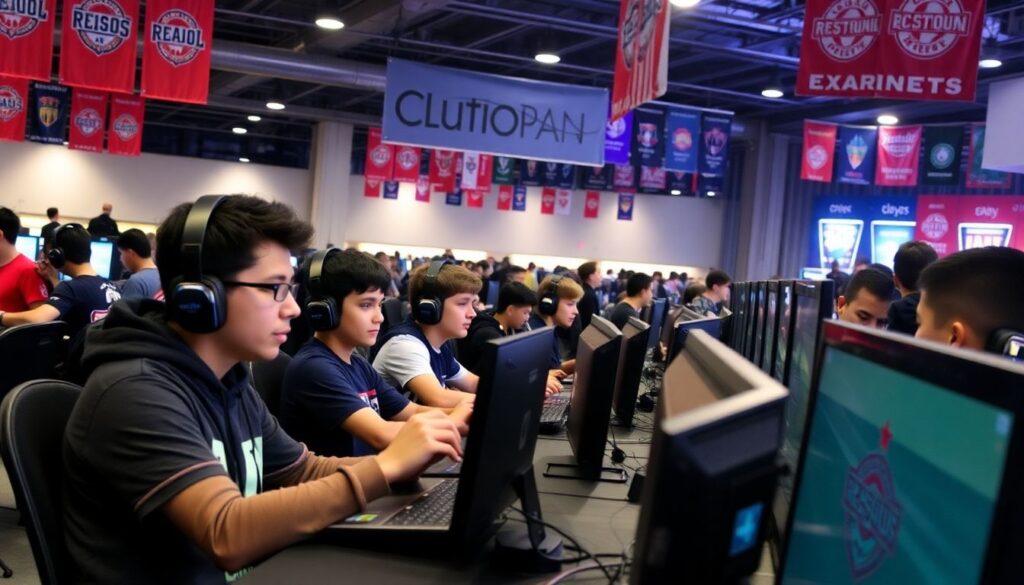
Regional clubs can use esports to reach youth online without large stadiums, hosting local qualifiers and community events. Partnering with local LAN centres and schools reduces costs and builds distinctive regional identities.