
How Turkish Academies Became Europe’s New Talent Labs
Over the last five years, Turkish clubs have quietly turned their academies into serious production lines for European soccer. Instead of just buying aging stars, Super Lig teams now invest in data-driven scouting, integrated sports science and multilingual education programs. The result is a pipeline of technically clean, tactically flexible players who can step straight into mid‑tier Bundesliga or Serie A squads. What used to be a “bridge league” has become a development hub: clubs like Fenerbahçe, Galatasaray, Trabzonspor and Basaksehir treat their youth setups as standalone R&D centers, exporting assets to Europe and reinvesting transfer fees back into infrastructure, analytics and coaching education.
Modern Trends Defining Turkish Youth Development

Since 2023, the main trend is hybrid training: Turkish prospects are groomed to switch between high‑pressing, transition-heavy football and slower, positional buildup. Academies run game models mirroring European benchmarks, so a 17‑year‑old winger from Istanbul understands pressing triggers used in Germany or Spain. There is consistent exposure to international opposition: regular friendly matches, loan partnerships and joint camps with European clubs. VAR-style decision simulations, mental resilience modules and weekly tactical video debriefs are standard. By 2026, even mid‑table Turkish sides use GPS, neuromuscular testing and cognitive reaction drills, turning what used to be “raw talent” into tactically literate, data‑profiled assets attractive to European recruiters.
Why European Scouts Now Swarm Turkish Trials

European clubs used to visit Turkey mainly for senior tournaments; now they show up to U16 and U17 tournaments with full analytics teams. The number of turkish football academy trials in europe has grown because agents and intermediaries see Turkish prospects as undervalued compared with similarly skilled Western Europeans. Players arrive with exposure to intense atmospheres, multilingual staff and mixed tactical schooling, which lowers adaptation risk. For clubs, it is cheaper to integrate a 19‑year‑old fullback from Turkey, already used to high‑pressure derbies, than to overpay in top‑five leagues. This arbitrage effect pushes Turkish academies to standardize documentation, data formats and medical records to meet UEFA club demands.
Necessary Tools: Infrastructure Beyond Just Pitches
When people think about necessary tools for elite academies, they picture pristine grass and shiny gyms. In 2026, Turkish setups go far beyond that. The best turkish football academies for youth players operate like small tech campuses, with fiber‑connected analysis rooms, AI‑assisted performance dashboards and cloud‑based wellness tracking that syncs with players’ phones. GPS vests, optical tracking cameras, lactate testing devices and force platforms are routine, but so are sleep‑monitoring apps and nutrition portals accessible by families. The “toolkit” now includes customized learning paths: language software for English and German, psychology support platforms and tactical whiteboard apps that let coaches push session plans directly to players’ devices each morning.
Coaching, Data and Human Resources as Core Instruments
Hardware means little without the right human tools. Turkish academies invest aggressively in UEFA‑licensed coaches who can work comfortably with video analytics, expected‑threat models and load management dashboards. Many clubs employ data engineers and sports scientists who translate raw numbers into session adjustments. Weekly interdepartment alignment meetings ensure physios, fitness staff and analysts feed coherent information to coaches. Legal and education officers handle regulations, visas and schooling, which is essential for cross‑border moves. The modern “tool stack” blends biomechanics labs, rehab centers and indoor technical halls with soft‑skill engines: mentorship programs linking academy kids to recent graduates now playing in Belgium, Netherlands or Portugal.
Step‑by‑Step: How Players Enter and Progress
If you are wondering how to join a football academy in turkey today, the process is more structured than a decade ago. It typically starts with regional identification: local scouts flag players, who are then invited to centralized assessment days. These events combine small‑sided games, psychometric tests and physical profiling rather than one‑off open trials. Those who pass move into probation phases of six to twelve weeks, living part‑time at the academy, where coaches monitor tactical learning speed, social behavior and recovery habits. Only then do clubs offer full contracts, integrating players into age‑group squads that follow clearly mapped progression milestones tied to minutes, metrics and educational targets.
From Academy to Europe: Operational Pathways
Once inside the system, Turkish prospects follow a staged pathway built around exposure. At 14–16, the emphasis is on technical repetition and multi‑position learning; players might rotate between fullback and winger to expand tactical vocabulary. At 17–19, internal KPIs decide who enters mixed training with the first team and who goes on strategic loans abroad. Many clubs now enroll their top talents into professional football training camps in turkey that host foreign teams during pre‑season, giving them early contact with European playing styles. Successful loans in Belgium, Austria or Scandinavia serve as validation nodes; performance data from these spells is fed back into club databases to refine future development algorithms.
Scholarships, Internationalization and Access Issues
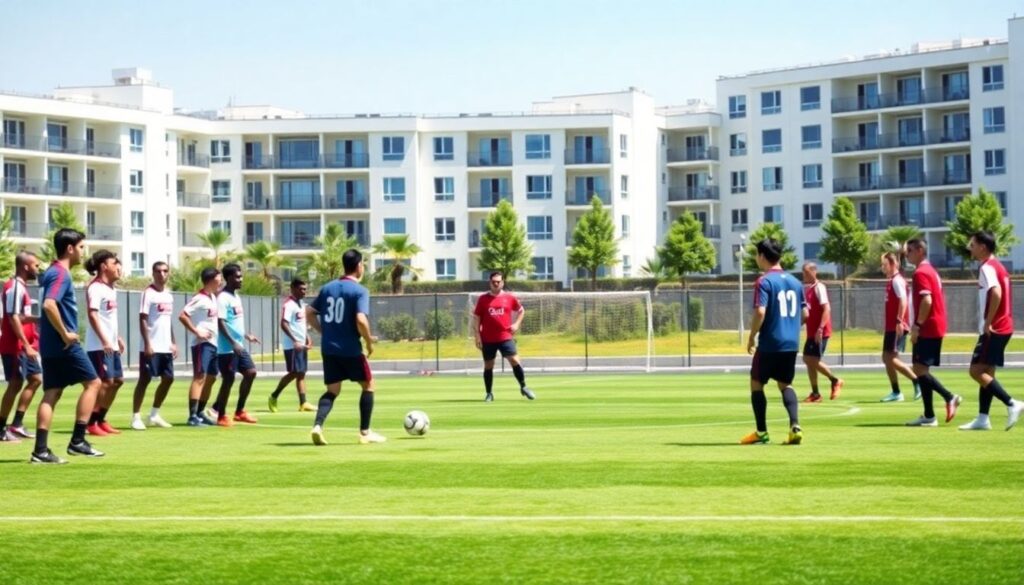
As Turkish academies globalize, they increasingly recruit beyond national borders. Several clubs now run turkey football academy scholarships for international players, covering accommodation, schooling and language courses while expecting strict adherence to performance benchmarks. These scholarships target regions with strong raw talent but weaker infrastructure, such as North Africa, the Balkans or Central Asia. The influx of diverse playing profiles enriches internal competition and broadens tactical options. At the same time, academies must manage integration risk: cultural induction modules, guardianship arrangements for minors and clear communication with families have become as important as any fitness plan, ensuring that promising imports do not fail for non‑football reasons.
Troubleshooting: Common Development Pitfalls
Even the most advanced system needs troubleshooting mechanisms. Turkish academies have learned that overloading young players with matches and travel can trigger burnout and soft‑tissue injuries, especially when they chase quick sales to Europe. Modern setups use red‑flag dashboards: sudden dips in high‑intensity running, sleep data anomalies or mood‑tracking alerts auto‑notify staff to intervene. Another recurring issue is tactical over‑coaching, where players lose creativity. To counter that, clubs protect “free play” slots in weekly schedules and track creative actions—line‑breaking passes, successful 1v1s—alongside safer metrics. When adaptation to foreign leagues stalls, remote mentoring networks link struggling graduates with psychologists and bilingual liaisons to recalibrate expectations.
What This Means for the Future of European Soccer
By 2026, the cumulative effect is clear: Europe now sees Turkey less as a destination league and more as a development partner. Data‑rich, tactically versatile graduates from Istanbul or Izmir fill roles in pressing systems across Germany, possession structures in Spain and balanced models in France. Turkish clubs, in turn, design their academies to match the tactical “vocabulary” of these leagues, effectively co‑authoring the next generation of European soccer. The feedback loop—transfer fees funding better tools, better tools producing more exportable players—suggests that over the next decade Turkish academies will stand alongside Dutch and Portuguese systems as primary incubators of continental talent.