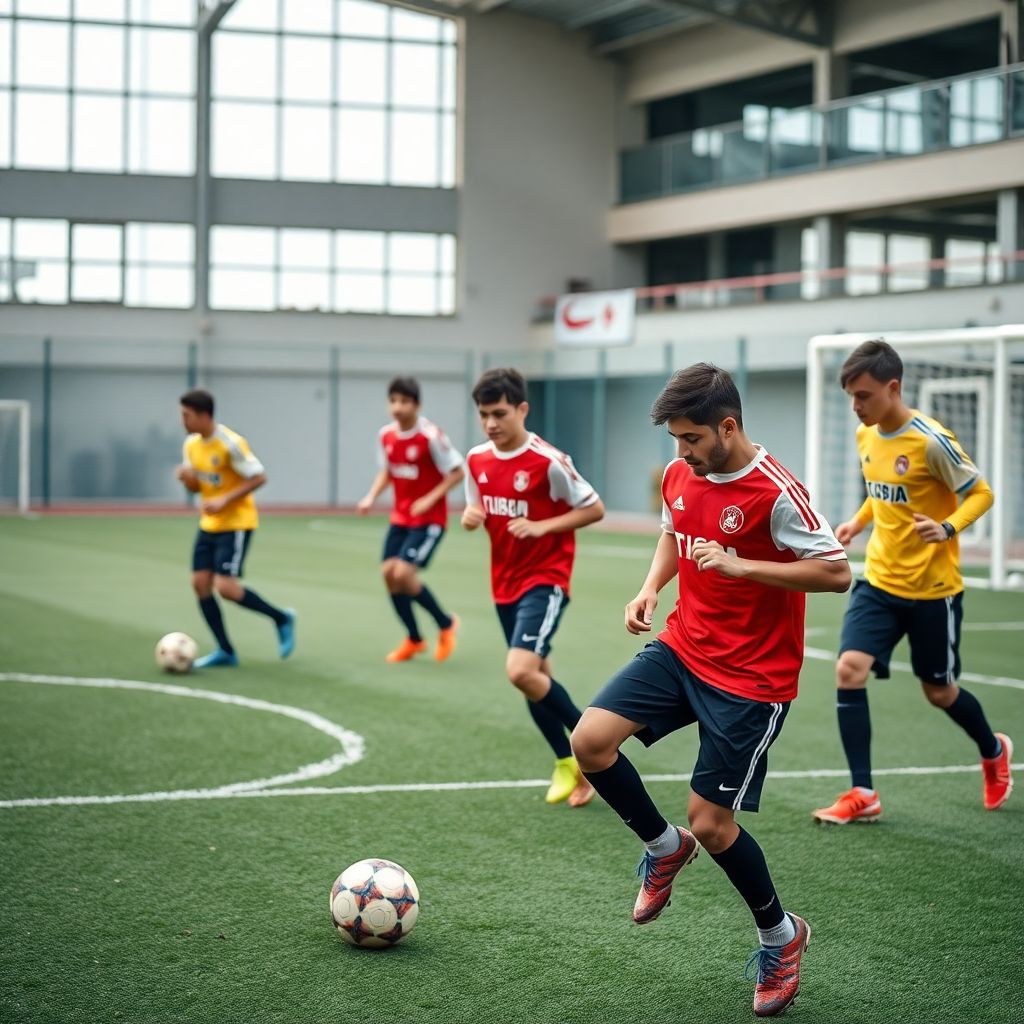
For most ambitious teenagers in Turkey, elite Western European academies offer the highest ceiling, but top Turkish club academies are often the smartest first step. Use Turkey for initial development and visibility, then move to the right European pathway once you prove readiness, language level and family logistics are under control.
Essential comparative snapshot
- Top Turkish club academies give cheaper access, cultural familiarity and easier entry, but usually with less structured individual planning than Europe’s elite.
- Elite football academies in Europe for youth players provide stronger daily competition and better infrastructure, yet demand higher language skills and living costs.
- For 10-14, stable local training in the best Turkish football academies for young talents usually beats early risky moves abroad.
- For 15-18, a proven academy record in Turkey plus targeted trials is the most realistic way to join elite European football academies.
- Foreigners often use short football academy trials in Turkey for foreigners as a springboard to regional scouting, not as a final destination.
- A staged pathway (local → top Turkish academy → selective Europe) wins in most comparison of Turkish vs European football academies decisions.
Scouting and recruitment: grassroots pathways versus academy funnels
Use these criteria to choose between starting or staying in Turkey and pushing directly for Europe’s elite environments.
- Entry barrier and realistic chances – How likely is a player with current level to be accepted in:
- a strong Turkish Süper Lig academy, versus
- a top-20 European club academy, versus
- a mid-tier or regional European club?
- Age and timing window – Under 14, focus on stable, high-volume training locally; from 14-16, combine domestic performance with carefully selected trials abroad; 17+ usually requires match-proof quality in strong youth or senior leagues.
- Scouting visibility – In Turkey, big clubs scout school competitions, regional associations and smaller academies. In Europe, scouts mainly watch partner clubs, elite tournaments and existing academy networks, making late external entry harder.
- Administrative and residency factors – Passport, visa, guardianship, schooling and federation rules often make long-term stays in Europe complex compared with remaining in Turkey until a professional contract is realistic.
- Family and social support – Distance, language and culture shocks in a new country can slow development; many players benefit from building confidence first in familiar Turkish environments.
- Financial sustainability – Consider tuition, boarding, travel and trial costs. A well-chosen Turkish academy may deliver better cost-benefit than an average European option that only looks attractive on paper.
- Pathway clarity – Prefer systems (Turkish or European) that can clearly explain: typical years from entry to professional level, success examples, and realistic outcomes for players who do not reach first team.
- Club philosophy and integration – In some Turkish clubs, academy-to-first-team transition is politically complicated; in certain European clubs, the pathway is structurally planned and protected.
Coaching methodology and technical-tactical curricula
The table below compares common development routes for Turkish-based players and foreigners looking at Turkey or Europe.
| Variant | Best suited for | Strengths | Weaknesses | When to choose this |
|---|---|---|---|---|
| Big Turkish club academies (Süper Lig) | Talented 10-16-year-olds living in Turkey or nearby, with strong basic technique. | Good weekly intensity, clear club identity, strong domestic competition, cultural familiarity, easier language and schooling. | Methodology consistency varies by club; less use of data and individual KPIs than Europe’s elite; limited international diversity in squads. | If you are in Turkey and can realistically win a place; ideal as a first elite environment before considering a move abroad. |
| Independent Turkish academies with pro links | Late beginners or physically late-maturing players needing extra time and exposure. | Flexible entry, more individual attention, opportunities for showcase games and trials in Turkey and sometimes abroad. | Quality is uneven; some lack clear curriculum or strong teams; risk of paying for name without real pathway. | When you cannot yet enter top club academies but want structured work and visibility to professional scouts. |
| Elite Western European club academies | Top 5-10% of players aged 13-17 with excellent technique, game intelligence and strong resilience. | Highly structured curricula, position-specific work, performance analysis, sports science and daily high-level competition. | Very hard to enter from outside networks; intense pressure; high living costs; language and study demands. | When a club shows concrete interest after watching full matches, not only highlights, and family can support relocation. |
| Mid-tier European academies and regional clubs | Solid but not yet elite talents seeking earlier senior minutes in competitive European environments. | Faster route to senior football, more minutes at 17-19, potentially clearer pathway to transfers if performance is strong. | Less brand power, weaker internal competition, sometimes limited resources in coaching and analysis. | If elite clubs say “not yet” but you receive serious offers with a clear plan for playing time and development. |
| Short-term camps and showcase programs (Turkey or Europe) | Players wanting benchmarking, feedback and occasional visibility without long-term relocation. | Safe way to test level, understand standards abroad and build initial contacts; useful for planning next steps. | Trials and camps alone rarely lead directly to contracts; risk of overpaying for low-quality events. | To prepare before official trials or big moves; as an assessment tool, not as a complete development solution. |
Facilities, sports science and year-round support systems
Think in concrete scenarios and apply simple if-then rules to your situation.
- If you are 10-13 and currently train only two or three times per week on poor pitches, then prioritise moving to a strong local or Turkish club academy that guarantees more frequent, well-structured sessions before worrying about Europe.
- If you already train four to six times per week in a top Turkish academy with decent pitches, gym access and medical staff, then focus on maximising current resources (extra technique, video review, language learning) rather than rushing abroad.
- If you have access only to small private academies without gym, physio or analysis support, then either upgrade to a better Turkish institution or target a mid-tier European club that can offer a complete environment, not just a badge.
- If you have chronic injury issues and no proper sports science support locally, then seriously consider academies (in Turkey or Europe) that can prove they use individual load monitoring, rehab plans and regular medical screening.
- If schooling is unstable or low quality in the proposed academy move, then delay relocation; academic and language foundations strongly influence the ability to adapt and stay in high-pressure setups abroad.
- If you receive an offer from Europe that includes supervised boarding, nutrition, medical, psychological and educational support, then weigh this strongly against remaining in a weaker but more familiar environment in Turkey.
Competitive exposure: youth leagues, international tournaments and loan strategies
- Define your current level honestly: Are you a standout in local Turkish youth leagues, or only average? Video of full matches against strong opposition is more valuable than highlight reels.
- Map available competitions: In Turkey, target the highest regional and national youth leagues; in Europe, look for academies whose teams regularly play strong cross-border tournaments or youth Champions/Europa competitions.
- Check match volume: Prefer pathways that guarantee regular starts or significant minutes. Being a rotation player in a famous European academy may be worse for development than playing full games in a strong Turkish academy.
- For ages 16-19, ask about loan strategies: Some European clubs use smart loans into lower divisions; some Turkish clubs place players in TFF lower leagues. Clarify who decides loans and how playing time is protected.
- Use international tournaments as tests, not illusions: Treat each event as a benchmark of where you stand against European peers and as a tool to refine your plan, not as a one-shot dream.
- Prioritise game relevance over prestige: Choose the environment where you will regularly face opponents who stretch your limits tactically, technically and physically, even if the club is less famous.
- Review progress every season: If you are not increasing level of opposition year by year, reconsider whether a switch (within Turkey or to Europe) is necessary to keep growing.
Contracting, retention and the academy-to-first-team pipeline
Avoid these frequent mistakes when choosing between Turkish and European systems.
- Signing any long contract in Turkey or Europe without independent legal advice, especially when it includes broad image rights or unclear compensation clauses.
- Focusing only on the badge and not checking how many academy players actually reach the first team or secure professional careers elsewhere.
- Ignoring federation rules on foreign players, home-grown quotas and compensation payments, which can limit opportunities later.
- Accepting unpaid or unclear arrangements where the club gains full control, but the player receives no guaranteed schooling, housing or defined development plan.
- Overvaluing verbal promises from scouts or agents instead of asking for written commitments or at least detailed written training and progression plans.
- Underestimating the impact of language and education; poor adaptation off the pitch is a major hidden reason why talented players fail abroad.
- Moving to a big-name European youth team at 16-17 but becoming the third or fourth option in your position, with limited match exposure.
- Staying too long in a comfortable Turkish environment where you dominate but are no longer challenged; progression stalls when opponents are much weaker.
- Working with unlicensed intermediaries for football academy trials in Turkey for foreigners or Europe, especially if they request high fees upfront without transparent club confirmations.
- Failing to plan an exit route: every decision should include what happens if you are released at 18-19, both in football and in education.
Outcomes and metrics: player progression, transfer value and long-term impact
- If your priority is controllable entry and solid foundational training from Turkey, then:
- start in a good local setup,
- progress into the best Turkish football academies for young talents you can realistically access,
- build statistics, video and experience in national youth competitions.
- If you already stand out nationally in Turkey and receive sustained interest from reputable European clubs, then:
- shortlist clubs that clearly show their academy-to-first-team numbers,
- prioritise those with structured education and language support,
- prefer written, detailed development plans over general promises.
- If you are a foreigner using Turkey as a stepping stone, then:
- target Turkish academies with proven export of players abroad,
- use domestic performance to open doors in football academies in Europe for youth players,
- compare offers by real playing-time opportunities and educational support.
Mini decision tree before choosing a path:
- If you cannot yet dominate competitive youth matches in Turkey, stay and develop locally.
- If you dominate locally and can access a top Turkish academy, move there first.
- If you excel at top Turkish academy level and receive concrete interest from Europe, consider a move to a well-structured European club with clear playing-time and education plans.
- If European offers are weak or unclear, continue in Turkey while improving language, education and performance metrics, then reassess later.
Overall, Turkish academies are usually best for accessible early development, cultural comfort and building a strong base; Europe’s elite is best for maximising long-term ceiling once you have already proved yourself in serious competition and can handle academic, linguistic and psychological demands.
Practical questions for decision-making and implementation
At what age should a Turkish player seriously consider moving to a European academy?
Most players should focus on strong local and Turkish academies until at least 14. From 14-16, a move becomes realistic if you already stand out nationally, have solid schooling and language basics, and receive concrete offers with clear integration plans.
How can I realistically get noticed by elite European clubs while based in Turkey?
First, perform consistently in top Turkish youth leagues or strong independent academies with verified links to clubs. Collect full-match video, attend high-level tournaments and only then target official, club-confirmed trials or invitations, ideally supported by a trusted, licensed intermediary.
Is it worth paying large fees for short camps or “experience” programs in Europe?
Short camps are useful to benchmark level and learn, but they rarely lead directly to contracts. Pay only when the program is transparent about staff, schedule, level and clubs attending, and treat it as education and scouting exposure, not a guaranteed pathway.
What should parents prioritise when choosing between a Turkish and a European academy?

Prioritise daily training quality, coaching competence, playing-time prospects, education and language support, and the club’s track record of promoting academy players. A clear, written plan with responsibilities and support is more important than the fame of the club alone.
How do foreign players use Turkish academies in their career strategy?
Some foreigners join competitive Turkish academies to gain professional-level training, match experience and regional visibility at lower cost than in Western Europe. Strong performance in Turkey can then be used to approach European clubs with real data and video, not only trial performances.
How many trials are too many in one year?
If frequent trials start to disrupt regular training, school and recovery, it is already too many. Plan only a few high-quality, targeted trials per year, where you are physically ready and the club has a genuine interest, instead of chasing every opportunity.
What signals show that staying in a current academy is better than moving?
Clear improvement in performance, regular starts, individual feedback, visible physical and tactical growth, and good school balance suggest that staying is wise. Move only when your progress plateaus and you can identify a specific environment that clearly solves current limitations.