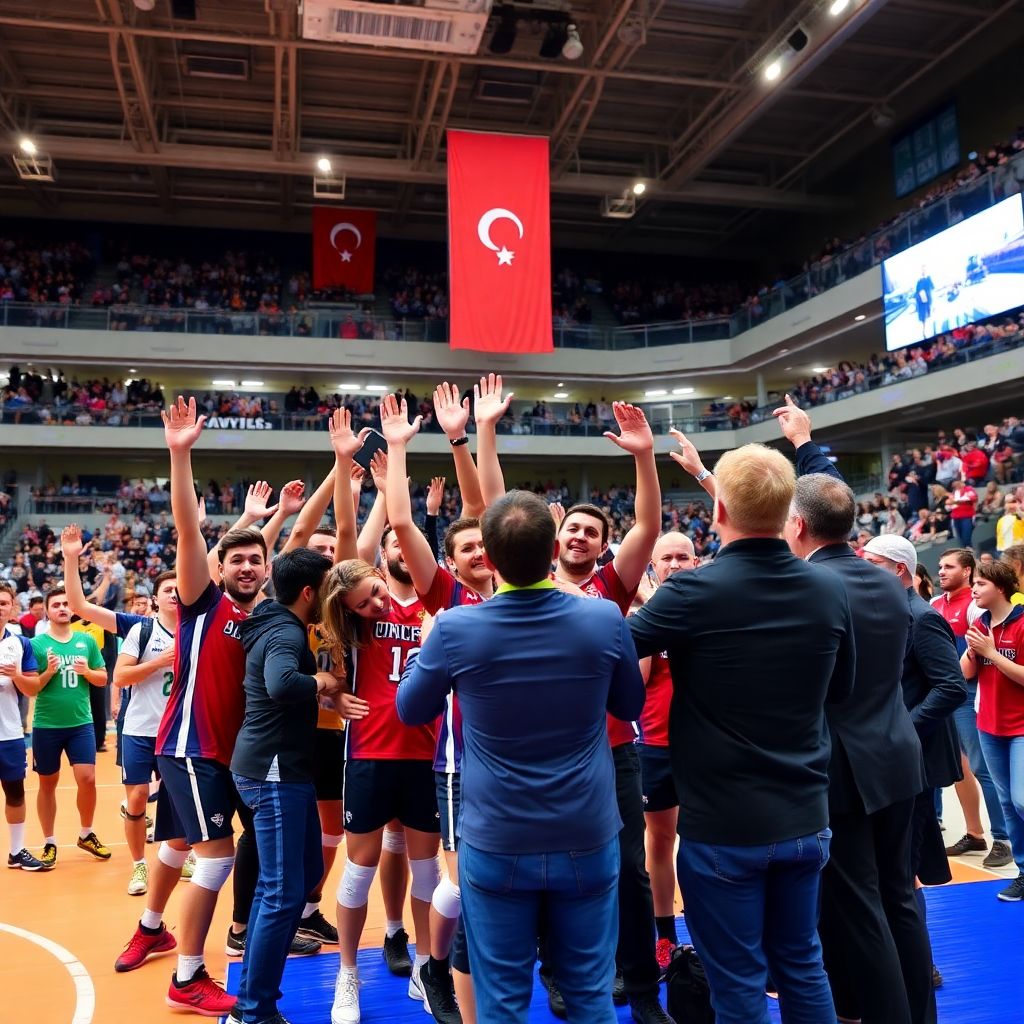
Turkish volleyball clubs dominate European competitions by combining strong multi-source funding, deep youth academies, world-class foreign signings, data-driven coaching, and ruthless match preparation focused on serve-receive and block-defense. If you copy their organizational model, invest in long-term talent pipelines, professional analytics, and risk-aware rotation policies tailored to your club’s budget and context.
Core Strategies Behind Turkish Clubs’ Success
- Diversified club structures mixing corporate sponsorship, municipal backing, and membership income to stabilize funding.
- Integrated academies, regional scouting, and smart transfers instead of relying on short-term star signings only.
- Daily cooperation between coaches, analysts, and sports science staff to individualize training loads.
- Highly detailed opponent scouting, plus fixed match-week routines for tactical and psychological readiness.
- Planned use of foreign players with clear integration programs and strict regulatory compliance.
- Competition calendars optimized around peak matches in European tournaments and domestic playoffs.
- Commercial focus on fan experience, from Turkish volleyball clubs tickets Champions League sales to digital content and merchandise.
Organizational Models: Club Structures and Funding
Copying Turkish powerhouses works best for clubs that already have a stable domestic position, some youth base, and access to one or two strategic sponsors. If your finances are fragile or you lack basic facilities and staff, do not try to mirror top Istanbul clubs immediately; scale up step by step instead.
Three organizational patterns frequently seen in successful Turkish volleyball clubs can guide your own structure.
| Model | Main Funding Sources | Typical Focus | Relative Cost Level | Expected Outcomes | Key Risks |
|---|---|---|---|---|---|
| Corporate-backed flagship | Large company sponsorship, branding budget | European trophies, global visibility | Very high | Ability to sign elite foreign players and staff; strong media presence | Dependence on a single sponsor; vulnerable to business downturns |
| Municipal / community hybrid | Municipal support, local sponsors, memberships | Regional talent development, steady top-league presence | Medium | Stable academy pipeline, strong local fan base, occasional European runs | Political changes; limited flexibility in commercial decisions |
| Private club with smart recruitment | Multiple mid-size sponsors, ticketing, merchandise | Efficient scouting, flipping players, sustainable growth | Medium to high | Competitive squads without overspending; room to adapt quickly | Cash flow volatility; requires strong management discipline |
Choose your model based on:
- Your realistic sponsorship potential over at least three to five seasons.
- Access to municipal support and facilities in your region.
- Existing academy size and local interest in volleyball.
- Internal governance capacity: board, legal, finance, marketing.
When not to copy the top-end corporate-backed model:
- If one sponsor would represent most of your income and has an unstable business.
- If you do not have staff to manage media, ticketing and merchandising professionally.
- If your arena does not meet standards for hosting European competitions and TV coverage.
Talent Development: Academies, Scouting and Transfers
To imitate leading Turkish clubs in talent development, you need a minimal set of resources and tools.
Core requirements for academies
- Facilities: at least one full-sized court with safe flooring, plus access to school gyms for satellite sessions.
- Staff: head of youth development, age-group coaches, strength and conditioning support, and a basic medical partner or clinic cooperation.
- Structure: clear age categories (for example U14, U16, U18, reserve team) with written technical and physical standards for each level.
Scouting and data tools
- Video systems: a simple camera setup for training and matches; later you can add professional software for tagging actions.
- Databases: central spreadsheet or software where you track prospects, including height, position, injury history, and performance notes.
- Network: relationships with school coaches, regional clubs, and agents who work with both local players and foreign talent.
Transfer and pathway management
- Budget rules: maximum percentage of your total budget allocated to transfer fees and player salaries, with caps for each position group.
- Pathway map: documented routes from academy to senior team, including when to loan players out and when to promote permanently.
- Legal checks: all contracts aligned with national federation rules and international transfer regulations.
To make your pathway attractive, connect it with visible milestones: first pro contract, debut in European competitions, and inclusion in marketing campaigns promoting the best Turkish women’s volleyball team merchandise and match-day experience.
Coaching and Sports Science Practices

Before following the step-by-step coaching model used by Turkish powerhouses, be aware of key risks and limitations.
- Overtraining risk: copying pro-level volume without medical and recovery support can cause injuries; always adapt loads to your context.
- Data misuse: using statistics without understanding can lead to wrong tactical choices; keep metrics simple at first.
- Staff burnout: long video and analysis hours can exhaust coaches; rotate tasks and set realistic analysis depth.
- Budget pressure: importing every tool elite clubs use is expensive; prioritize items with clear impact, like video and basic GPS or jump monitoring.
-
Define your performance model
Start by writing a one-page document that describes how your team should play in side-out, transition, serve, and block-defense. Include ideal player profiles for each position and minimum physical and technical benchmarks.
-
Set up integrated training planning
Create a shared digital calendar where head coach, assistant, strength coach, and medical staff plan each week together.
- Mark high, medium, and low-intensity days according to the match schedule.
- Add time blocks for technical drills, tactical systems, and recovery sessions.
- Review the calendar after each week and adjust based on player feedback and wellness indicators.
-
Build a basic video and analytics workflow
Record all matches and at least one training per week. Use simple tagging (serve zones, reception quality, attack direction, block result) instead of complex metrics at the start.
- Assign one staff member or analyst to prepare a short (10-15 clips) edit before each opponent.
- Hold brief video meetings: no more than 15-20 minutes per session with players to keep focus high.
-
Introduce sports science monitoring safely
Begin with low-cost, low-risk tools before moving to advanced devices.
- Use simple questionnaires on sleep quality, soreness, and mood to track readiness.
- Measure jump height and jump count for key players a few times per week to watch fatigue trends.
- Share only clear, actionable results with players to avoid confusion or anxiety.
-
Connect training to competition goals
Set specific targets linked to European competition demands, such as side-out efficiency under strong serving or block touches against taller opponents.
- Use data from live streaming Turkish volleyball European competitions to benchmark the speed and style you must match.
- Update your performance model at least once per season based on actual results.
-
Create safe review loops for continuous improvement
After every important match, hold a structured debrief.
- Limit feedback to a few key points per player to prevent overload.
- Always pair criticism with at least one practical correction or drill for the next week.
- Track which adjustments truly improve match metrics and remove routines that do not add value.
Tactical Approaches and Match Preparation
Use this checklist to confirm that your tactical and match-prep process reflects what makes Turkish clubs so hard to beat in Europe.
- You have a repeatable match-week structure (recovery, scouting, tactical training, serve-receive focus, pre-match activation).
- Opponent analysis includes serving targets, key attackers, and preferred rotations, condensed into a one-page game plan for players.
- Your serve strategy is clearly defined for each player and rotation, balancing risk and error limits.
- Side-out patterns are trained under pressure, with fixed rules for emergency situations when the pass is off the net.
- Block-defense systems are adjusted to each opponent instead of staying identical every match.
- Setters have a pre-agreed plan for distributing balls in the first 10-15 rallies to establish your main threats.
- You hold short, focused tactical meetings rather than long, confusing sessions before big European fixtures.
- Travel, nutrition, and sleep plans are prepared for away matches, especially in tight Turkish volleyball clubs tickets Champions League schedules.
- Substitution plans and challenge or timeout rules are rehearsed so the bench reacts quickly and calmly under pressure.
International Recruitment, Integration and Compliance
When bringing in foreign players and staff to mirror Turkish clubs, avoid these common mistakes.
- Signing star names without checking how their style fits your current system and league tempo.
- Ignoring language and cultural support, which can delay adaptation and hurt locker-room cohesion.
- Overloading rosters with foreign players and leaving too little space for local talent development.
- Missing or misreading federation limits on foreign players, leading to eligibility problems on match day.
- Rushing contracts without clear clauses on injuries, image rights, and participation in marketing activities.
- Failing to provide structured onboarding: housing help, medical checks, gym orientation, and city basics.
- Not using foreign players in community events and merchandise promotions, such as campaigns around Turkish volleyball jerseys for sale online.
- Underestimating tax and legal differences between countries, which can cause unexpected costs or disputes.
- Skipping mental health support, especially for younger imports living abroad for the first time.
Competition Management: Scheduling, Rotation and Risk Controls
When your domestic and European schedule becomes dense, there are several realistic ways to manage workload that echo Turkish approaches without copying them blindly.
Alternative 1: Prioritize European competitions
Use this when you have a deep roster and strong commercial interest in Europe. Rotate more in domestic matches against weaker opponents, protect key players’ minutes before Champions League ties, and align marketing (for example, campaigns to buy VakifBank vs Eczacibasi volleyball tickets) with marquee European nights.
Alternative 2: Secure domestic dominance first
If your squad depth is limited, focus on winning your national league and cup while treating European matches as experience-building. Rest players after heavy travel, use broader rotations in away European games, and avoid overloading training volume between long trips.
Alternative 3: Development-focused mixed strategy
Suitable for growing clubs that are just entering European competitions. Use European matches to accelerate young players’ growth, giving them planned court time, while maintaining a stable core for critical domestic fixtures. Monitor physical and mental fatigue closely and cut optional sessions when signs of overload appear.
Alternative 4: Commercial and fan engagement angle
Consider scheduling open trainings, fan days, and online content drops around key fixtures. Coordinate match themes with ticket and merchandising pushes, highlighting best Turkish women’s volleyball team merchandise and limited-edition items, always ensuring players’ rest and preparation are not compromised by promotional duties.
Practical Questions on Applying Turkish Club Methods
How can a mid-budget club start copying Turkish powerhouses safely?
Begin with low-cost elements: structured academies, simple video analysis, and clear tactical routines. Avoid large, long-term contracts until your budget is stable over several seasons, and build written policies for training load, rotation, and transfers before making big signings.
What should we prioritize: facilities, players, or staff?
Secure safe, reliable facilities first, then invest in competent staff, and only then add higher-salary players. Quality coaching and sports science structures will multiply the value of any players you sign and reduce injury risk across the season.
How do merchandising and tickets support competitive success?
Income from tickets and merchandise stabilizes cash flow and helps fund better staff and development programs. Using themed products and bundles, such as Turkish volleyball jerseys for sale online around big matches and playoff runs, can connect fan passion directly to your sporting budget.
Is it realistic to offer live streaming like Turkish clubs do?
Yes, at a smaller scale. Start with basic live streaming Turkish volleyball European competitions or domestic games on popular platforms, focusing on reliable production and clear commentary. As audiences grow, you can improve graphics, multiple camera angles, and sponsor integration.
How much of our style should be based on Turkish examples versus local traditions?
Use Turkish clubs as a reference for structure and discipline, but adapt tactics to your league’s typical playing style and referee tendencies. Combine their emphasis on serve-receive and block-defense with strengths your local players already have, such as speed or ball control.
When should we push for European qualification?
Target European qualification when you have two things: financial reserves to handle extra travel and a roster deep enough to rotate safely. If either is missing, focus on building those foundations first to avoid injuries, poor results, and financial stress.
How can we use big fixtures to grow our fan base?
Build campaigns around major matches: presales of Turkish volleyball clubs tickets Champions League style events, limited-edition merchandise, and social content with players. Combine online sales with in-arena experiences so new fans feel part of a growing community from their very first game.