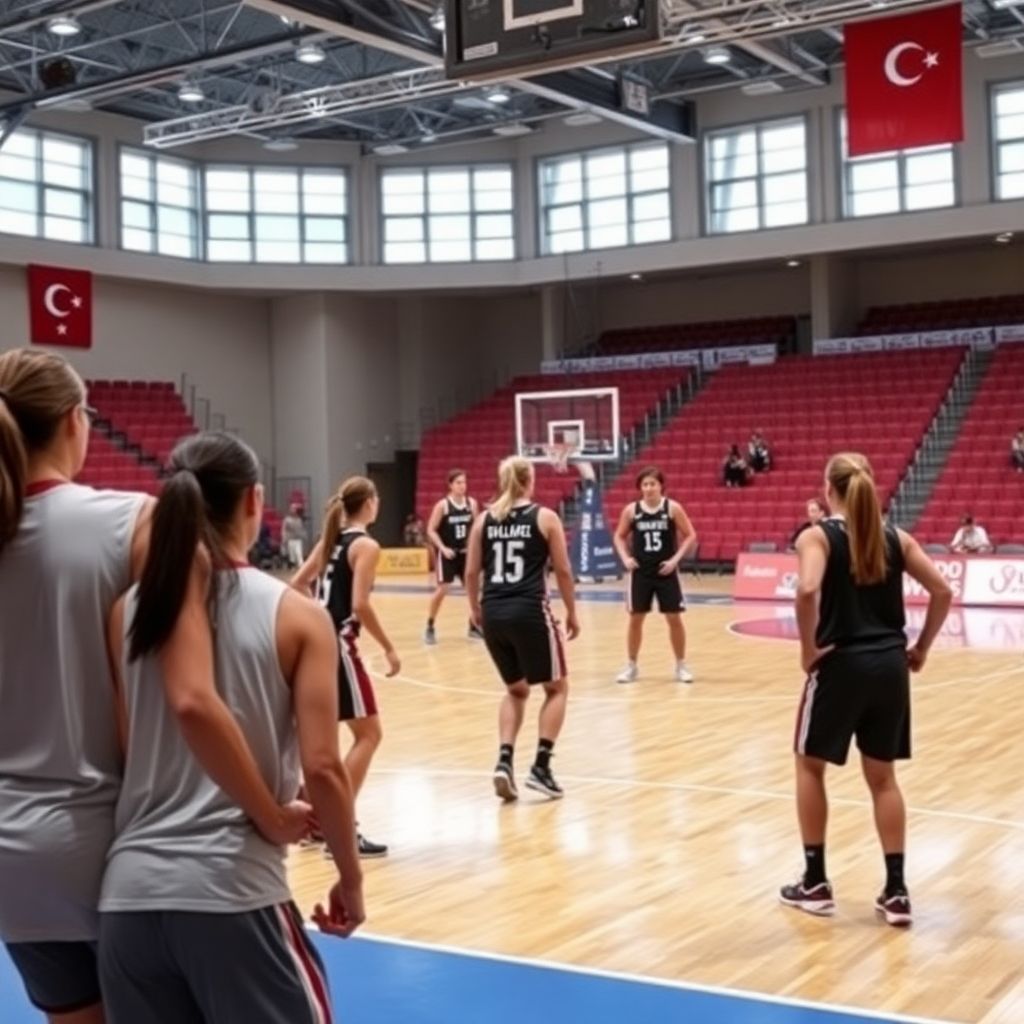
Women’s basketball in Turkey is a structured, well-funded system where big multisport clubs, strong academies and science-driven coaching quietly produce teams that regularly challenge the best women’s basketball teams in Europe. If you understand its history, league design and development pathways, then you can see why Turkey’s rise is sustainable.
Strategic Snapshot: How Turkey Is Becoming a European Contender
- If major multisport clubs invest consistently in women’s programs, then they create stable, high-performance environments that attract elite talent.
- If the domestic league keeps competitive balance and clear promotion-relegation, then clubs stay under constant pressure to improve rosters, coaching and facilities.
- If academies, schools and regional scouting work in one pipeline, then Turkish players can progress from grassroots to EuroLeague-ready within the same ecosystem.
- If coaches integrate sports science and individualized development plans, then players extend their peak years and reduce injury-related drop‑offs.
- If sponsors back arenas, marketing and fan products, then demand for turkish women’s basketball league tickets, jerseys and streams grows organically.
- If top Turkish teams regularly test themselves in continental competitions, then domestic standards rise to match European benchmarks.
Historical Foundations and Pioneering Clubs
Women’s basketball in Turkey grew inside large, city-based multisport clubs rather than as isolated women-only entities. This means that from the beginning, women’s teams could use existing facilities, medical staff and fan bases built around football or men’s basketball. If you see a strong women’s section today, then there is usually a decades-long club culture behind it.
Clubs like Fenerbahçe, Galatasaray and Beşiktaş played a pioneering role by treating women’s squads as part of their competitive identity, not a side project. Later, municipally supported teams and university clubs expanded the map beyond Istanbul and Ankara. If a city invested in a modern hall and youth programs, then a women’s team often followed soon after.
Over time, early participation in European competitions created a feedback loop. Turkish teams learned from established powers in Spain, France and Russia and brought those ideas home. If a club faced tougher international opponents every season, then it had to upgrade recruiting, strength training and tactical sophistication just to remain competitive.
For today’s intermediates-coaches, administrators, serious fans-the key is to see this as an ecosystem, not a collection of isolated success stories. If you analyze how historic clubs used their brands, facilities and community ties to normalize support for women’s sports, then you can copy that model in other Turkish cities or even in different countries.
Domestic League Architecture and Competitive Balance
The top-flight Women’s Basketball Super League (KBSL) is the visible tip of a broader pyramid that also includes second-tier competition and youth leagues. The structure is built to keep promotion and relegation meaningful while ensuring that elite clubs have enough high-level games each season.
- If the league schedule guarantees frequent matchups between top and mid-table teams, then tactical innovation and roster depth become non‑negotiable for anyone targeting the playoffs.
- If turkey women’s basketball league standings are tight from mid-season onwards, then every club must make smarter in-season decisions on rotations, foreign signings and player load management.
- If promotion and relegation are enforced, then ambitious second-division clubs invest in coaching and facilities early, knowing there is a real pathway up.
- If domestic roster rules protect minutes for Turkish players while allowing a limited number of imports, then clubs are pushed to develop local talent without losing European competitiveness.
- If calendar planning avoids direct clashes with major EuroLeague Women fixtures, then Turkish teams can compete in Europe without sacrificing domestic form.
- If marketing links live standings, ticketing and media coverage, then more fans follow the league weekly instead of only watching major derbies.
Mechanically, this architecture affects almost every stakeholder. Clubs plan rosters and budgets according to realistic league targets; broadcasters choose which games to highlight based on playoff implications; fans decide when to buy turkish women’s basketball league tickets depending on high-stakes fixtures. The ruleset and schedule quietly push everyone toward higher standards.
If you are managing a club, then your strategic calendar should start with the domestic fixture list: identify must-win clusters, EuroLeague-heavy weeks and recovery windows. If you are a coach, then build rotation plans tied to the promotion-relegation pressures your club faces. If you are a fan or analyst, then read the standings with context: a mid-table team balancing Europe and domestic survival might be performing better than its record suggests.
Talent Identification: Academies, Schools and Scouting
Talent discovery in Turkish women’s basketball is not centralized in a single academy; it is a network that combines club systems, school competitions, universities and regional scouting. If you understand where players enter and exit this network, then you can design better development programs or simply read a prospect’s path correctly.
Typical application scenarios include:
- If a big club runs girls’ teams from mini-basket to under-18, then it can track players longitudinally and decide early who should receive advanced skills training or position changes.
- If a player emerges in a high-school tournament outside major cities, then regional scouts can bridge her move to a professional environment without forcing her to relocate too early.
- If universities maintain competitive women’s teams, then late developers who were not standout teenagers still have a genuine route into professional rosters.
- If local municipalities support community courts and introductory programs, then more girls touch a basketball for the first time, giving scouts a broader base to search.
- If technology is used-simple video platforms or data from tournaments-then club scouts can cover more regions and compare players objectively rather than relying only on reputation.
- If national youth teams are selected transparently from this wide base, then they become a showcase for both clubs and players, accelerating professional opportunities.
For practitioners the logic is direct. If you run an academy, then connect intentionally with local schools and university coaches; share simple evaluation criteria so everyone is looking for similar fundamentals. If you are a regional federation official, then structure tournaments so that promising players face strong opposition early, making it easier to judge who is truly ready for a jump to a top club.
Coaching Methods, Sports Science and Player Development
Modern Turkish women’s basketball has moved away from purely intuitive coaching toward integrated programs that blend tactics, strength and conditioning, nutrition and psychology. If a club aligns these elements, then it can keep key players healthy and productive over longer careers, which is essential when competing with the best women’s basketball teams in europe.
Core advantages of this integrated approach:
- If practice plans are periodized across the season, then players can peak for domestic playoffs and EuroLeague phases instead of burning out by mid-season.
- If strength and conditioning focuses on joint stability and landing mechanics, then guards and wings suffer fewer knee and ankle injuries from heavy minutes.
- If video analysis is tailored to individual roles, then players understand not just team systems but also their personal decision patterns under pressure.
- If sports psychologists are part of the staff, then young players transitioning from junior to senior level handle bench roles, criticism and tough losses more constructively.
Limitations and common pitfalls to watch:
- If clubs copy training loads from men’s programs without adjustment, then overuse injuries can spike in women’s teams with different physiological profiles.
- If data tools are adopted without staff education, then numbers confuse decision-making instead of clarifying it.
- If foreign coaches impose systems without learning local player strengths, then promising Turkish athletes may be miscast in roles that slow their development.
- If financial pressure forces short-term results, then clubs might overplay veterans and underinvest in long-term physical development of teenagers.
For coaches and performance staff, the rule of thumb is simple: if you add any new method-GPS tracking, advanced scouting, specialized shooting coaches-then tie it to a clear decision you will make differently. Otherwise it becomes noise instead of a competitive edge.
Financing Growth: Clubs, Sponsors and Facility Investment
Money in Turkish women’s basketball comes from a blend of club budgets, municipal support, university backing, sponsorships and growing fan-driven revenues. Communication and priorities determine whether that money compounds or evaporates. If stakeholders share a long-term view, then even modest budgets can build sustained contenders.
Frequent mistakes and myths include:
- If a club assumes star signings alone will fill arenas, then it usually neglects community outreach, school visits and social media storytelling that actually move turkish women’s basketball league tickets.
- If management believes women’s games cannot generate merchandise revenue, then it ignores demand for turkish women’s basketball jerseys for sale, scarves and player-branded gear, leaving an easy income stream unused.
- If sponsors are treated only as logos on uniforms, then they lose interest; instead, they need clear stories about social impact, role models and visibility across TV and fenerbahce women’s basketball live stream audiences.
- If facility upgrades focus only on locker rooms and ignore fan areas, then live attendance stagnates because the in-arena experience feels outdated, even when the on-court product is elite.
- If clubs hide financial realities from players and staff, then trust erodes quickly during tough seasons, leading to mid-year exits and performance drops.
- If decision-makers neglect digital rights strategy, then third parties capture value around highlights, statistics and fan communities that the clubs and league could own.
For administrators, a simple conditional framework helps: if you invest in something, then define exactly which revenue or performance lever it should move-tickets, streaming numbers, sponsorship retention, or competitive results. If the effect is unclear, then adjust the plan before committing scarce resources.
From Domestic Success to EuroLeague: Competitive Pathways
Turkey’s women’s clubs use domestic performance as the platform for continental ambitions. EuroLeague Women and EuroCup Women entries usually go to those who excel in the KBSL. If a team becomes structurally strong in the national league, then it can translate that strength into deep European runs.
A simplified mini-case illustrates the pathway:
If a club finishes near the top of turkey women’s basketball league standings with a core of Turkish internationals and two high-impact imports, then it earns a EuroLeague or EuroCup spot. Off-season, if management keeps that core, upgrades one rotation spot and maintains the coaching staff, then continuity becomes its main advantage.
In the following season, if the team treats EuroLeague group games as high-intensity laboratories-testing schemes, end-game lineups and matchup solutions-then it returns to domestic play sharper and more confident. If that cycle repeats, then within a few years the club is no longer just a national power but a regular in discussions about the best women’s basketball teams in europe.
For clubs aiming to follow this path, the practical logic is clear: if you cannot yet build a roster for a title, then at least build one that can learn from Europe without collapsing domestically. If you are a fan tracking this rise, then following a fenerbahce women’s basketball live stream or other Turkish clubs in EuroLeague gives you a preview of tactical trends that will soon shape the domestic game as well.
Practical Clarifications for Understanding the Rise
How did women’s basketball in Turkey become so competitive so quickly?

Growth was not overnight; it came from large multisport clubs extending resources to women’s teams, systematic youth development and steady investment in coaching and facilities. If you look at club histories and infrastructure timelines, then the current success appears as the logical outcome of long preparation.
Why do Turkish clubs attract so many international players?
They offer competitive salaries, strong training conditions and regular exposure in EuroLeague and EuroCup. If an international player wants both financial stability and high-level games, then Turkey is a natural option, especially at clubs with proven records of competing deep into European tournaments.
Is the domestic league only about the biggest Istanbul teams?
No. While Istanbul giants are highly visible, regional and university-backed teams also play key roles. If you scan turkey women’s basketball league standings over several seasons, then you will see non-Istanbul clubs regularly reaching playoffs and challenging the traditional powers.
How can fans inside and outside Turkey follow the league?
Domestic broadcasters and official streaming partners show many games, while top clubs produce extensive digital content. If you cannot attend in person with turkish women’s basketball league tickets, then club channels, league platforms and selected international rights holders provide access to live and on-demand coverage.
What is the best way to support women’s teams financially as a fan?
Direct support comes from buying match tickets, official merchandise and club memberships. If you purchase turkish women’s basketball jerseys for sale from official outlets and engage with sponsors’ campaigns, then you help signal that investment in women’s basketball delivers real commercial value.
Do Turkish women’s teams have the potential to dominate Europe?

They already contend at the highest levels in some seasons. If investment in youth, facilities and coaching continues at its current pace and is well-managed, then Turkish clubs can remain among Europe’s elite and occasionally build dynastic runs in continental competitions.
What can smaller clubs learn from Turkey’s model?
They can study how Turkish programs align academies, senior teams and community engagement. If a smaller club copies the integration of youth development, clear pathways and consistent branding-even at a lower budget-then it increases its chances of building a sustainable, competitive women’s program.