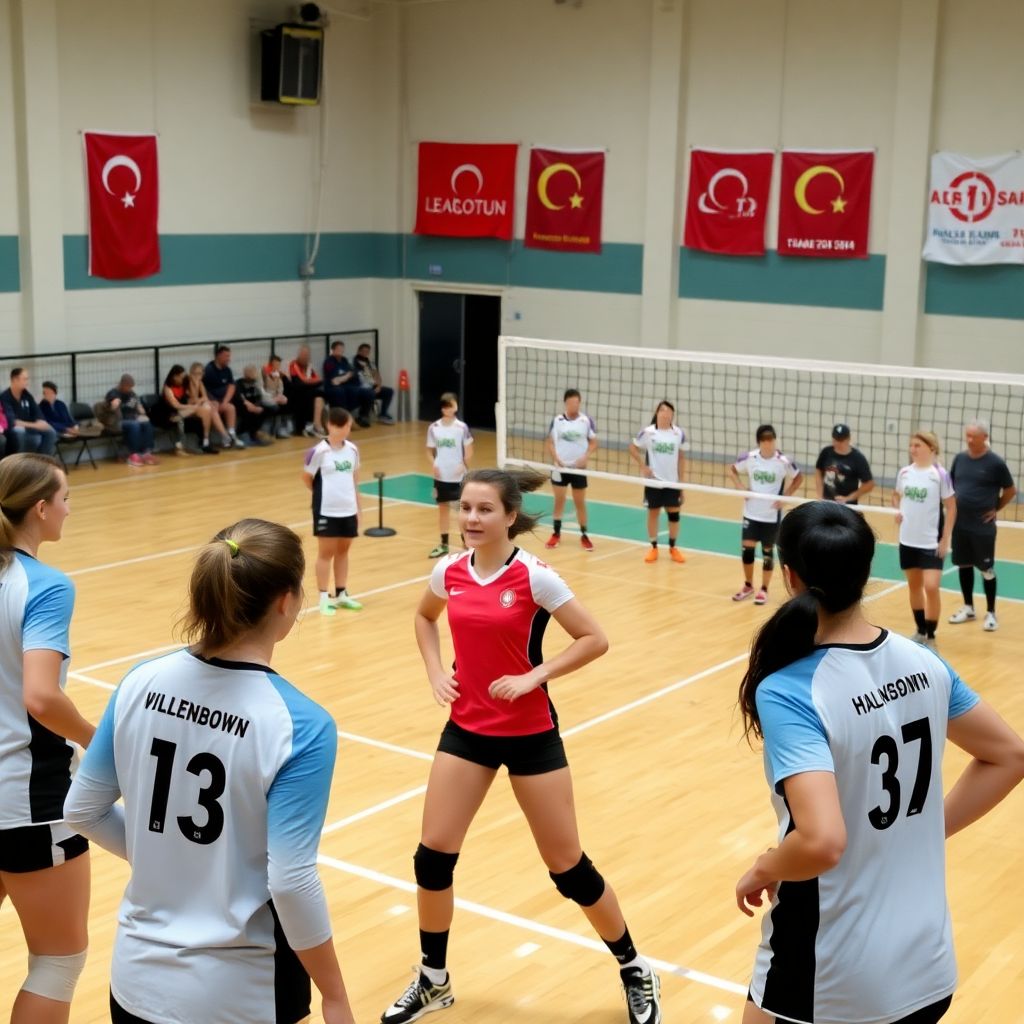
Turkey’s women’s volleyball success is powered by a tight ecosystem: strong city clubs, school and academy systems, professional coaching, stable sponsorship, and a clear pathway from youth to elite. Even with limited resources, smart scheduling, shared facilities, and targeted foreign-player use allow clubs and regions to stay competitive and sustainable.
Core Mechanisms Powering Turkey’s Women’s Volleyball Success
- Big-city clubs (Istanbul, Ankara, Izmir) anchor the system with stable structures and visibility.
- School-club-federation alignment creates continuous pathways from mini-volley to Super League.
- Professional coaching education standardises techniques, systems, and injury prevention.
- Television, digital platforms, and live attendance make women’s volleyball a commercial product.
- Foreign players and coaches are used as accelerators, not replacements, for local talent.
- Smaller clubs leverage regional identity, smart scouting, and shared resources to compete.
- National-team success loops back into more interest, sponsors, and grassroots participation.
Debunking Myths About Turkey’s Rapid Ascent in Women’s Volleyball

The first myth is that Turkey’s rise in women’s volleyball is “overnight” and driven only by money. In reality, it is a multi-decade build involving municipal clubs, school sport, and consistent federation policy that slowly raised the floor for players, coaches, and facilities.
A second misconception is that success is limited to a few rich Istanbul clubs. While giants like VakifBank, Eczacibasi, and Fenerbahce shape the CEV Champions League, regional clubs and universities feed the system with talent, especially in Anatolia where gym time is cheaper and community support is strong.
Another myth says the system is impossible to copy without huge budgets. Yet many mechanisms behind the best women’s volleyball clubs in turkey for professional players are scalable: structured training weeks, clear age-banding, shared medical staff, and using video analysis apps instead of expensive dedicated software.
The final misconception is that women’s volleyball is only “elite entertainment”. In Turkey it functions as a hidden engine for girls’ participation in sport, PE teacher development, and even city branding, which is why alternatives for limited resources focus on multi-use halls, joint programs with schools, and affordable volleyball training camps in turkey for women.
Historical Trajectory: Clubs, Policy Shifts, and Milestones
A common misunderstanding is that the history started when big TV contracts arrived. The structure was built earlier through small but critical decisions and events that layered on top of each other.
- Municipal and factory clubs in big cities. Early women’s sections in Istanbul and Ankara municipal and factory-backed clubs formed the basic competitive framework, proving that regular female leagues were viable.
- Federation focus on women’s leagues. The Turkish federation progressively formalised women’s divisions, tightened competition calendars, and shaped the current Turkish Women’s Volleyball Super League as a coherent top product.
- School sport and university competitions. Inter-school and university leagues created a parallel track where late starters could still reach semi-professional level, adding depth to the age pyramid.
- Early European campaigns. Club performances in European cups, even before titles, taught Turkish teams about travel logistics, physical demands, and tactical trends, raising standards at home.
- Broadcast and digital coverage. As matches became accessible via TV and later every turkish women’s volleyball super league live stream, the sport turned from niche to mainstream, attracting sponsors specifically interested in women’s audiences.
- National-team breakthroughs. Strong EuroVolley and Nations League cycles validated the system internationally, convincing cities and sponsors that investment in girls’ academies would bring both prestige and economic return.
Talent Pathways: Youth Systems, Scouting, and Player Retention
A popular myth is that Turkish stars emerge only from big academies in Istanbul. In practice, pathways are more diverse, and many efficient options work even where budgets and facilities are modest.
-
School-based discovery and first training.
PE teachers identify tall or coordinated girls and funnel them to local clubs. Where no club exists, schools can run basic volleyball groups three times per week using simplified drills and mini-courts. -
Local clubs with shared resources.
Instead of full standalone academies, smaller cities combine basketball, handball, and volleyball sections under one management to share halls and medical staff. This is a realistic alternative when only one indoor court is available in the district. -
Regional development centres.
Federations and big clubs sometimes cluster the best 20-30 players of a region once a month. For limited-resource provinces, this “hub” model replaces expensive daily academies but still gives access to high-level coaching and testing. -
University and late-entry routes.
Many players joining the best women’s volleyball clubs in turkey for professional players came through university teams after starting late. For smaller programs, investing in study-sport balance and dormitory support can compensate for lack of early elite training. -
Loan and dual-license systems.
Top clubs loan young players to lower divisions where they can play full seasons instead of sitting on the bench. With limited budgets, regional clubs can specialise as “development partners” rather than competing for expensive veterans. -
Retention through off-court support.
To avoid losing girls at 15-18, clubs in Turkey increasingly offer academic tutoring, safe transport, and basic nutrition guidance. Even low-budget teams can partner with local schools and bus companies to provide these essentials.
Financial Architecture: Club Ownership, Sponsorships, and Revenue Streams
There is a myth that Turkish women’s volleyball survives only on a few wealthy corporate sponsors. In reality, budgets are layered from municipalities, federations, private sponsors, and increasingly from fans, with many cost-control strategies available to lower-tier clubs.
Structural Advantages of the Turkish Model
- Municipal and institutional backing. Many clubs are owned or supported by municipalities, universities, or banks, which stabilises hall access and core staff salaries.
- Corporate title sponsors. Bank and logistics brands attach their names to women’s teams, gaining positive social-image value while funding travel, foreign players, and academy programs.
- Media and streaming rights. TV and digital deals generate both direct income and marketing value; each turkish women’s volleyball super league live stream also boosts sponsors’ visibility.
- Matchday and fan spending. Revenue from turkey women’s volleyball league tickets, small VIP packages, and in-hall food and beverage sales complements sponsorship income.
- Merchandise and licensing. Jerseys, scarves, and especially popular items like vakifbank women’s volleyball team merchandise allow fans to support clubs financially while strengthening identity.
Constraints and Lean Alternatives for Low-Budget Programs
- High facility and travel costs. When renting halls is expensive, clubs can negotiate shared time slots with schools, schedule double-headers, and centralise tournaments to reduce travel days.
- Limited staff capacity. Instead of full-time analysts and S&C coaches, resource-limited teams can train multi-role staff (head coach + student analyst) and use free or low-cost video tools.
- Foreign-player expenses. Rather than signing aging stars on high salaries, smaller clubs can target undervalued younger foreigners or focus resources on one key position (e.g., opposite) while fully developing local middles and liberos.
- Small local sponsor base. Clubs can package micro-sponsorships (per set, per ace, per match MVP) so several small businesses collectively cover key costs like transport and medical checks.
- Unpredictable municipal budgets. To avoid overreliance, clubs should gradually grow independent revenues: season passes, youth participation fees, low-cost camps, and basic online merchandise.
Technical and Tactical DNA: Coaching Methods and Playing Philosophy
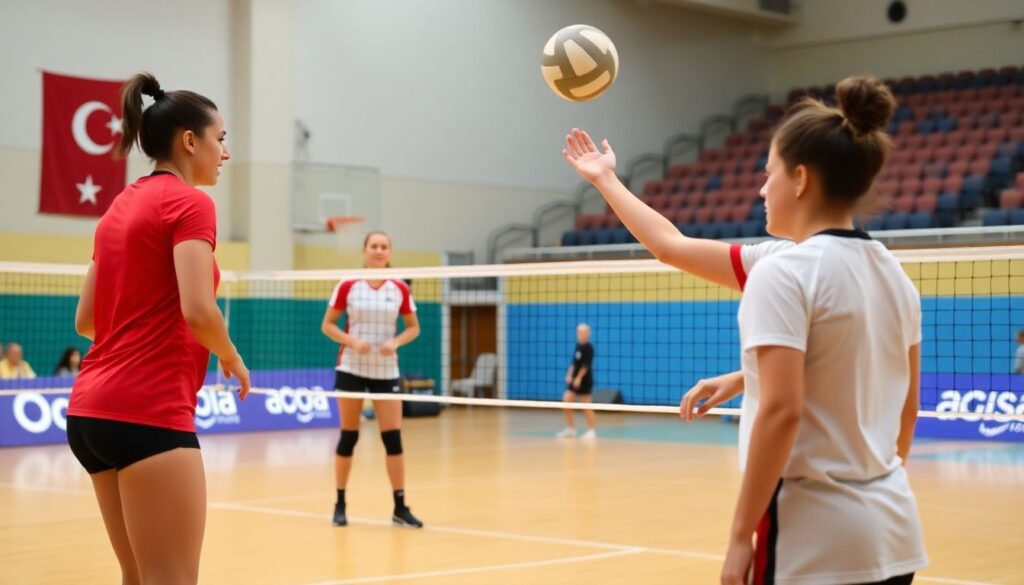
A frequent myth is that Turkish women’s volleyball success comes only from buying strong spikers. The real engine is systematic coaching: serving pressure, block-defence coordination, and adaptable game plans, all built with consistent methodology from youth teams upward.
- Myth: “Height solves everything.” Overemphasis on tall attackers can create slow, unbalanced teams. Turkish coaches increasingly value quick setters, mobile liberos, and fast middle routes to beat well-organised blocks.
- Myth: “System = copy-paste from one big club.” Imitating VakifBank’s complex systems without resources leads to chaos. Smaller clubs should start with simple side-out patterns, one or two serve targets, and a basic transition plan they can execute under pressure.
- Myth: “Youth need heavy training volumes to catch up.” Overloading growing athletes causes fatigue and injuries. A more effective low-budget alternative is shorter, high-quality sessions with strict technical focus and coordination work, plus shared access to a physiotherapist across several teams.
- Myth: “Video analysis requires expensive software.” Many Turkish clubs now use smartphones, free editing tools, and cloud drives to share clips. The key is consistent tagging (serve, reception, side-out, transition) rather than advanced graphics.
- Myth: “Tactics are only for top divisions.” Even in regional leagues, simple scouting (serve at weaker passer, attack away from strongest blocker) yields big gains. Coaches with minimal resources can prepare one-page game plans focusing on two or three actionable priorities.
- Myth: “Training camps are a luxury.” In reality, short, local volleyball training camps in turkey for women, using school dorms and municipal halls in summer, give concentrated court time and team-building at low cost.
Global Footprint: Turkish Clubs, Player Migration, and Competitive Influence
It is often assumed that foreign stars “carry” Turkish clubs internationally. In practice, the interaction between imported quality and home-grown systems creates the global footprint that now shapes how other countries design their programs.
Consider a simplified season arc for a top Istanbul club. Domestic league play develops depth and gives young Turkish players regular sets; European competitions test tactical sophistication and mental resilience; national-team summers expose key players to different coaching styles, which they then bring back to their clubs.
At the same time, Turkish players moving abroad spread the country’s technical DNA: emphasis on serve-receive stability, aggressive but disciplined blocking, and multi-phase transition offence. Coaches visiting Turkey or watching a turkish women’s volleyball super league live stream often borrow these ideas, from training volumes to substitution patterns.
For smaller or emerging programs, the practical lesson is clear: you do not need a Champions League budget to copy the engine. Focus on structured weekly planning, clear age pathways, modest but consistent scouting, and community engagement through affordable turkey women’s volleyball league tickets and accessible youth events, then scale up as resources allow.
Concise Answers Coaches, Analysts, and Managers Need
How can a small Turkish club build a competitive women’s team with limited resources?
Start by sharing facilities with schools, running two to three high-quality sessions per week, and focusing on a clear game model. Partner with bigger clubs for loan players and target one or two impact signings instead of spreading a tiny budget across many average players.
What makes the Turkish Women’s Volleyball Super League attractive to sponsors and fans?
High technical level, clear scheduling, strong club brands, and consistent TV plus turkish women’s volleyball super league live stream coverage create a professional product. Sponsors value its female audience and family-friendly image, while fans enjoy intense city rivalries and international stars playing alongside local talent.
How important are youth academies compared to school programs in Turkey?
Both are essential, but in many regions schools are the real entry point. Where full academies are impossible, well-organised school teams, weekend regional festivals, and periodic regional camps can replicate many benefits of a classic academy structure.
How can clubs monetise fan interest without big marketing departments?
Basic steps include clear information on turkey women’s volleyball league tickets, simple online sales or reservations, and visible matchday stands selling scarves and jerseys. Even a modest line of vakifbank women’s volleyball team merchandise or local-club-branded items can create steady additional income.
What should coaches in Turkey prioritise in technical training for young female players?
Reception, serving, and safe landing mechanics should come before complex offensive systems. For limited-resource environments, standardised technical progressions and regular video feedback sessions in a classroom can compensate for fewer hours on court.
Are volleyball training camps in Turkey for women only for elite players?

No. Many camps are mixed-level and function as intensive learning environments and talent ID opportunities. Low-budget clubs can create shorter regional camps using school dorms, shared coaches, and simple video sessions to keep costs accessible.
How can foreign players and coaches be used effectively without blocking local development?
Assign foreigners to positions or roles where local depth is weakest and require them to mentor local players. Use foreign coaches to upgrade methods and practice planning, while ensuring that assistant coaches and youth staff are Turkish and fully integrated.