
From School Gyms to Superclubs: How Turkey Fell in Love with Women’s Volleyball
Women’s volleyball in Turkey didn’t start as a mega‑product with sold‑out arenas and superstar foreigners. For a long time it was a niche sport played mostly in school gyms, university halls and modest club facilities. The real acceleration began in the late 1990s and early 2000s, when big Istanbul institutions like VakıfBank, Eczacıbaşı and Fenerbahçe decided to treat women’s volleyball not as a side project, but as a strategic investment and a branding tool. They hired better coaches, built youth academies, and—crucially—started competing seriously in European cups, where early results showed Turkish teams could already hold their own against Italian and Russian giants.
This period coincided with broader economic growth in Turkey and a cultural shift toward women’s sports as a space where international success came faster than in men’s football. The Turkish Volleyball Federation (TVF) seized the momentum, rebranding the league (today known as the Misli.com Sultanlar Ligi for sponsorship reasons), tightening licensing requirements for clubs and standardizing TV broadcasts. By the early 2010s, the foundation was strong enough that Turkish clubs didn’t just participate in European competitions—they started to dominate them consistently, reshaping the continental hierarchy in women’s volleyball.
Why Turkish Clubs Dominate Europe: The Core Mechanisms
1. Money Meets Long‑Term Planning, Not Just Star Shopping
The usual cliché says, “They win because they spend more,” but in women’s volleyball, raw budget is only the first layer. Turkish clubs indeed operate some of the largest payrolls in Europe, yet what makes them special is how they structure that spending. Instead of blowing the entire budget on one superstar outside hitter, they spread resources across a deep bench, performance staff and youth development. The idea is to maintain a high average level across all positions and training processes, so the system survives injuries and long seasons instead of collapsing when one player is off her game.
This is why the best Turkish women’s volleyball clubs for foreign players, such as VakıfBank, Eczacıbaşı Dynavit and Fenerbahçe Opet, offer more than just a salary: they provide sports science support, language assistance, detailed video analysis and individualized physical preparation. Foreign athletes talk about predictable payment schedules, professionally organized logistics and clear tactical roles, all of which are still irregular in some other European leagues. As a result, when the same budget is spent in Italy or Poland, the on‑court output often ends up lower than what top Turkish clubs squeeze out of comparable numbers.
2. Youth Academies That Actually Produce World‑Class Players
Behind every imported MVP, there’s a Turkish setter, libero or opposite who came through a local academy and can already operate at Champions League level. Since the early 2000s, organizations like VakıfBank and Eczacıbaşı developed vertically integrated systems: from U‑13 and U‑15 teams to professional squads and loan networks. Players are tracked with long‑term plans, not just thrown into senior training when there’s an injury crisis.
The results are visible in the core of the Turkish national team: generations of players who grew up with high‑intensity training, modern periodization and constant exposure to foreign teammates. That homegrown backbone allows clubs to use their foreigner spots surgically, bringing in elite scoring outside hitters or middles instead of having to import an entire starting six. It’s a structural advantage: a deeper domestic talent pool means more tactical flexibility and better balance between star power and continuity.
> Technical note: Talent pipeline architecture
> – U‑Academy structure: U‑13 → U‑15 → U‑17 → U‑19, each with dedicated head coach and conditioning coach.
> – Monitoring: annual physical testing (jump height, lateral speed, repeated‑sprint ability), plus skill metrics (serve efficiency, reception accuracy, block touch height).
> – Promotion logic: promotion to senior training is triggered by performance thresholds, not just age; players may “float” between age groups based on readiness.
3. Sports Science, Analytics and the “Industrialization” of Training
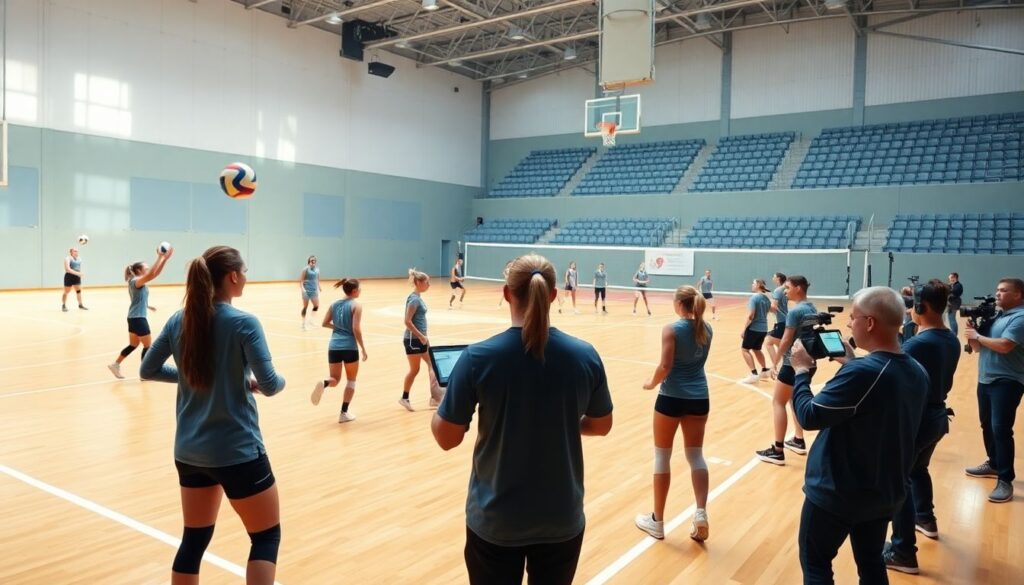
Watch a top Sultanlar Ligi team practice and you’ll see a structure closer to an NBA shootaround than an old‑school volleyball session. There are separate stations for serve‑receive, block‑defense synchronization, side‑out patterns and transition attack, with staff members filming and tracking each rep. Sports scientists monitor jump count to control tendon loading, GPS or inertial sensors to estimate player workload and heart‑rate data to keep conditioning blocks in precise intensity zones.
This “industrialization” of training matters over a 9‑10 month season. It’s one reason why Turkish clubs frequently look fresher in April and May, exactly when Champions League Final Four matches happen. Where some rivals wear down after tight domestic calendars, Turkish squads manage peak performance windows more accurately, timing their top form for decisive European ties rather than burning all their energy in November derbies.
> Technical breakdown: Load management in elite Turkish clubs
> – Weekly microcycle: 2 high‑intensity tactical days, 2 moderate technical days, 1 match‑taper day, 1 strength/plyometrics block, 1 recovery or optional session.
> – Metrics tracked: number of jumps per player, high‑speed movement volume, serve repetitions, and subjective wellness scores (sleep quality, muscle soreness).
> – Goal: keep cumulative workload inside an “optimal stress band” that builds capacity but allows supercompensation before key playoff and Champions League matches.
Historical Turning Points: From First European Titles to a Era of Dominance
Early Signals: Breaking the Italian–Russian Duopoly
In the 2000s, Italian Serie A1 and Russian Superleague teams ruled European women’s volleyball. Turkish sides were, at best, dangerous outsiders. The first major signal that the balance was shifting came when Eczacıbaşı and VakıfBank started to make deep runs in CEV competitions, pushing established powers to five‑set marathons and gradually learning how to manage the intensity of continental play. Those seasons functioned like laboratory experiments: Turkish staffs gathered tactical templates, scouting patterns and mental routines that later became internal know‑how.
By the early 2010s, the experiment phase ended and the results were clear. VakıfBank and Fenerbahçe began collecting Champions League trophies and Club World Championship medals. Each title came with federation bonuses, sponsor interest and increased leverage in negotiating TV broadcast rights for Turkish women’s volleyball Champions League games. Instead of being happy underdogs, Turkish clubs suddenly became the measuring stick—and other European federations had to think about how to catch up structurally, not just on a single game day.
The Mid‑2010s: Professionalization Loops and Brand Ecosystem
After the first wave of European trophies, a feedback loop formed. Better results brought bigger audience numbers, which attracted more sponsors and better media deals, which then allowed more investment in players, facilities and marketing. Turkish clubs learned quickly to act like entertainment brands, not just sports teams. They started actively selling Turkish women’s volleyball league tickets online, integrating them with football and basketball club platforms, and building direct‑to‑fan databases instead of relying solely on match‑day sales at the arena doors.
Merchandising followed. Instead of treating jerseys as an afterthought, clubs invested in design, limited editions and collaborations. You can now scroll through VakıfBank women’s volleyball merchandise and see a thought‑out product line: replica kits, training gear, fan accessories and even capsule drops tied to special events like a Champions League final or a domestic derby. That approach created an emotional relationship between fans and teams; for the players, it also signaled they were part of a premium product, not a side show behind men’s football.
Infrastructure, Arenas and the Match‑Day Product
Modern Arenas and the “Game Experience” Strategy
One underappreciated factor in Turkish dominance is the way clubs and the federation treat the arena experience as a product that has to compete with streaming, social media and other entertainment options. New or renovated halls feature decent sightlines, LED scoreboards, reliable lighting and sound systems—and, critically, consistent match scheduling so fans can build habits around weekend games. These aren’t minor details: predictability is a huge driver of attendance when families decide what to do with their Saturday evening.
A typical top‑level match in Istanbul or Ankara now feels like a multi‑layered event: music, fan choreography, sponsor activations, kids’ zones and interaction with players before and after the game. It’s not unusual for Turkish women’s volleyball league tickets for big clashes—VakıfBank vs. Fenerbahçe Opet, or Eczacıbaşı Dynavit vs. Galatasaray Daikin—to sell out days in advance. That pressure cooker atmosphere feeds back into performance; players learn to operate in high‑noise environments every week, so an away Champions League semi‑final feels less intimidating than it might for athletes from smaller, quieter leagues.
Broadcasting and Digital Reach
Media exposure is another field where Turkey pushed harder than many rivals. Domestic broadcasters treat women’s volleyball as prime content, not filler. High‑definition coverage, multiple camera angles, replay systems and analytic commentary have become standard for top Sultanlar Ligi matches. The TVF and clubs cooperate to coordinate kick‑off times, highlight packages and social media distribution, ensuring that key rallies and star moments circulate widely beyond the core volleyball audience.
On the European front, clubs and the federation negotiated to ensure that TV broadcast rights for Turkish women’s volleyball Champions League games remained accessible to local audiences instead of being locked behind obscure foreign platforms. Coupled with streaming options, this ensured that a new generation of fans—especially younger viewers who rarely watch traditional TV—could follow their favourite clubs everywhere. For sponsors, this ecosystem provides cross‑platform visibility: in‑arena branding, live broadcasts, and then long‑tail exposure on YouTube, Instagram and TikTok clips.
Foreign Stars, Local Heroes: Roster Construction as a Competitive Weapon
Why Top Foreign Players Keep Choosing Turkey
Talk privately with agents and a pattern emerges: when a global star outside hitter or opposite weighs offers, Turkish clubs usually appear in the final shortlist. It’s not just about the highest number on the contract. Players look at competitive level, training conditions, medical support, city lifestyle and how the club treats families. On almost all of these axes, Istanbul and Ankara superclubs score near the top. As a result, the league concentrates an unusual density of world‑class talent in one place.
This is where the phrase “best Turkish women’s volleyball clubs for foreign players” stops being pure marketing and becomes almost a technical description. For non‑Turkish athletes, the Sultanlar Ligi offers: two or three matches per week at a very high level, constant Champions League exposure, and a platform where one big season can significantly raise their international market value. Because so many stars end up in Turkey, the league’s training environment itself becomes a form of development; local players train daily against the same caliber of athletes they’ll later face in national‑team tournaments.
> Technical note: Roster‑building constraints
> – Foreign player limits: clubs must balance elite imports with strong domestic core due to federation regulations on non‑Turkish players on the court.
> – Positional targeting: foreign slots typically emphasize high‑impact roles (primary outside hitters, dominant opposites, top‑tier middles, or world‑class setters).
> – Cap strategy: with semi‑soft budget limitations, success hinges on multi‑year deals, staggered contract expirations and early recruitment cycles to secure top names.
Brand Identity and Merchandise as a Performance Multiplier
In the modern era, a club’s brand is more than a logo; it affects everything from player recruitment to youth sign‑ups. Turkish giants have learned to build and monetize that identity. Take Eczacıbaşı, one of the pioneers of women’s volleyball in Turkey: their current Eczacıbaşı Dynavit women’s volleyball jerseys online aren’t just team gear; they communicate a legacy of innovation, a pharmaceutical‑industry backing, and a reputation for nurturing high‑IQ volleyball teams rather than purely physical squads.
Similarly, VakıfBank has used its dominance to build a coherent visual and emotional story around excellence and resilience. A fan who buys VakıfBank women’s volleyball merchandise is also buying into that narrative: a team associated with long winning streaks, epic comebacks in Champions League finals and an academy that keeps producing national‑team captains. That emotional connection matters: it keeps arenas full during rebuilding seasons and motivates young talents to choose one academy over another, perpetuating success cycles across decades.
Economics Behind the Scenes: Sponsorship, Governance and Risk Management
How Stable Backing Creates Tactical Freedom
Many European volleyball clubs operate season to season, dependent on one main sponsor or city budget. When that support disappears, so does competitiveness. Turkish powerhouses are typically anchored to large, relatively stable institutions: banks (VakıfBank), industrial conglomerates (Eczacıbaşı), or multi‑sport juggernauts with massive fan bases (Fenerbahçe, Galatasaray). This doesn’t eliminate financial risk, but it reduces volatility enough for sporting directors to plan three to five years ahead instead of living in annual crisis mode.
That planning horizon allows for calculated risk‑taking: signing a young, high‑ceiling foreigner for a multi‑year deal, or investing in a performance lab that won’t pay off in the first season but will raise the entire program’s standard over time. Governance structures are increasingly professionalized; decisions about foreign signings or coaching changes involve data, medical input and budget models, not just a president’s gut feeling after a bad loss. The result is strategic coherence, which shows up on the court as tactical stability and continuity of playing style.
Balancing Domestic League Strength with European Ambitions
Another subtle advantage: the Misli.com Sultanlar Ligi is brutally competitive, but not chaotic. Mid‑table teams are strong enough to push the giants weekly, forcing top clubs to maintain intensity, yet the overall schedule is still manageable compared to some other countries where domestic travel is more demanding. Turkish teams benefit from frequent high‑quality matches without the insane travel volumes seen, for example, in geographically huge leagues.
Coaches can periodize the year around known pressure points: domestic playoffs and Champions League knock‑out rounds. Because league depth is solid, squads are battle‑tested by the time they reach European quarter‑finals, but they are not so exhausted that they fall apart physically. This balance is tricky to replicate elsewhere; it’s an emergent property of a country big enough to have multiple strong clubs, yet compact enough geographically to keep logistics under control.
Fan Culture and Social Impact
Volleyball as a Flagship Women’s Sport
In Turkey, women’s volleyball occupies a social role that in some countries is held by women’s football or basketball. It’s become one of the few women’s sports where mainstream media, major sponsors and broad audiences align around a single product. For young girls, seeing their national team win major tournaments and their club idols starring in prime‑time broadcasts normalizes high‑performance sport as a legitimate career path.
This social visibility feeds the grassroots: more school programs, more local tournaments, more parents who are comfortable sending their daughters to academies. Over time, the base of the pyramid widens, and even if only a small percentage reach professional level, the sheer size of the pool raises the ceiling for the national team and for clubs. That expanded pipeline is one reason Turkish teams can maintain depth even as the global market for talent becomes more competitive.
Digital‑Native Fan Engagement
Younger fans experience volleyball primarily via screens. Turkish clubs understand this and build content ecosystems around matches: behind‑the‑scenes videos, tactical explainers, highlight compilations and interactive Q&A sessions with players. This digital layer keeps fans engaged between games and seasons and makes the league visible to international audiences who may never set foot in a Turkish arena but stream matches from abroad.
For foreign players, this visibility matters. A great season in Istanbul is amplified by global social media, turning them into international names instead of regional stars. That, in turn, makes Turkey a more attractive destination, closing a loop where prestige, performance and fan culture reinforce each other. When prospects see how their predecessors built personal brands in the Sultanlar Ligi, the decision to sign in Turkey often becomes straightforward.
Looking Ahead: Can Europe Catch Up?
Structural Advantages Are Hard to Copy Quickly
Other European leagues are not standing still. Italy, Poland, Germany and France are investing more in women’s volleyball, improving arenas, digital coverage and youth systems. But structural advantages like Turkey’s don’t disappear overnight. The combination of institutional backing, deep academies, competitive domestic league and refined sports science methodologies will keep Turkish clubs at or near the top in the mid‑2020s, barring major economic shocks.
For Europe to rebalance, rival federations would need to replicate the entire chain: stable funding, mainstream media space, integrated youth pipelines and consistent Champions League participation. That’s a multi‑year project, not a one‑season fix. Until then, we’re likely to see Turkish clubs in most continental finals, forcing others to measure themselves against a benchmark built over decades, not just talent assembled during the last transfer window.
Key Takeaways for Coaches, Managers and Fans
For professionals and enthusiasts trying to understand why Turkish women’s volleyball rules Europe, a few core lessons emerge:
– Success is systemic, not episodic. Trophies are the end of a long chain: youth development, science‑based training, financial planning and brand building.
– Stability multiplies talent. Reliable institutions and predictable structures make it easier to attract and retain world‑class players and coaches.
– Fan experience is a performance factor. Full arenas, strong digital presence and high‑quality broadcasts create pressure, prestige and revenue that feed back into better squads.
If you watch a Champions League final in 2026 and see yet another Turkish club lifting the trophy, it’s not just because they had the tallest middle blockers or the hardest‑hitting opposite. It’s because, for more than twenty years, Turkey has treated women’s volleyball as a strategic asset—building an ecosystem where performance, economics and culture pull in the same direction.