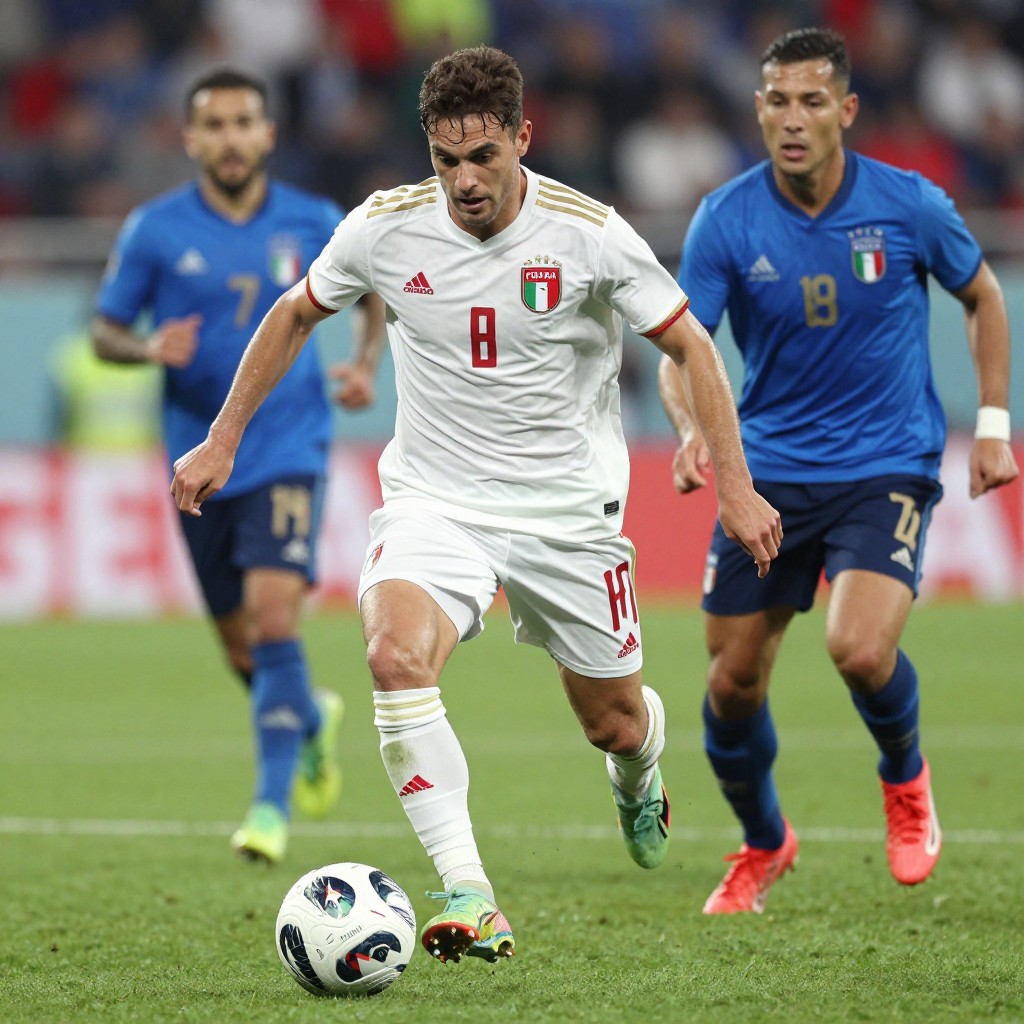
Arda Güler Stands Out as Türkiye Falls 4-1 to Italy in Nations League
Arda Güler was Türkiye’s most influential player on a difficult night in the UEFA Nations League, producing a composed and energetic performance despite his side’s 4-1 defeat to Italy. The Real Madrid midfielder repeatedly sought possession and tried to move his team forward, but his individual quality could not compensate for Türkiye’s defensive problems at the Atatürk Spor Kompleksi Matlı Stadyumu.
The result followed a narrow 1-0 loss to France in Türkiye’s opening fixture. Vincenzo Montella’s team therefore had little room for another setback, yet Italy took control before the break with a clinical first-half display. Alessandro Bastoni, Davide Frattesi and Michael Kayode each scored to give the visitors a 3-0 advantage.
Türkiye responded after the interval when Barış Alper Yılmaz found the net, offering a brief sign of resistance. Italy soon restored its three-goal cushion, however, as Francesco Pio Esposito scored to make it 4-1 and settle the contest.
Güler Keeps Demanding the Ball
While Türkiye struggled to contain Italy, Güler remained actively involved in midfield. The 21-year-old operated in the central half-spaces, often making himself available under pressure and looking for ways to carry or pass the ball into more advanced areas. His willingness to take responsibility stood out as the match moved against his team.
Güler recorded a match-high 100 touches and completed 62 of his 70 passes, finishing with an 89% passing success rate. Those figures reflected more than simple possession: he was one of Türkiye’s main routes through the middle of the pitch and continued trying to connect midfield with attack.
His work also extended beyond distribution. Güler won 11 of his 16 ground duels, completed four dribbles-a match-high total-and attempted four shots. Even when Italy’s defensive shape made progress difficult, he looked for opportunities to break through it rather than retreat from the challenge.
That persistence was particularly notable given the physical pressure he faced. Güler continued to receive the ball in crowded areas, protect possession and attempt to create forward momentum. His performance did not change the outcome, but it offered a clear contrast to Türkiye’s broader difficulties in keeping the match under control.
Individual Quality Could Not Repair Türkiye’s Defensive Problems
Italy’s three first-half goals left Türkiye with a steep challenge. Falling behind by three before the break meant the hosts had to take greater risks to get back into the game, while also trying to prevent Italy from exploiting the space those risks could create.
Yılmaz’s goal after the restart gave Türkiye a response, but Esposito’s quick reply curtailed any possibility of a sustained comeback. The sequence underlined how difficult it was for the hosts to build momentum: a promising attacking moment was followed almost immediately by another setback.
Güler’s ball progression helped Türkiye move forward, but one midfielder could not resolve the team’s problems across the pitch. The defeat showed the difference between creating promising individual moments and maintaining enough defensive organisation to compete over the full 90 minutes.
A Positive Display for Real Madrid
For Real Madrid, Güler’s performance offered encouraging evidence of his confidence and maturity. He continued to influence play in a challenging match, handled pressure and remained willing to attempt decisive actions even when Türkiye were trailing heavily. Those qualities are valuable for a young player returning to the demands of club football.
His showing also suggested that he is increasingly comfortable taking on responsibility in central areas. Rather than limiting himself to safe passes, Güler tried to advance possession through dribbling and forward intent. The four completed dribbles and four attempts on goal illustrated his desire to affect the game in multiple ways.
Italy’s players also recognised his influence after the match. Fiorentina defender Michael Kayode praised Güler’s performance in central midfield, acknowledging the playmaker’s impact despite the one-sided scoreline.
For Türkiye, the focus now must be on addressing the collective issues exposed by the defeat. A strong individual display can provide a foundation, but the team will need greater defensive discipline and better coordination if it is to recover in League A. After consecutive losses to France and Italy, the margin for error in the group has narrowed.
Güler, meanwhile, leaves the match with a result he will not have wanted but with a performance that showed his ability to remain influential under adverse circumstances. Türkiye’s next challenge is to turn that individual resilience into a more complete team response.