
Basketball analytics in the Turkish Basketball League is about turning play-by-play, tracking, and scouting data into clear decisions on rotations, tactics, player recruitment, and budgeting. With the right tools, workflows, and staff training, clubs can safely build a step-by-step analytics system that coaches trust and executives can act on.
Data-driven snapshot for Turkish Basketball League actors
- Clubs can already access Turkish Basketball League stats and analytics through multiple local and international providers, plus open data sources.
- Most TBL teams underuse data because workflows are fragmented between coaching, medical, and front-office staff.
- Simple models and clear visuals beat complex “black box” systems for coach adoption in the Turkish Super League context.
- Reliable video tagging and shot charts are usually higher-impact than exotic advanced metrics early on.
- Data analytics solutions for basketball clubs in Turkey must adapt to crowded weekly schedules, travel, and tight staffing.
- Sports data providers for Turkish basketball league teams differ widely in cost, latency, and API quality, so tool selection matters.
Current data infrastructure and readiness across the TBL
Before investing heavily, each club in the Turkish Basketball League should assess where they stand and whether a larger analytics build-out makes sense right now.
This approach is usually appropriate when:
- You already collect stable box score and play-by-play data for all Turkish Super League and European games.
- Coaches or assistants regularly review video and are open to integrating visual reports into game prep.
- The club has at least one staffer comfortable with spreadsheets and basic coding or BI tools.
- Management is ready to align recruitment, salary decisions, and scouting with data signals.
It may be premature or counterproductive when:
- Head coach is strongly opposed to analytics, seeing it as a threat rather than support.
- There is no consistent data capture (missing games, inconsistent tagging, scattered files).
- Budget cannot support at least minimal software subscriptions or part-time analyst work.
- Internal politics make data transparency risky (for example, contract disputes, staff turnover).
In such cases, start with very small foundations: shared stat templates, a basic video tagging workflow, and clear ownership of who maintains Turkish Basketball League stats and analytics files.
Core performance metrics and analytical models every staffer should use
To make analytics practical for intermediate-level staff in Turkey, focus on a tight set of metrics and simple models that directly answer coaching and front-office questions.
Essential data sources and access needs
- Official league box scores and play-by-play logs for all games.
- Video of every TBL and European fixture, ideally with time-synced events.
- Training load data where available (GPS, heart rate, RPE spreadsheets).
- Scouting reports and salary data for your roster and key targets.
Priority performance metrics for the Turkish Super League
- Possession-based efficiency: offensive and defensive rating, pace, points per possession.
- Shooting quality: shot charts, expected effective FG% by location and play type.
- Rebounding and turnover control: offensive/defensive rebounding rates, turnover percentage.
- Lineup impact: plus/minus and net rating for common five-man units.
- Role clarity: usage rate, assist rate, spot-up vs on-ball volume.
Simple analytical models that are realistic to maintain
- On/off impact breakdowns – For each player, compare team offensive and defensive rating when they are on vs off the floor across all advanced basketball statistics Turkish Super League games, not just a few matches.
- Shot quality model – Classify shots (at rim, midrange, three, contested, open) from video or tracking. Estimate expected points per shot type and compare players and lineups.
- Fatigue and load flags – Combine game minutes, travel, and training load to create simple traffic-light status (green, yellow, red) ahead of congested weeks.
- Roster value bands – Group players into internal salary bands based on age, position, production, and role to guide renewal and recruitment talks.
Skills and tools required per role
| Tool / Approach | Main Use Case | Typical Cost Level | Required Expertise | Good Fit For |
|---|---|---|---|---|
| Spreadsheet (Excel, Google Sheets) | Basic Turkish Basketball League stats and analytics, lineup tables, simple charts | Low | Intermediate spreadsheet skills | Assistant coaches, team managers |
| BI dashboard (Power BI, Tableau, Looker Studio) | Automated game and season dashboards, shot charts, trend views | Low-Medium | Comfort with data models and visuals | Analysts, performance staff |
| Python/R scripts | Custom models, advanced basketball statistics Turkish Super League analyses | Low (open-source) | Programming and statistics knowledge | Data analysts, external consultants |
| Video tagging software | Play tagging, actions by player, synergy with reports | Medium | Video experience, tactical knowledge | Video coordinators, assistant coaches |
| Third-party basketball analytics services for professional teams | Ready-made reports, tracking data, league-wide benchmarks | Medium-High | Basic data literacy | Clubs with limited internal analytics staff |
Deploying player-tracking, wearable and video analytics in practice
Before the step-by-step rollout, remember the main risks and limitations:
- Tracking and wearables can create player privacy and trust concerns if communication is weak.
- Too many metrics can overload coaches, causing them to ignore dashboards entirely.
- Hardware failure or missing data can mislead decisions if you do not have basic quality checks.
- Heavy dependence on a single vendor among sports data providers for Turkish basketball league clubs can create lock-in and budget risk.
-
Clarify use cases and staff responsibilities
Define what decisions you want to improve first: rotation management, defensive schemes, or injury risk. Assign a responsible person for each data stream (tracking, wearables, video tags) and how it flows into reports.
-
Audit current hardware, software, and data providers
List your cameras, wearable systems, and external sports data providers for Turkish basketball league games. Check whether data formats, timestamps, and IDs are consistent enough to merge into one database or at least linked spreadsheets.
-
Set up a minimal, robust data collection workflow
For each game and practice, decide who:
- Starts and stops tracking systems and wearables on time.
- Downloads raw files and stores them in a shared, backed-up folder.
- Checks that files are complete (no missing halves, broken logs).
- Documents any anomalies (device failure, missing players).
-
Implement basic video tagging aligned with coaching language
Create a simple tagging template that mirrors how your staff talks: actions like pick-and-roll coverage, closeouts, cuts, and transition defense. Make clips searchable by player, action, and result, so coaches connect visuals with Turkish Basketball League stats and analytics tables.
-
Integrate tracking and wearables with video and event data
Start small: link tracking coordinates or speed data with key tagged actions like closeouts and drives. Use this to answer focused questions such as whether your small lineup really speeds up in transition or just feels faster.
-
Build coach-ready reports and routines
Convert complex tracking metrics into 1-2 clear visuals and bullet points for each game and training week. Present reports at fixed times, for example the morning after games and before main tactical sessions, so analytics is part of the routine, not an optional add-on.
-
Review, simplify, and protect from overload
After a few weeks, drop metrics that coaches never use or find confusing. Keep a lean set of indicators and regularly explain how data analytics solutions for basketball clubs in Turkey can support the specific way your head coach wants to play.
Merging scouting, salary and market data for smarter roster decisions
Use this checklist to verify that your roster analytics layer is coherent and decision-ready before major transfer windows.
- All internal players and external targets have unified IDs across scouting reports, stats tables, and contract files.
- You track current salary, contract length, and options alongside performance metrics for quick comparison.
- Each target includes both traditional box stats and role-specific advanced basketball statistics Turkish Super League indicators where available.
- Market data includes at least a rough estimate of expected offers or salary ranges for each target profile.
- Injury history, availability, and recent load are captured in structured fields, not just narrative notes.
- Scouting grades (skill, character, fit) are numeric and standardized, so you can combine them with performance and cost.
- Reports are comparable by position archetype, for example “stretch four”, “rim-protecting five”, “secondary ball-handler”.
- Decision logs clearly show why a player was signed, extended, or rejected, based on the merged data.
- At least one pre-season and mid-season review compares roster spend against production by position group.
- Sensitive information is access-controlled, reducing the risk of leaks while keeping decision-makers fully informed.
Designing an analytics pipeline: from raw feeds to coach-ready reports
Avoid these common mistakes when building your end-to-end analytics pipeline for the Turkish Super League environment.
- Building overly complex databases when a well-structured set of spreadsheets would be enough initially.
- Ignoring data validation, leading to wrong stats from simple issues such as duplicated games or misaligned timestamps.
- Automating everything before understanding what coaches and executives actually use week to week.
- Locking into one vendor among basketball analytics services for professional teams without clear exit options or data export rights.
- Failing to document scripts, queries, and dashboards, so workflows collapse when a single analyst leaves.
- Designing dashboards for analysts rather than for coaches, with too many filters, charts, and technical labels.
- Not testing dashboards on mobile and tablets, which are common devices for TBL staff on the road.
- Skipping basic security practices, such as role-based access and off-site backups for critical performance data.
- Using experimental models in contract talks without clear communication about uncertainty and data limits.
Evaluating impact: KPIs, experiment design and rolling improvements

Clubs in Turkey can choose different levels of commitment to analytics depending on resources, culture, and time horizon.
- Lightweight reporting only – Focus on clean box score, shot charts, and scouting summaries with no complex modelling. Suitable for clubs with limited staff or skeptical coaches who still want better organization of information.
- External consultancy-driven model – Outsource heavy analytics tasks to specialists offering basketball analytics services for professional teams, while keeping in-house staff focused on communication and application. Useful when you need deeper models but cannot hire full-time analysts.
- Hybrid in-house analytics cell – Maintain a small internal team that controls core data and dashboards, while using external providers for tracking, projections, and some Turkish Basketball League stats and analytics enhancements. Fits clubs with medium budgets and growth ambitions.
- Collaborative league-level initiatives – Work with other clubs and data analytics solutions for basketball clubs in Turkey vendors to share some anonymized benchmarks and best practices, reducing costs and improving standardization without revealing competitive secrets.
Practical concerns and mitigation strategies for adoption
How can we prevent analytics from clashing with coach authority?
Define analytics as a support tool that answers the coach’s questions instead of prescribing decisions. Involve the head coach early when choosing metrics and visual formats, and present outputs as options and scenarios, not directives.
What if our budget is too small for full tracking systems?
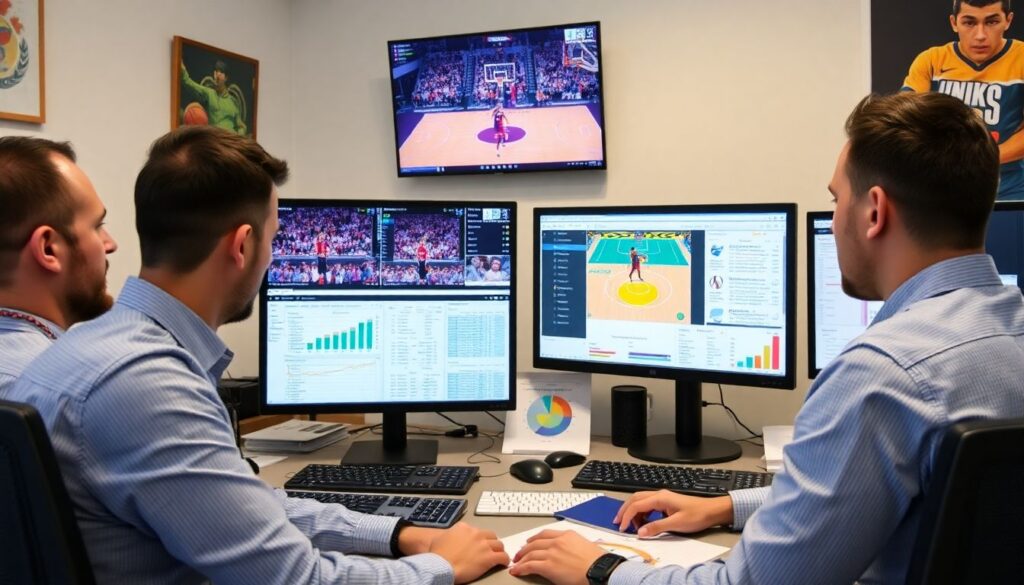
Start with structured video tagging, high-quality play-by-play, and simple lineup analysis in spreadsheets. Add low-cost or shared services from sports data providers for Turkish basketball league games later, once workflows are stable and clearly useful.
How do we handle player privacy and wearables in Turkey?
Explain clearly what is tracked, how it is stored, and who can see it. Use written policies aligned with club legal advice, and focus on health and performance benefits rather than punishment or contract leverage.
How can we avoid overfitting to short-term TBL results?
Always analyze at least full-season samples where possible, and combine local Turkish Super League data with broader European or international benchmarks. Mark any conclusions from small samples as tentative and avoid making big roster decisions from tiny splits.
What skills should our first analytics hire in the TBL have?
Look for someone comfortable with basketball language, spreadsheets, and at least one scripting or BI tool. Communication skills and the ability to translate models into simple visuals matter more than very advanced mathematics at the start.
How do we measure whether analytics is actually helping?
Track a few clear KPIs such as shot quality trends, lineup efficiency, and injury days lost before and after adoption. Also collect qualitative feedback from coaches and players on whether reports feel useful and actionable.
How can we keep our analytics system robust during staff changes?
Document all pipelines, store code and templates in shared repositories, and use standardized naming and folder structures. Train at least two people on key workflows and review them at the start and end of each season.