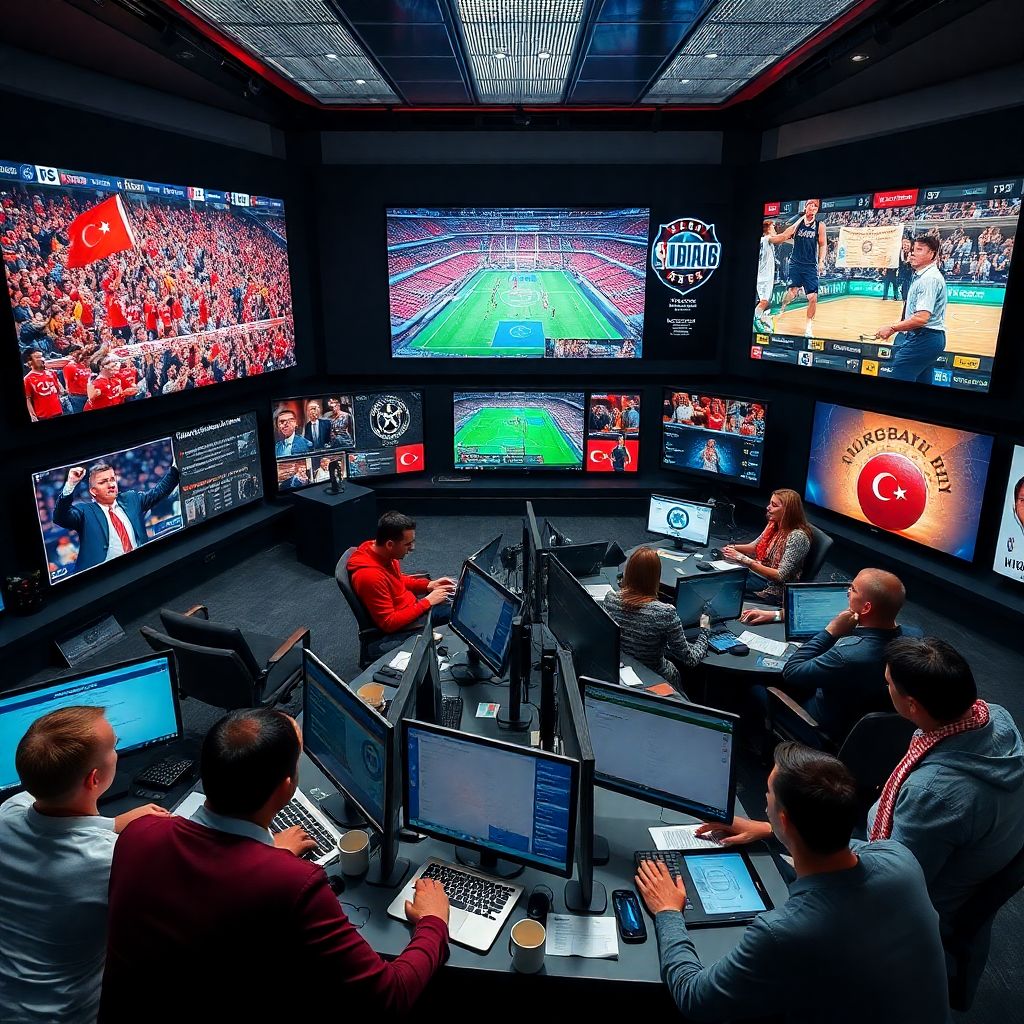
Why Turkish sports journalism matters when the story goes global
When a Turkish club faces Manchester City, when a rising Turkish basketball star signs in the NBA, or when the national team stuns a favorite at the Euros, millions of people around the world don’t just watch the game — they watch how it’s told.
In Turkey, sports is not a “culture section” add‑on. It’s politics, economics, diplomacy, identity. That’s why coverage of global events by Turkish sports media often looks and feels different from what you’ll see in London, New York or Berlin.
And that difference didn’t appear out of nowhere; it’s rooted in a specific media history, commercial pressures and a constantly shifting digital ecosystem up to at least 2024 (I can’t reliably comment on changes after that).
Let’s go behind the headlines and unpack how it all works.
—
From the back page to prime time: a quick historical detour
Sports journalism in Turkey really took off after the 1950s, when football became a mass spectacle and newspapers realized that Galatasaray–Fenerbahçe could sell almost as many copies as national politics.
For decades, three milestones shaped how global events are covered today:
1. 1960s–1980s: The era of the print giants
Papers like Milliyet and Hürriyet built strong sports sections. Foreign games were hard to access, so correspondents in Europe became gatekeepers. If you wanted to know how Turkish players in Germany were doing, you waited for tomorrow’s paper.
2. 1990s–2000s: Satellite TV and the “big match” obsession
With the launch of Lig TV and the growth of TRT’s sports coverage, live broadcasting turned derbies and Champions League nights into huge TV events. International matches were framed around Turkish club narratives: “How does this affect Galatasaray?” became more important than “What does this mean for European football?”
3. 2010s–early 2020s: Digital disruption and the English‑language pivot
When social media and streaming took over, print lost its dominance. Suddenly, Turkish audiences could follow La Liga, NBA or Premier League in real time. At the same time, the best Turkish sports news websites in English emerged to talk directly to global fans who wanted local insight without the language barrier.
These three phases still echo in how Turkish outlets approach major global stories today: local lens, event‑driven drama, and an increasingly international voice.
—
How Turkish outlets frame global sports stories
1. The “national stake” angle
Open Turkish sports TV on the night of a Champions League draw. You’ll hear a simple question: *“Is this good for Turkish football?”*
Even when the match doesn’t involve a Turkish team, coverage often revolves around:
– Coefficient math – How UEFA points affect future qualification rounds.
– Transfer shop window – Which Turkish players might be scouted.
– Prestige and soft power – What it does to Turkey’s reputation in Europe.
For example, when Trabzonspor or Başakşehir ended up in tough Europa League or Conference League groups in recent years, analysis segments combined tactics with the long‑term implications for league ranking and broadcast income. A routine draw became an economic and political story.
2. Personality‑driven narratives
Turkish coverage leans strongly toward personalities rather than abstract systems.
When a Turkish coach works abroad, or a star like Hakan Çalhanoğlu or Cedi Osman plays in a big league, the game is often framed as:
– “How did *our* player perform on the global stage?”
– “Is this a step toward or away from the national team?”
This creates a very human, narrative‑heavy coverage of global events. A mid‑table Serie A game becomes important because a Turkish midfielder is in the lineup. NBA regular‑season matches suddenly trend because a Turkish center records a double‑double.
—
Real‑world examples: what “global” looks like from Istanbul
European Championships and World Cups
When Turkey plays at a major tournament, the coverage is wall‑to‑wall. But even when it doesn’t, Turkish media still heavily invest in the event.
– 2014 and 2018 World Cups (without Turkey): Big broadcasters still sent reporting teams to Brazil and Russia. Focus shifted to former Turkish league stars, ex‑Süper Lig coaches on the touchline, and transfer gossip tied to standout players.
– Euro 2020 (played in 2021): Because Turkey qualified and opened the tournament in Rome, pre‑tournament coverage merged travel reporting, fan stories and tactical deep dives. Turkish outlets spent days discussing Şenol Güneş’s line‑ups, while social media teams churned out multi‑language content to reach international viewers.
By combining global spectacle with local angles, Turkish media made sure domestic audiences still felt personally invested, even in matches with no direct Turkish involvement.
NBA, EuroLeague and global basketball
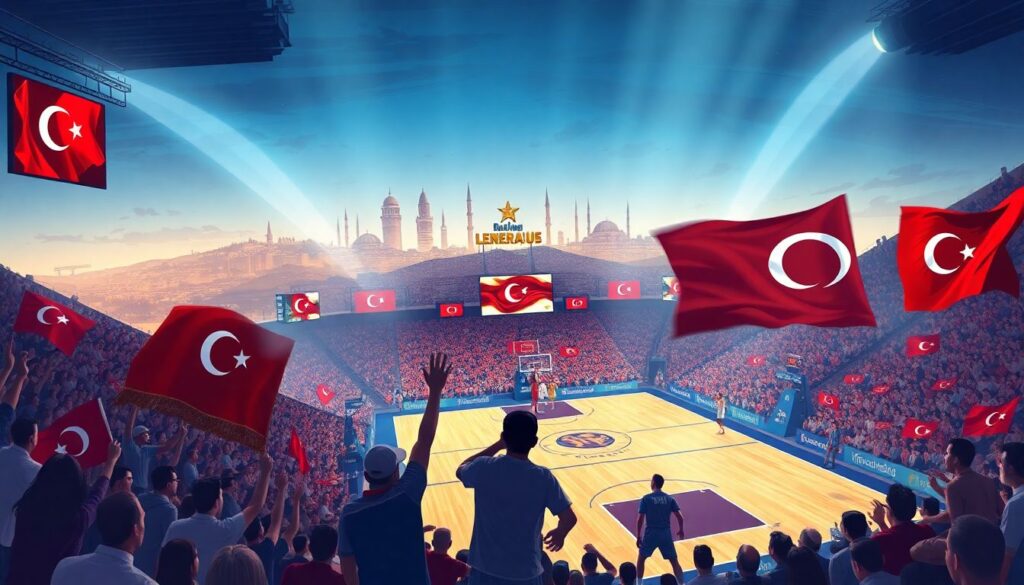
Turkey is a basketball country as much as it is a football country, especially at club level.
– Istanbul clubs (Fenerbahçe, Anadolu Efes) have been EuroLeague powers, so Turkish outlets treat EuroLeague Final Fours like a global event on par with Champions League knockout stages.
– When Anadolu Efes won back‑to‑back EuroLeague titles (2021, 2022), coverage blended celebratory patriotism with serious tactical analysis: spacing, pick‑and‑roll schemes, efficiency stats.
– For the NBA, any game featuring a Turkish player — from the early days of Mehmet Okur and Hidayet Türkoğlu to more recent generations — gets magnified coverage. Local sites publish condensed highlights with Turkish commentary within minutes of the final buzzer.
In other words, global basketball is filtered through the prism of Turkish success, system expertise and the export of local talent.
—
Who actually does the reporting: jobs, structures and pressures
Behind the camera: the ecosystem of sports media companies in Turkey
The landscape is a mix of legacy TV networks, club‑aligned channels, digital natives and niche platforms.
– Large broadcasters and sports media companies in Turkey (like beIN Sports Turkey, TRT Spor, and the sports arms of major media holding groups) control most live rights and big‑budget productions.
– Club‑driven channels and YouTube shows (from “Fan TV” style formats to official club studios) give hyper‑partisan views on global football stories.
– Independent digital outlets and newsletters fill in the gaps with long‑form analysis, data‑driven pieces and podcasts.
All of them compete for the same thing: attention during global events where international coverage from BBC, ESPN or Sky is just one click away.
Technical Corner: How a global story gets built in a Turkish newsroom
Imagine a big Champions League night or a World Cup quarterfinal. A typical workflow at a mid‑to‑large Turkish outlet looks like this:
– Data intake:
– Opta or similar data provider feeds live stats (xG, pass networks, shot maps).
– Social media listening tools track trending topics around Turkish keywords and player names.
– Desk specialization:
– *Foreign football desk* focuses on the game itself.
– *Turkey‑focus desk* searches for national angles: ex‑Süper Lig players, potential transfer links, historical rivalries.
– Output layers (often in parallel):
1. Live text commentary and short video clips.
2. Immediate post‑game match report (within 15–20 minutes of full time).
3. Deep‑dive analysis piece with tactical diagrams and quotes (published within a few hours).
4. Social “react” content: TikTok/Instagram Reels/YouTube Shorts summarizing drama, controversies, refereeing decisions.
This layered approach allows the same global event to be repackaged for different audiences and attention spans.
—
How to enter the field: education, careers and skills
Studying the craft: from classroom to press tribune
If you want to study sports journalism in Turkey, you don’t go to a separate “sports press” school — you enter broader communication and journalism programs that offer sports‑focused courses or let you specialize later.
Several universities (both public and private) blend:
– Core modules: media law, journalistic ethics, writing and editing, TV production, data literacy.
– Sports‑specific content: history of Turkish football and basketball, sports economics, event management, basic performance analytics.
Many students start part‑time work for campus radios, local clubs or digital start‑ups while still at university, which is almost a prerequisite now.
sports journalism jobs in Turkey: what they look like in practice
By the early‑to‑mid 2020s, traditional full‑time newsroom positions had been shrinking, while freelance and hybrid roles grew.
Typical roles around global events include:
1. Live blogger / match commentator
– Runs minute‑by‑minute coverage of Champions League, EuroLeague or NBA games.
– Needs quick English to scan foreign feeds and press conferences, then summarize in Turkish.
2. Data‑driven analyst
– Turns Opta or Second Spectrum data into visual and narrative stories.
– Works closely with video editors to integrate numbers into analysis segments.
3. International desk reporter
– Follows big clubs and leagues abroad, maintains relationships with foreign journalists, attends online pressers.
– Often also responsible for English‑language versions of stories.
4. Social media producer
– Clips viral moments of global events, adds localized commentary, pushes it across platforms in seconds.
– Monitors copyrights and takedown risks while racing against competitors.
Competition is tough: in Istanbul alone, hundreds of graduates per year chase a limited number of stable contracts. That’s a key reason why many young professionals build personal brands on YouTube or X, then leverage that visibility to get into larger outlets.
—
English‑language coverage: talking to the world about Turkish sport
Why English matters so much now
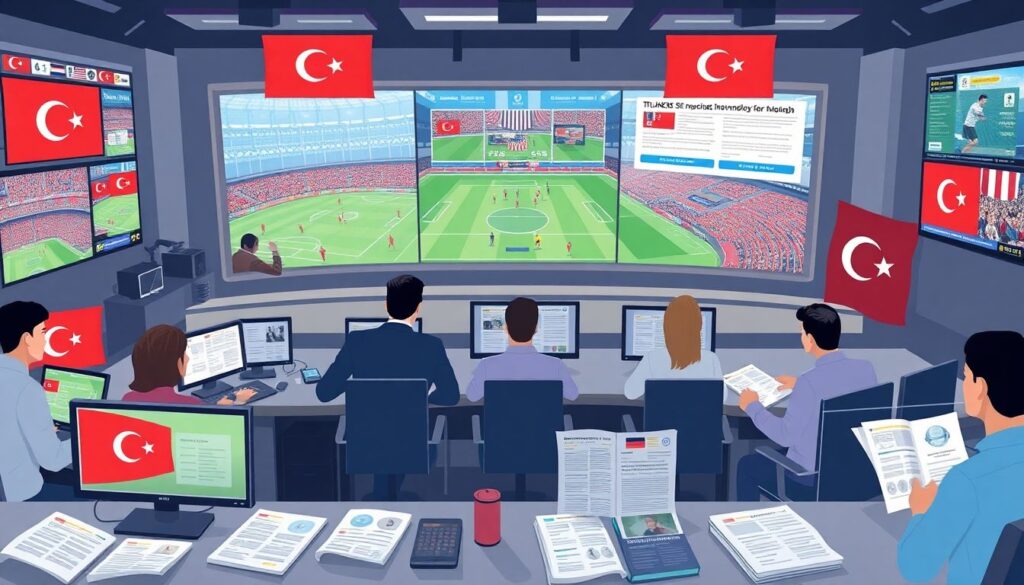
As more foreign fans follow Turkish clubs and players, and as Turkey hosts international events, the need for high‑quality English content has grown fast.
That’s where sports news agencies covering global events with a Turkish perspective come in. They:
– Provide bilingual match reports and features.
– Syndicate Turkish‑flavored analysis to international partners.
– Offer local sourcing (e.g., from club directors, agents, coaches) that’s hard to access from abroad.
In parallel, the best Turkish sports news websites in English play another important role: they correct misconceptions and provide context that global outlets often miss — things like fan politics, stadium culture, and the financial structure of club ownership.
—
Technical Corner: What an English‑language workflow looks like
When a major global event involves Turkey (say, a Euro knockout game or a EuroLeague Final Four in Istanbul), an English‑language team might:
– Prepare dual‑language style guides (names, transliterations, club nicknames) to avoid confusion: *Fenerbahçe* vs *Fenerbahce*, *Beşiktaş* vs *Besiktas*.
– Create two narrative paths from the same fact base:
– Domestic version: more emotional, assumes deep knowledge of club politics.
– International version: more explanatory, includes context about the league, rivalries, economic tensions.
– Use time‑zone‑aware scheduling for social posts, aiming at peak hours in Europe and North America, not just Turkey.
This is how local stories about a derby incident or a referee controversy can suddenly become part of an international conversation.
—
Digital habits: how audiences change the way stories are told
From TV viewers to multi‑screen users
Modern Turkish sports fans rarely just watch TV. They:
– Stream the game on a big screen,
– Scroll through live stats on their phones,
– Argue on social media,
– And sometimes listen to a fan podcast — all at once.
This multi‑screen behavior has reshaped production:
– Short, smartphone‑native clips are prepared in advance for star players and likely scenarios.
– Commentators are encouraged to deliver “clippable” lines that will make sense out of context in a 15‑second video.
– Post‑game opinion pieces are written with search trends in mind, because fans immediately Google names, decisions and controversies.
Fact‑driven vs emotion‑driven coverage
You may notice a split:
– Big TV talk shows lean on heated debates, club allegiances and emotional language.
– A newer wave of analysts — often younger, sometimes independent — emphasizes numbers, tactical breakdowns and long‑form podcasts.
The two camps coexist, and during global events, they actually feed off each other: a hot‑take TV clip goes viral, and data‑driven outlets publish calm, evidence‑based responses. The audience gets both adrenaline and depth.
—
Challenges and opportunities going forward

Even stopping at the knowledge available by 2024, several long‑term trends are clear for the next few years:
1. Rights and access will keep tightening
– As global broadcasters invest more in top leagues and tournaments, Turkish outlets must negotiate harder for highlights, mixed‑zone access and interview windows.
2. Language skills will be non‑negotiable
– Reporters covering global events need working English (and often more languages) just to keep up with foreign pressers, documents and analytics tools.
3. Data literacy will separate serious journalism from punditry
– Fans can now see raw stats themselves. What they need from professionals is not numbers, but interpretation and context.
4. Independence vs. club alignment will stay a tension point
– Club‑funded channels and influencers provide access and intimacy but can blur critical distance. Independent outlets must prove their added value with deeper, more reliable coverage.
At the same time, for young professionals, the field is more open than ever: you can start a niche newsletter on Turkish players abroad, break down NBA games in Turkish, or build a bilingual YouTube channel that covers both Süper Lig and Champions League from Istanbul’s point of view.
—
Final thoughts: what “behind the headlines” really means
To understand how Turkey covers global sports events, you have to see three layers at once:
1. A historical layer rooted in print culture, television and big derbies.
2. A national layer where every Champions League night or EuroLeague game is also a story about Turkish prestige and identity.
3. A global layer where English‑language platforms, data tools and social media connect Istanbul, London, Madrid and New York in real time.
The result is a distinctive ecosystem: emotional but increasingly analytical, intensely local yet more international every year.
If you’re thinking about a career here — whether you plan to work for large broadcasters, nimble digital players, or international agencies — understanding those layers isn’t just theory. It’s the difference between describing a match and really explaining why it matters, both in Turkey and far beyond its borders.