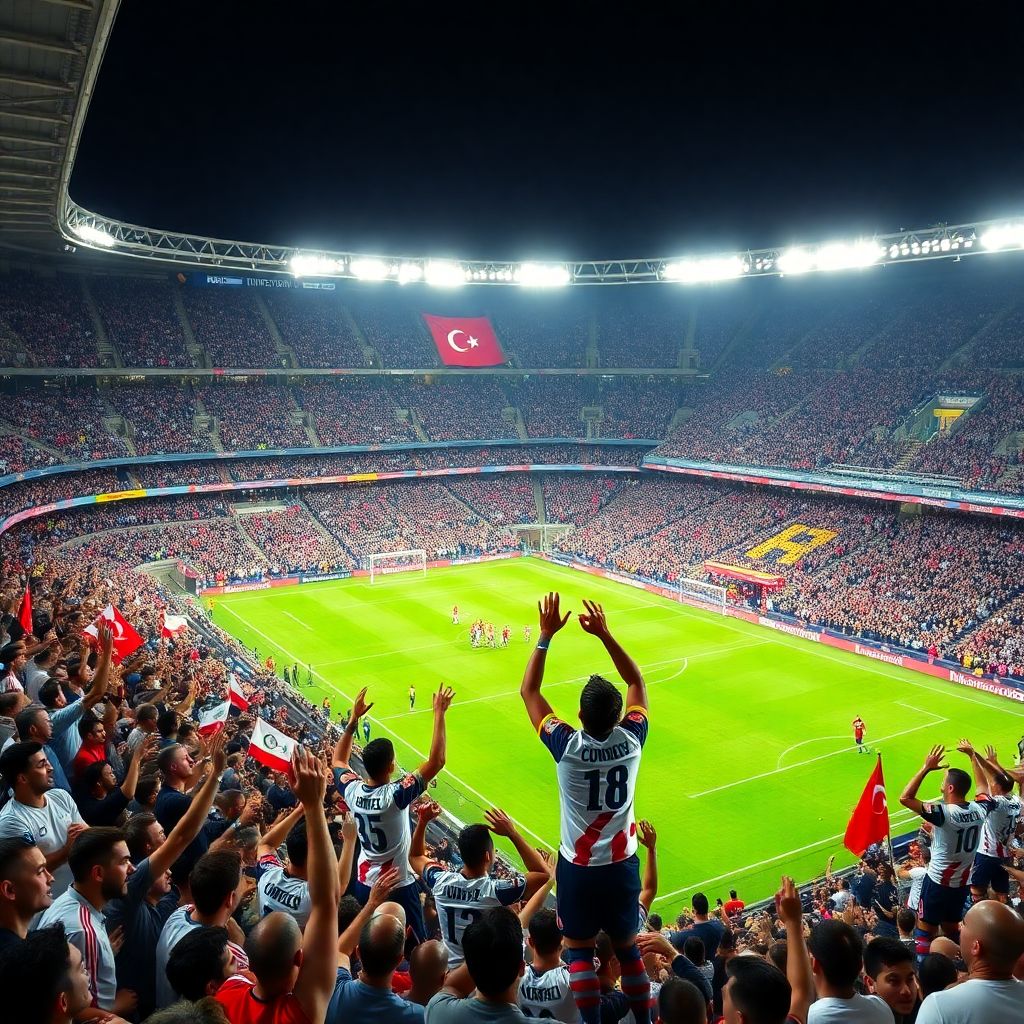
Sports sponsorship in Turkey is a commercial partnership where brands fund clubs, athletes or events in exchange for marketing rights, visibility and business growth. It is driven mainly by football, supported by corporations, state-owned enterprises and SMEs, and executed through structured contracts, activation campaigns and measurement standards adapted to the Turkish media, legal and fan culture context.
Snapshot: Why sports sponsorships in Turkey matter
- Football dominates attention, but basketball, volleyball and esports offer fast-growing brand sponsorship opportunities in Turkish sports.
- Corporate, state-owned and SME investors use sponsorship to reach national and regional audiences at scale.
- Sponsorships support brand image, sales and stakeholder relations better than short-term ad bursts.
- Public bodies and municipalities influence which clubs and events attract funding.
- Well-structured deals with clear KPIs turn sports sponsorship Turkey budgets into measurable marketing investments, not donations.
Action-focused tips for first-time sponsors
- Start with a clear objective: awareness, sales, B2B networking or employer branding.
- Test smaller local deals before signing long multi-year football club sponsorship deals Turkey is famous for.
- Use independent research or sports marketing agencies in Turkey to benchmark prices and audiences.
- Negotiate digital and content rights aggressively; TV visibility alone is rarely enough.
- Align sponsorship with in-store, e-commerce and social media campaigns from day one.
Common misconceptions about Turkish sports sponsorship
Sports sponsorship in Turkey is often misunderstood as pure philanthropy or a “chairman’s hobby”. In reality it is a structured business tool: brands buy specific rights (logo placement, content, hospitality, data) and expect a return in awareness, preference, sales or political goodwill. The commercial logic is similar to other markets, but the execution is shaped by Turkey’s media landscape, football culture and regulatory environment.
A second misconception is that only big banks or telecoms can afford meaningful deals. While top Super Lig shirt sponsorships are expensive, regional football, women’s sports, futsal, volleyball, basketball and esports provide accessible entry points for SMEs. Another myth is that success is only about TV exposure; modern sponsorship in Turkey is driven by digital activation, influencers and data-based targeting.
Finally, many foreign brands think they must sponsor a “big three” Istanbul club to be noticed. In practice, focused regional properties, national federations or niche sports can deliver better cost-per-contact and lower risk of crowd-related reputational issues.
- Clarify internally that sponsorship is an investment with KPIs, not a donation line.
- Consider alternative properties beyond the biggest clubs to match your budget and target audience.
- Plan activation and data collection from the start; visibility alone is not a complete strategy.
Who invests: profiles of major sponsors and industry sectors
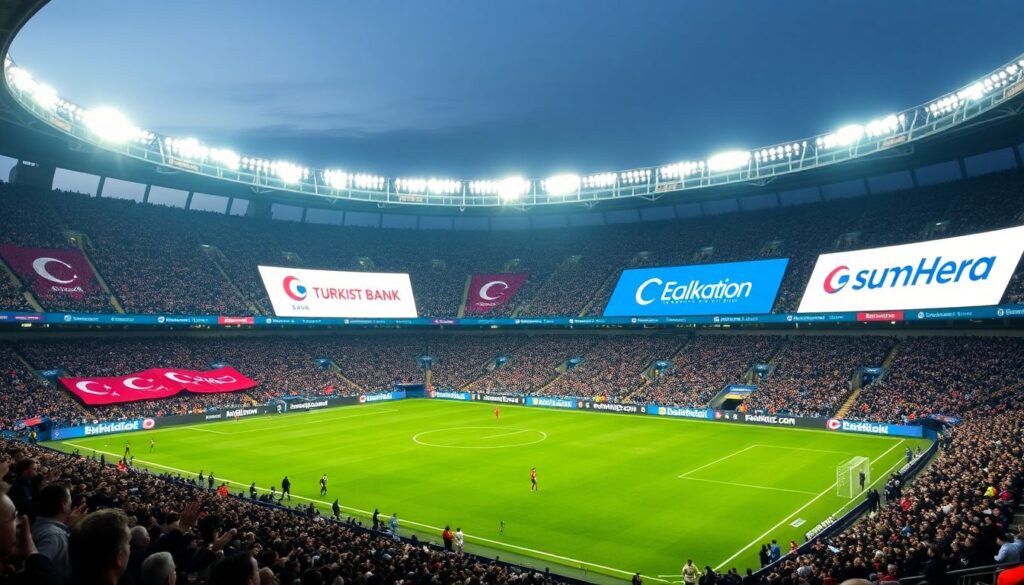
Investors in sports sponsorship Turkey can be grouped into several broad categories, each with its own objectives and activation style.
- Large domestic corporates – Banks, telecoms, insurers, energy and retail groups often lead headline football club sponsorship deals Turkey relies on. They seek mass reach, national image leadership and political goodwill.
- State-owned enterprises and public institutions – Airlines, energy companies and municipalities back national teams, stadium naming rights and local clubs, combining soft power, tourism promotion and social responsibility.
- SMEs and regional brands – Construction firms, local retailers, logistics and food brands connect with city-level fan bases via shirt backs, training kits or arena branding.
- Foreign brands – Consumer electronics, betting, automotive and quick-service restaurants use Turkey’s football and basketball properties to enter or deepen the market.
- Digital-first and esports brands – Gaming, fintech and e-commerce players experiment with clubs, streamers and leagues to reach young audiences.
- Nonprofits and NGOs – Occasionally team up around social impact campaigns, using sports to drive awareness and donations.
| Sponsor type | Typical main objectives | Common activation tactics in Turkey |
|---|---|---|
| Large domestic corporates | Nationwide awareness, brand preference, political and regulatory goodwill | Front-of-shirt deals, national TV campaigns, stadium naming, co-branded financial products, fan loyalty programs |
| State-owned & public bodies | Reputation, tourism promotion, national pride, social cohesion | National team partnerships, event hosting support, grassroots academies, community tournaments, CSR storytelling |
| SMEs & regional brands | Local sales, B2B networking, trust and status in the city | Perimeter boards, local TV and radio, matchday hospitality, retail promotions with club branding |
| Foreign brands | Market entry, fast awareness, distribution partner support | Co-branded digital content, influencer campaigns with star players, targeted social ads, joint PR with clubs |
- Map your company to the sponsor type that best fits, then copy the proven tactics for that group.
- Check which sectors dominate a club’s current portfolio to avoid being lost among similar brands.
- Use sports marketing agencies in Turkey when navigating unfamiliar sectors or regional clubs.
Motivations behind sponsorships: commercial, social and political drivers
Commercial goals remain the primary driver for most brand sponsorship opportunities in Turkish sports. Brands aim to increase awareness, preference and sales in a fragmented media environment where traditional TV spots are less efficient. Sponsorship delivers emotional relevance and offers year-round storytelling via matches, training, transfer news and fan culture.
Social impact and community positioning are also important. Companies invest in youth academies, women’s teams and local facilities to demonstrate long-term commitment to a region. This helps attract talent, calm local opposition to projects and support employer branding. In some cases, sponsorship extends corporate philanthropy with measurable branding benefits.
Political and relational motives matter in Turkey’s hybrid economy. Supporting influential clubs or federations can strengthen ties with municipalities, regulators and business elites. While this is rarely the only reason, it often shapes which properties receive sustained funding and how visible government-linked brands become in stadiums and broadcasts.
- Write down and rank your motivations (commercial, social, political) before shortlisting properties.
- Balance visible top-level sponsorships with quiet grassroots programs to hedge political and reputational risk.
- For foreign brands, partner with local advisors to understand any informal expectations around prestige properties.
Deal anatomy: rights, activation strategies and measurement standards in Turkey
Typical sponsorship contracts in Turkey define asset categories such as kit branding, perimeter LED boards, backdrop presence, hospitality, digital content rights, player appearance days and licensing for merchandise. In football and basketball, TV exposure and shirt presence still anchor negotiations, but digital and international rights have become more prominent, especially for clubs with strong diaspora audiences.
Activation strategies determine how value is actually created. Brands mix mass-media campaigns, in-store promotions, social media contests, influencer collaborations, data-driven CRM integrations and hospitality events. Measurement standards are improving: media-equivalent value, reach and frequency estimates, brand lift studies and sales attribution models are increasingly used, though not always consistently across properties.
- Common advantages
- High emotional engagement and repeated exposure across the season.
- Flexible rights that can be adapted to new channels (social, OTT, mobile apps).
- Access to players, legends and training facilities for content creation and VIP hosting.
- Typical constraints
- Complex rights ownership across league, federation, broadcaster and club.
- Variable data quality on fans, especially for smaller clubs and older ticketing systems.
- Reputation risks from crowd incidents, governance disputes or poor sporting results.
- List all assets you actually plan to use and remove unused items from the contract to save budget.
- Attach a measurement annex specifying KPIs, reporting frequency and required data access.
- Include protective clauses for major scandals or relegation when negotiating long-term deals.
Regulatory environment and the role of public institutions
Sports sponsorship in Turkey sits at the intersection of sports law, advertising regulations, competition rules and, in some sectors, specific restrictions such as on alcohol or betting. Misunderstandings often arise when foreign brands assume that rules are identical to their home markets, or when local clubs overlook disclosure and taxation aspects of in-kind deals.
Public institutions, including ministries, municipalities and federations, play a visible role in facility ownership, event permits and funding decisions. This can create confusion about who is allowed to sell which rights and under what conditions, particularly for stadium naming, city marathons or multi-sport events. Governance changes at federation level can also alter sponsorship categories or centralization of rights over time.
Common errors include over-reliance on informal understandings, ignoring advertising rules for sensitive sectors, and failing to account for currency volatility in multi-year contracts denominated in Turkish lira versus foreign currency. Brands that skip proper legal review or do not involve finance early can end up with structurally unprofitable deals.
- Engage specialist legal counsel familiar with Turkish sports and advertising law before signing.
- Clarify the exact rights holder (club, federation, league, municipality) for each asset you buy.
- Structure currency, escalation and termination clauses to handle macroeconomic and governance shifts.
Assessing ROI and managing risks for local and international sponsors
Measuring return on investment requires aligning sponsorship metrics with broader business goals. In Turkey, typical frameworks combine media exposure value, brand lift surveys, digital engagement metrics and direct sales indicators such as coupon redemptions, e-commerce tracking codes or partner channel uplifts in sponsored regions.
Risk management blends contractual safeguards, portfolio diversification and active reputation monitoring. Sponsors spread exposure across several clubs or sports, mix elite and grassroots properties, and prepare crisis-response protocols for match-fixing allegations, fan violence or political controversies. International brands often pilot with short-term or seasonal deals before committing to multi-year flagship partnerships.
Mini-case illustration:
Consider a mid-sized regional supermarket chain evaluating how to sponsor a sports team in Turkey:
- The brand defines objectives: +brand recognition in two provinces and +basket size with families.
- It shortlists a local football club and a women’s volleyball team, comparing reach, cost and fit.
- It selects the volleyball team, negotiates sleeve branding, social content and in-store player visits.
- Activation plan:
- Match-week discounts for loyalty card holders who scan a code on the team’s social posts.
- Player appearances at new store openings in target districts.
- Co-branded school tournaments supported by the municipality.
- KPIs:
- Loyalty card sign-ups in sponsor districts versus control districts.
- Sales uplift on promoted product categories on match weeks.
- Brand awareness and consideration in pre- and post-season surveys.
- Start with a pilot season and compare performance against non-sponsored regions using the same KPIs.
- Document learnings and renegotiate rights based on which assets actually drive results.
- For cross-border sponsors, benchmark ROI against other markets to justify scaling Turkish investments.
Practical answers to recurring sponsor questions
How to sponsor a sports team in Turkey without overpaying?

Define your objectives and audience, then shortlist 3-5 teams across different leagues and cities. Request standardized proposals, compare rights and reach, and use neutral sports marketing agencies in Turkey or independent consultants to benchmark fees before negotiating.
Are football club sponsorship deals Turkey’s only effective option?
No. Football is powerful but often crowded and expensive. Basketball, volleyball, futsal, motorsports and esports can offer better value, especially for youth and urban segments. Many brands combine one major football asset with several smaller properties in other sports.
What contract length works best for new sponsors?
For a first deal, one to two seasons are usually enough to test assumptions and refine activation. Longer terms make sense only when you have strong evidence of ROI, stable club governance and favorable currency clauses.
How can smaller companies access brand sponsorship opportunities in Turkish sports?
SMEs can focus on regional clubs, youth academies, facility naming rights or individual athletes. These properties offer affordable entry points, strong local ties and flexible activation, especially when combined with local media and point-of-sale campaigns.
What are the biggest risks in sports sponsorship Turkey that foreign brands underestimate?
Commonly underestimated risks include currency volatility, governance changes at clubs or federations, and reputational issues linked to fan incidents or political tensions. Mitigate them through careful due diligence, diversified portfolios and robust contract clauses.
Do I really need external agencies to manage my sponsorships?
Not always, but experienced agencies can improve property selection, negotiation and activation efficiency. They are particularly valuable for non-Turkish companies and for complex, multi-property portfolios across different sports and cities.
When should I exit a sponsorship instead of renewing it?
Exit if core KPIs stagnate despite solid activation, if governance issues threaten your reputation, or if new properties can deliver better strategic fit. Review performance data at least six months before contract expiry to leave time for alternatives.