From 80s Asphalt to 2026 Ecosystem
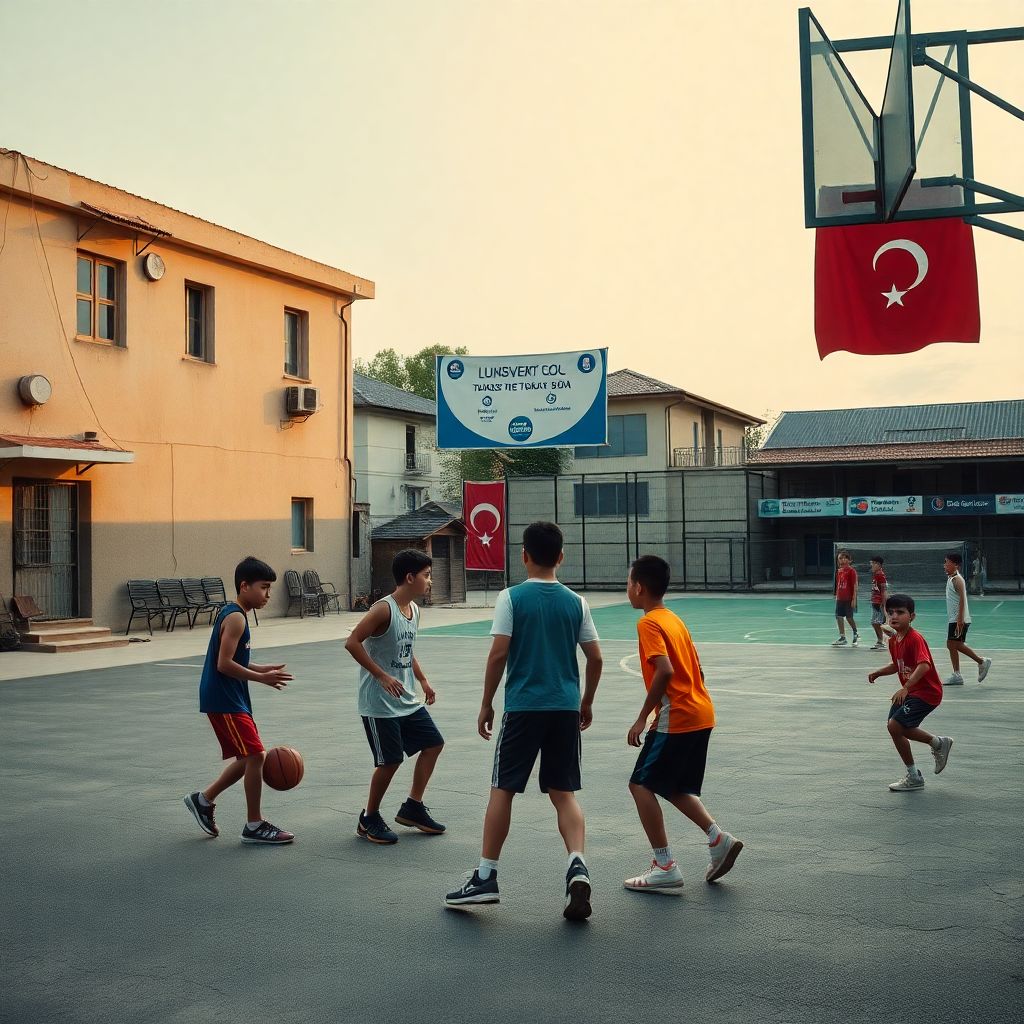
Grassroots basketball in Turkey didn’t start with glossy academies; it began on dusty schoolyards and uneven asphalt in the late 1980s, when TV broadcasts of the NBA and EuroLeague first became a weekly ritual. Through the 1990s, state-built sports halls and municipal courts turned the game from a niche hobby into a mass activity, especially in Istanbul, Ankara, and Izmir. The 2001 EuroBasket silver medal run and the 2010 FIBA World Championship on home soil embedded basketball into urban youth culture. By 2026, school leagues, street courts, and community projects have fused into a semi-formal ecosystem, but it still fights chronic issues: underfunded facilities, uneven coaching quality, and fragile pathways from a random neighborhood court to a professional club structure.
School Leagues: Hidden Engine of the Talent Pipeline
School leagues remain the quiet backbone of grassroots development, although they rarely get the spotlight. Public and private schools across major cities join regional competitions under the national federation umbrella, but school basketball league registration Turkey is often chaotic: late announcements, unclear eligibility rules, and limited data on schedules and stats. Despite that, coaches use school seasons as real-time laboratories for talent identification and lineup optimization. A common non-obvious solution is “role rotation”: instead of locking the tallest kid into the center position, some PE teachers intentionally cycle players through guard and wing roles to expand their decision‑making repertoire and prevent early specialization that later locks in skill deficits.
Real Cases: How Schools Hack the System
A concrete example is a public high school in Bursa that had no full-time basketball coach and only a worn-out half court. The PE teacher partnered with a local university’s sports science department: graduate students handled scouting reports and basic performance analytics using free tracking apps, while the school negotiated off‑peak training slots at a nearby municipal hall. Within three seasons, the team progressed from early exits to regional semifinals, with two players signing youth contracts at a professional club. The key here wasn’t money; it was using academic resources to simulate a club environment—video breakdowns, load monitoring, and simple injury-prevention protocols—inside an ordinary school framework that otherwise looked uncompetitive on paper.
Street Courts: Informal Labs for Creativity
Street courts in Istanbul’s Kadıköy, Ankara’s Çankaya, or Izmir’s Karşıyaka act as open‑source R&D labs for skills and style. They are where euro-steps, step‑back threes, and switch-heavy pick‑and‑roll coverage are first tested in unsupervised conditions. Here, players self-organize into “winner-stays” systems that incentivize tactical adaptability and shot selection under pressure. While clubs often emphasize structured sets, street games reward spontaneous decision‑making and spatial awareness. Coaches who understand this don’t try to suppress street habits; instead, they codify them, transforming instinctive moves into repeatable “micro-skills” that can be tracked and developed—like attacking the weak hip of a defender or reading low-man help during a drive.
Non-Obvious Solutions from the Asphalt
One Istanbul case shows how street culture can systematically feed formal pathways. A community organizer in Üsküdar mapped all active evening runs on outdoor courts and created a rotating “court circuit”: players earned points not for wins alone, but for advanced metrics like assist-to-turnover ratio or contested rebounds, recorded manually. Top performers were invited to joint sessions with a local club’s U16 team. This hybrid model turned chaotic pickup into a quasi-league with visible progression. Another non-obvious detail: shifting peak games to late Sunday afternoons, when younger players are fresher and older “court veterans” are more willing to mentor rather than dominate, freed up space for teaching moments embedded inside real competition.
Community Projects and NGOs: Beyond Talent, Toward Inclusion
Community projects have stepped in where state programs lag, especially in lower-income districts and among refugee populations. NGOs in Gaziantep and Şanlıurfa, for example, run mixed teams of Turkish and Syrian teenagers, using basketball as a vehicle for social integration and trauma coping. Instead of only chasing wins, these programs bake in psychosocial goals: conflict-resolution drills between scrimmages, leadership rotations in captaincy, and mandatory post-game debriefs that function as group therapy in disguise. Metrics of success shift from pure win–loss records to school attendance, dropout reduction, and basic health markers. This wider lens doesn’t replace elite development, but it stabilizes the bottom of the pyramid, reducing the rate at which vulnerable kids fall out of sport altogether.
Basketball Camps and Academies: Between Hype and Substance
The rise of basketball camps in Turkey for youth has created a seasonal micro‑industry, from coastal resort camps to city-based “elite weeks.” Quality, however, varies dramatically. The best grassroots basketball academies in Turkey tend to share a few traits: periodized workloads rather than random drills, clear transfer paths to club tryouts, and transparent communication with parents about realistic outcomes. In contrast, some short-lived camps overpromise exposure to scouts while delivering generic group sessions in overcrowded gyms. A robust due diligence checklist—staff credentials, coach‑to‑player ratios, and evidence of individualized feedback—has become essential, especially as social media marketing can make even mediocre setups look professional in carefully edited highlight clips.
Private Training and Micro-Skill Development
The boom in private basketball training Turkey Istanbul has reshaped how serious players approach development. Individual coaches now offer micro‑skill sessions focused on specific competencies: pick‑and‑roll reads as a ball handler, closeout footwork for wings, or short‑roll passing for bigs. When done well, these sessions are scheduled around club practices to avoid cumulative load spikes, with GPS or wearable tracking to monitor intensity. A key alternative method practiced by a few forward-thinking trainers is “constraint-led design”: instead of direct instruction, they tweak rules—smaller court, time‑limited dribbles, or bonus points for paint touches—to nudge players toward better patterns organically. This approach often outperforms lecture-heavy training, especially for teenagers with low attention spans.
Real Cases: How Pros Optimize Offseason Work
Some Turkish pros and high‑level youth players now treat the offseason as a structured R&D window rather than just rest. A common pattern in Istanbul and Izmir: six-week blocks with alternating emphasis—first two weeks on strength and mobility, next two on decision-making in small-sided games, final two on high-intensity shooting with fatigue. One Istanbul-based coach invites analytics interns to chart detailed shot charts during scrimmages, feeding back to players in weekly “film + data” sessions. Instead of the vague goal of “getting better,” athletes leave with specific deltas, such as improving corner three efficiency by 8% or reducing live-ball turnovers against traps, which then guide the next micro-cycle of drills.
Sponsorship and Funding: Building Sustainable Models
Money remains the chronic bottleneck, but there are underused sponsorship opportunities grassroots basketball Turkey organizers can tap. Local SMEs—cafés, barbers, small logistics firms—often see more value in hyperlocal visibility than in traditional mass advertising. Smart project leaders pitch packages that bundle jersey branding, social media content, and on-site activations during mini-tournaments. Another less obvious path is aligning with municipal “healthy city” or CSR agendas, framing basketball as a public health and social cohesion tool. When impact metrics—like reduced youth delinquency reports around active centers—are documented and shared, they make a compelling case for recurring micro-grants, which are more stable than one-off trophy donations from big brands.
Alternative Governance: Parents, Alumni, and Data
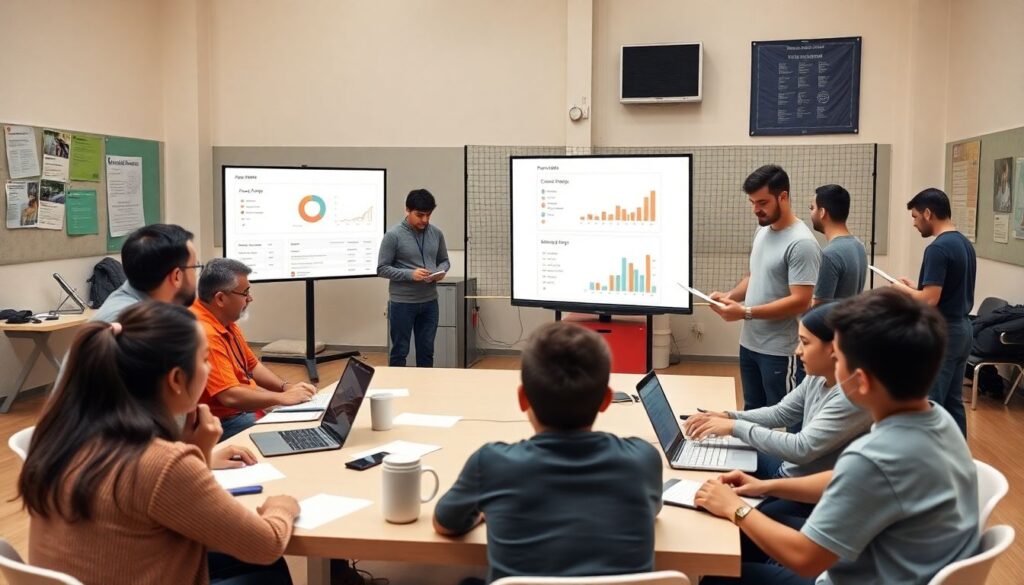
Some of the most resilient programs in 2026 rely on distributed governance instead of a single charismatic founder. Parent committees handle logistics, alumni manage digital platforms, and coaches focus on pedagogy. One Ankara community club built a simple open-data dashboard: attendance, injury logs, and basic performance indicators are anonymized and shared with stakeholders. This transparency prevented common grassroots pitfalls like overplaying key kids or ignoring overuse injuries. It also helped when applying for municipal permits, as the club could demonstrate structured risk management. Such data-informed governance turns what is usually an informal hobby group into a semi-professional entity better positioned to negotiate gym time and long-term partnerships.
School League Hacks for Coaches and Coordinators
For professionals navigating school ecosystems, a few operational hacks consistently pay off: start school basketball league registration Turkey procedures early and maintain a live checklist of documents; pre-negotiate exam-time training alterations with teachers to avoid last-minute conflicts; and run open “talent ID days” where non‑team students can be assessed using simple agility and decision-making drills. Beyond that, many successful coaches keep a shared digital playbook accessible to players, mixing text diagrams, short video clips, and role-specific notes. This not only accelerates tactical learning but also equalizes access for kids who might miss practices due to family or work obligations, keeping them integrated into the group process rather than drifting away.
Pro Tips for Trainers and Program Directors
For practitioners already experienced in player development, marginal gains often come from better process design rather than new drills. Some practical levers include:
– Scheduling regular joint sessions between school teams, club squads, and community groups to widen competition pools without inflating travel budgets.
– Rotating assistant coaches across age groups to avoid siloed coaching philosophies and to spot late-blooming talent that might be miscast in its current role.
– Using low-cost video solutions (phones + shared drives) for post-practice feedback, staying consistent rather than high-tech but irregular.
Street and Community Best Practices: Field-Proven Shortcuts
On the community side, a different set of field-tested “shortcuts” has emerged:
– Designating “court captains” on busy street courts who informally mediate disputes, track loose attendance data, and liaise with municipalities about lighting or surface repairs.
– Organizing monthly mixed-age “mentor runs” where college players commit to play and actively coach younger kids during games, normalizing feedback rather than making it feel like criticism.
– Linking with nearby health centers for periodic screenings, turning casual courts into gateways for basic health education and early injury detection.
Looking Ahead: Connecting the Dots by 2030
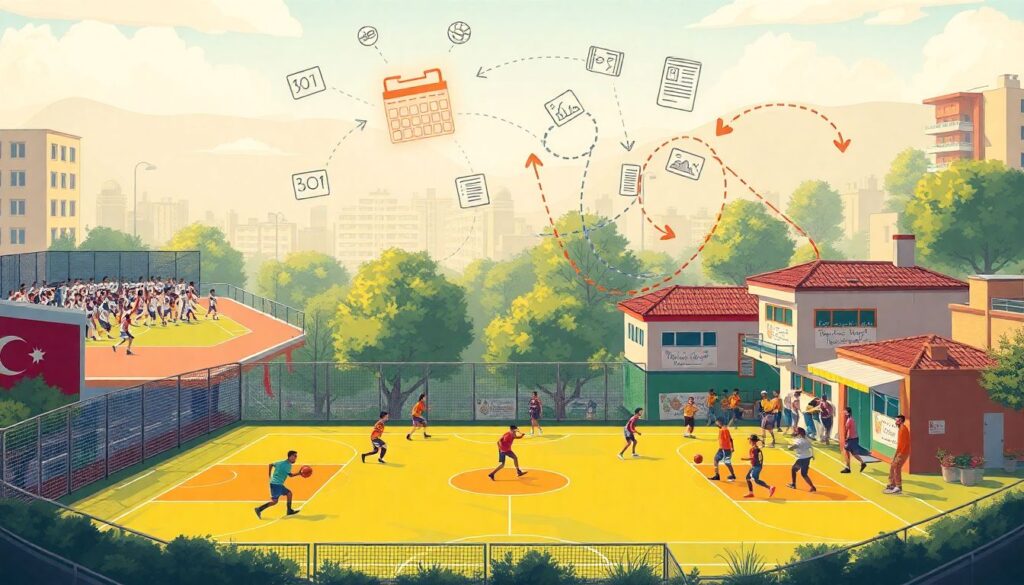
By 2026, Turkey’s grassroots scene is rich but still fragmented: strong school teams with no street presence, vibrant pickup cultures detached from clubs, and isolated community NGOs doing excellent but underreported work. The next frontier is interoperability—shared calendars, cross-program talent pathways, and unified minimal standards for coaching education. If the energy of street courts, the structure of schools, and the inclusion focus of community projects can be better synchronized, the country will not just produce more professionals; it will build a robust basketball culture where every child, regardless of postcode, can move fluidly from first casual game to whichever ceiling—recreational or elite—their work and circumstances allow.