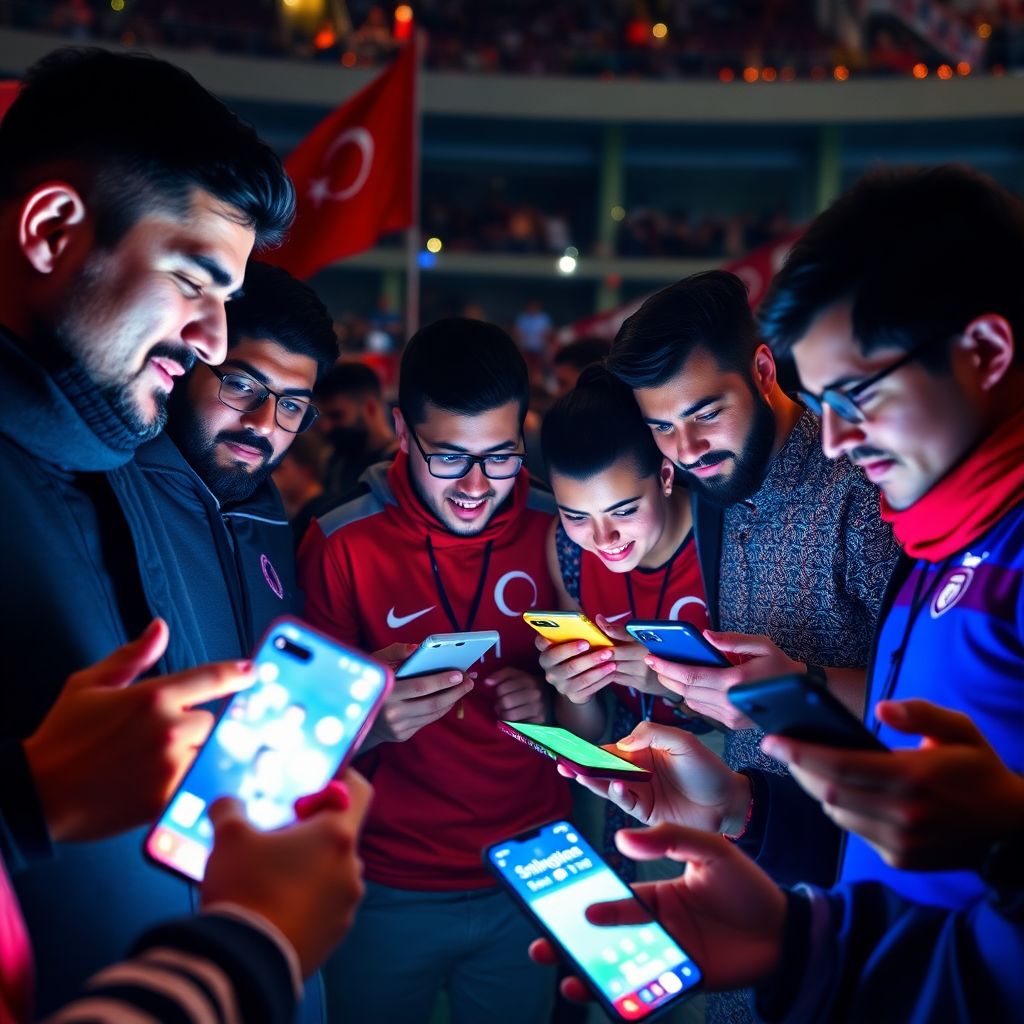
Social media is transforming sports fandom in Turkey and worldwide by shifting it from mostly local, match‑day support to always‑on, global, data‑driven communities. Fans now follow clubs, players and leagues across platforms, influence narratives, buy products digitally, and create their own content-even with limited budgets or basic phones and connections.
Core Insights on Social Media’s Impact on Sports Fandom
- Fan identity is no longer tied only to geography; Turkish fans follow European, American and Asian teams as closely as local clubs.
- Algorithms on platforms like X, Instagram, TikTok and YouTube decide which sports stories dominate timelines.
- Players and fans interact directly, bypassing TV and traditional journalists, creating both intimacy and risk.
- New revenue models include memberships, creator content, and digital sales such as when supporters buy football club merchandise online.
- Social media is now a political and cultural arena where fan debates can quickly escalate into wider conflicts.
- Engagement metrics guide decisions, but over‑optimizing for clicks can damage trust, inclusion and long‑term fan loyalty.
Evolution of Fan Identity: From Local Clubs to Global Communities
Social media has expanded what it means to be a sports fan. Instead of only going to the stadium in Istanbul, Ankara or Izmir, Turkish supporters can now follow a Premier League or NBA team in real time, join global fan groups, and participate in debates with people they will never meet offline.
In Turkey, WhatsApp groups, Twitter Spaces and Instagram fan pages sit alongside sports streaming platforms Turkey uses to watch Süper Lig, Champions League and national team games. In Brazil, India and the UK, similar patterns appear: local identities remain strong, but multi‑club, multi‑league fandom becomes normal, especially among younger fans.
This globalisation of fandom has trade‑offs. It gives Anatolian clubs new international visibility, but it also means a teenager in Bursa might feel closer to Real Madrid or Manchester City than to any local team. For clubs with fewer resources, smart use of free tools-consistent TikTok clips, behind‑the‑scenes Reels, or community‑run Discord servers-can help keep local attachment alive without big media budgets.
For many, fandom now includes content creation: memes, fan podcasts, YouTube analysis, or match‑day vlogs can matter as much as watching live. In North America and Europe, fan creators sometimes reach more people than official club channels. In Turkey, independent YouTube channels and X accounts drive narratives after controversial derbies or VAR decisions.
- Clarify what kind of fan community you want: ultra‑local, global, or a hybrid.
- Support low‑cost fan initiatives (fan podcasts, local blogs) that strengthen identity.
- Balance global star content with stories about local players, youth academies and women’s teams.
Platform Dynamics: How Algorithms Shape Sports Narratives
Algorithms decide which sports posts people see first, how long a controversy lasts, and which clubs or players feel “everywhere” online. They reward content that keeps users on the platform: short, emotional, visually strong posts and streams, more than careful analysis or long reads.
- Engagement bias: Posts with comments, shares and reactions are shown more. A heated argument about a referee in the Süper Lig can overshadow more nuanced tactical breakdowns, both in Turkey and in leagues like LaLiga or Serie A.
- Recency and frequency: Accounts that post regularly are prioritised. Smaller Turkish clubs or amateur basketball teams that upload highlights and behind‑the‑scenes clips daily often outperform more traditional organisations that only post on match days.
- Format preference: Reels, Stories and TikTok‑style videos are pushed over static images. Low‑budget clubs in Eastern Europe or Southeast Asia use simple vertical videos shot on phones to reach more fans than expensive TV‑style content.
- Personalization: Platforms study each user’s behaviour. If a fan interacts mostly with Premier League content, the algorithm may bury Turkish league or women’s sports, even if the fan says they “support local football.”
- Commercial prioritisation: Paid ads, promoted posts and sponsored trends influence what people see during transfer windows or when a new live match streaming subscription service launches.
- Language and region filters: Turkish‑language posts may circulate mostly within Turkey, while English content travels further, giving English‑speaking clubs an advantage.
Clubs and media teams with limited resources can still work effectively with algorithms by focusing on a narrow niche: for example, consistent coverage of a women’s volleyball team, youth academy, or fan culture around a single derby, instead of trying to cover everything superficially.
- Design content specifically for each platform’s preferred formats and length.
- Track which posts actually reach non‑followers and repeat those patterns.
- Protect editorial judgement; do not let short‑term algorithm spikes override your long‑term values.
Player-Fan Interactions: Direct Communication and Its Consequences
Direct communication between players and fans on X, Instagram, Twitch and TikTok is one of the biggest shifts in modern sports fandom. A player in Istanbul can reply to a fan in Berlin seconds after a match, bypassing press conferences and club media teams entirely.
Common scenarios include live Q&As after important Süper Lig or EuroLeague games, Twitch streams where footballers play video games with supporters, and behind‑the‑scenes Instagram Stories from training camps. In the US and Europe, WNBA and women’s football players often build strong fanbases this way, even when traditional TV coverage is limited.
There are also risks. Emotional late‑night posts after a defeat, conflicts with referees, or reactions to political events can quickly become viral, attracting trolls and hate speech. In Turkey and elsewhere, this sometimes leads to club fines, legal issues or mental‑health strain for athletes.
For smaller clubs or semi‑professional players, low‑cost tools like scheduled posts, basic media training via free online resources, and straightforward guidelines (what not to post) can reduce risks without requiring a full social media department.
- Offer players simple, written social media guidelines and basic media training.
- Encourage positive, planned interactions (Q&As, charity campaigns) rather than spontaneous rants.
- Prepare crisis plans: who responds, how quickly, and on which channels if a post backfires.
Monetization and Sponsorship: New Revenue Streams for Fans and Teams
Social media turns attention into money for both clubs and fans. Official channels promote sponsors, sell tickets and encourage supporters to buy football club merchandise online. Fan creators use platforms like YouTube, Patreon or Twitch subs to finance their work, sometimes collaborating directly with clubs or brands.
In Turkey, smaller clubs and futsal or women’s teams can use affordable social media sports marketing services to handle campaigns around derbies or new kit launches. In regions like South America or Eastern Europe, fan‑run shops and unofficial merchandising pages on Instagram or Facebook help supporters access products when there is no local store.
At the same time, monetisation pressures can push content towards clickbait or constant promotions, weakening trust. Not every fan can afford a live match streaming subscription or premium fan token; over‑commercialisation can exclude low‑income supporters in Turkey, Africa, Latin America and beyond.
Upsides for clubs, leagues and creators
- Direct product sales (tickets, subscriptions, merchandise) without relying entirely on TV broadcasters or physical stores.
- New sponsorship formats: integrated content, branded challenges, and co‑created campaigns with influencers or fan channels.
- Revenue for independent fan media that deepens the community with podcasts, tactical analysis or local stories.
Limits, risks and equity concerns
- Paywalled content, over‑branded feeds and constant upselling can alienate long‑time fans.
- Smaller clubs may become over‑dependent on a single sponsor or platform that can change rules overnight.
- Low‑income fans are pushed to unofficial streams or piracy when legal options are too expensive.
Low‑resource alternatives include community watch‑parties with one shared legal stream, basic WhatsApp or Telegram updates for fans who cannot afford subscriptions, and low‑cost local sponsorships (cafés, small retailers) instead of only chasing multinational brands.
- Map all revenue sources (tickets, merch, partners, digital) and check which rely on a single platform.
- Keep some core content free to protect inclusiveness and long‑term loyalty.
- Test small, low‑risk experiments (limited‑run merch, one co‑branded livestream) before scaling.
Political and Cultural Resonances: Social Media as a Battleground
Sports fandom on social media often overlaps with politics, religion and cultural identity. Hashtags about derbies in Istanbul or national team games can quickly turn into debates about national pride, regional inequality or social issues, similar to what happens around clubs in Glasgow, Buenos Aires or Cairo.
Some persistent errors and myths cause unnecessary conflict and reputational damage when clubs and media do not handle this overlap carefully.
- Myth: “Sport is always separate from politics.” In practice, fan groups, ultras and national teams are often symbols of political or cultural positions, whether in Turkey, Spain or the Balkans. Ignoring this can make club messaging appear naive or dishonest.
- Error: Treating all fans as one voice. Online, loud minorities can dominate the conversation. Assuming that a trending hashtag equals “all fans think this” leads to poor decisions and overreactions.
- Myth: More engagement is always good. Controversial political posts can generate likes and comments but damage trust with quieter fans, sponsors, or international audiences.
- Error: No moderation or community rules. Leaving comment sections unmoderated allows hate speech and harassment to flourish, driving away women, minorities and younger fans.
- Myth: Only big clubs face political storms. Even small regional clubs or women’s teams can become the centre of national debates after one viral clip or banner.
Clubs and fan engagement platform for sports clubs providers with limited staff can still improve safety by using built‑in moderation tools, filtered keywords, and volunteer community moderators from trusted fan groups.
- Define clear red lines for content and comments (hate speech, threats, discrimination).
- Prepare neutral, consistent messaging templates for politically sensitive moments.
- Invest a little time each week reviewing moderation settings and blocking repeat offenders.
Measuring Engagement: Metrics, Analytics, and Ethical Limits
Social media has made sports fandom measurable: likes, shares, watch time, sentiment analysis and conversion rates are available even to small clubs. Basic analytics dashboards help teams in Turkey, Europe, Africa or Asia understand which posts drive ticket sales, what times fans are online, and which players attract the most attention.
Analytics should guide, not rule, decisions. Over‑focusing on vanity metrics (raw follower counts) can hide more important questions: are young fans in Anatolia actually watching full games, or only highlights? Are women and rural supporters represented, or is content reaching mainly a narrow urban male audience?
Even with low resources, clubs can track simple numbers: weekly follower growth, average views per post, click‑throughs to ticketing or streaming pages, and basic retention for long‑form content. Free tools inside platforms are usually enough for small organisations that cannot buy advanced software.
A minimal decision loop for a club promoting a local derby alongside sports streaming platforms Turkey audiences already use could look like this:
// Pseudo-logic for a small club social team
Every Monday:
  Review last week's top 5 posts by:
    1) Saves/shares
    2) Clicks to ticket/stream page
  Keep 2 formats that worked
  Replace 1 weak format with a new test
Ethical limits matter. Fans rarely read privacy policies; collecting detailed personal data or using aggressive remarketing can feel intrusive, especially for young or vulnerable supporters.
- Pick 3-5 core metrics that connect clearly to your goals (attendance, sales, inclusion).
- Use free built‑in analytics tools before paying for external dashboards.
- Explain, in simple language, what data you collect and how you use it.
Quick Self-Check for Clubs, Leagues and Fan Creators
- Is your online fan identity balanced between local roots and global visibility?
- Do your content and posting habits work with algorithms without betraying your values?
- Are players supported with guidance on safe, effective social media use?
- Is monetisation inclusive, with at least some low‑cost or free options for fans?
- Do your metrics reflect real community health, not just raw numbers?
Practical Questions from Sports Media Practitioners
How can a small Turkish club compete online without a big media budget?
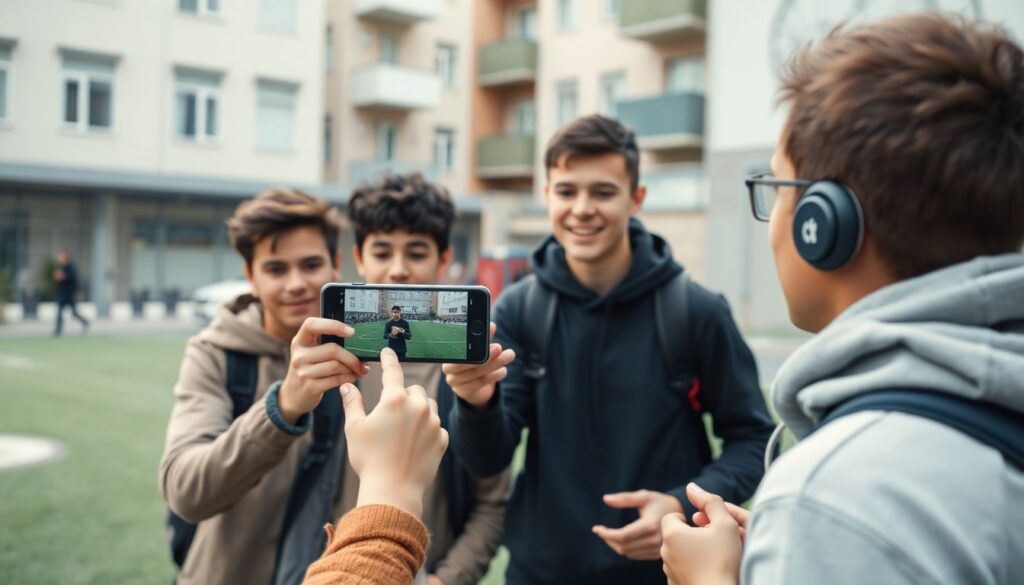
Focus on consistent, authentic content: short phone‑shot videos, simple graphics, and regular updates. Use free tools and templates, prioritise one or two platforms, and collaborate with local fan creators instead of trying to imitate elite European club production quality.
Are social media followers more important than TV audiences now?
They are different, not strictly more important. Social media followers give daily feedback and global reach, while TV still drives major sponsorship and visibility. Measure how each channel contributes to ticket sales, subscriptions and long‑term loyalty before shifting budgets.
What is a realistic way to monetise sports content as an independent creator?

Start with diversified, low‑risk options: basic ads, small sponsors, and voluntary support on platforms like Patreon. Offer clear value (analysis, humour, local insights) and avoid locking everything behind paywalls until you understand your audience size and behaviour.
How can clubs protect players from online abuse?
Establish clear policies, encourage players to limit comments or use filters, and monitor mentions after high‑tension games. Provide psychological support channels and, where possible, coordinate with platforms to report or remove abusive accounts.
What metrics should a mid‑level club in Turkey track first?
Start with engagement rate, clicks to ticketing or live match streaming subscription pages, and retention for key videos. Add qualitative feedback from fans (DMs, surveys) to avoid chasing empty numbers like impressions that do not convert.
Are social media sports marketing services worth it for small organisations?
They can be useful if they understand your budget and local context. Test with a small, clearly defined campaign-such as a pre‑season tournament or new kit launch-and compare results with your own past performance before committing long‑term.
How can fans with limited budgets still follow their favourite teams?
Use official highlight clips, radio or audio commentaries, and community watch‑parties instead of individual subscriptions. Many clubs also share key moments live on social channels, making it possible to stay connected without paying for every game.