
To build a sustainable sports career in Turkey, start by honestly assessing your level, then integrate into the local club and federation system, follow a structured performance plan, and carefully manage contracts, finances, and health. Use trusted coaches, licensed agents, and official competitions, and avoid shortcuts, unsafe training, or informal agreements.
Essential Milestones for a Turkish Sports Career
- Clarify whether you truly aim for a professional sports career in Turkey or high-level amateur competition.
- Join a reputable local club and compete regularly in federation-recognised events.
- Follow a periodised training, nutrition, and recovery plan with medical oversight.
- Build a competition record strong enough for trials, camps, or sports academies in Turkey for foreigners and locals.
- Secure guidance from experienced coaches and, later, from one of the best sports agencies in Turkey for athletes.
- Protect yourself with written contracts, legal advice, and appropriate insurance.
- Prepare a plan B: education or parallel skills if a pro career does not materialise.
Evaluating Your Current Level and Long-Term Potential
Before focusing on how to become a professional athlete in Turkey, determine whether your current abilities and life situation justify the risk and investment. This stage is about objective self-diagnosis, not wishful thinking.
Who is this path suitable for?
- Athletes consistently competing at the top of their local age group or regional level.
- People ready to train seriously for several years, not just one season.
- Those who can handle irregular income, travel, pressure, and possible injuries.
When you should reconsider or delay
- You have persistent injuries or medical conditions but no recent sports physician clearance.
- Your academic or work obligations cannot be adjusted for intensive training and travel.
- You rely on unsafe shortcuts (doping, extreme dieting, overtraining) to close performance gaps.
Practical self-assessment checklist
- Compare your times, stats, or rankings with national youth or senior standards in your sport.
- Get a full sports medical exam and ask directly: “Is a professional load realistic for me?”.
- Ask two experienced coaches in Turkey for independent evaluations of your potential.
- Identify your top three strengths and top three weaknesses in physical, technical, and mental areas.
- Decide how many years you can realistically commit to pursuing a sports career in Turkey.
Mapping Turkey’s Sports Ecosystem and Key Governing Bodies
Understanding the structure of Turkish sport lets you move strategically instead of randomly chasing opportunities like isolated professional football trials in Turkey that may not fit your level.
Core structures you must know
- Ministry and Provincial Directorates: The Ministry of Youth and Sports (Gençlik ve Spor Bakanlığı) and provincial sports directorates manage facilities and grassroots programmes.
- National Federations: Each sport (football, basketball, athletics, swimming, etc.) has a federation that organises leagues, licenses, and national teams.
- Club System: From big Süper Lig and Basketbol Süper Ligi clubs to municipal and private clubs registered with federations.
- Education Pathways: Sports high schools, university sports departments, and club academies integrated with schooling.
Key requirements and tools you will need
- Valid ID or residence permit; foreigners must check visa and work-permit rules before signing contracts.
- Federation license or player card via a club to compete officially.
- Access to safe training facilities near home or school (club, municipal sports centre, university).
- Basic digital tools: training log app or notebook, video recording (phone is enough), and email for communication with clubs and agencies.
Quick mapping template for your sport
- List 5-10 clubs in your city that are registered with the relevant Turkish federation.
- Identify the league tiers in your sport (e.g., Süper Lig, 1. Lig, amateur divisions).
- Note the federation’s standard competitions for your age group and where they are held.
- Write down at least two realistic pathways from your current level to a professional contract.
Designing a Performance Plan: Training, Nutrition and Recovery
Once you know the system, structure your daily work. This section outlines a safe, progressive approach suitable for most people aiming at a professional sports career in Turkey, with attention to injury and burnout risks.
Immediate risks and constraints to respect
- Jumping suddenly from low training volume to “pro-level” loads can cause serious injury.
- Copying elite athletes’ plans from social media often ignores your current condition.
- Restrictive diets without supervision can harm growth, hormones, and long-term health.
- Lack of sleep and unmanaged stress will limit progress regardless of how hard you train.
Step-by-step performance plan
-
Define a 12-24 month performance goal
Set one main goal linked to the Turkish competition structure: for example, earning a spot in a higher league, a national championship final, or an official club academy.
- Write one outcome goal (“earn a contract in X league”) and two process goals (“improve sprint speed”, “increase match fitness”).
- Make sure your timeline fits school, work, and family responsibilities.
-
Get baseline measurements and medical clearance
Before increasing training load, establish your starting fitness and health status with simple, repeatable tests and a medical check.
- Schedule a sports physician visit; share your planned training volume honestly.
- Test key capacities (e.g., 30 m sprint, endurance runs, strength tests) relevant to your sport.
- Record videos of technique (sprint mechanics, shooting form, swimming stroke).
-
Build a weekly training structure
Plan training so that hard sessions and recovery are balanced. Adjust for school or work but keep structure consistent.
- Include 2-4 sport-specific technical/tactical sessions per week with a qualified coach.
- Add 2-3 physical development sessions (strength, speed, mobility) under supervision.
- Reserve at least 1-2 lighter days and 1 full rest day weekly.
-
Integrate safe strength and conditioning
Use progressive, age-appropriate strength work to protect joints and improve power, not to “bodybuild”.
- Start with bodyweight and simple movements under guidance before heavy weights.
- Focus on technique and pain-free range of motion.
- Increase loads gradually, only if you recover well and stay injury-free.
-
Design practical, athlete-friendly nutrition
Aim for stable energy, good recovery, and healthy body composition, rather than extreme diets.
- Base meals on whole foods: grains, legumes, vegetables, fruits, quality proteins, and healthy fats.
- Time main meals around training (pre-session fuel and post-session recovery).
- Consult a sports dietitian if changing weight or body composition is necessary.
-
Schedule recovery and sleep as “non-negotiable”
Recovery is part of training. Without it, you increase injury risk and reduce long-term performance.
- Aim for consistent sleep hours; avoid late-night screens before key sessions or matches.
- Use simple tools: stretching, mobility, light walks, and hydration.
- Monitor warning signs: persistent soreness, mood changes, or falling performance.
-
Review progress every 8-12 weeks
Repeat initial tests, compare competition results, and adjust your plan with your coach.
- Check if you are closer to targets (times, stats, rankings).
- If performance drops for several weeks, reduce load and consult a medical professional.
- Update goals if your level improves faster or slower than expected.
Minimal weekly planning template
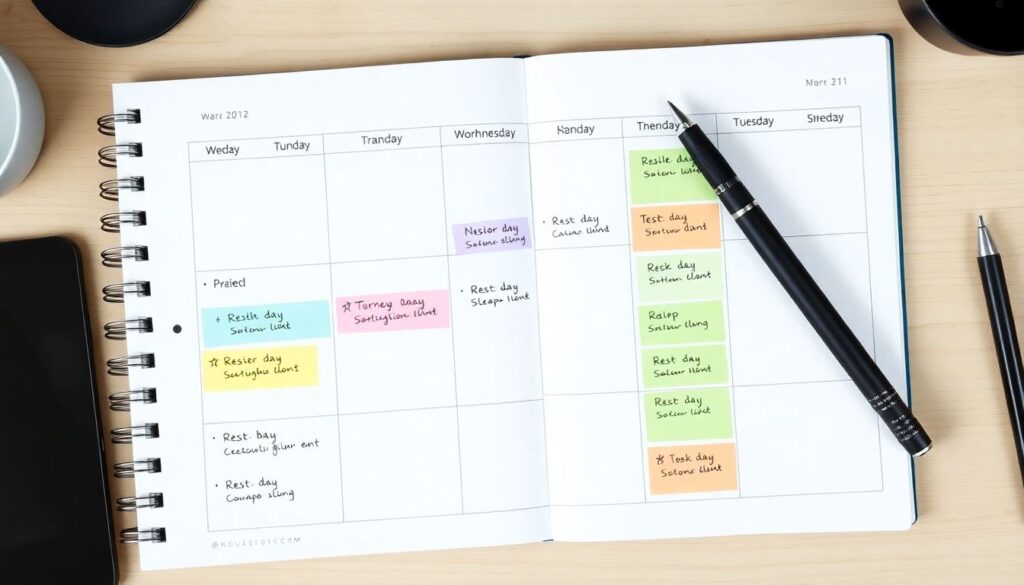
- List your school/work hours and fixed commitments.
- Add 3-6 training sessions into free windows, alternating harder and easier days.
- Mark one full rest day and one light day.
- Note planned bedtimes and wake-up times on training and match days.
Building a Competitive Record: From Local Clubs to Professional Trials
Clubs and scouts in Turkey trust results more than promises. A clear competition history is essential before you apply for high-level camps or professional football trials in Turkey and other sports-specific opportunities.
Sequential pathway examples
- Join a local club in your city and play in regional leagues or tournaments.
- Progress to higher divisions or age-group elite teams within the club’s structure.
- Use strong performances to access federation camps or bigger club academies.
- Only then target professional trials matching your current competitive level.
Competitive readiness checklist (5-10 points)
- You train regularly with a registered club and appear in official match reports or result lists.
- Your stats or times are consistently above average in your current league or region.
- You have recent, high-quality match or competition footage stored and backed up.
- Coaches outside your current team (e.g., from rival clubs) recognise your ability.
- You have played at least one full season without long injury breaks.
- You understand the level of the league or academy where you plan to trial; your coach agrees it is realistic.
- You know the exact dates, requirements, and costs of the trials, including travel and accommodation.
- You are prepared for rejection and have a plan to keep developing if the trial does not lead to a contract.
Simple competition log template
- For each event: date, location, opponent, competition level, and your role or event.
- Record key stats (minutes played, goals, assists, times, distances, scores).
- Write one strength and one improvement point from each competition.
- Update the log monthly and share summaries with your coach or mentor.
Securing Support: Coaches, Agents and Sponsorships in Turkey
Support people can open doors for your sports career in Turkey, but they can also expose you to financial, legal, and ethical risks if chosen poorly. Move step by step and prioritise people with verifiable track records.
Typical mistakes when choosing coaches and agents
- Working with unqualified “coaches” who cannot show licences, references, or current club roles.
- Signing long-term agent contracts before you have a strong competitive record.
- Paying large upfront fees to unknown intermediaries for vague promises of trials or contracts.
- Accepting verbal agreements instead of written contracts reviewed by a legal professional.
- Choosing an agent who is not properly licensed by the relevant Turkish or international federation.
- Letting agents or sponsors pressure you into playing through injuries or skipping medical checks.
- Ignoring how an academy or club will support your education and living conditions, especially for minors and foreigners.
Safe approach to finding support
- Prioritise development-focused coaches in established clubs or sports academies in Turkey for foreigners and locals, not only result-focused trainers.
- When you are ready, shortlist the best sports agencies in Turkey for athletes by checking federation records and client lists.
- Speak with at least two current or former athletes represented by any agent you consider.
- Never sign contracts you do not fully understand; seek independent legal advice.
Support network mini-checklist
- You have at least one main technical coach and one strength & conditioning coach (can be the same person in smaller clubs).
- For minors, a parent or guardian is actively involved in all key decisions.
- You have identified at least one neutral mentor (teacher, older athlete, trusted family friend).
- Any agreement with agents, academies, or sponsors is written, time-limited, and clearly states each party’s obligations.
Legal, Financial and Health Safeguards for Emerging Athletes
Even with talent and support, a sports career can be cut short by injury, legal disputes, or money problems. Plan safety nets early, whether you compete in top clubs or aim for semi-professional levels.
Risk-aware alternatives and when they make sense

- Dual-career path (sport + education) – Choose this if you are still in school or university, or if your level is not yet close to professional. Study at a Turkish university with strong sports programmes while competing for the university or a local club.
- High-level amateur or semi-professional focus – Suitable when you enjoy competition and perform well but do not want full financial dependence on sport. Work or study part-time while playing in competitive amateur or lower professional leagues.
- Sports-related profession (coaching, fitness, management) – A good option if injuries, age, or personal preference limit your chances of a pro playing career. Obtain coaching or fitness certifications and aim to work in clubs, sports academies, or schools.
- Short-term development stay in Turkey – For foreigners, consider 3-12 month periods in sports academies in Turkey for foreigners focused on development, not immediate contracts. This reduces immigration and financial risk while still improving your level.
Basic legal and health protection checklist
- Keep copies (digital and paper) of all contracts, medical reports, and federation registrations.
- Confirm whether you are covered by insurance during training, travel, and competitions.
- Never take supplements or medications without checking anti-doping rules and medical advice.
- Have at least three months of living expenses saved or guaranteed before relocating for sport.
- Know who you will call (doctor, lawyer, family member) in case of serious injury or contract dispute.
Straightforward Answers to Practical Career Risks
Is it realistic to aim for a professional contract if I start in my late teens?
It depends on your sport, current level, and rate of improvement. In Turkey, late starters sometimes succeed in certain sports, but you must show rapid progress and exceptional commitment. Maintain a dual-career plan so education or work does not stop while you chase opportunities.
How can I avoid fake trials and scams promising fast contracts?
Check whether the event is promoted by a recognised club or federation, and verify details on their official channels. Be very cautious if large fees are requested upfront, contracts are informal, or agents refuse to share their licence or client references.
What if my family is worried about education while I focus on sport?
Combine education and sport by choosing schools or universities that support training schedules and competition travel. Present a clear plan with timelines and backup options so your family sees you are not sacrificing your future for uncertain short-term chances.
How do foreigners safely pursue a sports career in Turkey?
Start with verified sports academies in Turkey for foreigners, or clubs with experience hosting international athletes. Clarify visa, residence, and work-permit conditions in advance, avoid cash-only arrangements, and insist on written agreements outlining housing, schooling, and medical support.
What should I do if a coach pressures me to play while injured?
Prioritise your long-term health. Seek an independent medical opinion, share written recommendations with the club, and involve your family or a trusted mentor in discussions. Continuing with serious pain or against medical advice can permanently damage your career and health.
Can I trust supplement recommendations from teammates or social media?
Do not rely on informal advice for substances you put in your body. Consult a sports doctor or dietitian and check anti-doping regulations. Poor-quality or contaminated supplements can cause health problems and positive doping tests, even if you did not intend to cheat.
What if I do not receive a professional offer after several trials?
Review feedback from each trial with your coach, identify clear gaps, and decide whether more time and investment are justified. It may be wiser to focus on high-level amateur competition, coaching education, or another sports-related career instead of endlessly repeating trials.