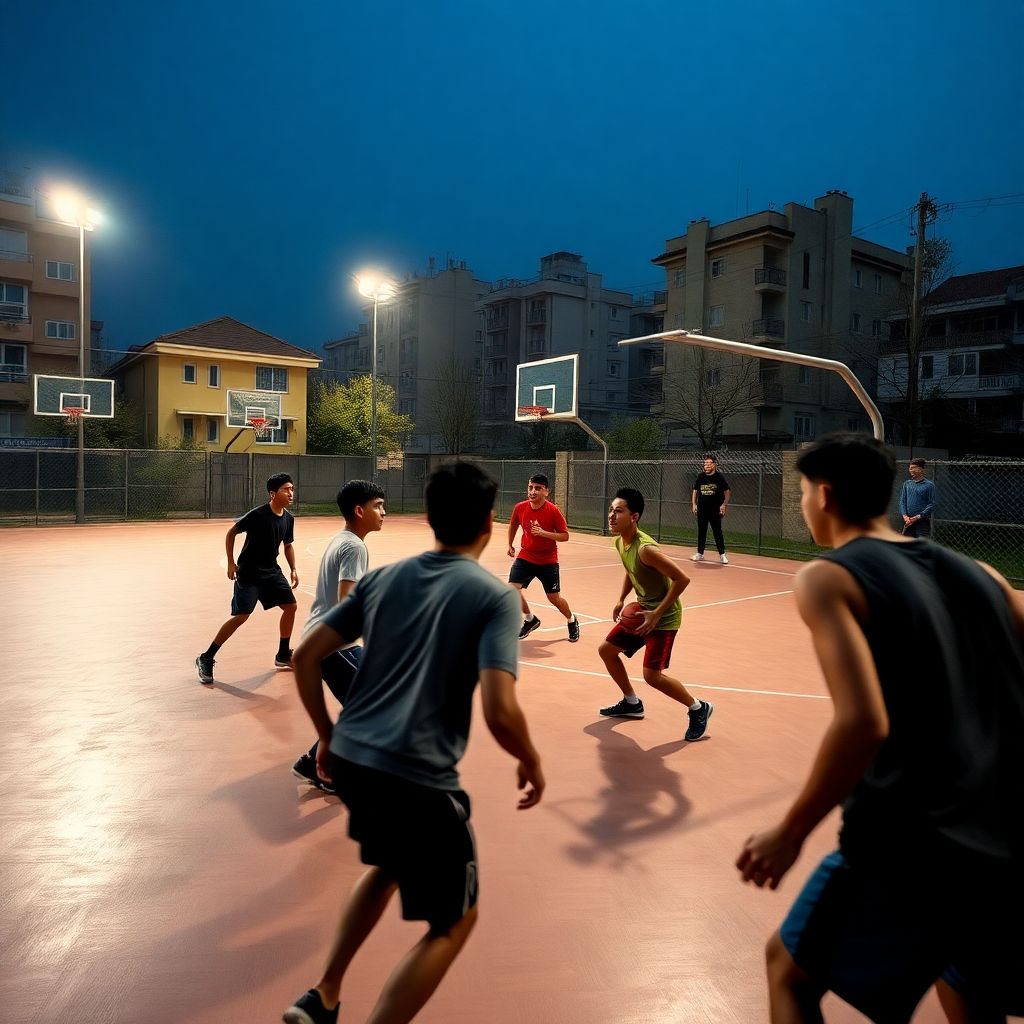
3×3 basketball in Turkey is a fast-growing urban version of the sport, played three‑a‑side on a half court with a 12‑second shot clock. It offers quicker games, lower costs, and easier access than 5×5, giving Turkey realistic opportunities to build competitive national teams and chase future Olympic qualification.
Why 3×3 Matters Now: Core Drivers in Turkey
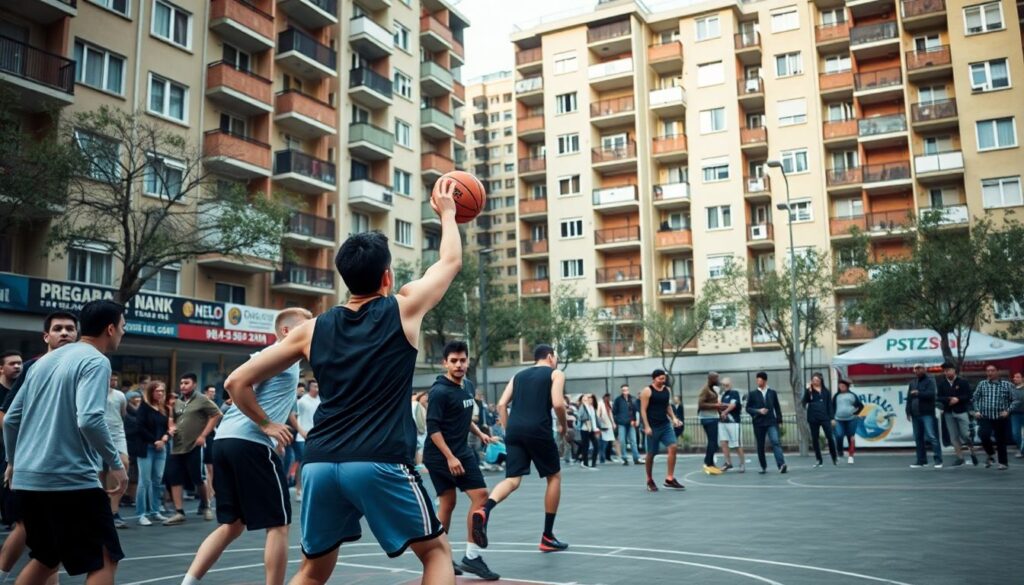
- 3×3 fits Turkey’s dense urban environments and limited indoor court availability, especially for grassroots players.
- Lower team sizes and shorter games reduce costs for clubs, municipalities, and private organizers.
- Internationally recognized FIBA structure opens a clearer pathway to Olympic qualification than many niche sports.
- 3×3 connects well with youth culture, streetball traditions, and social media‑friendly events in major Turkish cities.
- Existing 5×5 talent pools provide an immediate base of players who can adapt to the 3×3 format.
Historical emergence of 3×3 basketball in Turkey
3×3 basketball in Turkey began as informal street and schoolyard games, especially in Istanbul, Ankara, and Izmir. Public outdoor courts and neighborhood tournaments created a culture of half‑court play long before FIBA formally codified 3×3 rules and launched international competitions.
Once 3×3 became an official discipline, Turkish organizers started connecting existing streetball events to FIBA calendars. Federations and municipalities experimented with summer circuits in city squares and shopping‑mall parking areas, using portable courts and music‑driven shows to attract spectators new to traditional 5×5 leagues.
For many young players, 3×3 is now the first structured basketball experience, because it is easier to assemble three teammates than to find a full 5×5 roster and gym time. This is particularly important for districts with limited hall access or for mixed‑gender and recreational groups seeking flexible formats.
- Map local history: identify long‑running streetball or half‑court events that can transition into official 3×3 tournaments.
- Document stories: collect player and coach experiences to promote 3×3 as part of Turkey’s basketball identity, not a trend.
- Align calendars: synchronize local festivals and public events with FIBA‑recognized 3×3 dates to gain visibility.
Domestic league structures and player development pathways
Domestic 3×3 activity in Turkey combines federation‑sanctioned circuits, university events, municipal tournaments, and private leagues. In many regions, the calendar clusters around spring-summer months when outdoor venues are more accessible and school schedules allow additional competitions.
- Federation circuits: Official 3×3 tours provide ranking points and a clear ladder from local stops to national finals, influencing how coaches plan season peaks.
- Club‑based participation: Traditional 5×5 clubs increasingly register 3×3 teams, using existing players in off‑season events to maintain fitness and decision‑making sharpness.
- School and university leagues: Student tournaments act as talent filters, where standout 3×3 players catch the attention of regional and national scouts.
- Open and corporate leagues: Private organizers run participation‑focused competitions, often linked to sponsors and media, broadening the pool of recreational players.
- Pathway to national teams: Consistent performance in domestic 3×3 events, plus FIBA ranking points, affects selection for youth and senior national squads.
- Cross‑format development: Coaches use 3×3 to sharpen 5×5 players’ individual skills, spacing, and conditioning, then move them back into club seasons.
- Low‑resource alternatives: Where formal leagues are absent, regular weekly meetups on public courts and social‑media‑organized mini‑tournaments can still create a recognizable local pathway.
- Clarify your ladder: define how a player in your city progresses from school or street events to federation‑level 3×3 competition.
- Use dual roles: plan for players to appear in both 5×5 and 3×3 schedules without overload or calendar clashes.
- Track data: maintain simple stats on games played, results, and ranking points to support selection and funding discussions.
Infrastructure, funding, and federation strategies
3×3 requires less infrastructure than 5×5, which suits Turkish municipalities managing tight budgets. A quality half‑court with durable flooring, proper lines, and outdoor‑friendly hoops can host leagues, festivals, and 3×3 basketball training camps in Turkey without the rental costs of large arenas.
Federation and local authorities increasingly see 3×3 as a way to activate public spaces. Portable courts can be installed temporarily in busy areas, while permanent investments focus on multi‑use playgrounds. Private operators respond by offering some of the best 3×3 basketball courts to rent in Istanbul, appealing to clubs, companies, and content creators.
Funding models typically blend federation support, municipal budgets, sponsorship packages, and modest team entry fees. For communities with minimal resources, shared‑ball programs, volunteer referees, and low‑cost social‑media promotion allow sustainable play even without major sponsors or TV coverage.
Strategically, federation plans often link 3×3 to broader goals: increasing youth participation, raising Turkey’s FIBA 3×3 ranking, and building fan engagement through digital content, influencer partnerships, and accessible events tied to major city festivals.
- Audit courts: list existing half‑courts and gyms that can host 3×3 with only small adjustments (lines, shot clocks, music setup).
- Diversify funding: mix municipal support, small local sponsors, and entry fees rather than relying on one big backer.
- Design scalable events: start with one‑day tournaments that can expand into circuits once demand and funding grow.
Competitive performance: Turkish teams on the international stage
Turkish 3×3 teams compete in FIBA events across youth and senior categories, with performances that range from promising to inconsistent. The player pool is deep thanks to 5×5 tradition, but experience in high‑pressure 3×3 end‑games and physical adaptation to the format still needs systematic improvement.
Success abroad depends not only on player quality but also on scheduling, scouting, and recovery. Monitoring the Turkey 3×3 basketball Olympic qualifiers schedule and other international tournaments helps clubs and federations build targeted preparation blocks and choose events that maximize ranking points without overloading athletes.
Competitive strengths
- Strong technical base from domestic 5×5 leagues and youth academies.
- Access to large urban populations, generating diverse playing styles and talent profiles.
- Growing event‑management expertise from hosting European and global basketball competitions.
Current limitations
- Limited year‑round 3×3‑specific training compared to leading 3×3 nations.
- Inconsistent participation in high‑level international 3×3 tours, reducing exposure.
- Relatively low visibility of 3×3 stars in mainstream Turkish sports media and sponsorship markets.
- Study opponents: collect video and simple analytics on frequent European 3×3 rivals for targeted game plans.
- Plan travel smart: select international stops that balance ranking value, cost, and player well‑being.
- Showcase heroes: highlight best performers through social channels and community events to attract sponsors and youth players.
Olympic qualification mechanics and Turkey’s realistic prospects
Olympic 3×3 qualification is based on a mix of national federation rankings and results in dedicated qualifying tournaments. Rankings aggregate points from many FIBA‑sanctioned events, so countries must build depth: more competitive teams playing more recognized games throughout the season.
For Turkey, realistic Olympic prospects depend on three pillars: expanding the number of active ranked players, targeting events that yield strong ranking returns, and peaking at key qualifiers. Monitoring the official Turkey 3×3 basketball Olympic qualifiers schedule allows planners to reverse‑engineer training blocks and domestic calendars.
Common myths and mistakes include assuming that one star team is enough for qualification, overloading players with poorly chosen tournaments, and ignoring women’s and youth categories that can significantly contribute to federation rankings. Another trap is investing in flashy one‑off events instead of a consistent, year‑to‑year competition structure.
- Think in systems: build multiple ranked teams across genders and age groups instead of relying on one flagship squad.
- Filter events: prioritize tournaments that are FIBA‑sanctioned and strategically placed before key ranking deadlines.
- Educate stakeholders: explain qualification mechanics clearly to clubs, players, and sponsors to align expectations and investments.
Tactical and training differences between 5×5 and 3×3
Tactically, 3×3 compresses time, space, and roster depth. Players must handle, shoot, defend, and read the game with fewer specialized roles than in 5×5. Conditioning focuses on repeated high‑intensity bursts and rapid decision‑making, since the ball is live almost continuously.
A simple way to visualize the difference is to compare a 5×5 set‑play with a typical 3×3 possession:
Pseudo‑sequence for a 3×3 action
1) Defensive rebound → instant outlet beyond arc (no walk‑up.
2) Immediate handoff or ball screen with slip option.
3) If no open shot in 5-6 seconds → attack mismatch or kick‑out for catch‑and‑shoot three.
4) Miss or make → transition defense starts the moment the shot leaves the hand.
Training must reflect this tempo. Short, high‑intensity drills with built‑in decision trees work better than long 5×5 scrimmages. For teams with limited resources, mixed‑format sessions (half practice for 5×5 concepts, half for 3×3) and focused weekend mini‑camps can still raise tactical understanding and fitness efficiently.
- Rebuild drills: adapt 5×5 exercises into small‑sided, time‑pressured 3×3 scenarios with clear scoring rules.
- Train versatility: ensure each player touches the ball, screens, cuts, and defends multiple positions within a single drill.
- Simulate fatigue: run short, intense games with minimal rest to mirror real 3×3 tournament conditions.
Self‑check for Turkish 3×3 programs and projects
- Can you describe a clear pathway from street or school courts to your region’s top 3×3 competitions?
- Do your training sessions include format‑specific work on tempo, spacing, and quick decision‑making?
- Have you mapped FIBA‑sanctioned events and qualifiers relevant to your club, city, or federation goals?
- Are you using low‑cost infrastructure options such as public courts, portable hoops, and shared equipment pools?
- Do you actively promote 3×3 players and events through local media and social platforms to attract support?
Practical answers for coaches, players, and administrators
How can a small club in Turkey start 3×3 with almost no budget?
Use existing outdoor courts, shared balls, and volunteer referees. Organize regular pick‑up nights, then structure them into a simple league with posted results. Promote through school networks and social media instead of paid advertising.
Where can fans find 3×3 basketball Turkey league tickets and event information?
Check the Turkish Basketball Federation website, club social channels, and venue pages for schedules and ticket links. In some city events, admission is free in public spaces, so information may appear on municipal or festival platforms instead of classic ticket sites.
How should players choose between 5×5 careers and 3×3 specialization?
At intermediate level, it is useful to play both formats. As competition intensifies, players with strong one‑on‑one skills, versatile defense, and high stamina may lean toward 3×3, while others focus on roles better suited to structured 5×5 systems.
Are 3×3 basketball training camps in Turkey necessary for progression?
Dedicated camps accelerate learning by concentrating format‑specific tactics, fitness, and game situations. However, motivated players can progress using well‑planned local practices and frequent competitive games if camps are too expensive or far away.
How can organizers maximize court usage in big cities like Istanbul?
Schedule short 3×3 time slots, rotate teams quickly, and use public facilities where possible. Partnering with providers of the best 3×3 basketball courts to rent in Istanbul allows clubs to block hours for mini‑tournaments instead of scattered single games.
What can fans do to support the national 3×3 program?
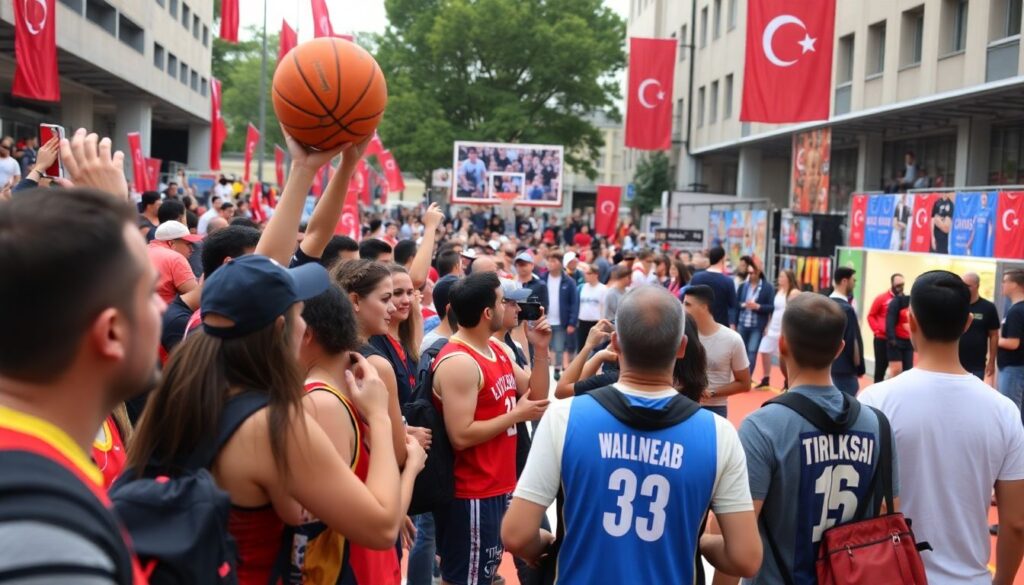
Follow national and club 3×3 teams online, attend events, and buy from the official Turkey 3×3 basketball team merchandise shop when available. Visibility and small purchases signal interest to sponsors and decision‑makers.
How should calendars adapt around the Turkey 3×3 basketball Olympic qualifiers schedule?
Coaches should taper training volume before qualifiers, reduce long travel close to key dates, and use lower‑priority events for tactical experimentation. Administrators need to align domestic tournaments so that players arrive fresh and well‑ranked at the qualifiers.