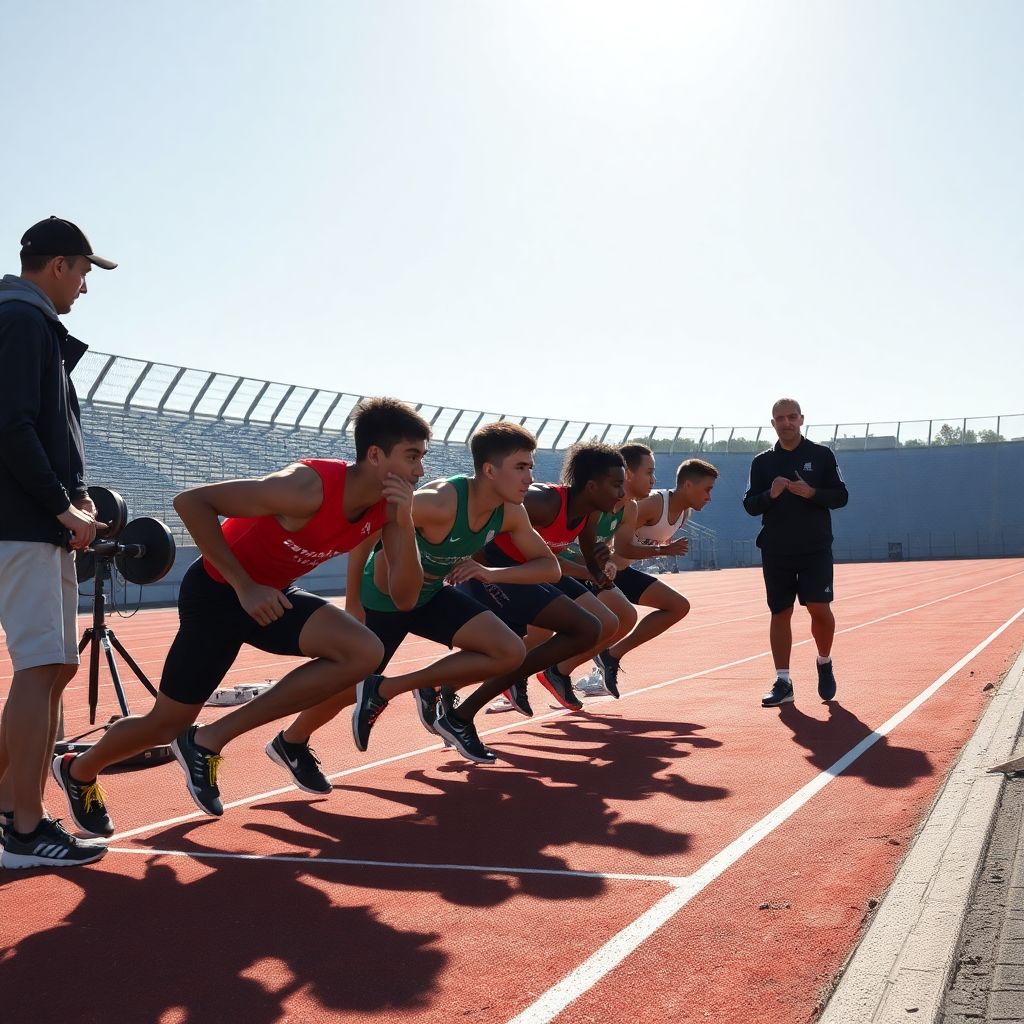
Elite 100m sprinting is built on forceful, efficient mechanics, high neural power, and disciplined planning. You need a focused 100m sprint training program for elite sprinters, quality coaching, smart strength work, and recovery habits. Turkish sprinters combine these science-based elements with climate, facilities, and competition structure to reach international standards.
Core performance drivers for elite 100m sprinting
- Explosive block start mechanics that convert reaction into horizontal force without wasted motion.
- Progressive acceleration with a long, powerful drive phase and stable trunk position.
- Efficient top‑end speed: optimal stride length and frequency with relaxed upper body.
- High force and power outputs from targeted strength, plyometric, and sprint‑specific lifts.
- Central nervous system freshness protected by smart periodization and recovery strategies.
- Race execution skills: rhythm under pressure, wind and lane adaptation, and cue‑based focus.
- Coaching environment: from turkey athletics sprint academy for 100m training to individualized online support.
Biomechanics of a world‑class block start
Block starts suit trained sprinters with adequate strength, mobility, and skill. They are not recommended for complete beginners, athletes with acute lower‑back or hamstring injuries, or anyone without a safe, supervised track environment.
Key technical priorities:
- Block set‑up – Front block roughly 1.5-2 shoe lengths behind the start line, rear block 1-1.5 shoe lengths behind the front. Angles are approximate; adjust for comfort and power.
- Body angles in the set position – Front knee around 90 degrees, rear knee more closed, hips slightly higher than shoulders, head neutral, eyes down the track.
- Force direction at the gun – Push back and down into the pedals, projecting the center of mass forward with a strong first step and minimal vertical bounce.
- Arm mechanics – Aggressive but controlled arm action, full range front to back, no crossing the midline, hands relaxed.
- Consistency under pressure – Practice with reaction drills, gun starts, and race simulations so that the pattern holds in competition.
For Turkish athletes training in Ankara or Erzurum, indoor halls are used in winter to keep block practice consistent while adapting to altitude and cooler conditions.
Accelerative mechanics and the drive phase: drills and metrics
To master the drive phase safely, you need appropriate tools, surfaces, and monitoring. A well‑structured 100m sprint training program for elite sprinters in Turkey typically includes the following resources.
- Facilities and surfaces
- Standard 400m synthetic track with marked 10m and 30m intervals for timing.
- Access to a safe indoor straight where possible, like in larger turkey athletics sprint academy for 100m training centers.
- Flat grass area for lower‑impact accelerations during early preseason.
- Footwear and equipment
- Professional sprint spikes for 100m runners with stiff plates and secure lockdown for maximal force transfer.
- Starting blocks adjustable in small increments.
- Timing gates or at least a reliable stopwatch and clear 10m marks.
- Light sled (for resisted sprints), mini‑hurdles, and cones for drill organization.
- Monitoring and data
- Split times over 10m, 20m, 30m, and 40m to track acceleration improvements.
- Video from the side for body angles and from behind for alignment.
- Simple wellness logs: sleep, soreness, and perceived exertion to prevent overload.
- Support structure
- Access to a qualified coach: on‑site in clubs or via online coaching for 100m sprinters with science based training.
- Basic medical support: physio contact and injury‑referral pathways.
- Strength and conditioning guidance integrated with track work.
- Drill menu for safe acceleration
- A‑marches and A‑skips to rehearse posture and foot strike.
- Wall or sled drives (low angle) for force direction.
- 3-5 step falling starts, then 10-20m build‑ups with controlled intensity.
Many athletes use short training camps with the best sprint coach and training camps in Turkey along the Mediterranean coast, combining good weather, quality tracks, and recovery facilities to focus on acceleration blocks.
Achieving and sustaining top‑end speed: stride mechanics and neural factors
This section outlines a safe, progressive method to build and maintain maximal velocity mechanics, usable for club‑level sprinters and for athletes in a turkey athletics sprint academy for 100m training context.
- Establish a safe base before maximal speed work – Spend several weeks on sub‑maximal runs (up to about 90 percent effort), general strength, and mobility. Only move to full‑speed flying sprints if you are pain‑free in hamstrings, calves, and lower back.
- Reinforce upright posture and relaxation drills – Use marching and skipping drills, then strides at 60-80 percent focusing on tall posture, hips high, shoulders loose, jaw relaxed. Stop the session if you feel sharp pain rather than pushing through.
- Introduce flying sprints progressively – Start with short approaches and short fly zones.
- Example session: 4-6 repetitions of 20m build‑up plus 20m fly zone, full walk‑back recovery.
- Keep total high‑speed distance moderate and rest at least 48 hours before another maximal day.
- Optimize stride mechanics at top speed – Think about stepping down under the hips rather than over‑striding in front.
- Knee drives forward and slightly up, then the foot punches down and back under your center of mass.
- Arms move from cheek (front) to back pocket (rear), driving rhythm but staying relaxed in the hands and shoulders.
- Use simple technical cues, one at a time – Focus on a single cue per rep: tall hips, fast but relaxed arms, or active foot strike.
- Ask your coach or video to confirm whether the cue is helping.
- Avoid stacking many cues at once; this causes stiffness and ruins rhythm.
- Protect the nervous system with recovery and scheduling – Place maximal velocity sessions on days when you are fresh, after a thorough warm‑up.
- Avoid back‑to‑back maximal speed days; alternate with strength or tempo running days.
- Use sleep, nutrition, and light mobility the day after speed to promote recovery.
- Integrate top speed into a full 100m model – Blend flying sprints with block‑to‑30m and 30-60m accelerations.
- Later in the season, run 80-120m special sprints so acceleration, transition, and top speed flow together.
- Use competition races as controlled opportunities to test rhythm under pressure.
Fast‑track protocol for top‑end speed development
- Warm up thoroughly, then perform 2-3 strides at 70-80 percent focusing on tall, relaxed running.
- Run 4-6 flying sprints with a 20-30m build‑up and 20-30m fly, full walk‑back recovery.
- Apply one technical cue per rep, record video from the side if possible.
- Stop the session at the first sign of sharp discomfort; prioritize quality over volume.
- Repeat this session 1-2 times per week, never on consecutive days.
Strength, power and force‑production programming for sprinters
Use this checklist to assess whether your strength and power work is serving your 100m rather than just building general gym strength.
- Your main lower‑body lifts are compound movements (squat patterns, hip hinges, step‑ups) with good technique, not excessive grinding sets.
- You include some form of explosive training (e.g., jumps, medicine ball throws, Olympic‑style lifts if properly coached) at least once per week in higher‑intensity periods.
- Gym sessions are placed to support, not sabotage, speed days (heavy lifting not immediately before maximal sprint sessions).
- Hamstring work emphasizes hip‑dominant (RDL, hip thrusts) and knee‑flexion patterns (leg curls, Nordic curls) in balanced amounts.
- Training loads progress gradually over weeks instead of jumping suddenly when you feel strong.
- Upper‑body work keeps shoulders stable and mobile (rows, presses, rotation control) without excessive bulk that tightens arm swing.
- You can complete sets with 1-3 solid reps still in reserve on key lifts during the competition phase, staying away from failure.
- Your strength numbers improve slowly across a season while your sprint times and jump tests also trend better, not worse.
- Testing (e.g., vertical or standing long jump, short sprints) is used periodically to check if power is transferring to the track.
- The plan is coordinated: your sprint coach and strength coach, whether in person or via online coaching for 100m sprinters with science based training, share basic information.
Sprint‑specific conditioning, recovery and periodization with Turkish practice examples
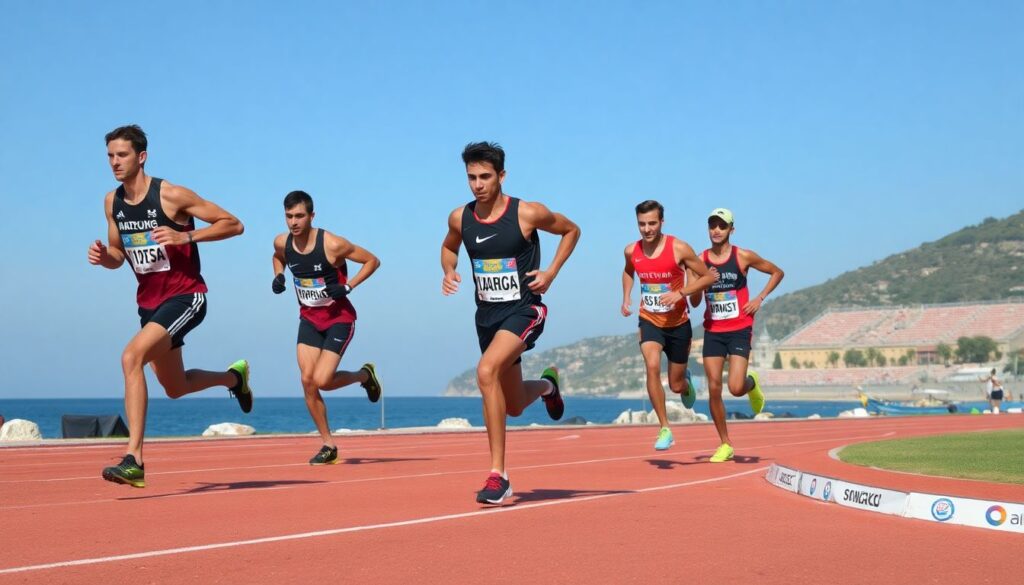
Common planning and recovery errors lower performance and increase injury risk, even in high‑quality environments like the best sprint coach and training camps in Turkey. Avoid these pitfalls:
- Packing too much high‑intensity sprinting into a single week, especially in hot coastal climates like Antalya without adjusting recovery.
- Using long, slow runs as the main conditioning method, which conflicts with sprint mechanics and neuromuscular demands.
- Skipping structured warm‑ups and cool‑downs on busy club nights, leading to tightness and preventable strains.
- Ignoring heat and humidity: not hydrating properly or adjusting session density during Turkish summer training camps.
- Failing to plan lighter deload weeks every few weeks, causing chronic fatigue and flat race performances.
- Doing heavy gym sessions the day before or morning of important races, leaving legs heavy and nervous system tired.
- Copying elite international programs without scaling volume and intensity to your own level and schedule.
- Under‑using available facilities in Turkey, such as indoor tracks in winter or therapy services at turkey athletics sprint academy for 100m training complexes.
- Not tracking basic data (sleep, soreness, mood, key sprint times), so overload is only noticed when injury appears.
- Neglecting simple regeneration tools: light pool work, low‑intensity bike, stretching, and soft‑tissue care between hard speed days.
Race execution and tactical adjustments: errors, wind, lane and competition cues

When conditions or schedule make ideal 100m preparation impossible, consider these alternatives and when to use them.
- Focus on 60m indoor or short sprints – Useful in winter seasons or when top‑end speed work is limited by weather; emphasizes start and acceleration that later transfer to 100m.
- Shift temporarily to 200m emphasis – Helpful for athletes needing more speed endurance; Turkish sprinters often race 200m heavily in spring to build rhythm before sharpening for 100m.
- Use relay training as competitive speed work – 4x100m practice and races provide high‑speed exposure and baton skills while sharing load across teammates.
- Target regional competitions and camps instead of constant racing – Attending a focused block at the best sprint coach and training camps in Turkey can replace several low‑quality meets, allowing technical consolidation.
Practical troubleshooting and rapid interventions for sprinters
How can I adjust my program if I feel constant hamstring tightness?
Reduce maximal speed and heavy hamstring loading for 1-2 weeks, emphasize mobility and isometric strength, and get assessed by a professional. Rebuild intensity gradually, starting with sub‑maximal runs and shorter distances.
What should I do on a windy race day in the 100m?
Into a strong headwind, stay patient in acceleration, avoid forcing stride length, and focus on frequency and posture. With a strong tailwind, guard against over‑striding; keep cues simple and trust your normal rhythm.
How often should I wear professional sprint spikes for 100m runners in training?
Use spikes mainly on quality speed days and specific sessions, not for every warm‑up or easy run. Gradually increase spike volume early in the season so your lower legs adapt without overload.
Is online coaching for 100m sprinters with science based training really effective?
It can be effective if the coach provides clear video feedback, structured planning, and adapts the 100m sprint training program for elite sprinters to your context. You still need safe facilities, local support, and consistent communication.
How do Turkish sprinters combine club training with national team camps?
They usually follow club programs during most of the year, then integrate national camps or turkey athletics sprint academy for 100m training blocks before major competitions. Communication between club and national coaches is key to avoid overload.
What is the safest way to increase speed volume during the season?
Increase either the number of reps or distance slightly, not both at once, and keep 48 hours between true maximal speed days. Monitor soreness and times; if quality drops sharply, maintain rather than increase volume.
How do I know if a training camp in Turkey is suitable for my level?
Check whether the camp screens athletes, groups them by level, and offers medical and coaching support. A suitable camp will be able to explain how they individualize loads and integrate you into their sprint structure safely.