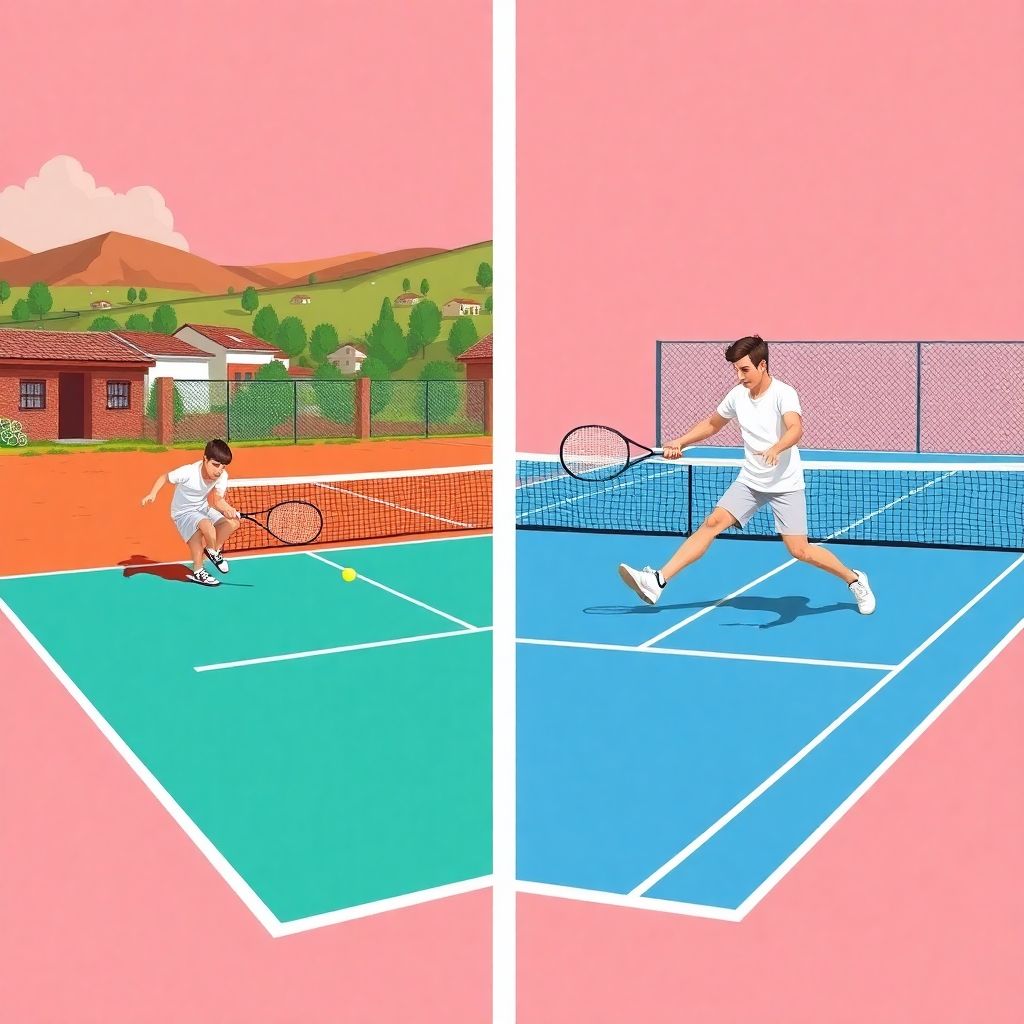
Clay, hard, maybe a bit of grass on summer tours – for Turkish players, the surface you grow up on quietly decides what kind of game you build. If you feel more confident on clay but every big tournament you dream of is on hard court, that mismatch can follow you for years. Let’s break down how surfaces shape Turkish tennis careers, what you actually need to adapt, and where beginners usually go wrong.
Why Court Surfaces Shape Turkish Players’ Games
Most juniors in Turkey still log most of their hours on clay, especially at public clubs and regional facilities. Slow bounce, higher trajectories, longer rallies – it all rewards patience, heavy topspin and good legs more than raw power. Then they go to an ITF event on a slick hard court and suddenly their “solid baseline game” looks fragile: balls don’t kick, time to prepare shrinks, and their trusted sliding move turns into a twisted ankle risk. This gap isn’t about talent; it’s about a career built with one surface in mind and a ranking system dominated by another. The players who manage the transition early, ideally inside well-run tennis academies in turkey, keep improving when others get stuck at the same national level.
At the top end, you’ll notice a pattern: the more a player travels to faster courts as a teenager, the more rounded their game becomes. They start learning to finish points at the net, take returns early, and use flatter shots without fear. Turkish players who stay locked into one club and one surface often discover, at 17–18, that their “clay identity” has become a limitation rather than a strength. By then it’s still fixable, but far more painful.
Necessary Tools: What You Actually Need To Adapt Between Clay and Hard
Adapting to both clay and hard courts is less about buying new rackets and more about having clear tools: a flexible playing style, sensible scheduling, and access to varied courts. Still, equipment and environment matter. On slow clay tennis courts turkey players typically favor slightly looser string tension and more open patterns to generate spin and depth; on hard, especially indoor, it often pays to tighten the tension, control the launch angle and keep the ball lower. Footwear isn’t a cosmetic choice either: clay shoes with their herringbone pattern help controlled sliding, while hard-court models add cushioning for repetitive impact. Add video analysis, a basic heart-rate monitor or smartwatch, and a simple notebook for session logs, and you already have a toolbox to read how your body and game react on different surfaces instead of guessing.
Essential “Tools” Beyond Gear
The invisible tools might be more important. Having access to different surfaces, even if you have to commute, matters more than owning three fancy rackets. Good scheduling is another: alternating training weeks on clay and hard instead of block-training only before tournaments. Finally, working with the best tennis coaches in turkey you can realistically access—coaches who have actually traveled on tour and understand surface-specific tactics—will save you years of trial and error.
Step-by-Step: Building a Game That Survives Every Surface
1. Map Your Current Surface Bias
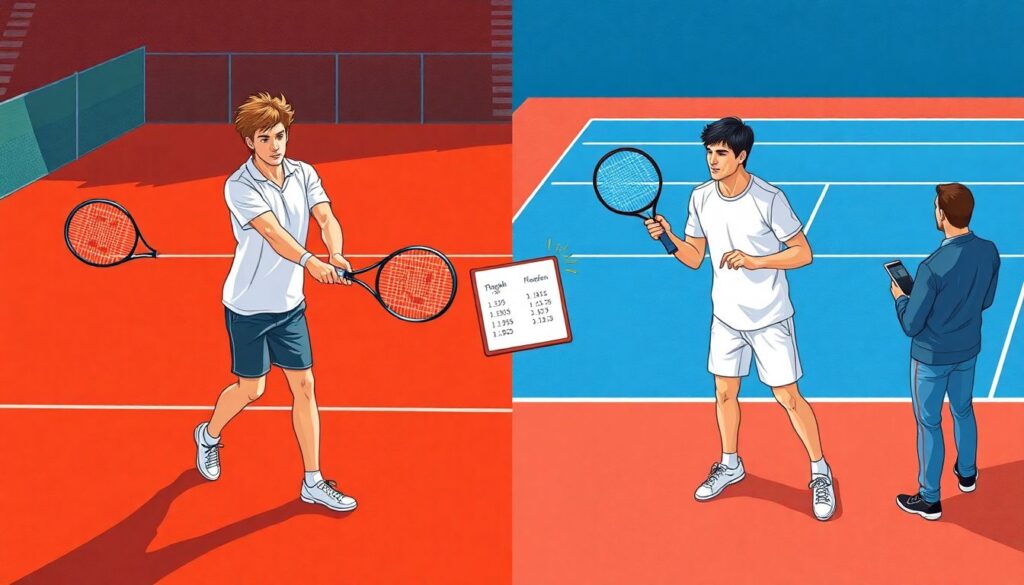
Before changing anything, figure out who you are as a player right now. Track a month of matches: where do you win more, clay or hard, and why? On clay you might rely on heavy topspin forehands and deep, looping cross-courts, while on hard you may win only when your first serve is hot. Ask a coach to film one practice on each surface from behind the baseline. Often you’ll notice that your swing itself barely changes; you just stand in the wrong place and choose the wrong targets. This “map” stops you from guessing and makes it possible to design specific drills instead of vague “let’s get better on hard” sessions.
Many beginners skip this step and jump straight to new technique. That’s a classic mistake: they start forcing flatter strokes on hard courts without understanding positioning or timing, so consistency collapses. Another beginner error is blaming the surface for every miss instead of identifying concrete patterns, like standing too far behind the baseline on fast courts or refusing to use depth on clay.
2. Use Camps and Academies Strategically

If you’re serious, treat tennis training camps turkey offers as laboratories, not holidays. Choose camps that list both clay and hard sessions in the program; otherwise you’re just paying to repeat your usual habits. Strong camps or tennis academies in turkey will plan micro-cycles: two–three days emphasizing clay patterns—long rallies, defense-to-offense transitions—followed by blocks on hard courts focused on first-strike tennis, returns, and serve plus one. The key step-by-step approach is simple: isolate one skill per surface, measure it, then retest after the camp. For example, track how often you step inside the baseline to finish on hard; or how many points you win after switching direction with your backhand on clay.
Beginners often make the mistake of overloading camps with volume instead of intention. They play five hours a day, get exhausted, and come home with the same habits. Another error is ignoring recovery on hard courts; without proper warm-up and cool-down, the sudden jump in impact from soft clay to rigid hard can cause knee and lower-back issues that derail the next month of training.
3. Rebuild Footwork Patterns Per Surface
Footwork is where surfaces differ the most. On clay, your “toolbox” needs controlled slides into and out of corners, plus comfort hitting from a slightly deeper position. On hard, sliding is limited, and the first step matters more than the last; you need explosive pushes and clean, balanced stops. Design drills around this: for clay, cross-court rally drills where you intentionally slide into wide balls and recover; for hard, short sprints and split-step timing exercises with a focus on taking the ball early. This is also where hard court construction turkey investments in modern facilities help: the better the court quality, the easier it is to feel consistent bounce and refine timing instead of fighting dead patches or slippery paint.
A very common beginner mistake is trying to slide on hard courts like they do on clay or in highlight reels. That’s asking for ankle sprains. Another is using the same deep return position on fast hard courts; you end up defending from the fence, giving the server all the initiative. Learners often don’t notice that their split step disappears under stress—they start standing flat-footed and then blame “fast courts” for being late.
Troubleshooting: Fixing Typical Surface-Related Problems
Problem 1: Your Clay Game Doesn’t Translate to Hard Courts
If you dominate local clay events but feel lost on hard, your patterns are probably too passive. On clay, you can grind, wait for errors, and still win; on hard, the same plan turns you into a target. The fix is not to abandon your topspin identity, but to shorten your patterns: turn three-shot rallies into “serve, aggressive first ball, finish.” Start in practice by forcing yourself to take forehands inside the baseline at least twice per game, even if you miss early. Over a few weeks this rewires your decision-making; you’ll recognize when a neutral ball on hard is practically an invitation to attack.
Newcomers usually approach this wrong by obsessing over more power instead of better positioning. They swing harder from the same deep spot and spray balls long. Or they copy pro-level flat hitting from YouTube without the legs to support it, leading to arm injuries and confidence drops.
Problem 2: You Can’t Win Long on Clay After Training Mostly on Hard
Some Turkish players grow up in cities where clubs emphasize fast hard courts and quick points. They learn to serve big, slap returns, and finish in three shots—fine until they hit a slow clay event where nothing penetrates. Troubleshooting here means rebuilding patience and spin. In practice, enforce rally minimums: no point counted until five balls cross the net; any forced error before that is “replayed.” Combine that with higher net clearance targets and heavier topspin drills focusing on height and depth rather than outright winners. Within a month, most players feel that staying in points on clay no longer drains them mentally.
Beginners on hard often believe clay is only about “just pushing balls back.” They stop using their serve, play moonballs with no purpose, and lose to opponents who mix height and angle intelligently. Another frequent mistake is standing on the baseline as if they were on hard courts, getting jammed on high bounces instead of taking a small step back to give their stroke time to work.
Long-Term Career Planning Around Surfaces
The players who break through from national to international level in Turkey usually treat surface management as part of their career plan, not an afterthought. They schedule seasons: blocks of clay events to build confidence and ranking points, followed by targeted hard-court swings to stress-test their attacking skills. They choose coaches and programs with that in mind, often joining setups where several surfaces are available in one place, or where travel to mixed-surface tournaments is built into the calendar. Over a few years, their results graph might look uneven, but their game becomes surface-proof, which is what matters at senior level.
If you’re just starting out or guiding a junior, use that same logic in simple form. Pick training bases that give you variety, even if they’re not the most glamorous; look for tennis academies in turkey that actively rotate surfaces and document progress. Use tennis training camps turkey offers not as prestige badges but as checkpoints to evaluate specific skills on clay and hard. Above all, avoid the two big beginner traps: staying loyal to one “comfort” surface until it defines you, and blaming conditions instead of using them as a framework to sharpen your game.