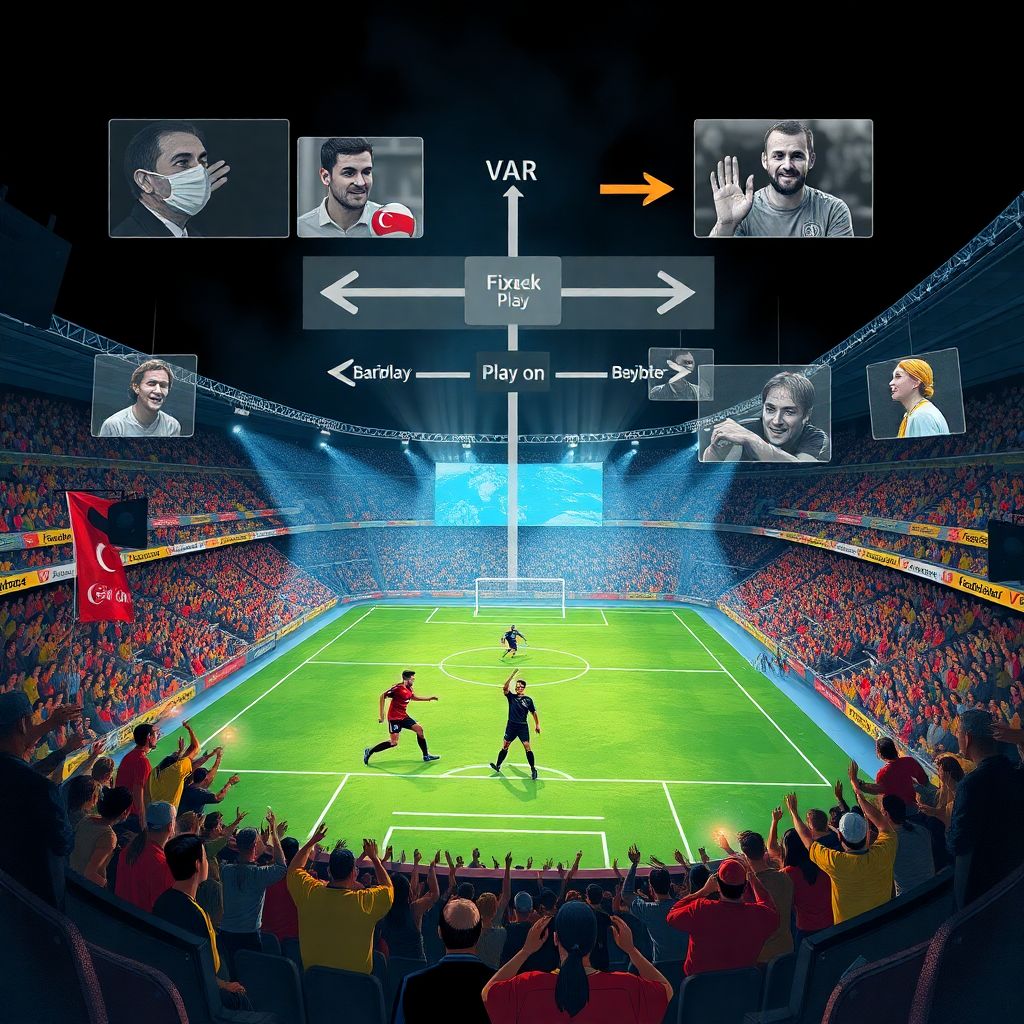
Video Assistant Referee was supposed to tidy up football. In Turkey, it kind of did the opposite: it cleaned some things and then threw the dirty water all over social media. Let’s unpack how VAR has changed Turkish football, why fans shout “fair play” one week and “fixed!” the next, and what could actually make the system work better instead of just louder.
—
What VAR Actually Is (And What It Is Not)
At its core, VAR is a support tool, not a second referee running a parallel match. In strict terms, VAR is a video-based review system that can intervene in four types of situations: goals, penalties, straight red cards and mistaken identity. It can only act on a “clear and obvious error” or a “serious missed incident.” The on‑field referee still makes the final decision; VAR just sends a recommendation after replay checks. Think of it less as a boss and more as a slightly annoying colleague with a joystick and eight camera angles.
In practice, Turkish fans often treat VAR like a hidden tribunal. If you believe your team is hated, every silent VAR check becomes proof. If you believe your rival is “protected,” every offside line looks crooked. The gap between what VAR is supposed to do on paper and what people think it does in reality is one of the roots of the ongoing turkish super lig var controversy.
—
Key Terms Explained in Plain Language
“Clear and Obvious Error”
Long version: This phrase is deliberately vague. It means the on‑field decision must be clearly wrong when seen on replay, not just “maybe questionable.” If a defender slightly clips a striker and the ref says “play on,” VAR should only intervene when that clip is undeniably a foul. In Turkey, the problem is that “clear and obvious” in one stadium looks like “soft but okay” in another; that inconsistency makes fans think the bar is being moved depending on shirt colors, not on the Laws of the Game, and this fuels mistrust more than any single bad whistle ever could.
Short version: If you and your rival fan friend can both honestly say “yeah, that’s a mistake” after two replays, that’s usually “clear and obvious.” If you’re still arguing after ten replays, it probably isn’t – but VAR sometimes steps in anyway, which is where trouble starts.
—
Lines, Offsides and Semi‑Automatic Confusion
Offside under VAR feels “mathematical,” but the drawing of lines still has human steps. Technicians choose the frame of the pass, set the point on the attacker’s body part that can score, and then draw a line to the last defender. A few pixels difference can flip a goal. For supporters, that looks like magic bordering on manipulation. In a league already suspicious of refereeing, every frozen frame posted on Twitter feeds the belief that those pixels are a weapon, not a tool, and thus every marginal decision becomes interpreted as part of a pattern, even when it’s really just a technical limitation.
You can think of it this way: the technology is precise, but the people using it are not robots. That tiny human margin is where anger, conspiracy and memes move in.
—
Text Diagrams: How a VAR Decision Flows
Imagine a typical penalty incident in Istanbul:
Diagram – VAR Flow
1) On‑field:
Ball in box → Contact → Referee: “No foul, play!”
2) VAR Room:
a) Check start: “Possible penalty, checking.”
b) Angles reviewed:
– Cam 1: behind goal
– Cam 2: side view
– Cam 3: main camera
c) Outcome node:
– If “clear & obvious error” → “Ref, recommend On‑Field Review (OFR).”
– Else → “Check complete, play on.”
This logic tree is simple in theory, but in Turkey the time spent at each node often feels endless. Long wait plus bad PA system plus tense derby = boiling stadium. If you want fewer riots and more rational debate, you need to shorten those arrows in the diagram, not just add more cameras to the mix.
—
How Turkey’s VAR Story Differs from Other Leagues
Comparing with the Premier League and Serie A
In England, complaints about VAR revolve around “killing the emotion” and micrometric offsides. In Italy, debates focus on excessive interventions and a stop‑start rhythm. In the Turkish Süper Lig, you get all of that plus deep historical mistrust of refereeing culture. When the same referee is at the center of two or three controversial reviews, fans jump directly from “bad night” to “systemic bias.” VAR was meant to dampen these emotions; instead, it gave everyone high‑definition evidence to re‑litigate every call from five camera angles, often selectively clipped to support each club’s narrative.
So while other leagues argue mostly about philosophy – “how much technology is too much?” – Turkey often argues about integrity. That’s why turkey super lig var highlights and analysis videos are less “tactical breakdowns” and more courtroom exhibits used in nightly studio shows where ex‑referees are cross‑examined like suspects rather than experts.
—
Statistics and Perceived Bias
Whenever tempers explode, people reach for numbers. They want hard evidence of who is favored and who is punished. The statistics of var decisions in turkish super lig usually show something boring: big clubs get more VAR interventions because they attack more and spend more time in the opponent’s box, where penalties and tight offsides happen. But fans rarely read the footnotes; they just see “Team A had 12 penalties from VAR, Team B had 3” and the story writes itself. Without context, even accurate data becomes ammunition, not clarification, and this statistical arms race ends up reinforcing club narratives instead of calming them down.
To avoid that, any stats release has to be packaged with plain‑language explanations: where on the pitch interventions occur, how often decisions are overturned, and how these rates compare over multiple seasons, not just in one emotional campaign.
—
Memorable Matches and Their Ripple Effect
When VAR Became the Main Character
Everyone has their own list of the best turkish super lig matches decided by var, and “best” usually means “most talked‑about,” not “most fair.” High‑stakes derbies, title deciders, relegation six‑pointers – these are the games where one replay can change the season. A late, drawn‑out review that flips a penalty or disallows a last‑minute winner doesn’t just change the scoreboard; it rewrites transfer decisions, coaching careers and even boardroom elections. Turkish football is hyper‑politicized, and topping that with slow‑motion justice makes VAR look like an invisible participant, not a neutral mechanism.
The more the outcome of crucial games hinges on opaque conversations in a remote booth, the more fans feel detached from the process. Football is emotional, but it’s also supposed to be understandable. When you can’t tell why your goal was cancelled even after watching the replay ten times, your frustration is not only natural – it’s structurally guaranteed.
—
Betting, Money and Unintended Side Effects
Now add money into the mix. The impact of var on turkish football betting is bigger than many admit. In‑play bets live on momentum; VAR pauses break that flow. A penalty given, then reversed, doesn’t just hurt your team – it flips over‑under bets, goal‑scorer odds, and live handicaps in seconds. Bettors start tracking referees, not just strikers, because a whistle plus a headset tap can change the market faster than any tactical substitution, and perception that certain refs are “card‑happy” or “VAR‑shy” becomes part of betting strategy rather than pub gossip.
If the league doesn’t publish detailed, real‑time data about VAR use, betting communities will build their own shadow databases. That underground analytics scene will always assume the worst when patterns appear, even if those patterns are just statistical noise. Transparency is not just an ethics issue here; it directly affects how credible the product looks to people who risk money on it every weekend.
—
Non‑Obvious Fixes: How to Make VAR Less Hated
Solution 1: Live Audio, But Smarter
Simply copying rugby and broadcasting referee‑VAR conversations is a popular idea, but in Turkey it needs guardrails. Raw audio would be clipped, subtitled and weaponized within minutes. A better, non‑standard solution: live, short “decision capsules.” Right after a review, a referee records a 15‑second explanation, in simple Turkish and optionally in English, that goes to broadcasters and stadium screens: “Penalty confirmed: defender trips attacker after playing no ball.” No legalese, no secret jargon. This reduces the space where speculation can grow while keeping the refs safe from having every private word turned into a meme.
Over time, a library of these capsules would also become a learning tool. Fans and coaches could revisit how similar incidents were described and decided, instead of arguing with no shared reference point.
—
Solution 2: Public VAR Dashboards
If people are already obsessing over numbers, give them better ones. Imagine an official weekly dashboard:
– “Interventions per matchday”
– “Average review time by stadium”
– “Decisions changed for/against each club (with expected ranges based on attack volume)”
Diagram – Transparency Layer
Raw Events → Categorization (goal, penalty, red) → Context (score, minute, location) → Public Dashboard
This is not about PR gloss; it’s about making sure anyone auditing patterns is at least using the same raw material. When the league itself provides a detailed, standardized feed, fan‑made graphs become more accurate and less conspiratorial.
—
Solution 3: Tactical Coaching for Players About VAR
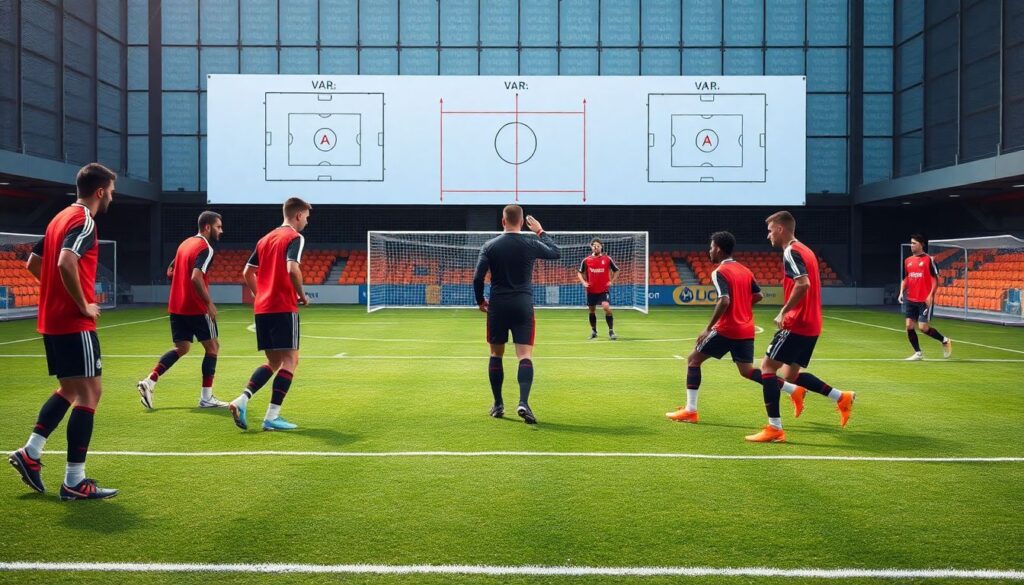
One unconventional angle: treat VAR as part of game preparation, not just as a background rule. Clubs should coach players on “VAR‑safe defending” and “VAR‑aware attacking.” For example, defenders in the box should learn body positions that minimize the risk of slow‑motion‑friendly contact; attackers should understand when going down will look like simulation from certain angles. This is not cheating; it’s adapting. Just as teams adjusted to back‑pass rules or offside traps, they need to adapt to how incidents look under replay scrutiny, or they’ll keep gifting cheap penalties.
If Turkish teams embrace VAR as a tactical environment rather than a curse, overall behaviour on the pitch will improve, which in turn reduces controversial incidents at the source instead of just arguing about them afterward.
—
Reframing the Debate: Tool vs. Culture
In the end, VAR did not invent Turkish refereeing drama; it just put it in HD, slowed it down and added graphics. The core question isn’t whether technology is evil or perfect. It’s whether the football culture around it is ready to handle decisions that are both more accurate and more visible. Until clubs stop using every marginal call as propaganda, and authorities stop hiding behind bland statements, the turkish super lig var controversy will keep simmering, regardless of how many cameras hang from the roof.
If the league embraces more open communication, cleaner data, and even some bold experiments like decision capsules and tactical VAR coaching, then turkey super lig var highlights and analysis might finally shift from courtroom drama to genuine football insight. VAR won’t make everyone happy – nothing in this game does – but it can at least move the argument from “they’re out to get us” to “we understand why it was given, even if it hurts.” And in Turkish football, that alone would be a revolution.