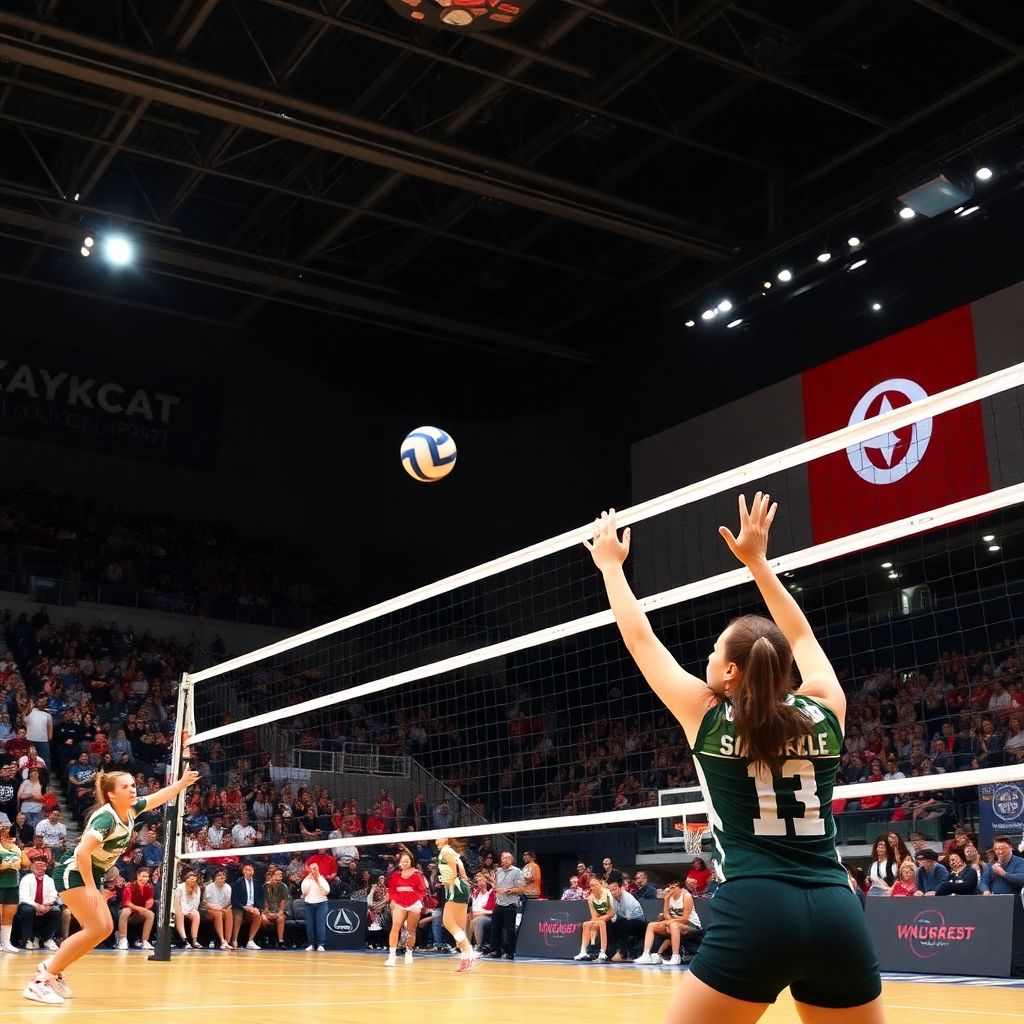
Turkey has become a global power in women’s volleyball by combining long‑term investment, a strong professional league, systematic youth development, and modern coaching supported by sports science. Compared with other models, Turkey’s approach is relatively fast to implement if funding exists, but carries risks around financial sustainability, overreliance on clubs, and media‑driven pressure.
Core Factors Behind Turkey’s Emergence as a Women’s Volleyball Power
- Early, consistent investment in women’s volleyball infrastructure and governance.
- A highly competitive professional league that attracts top global players.
- Integrated talent pipeline linking schools, clubs, and regional academies.
- Modern coaching methods and deliberate import of foreign expertise.
- Club and national team success reinforcing each other internationally.
- Strong media presence and fan culture that monetise and popularise the sport.
- Relatively clear pathways from youth participation to professional contracts.
Historical Investment and the Strategic Timeline of Growth
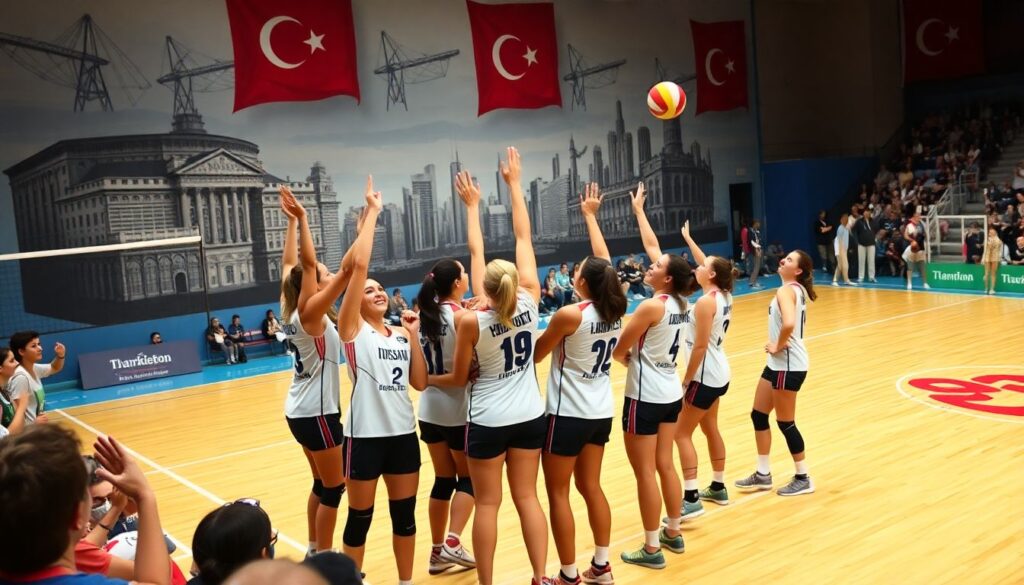
In the Turkish context, “historical investment” in women’s volleyball means a deliberate decision by the federation, government, and large multi‑sport clubs to treat the women’s game as a strategic priority over many seasons, not as a short marketing project. The “timeline of growth” is the sequence of policy, budget, and organisational steps that gradually raised level and depth.
Rather than relying only on national‑team camps before tournaments, Turkey put resources into club structures, coaching education, and youth competitions. Large Istanbul‑based clubs and municipal clubs supported women’s volleyball alongside football and basketball, which gave access to existing facilities, brand value, and sponsors. This made the sport visible and aspirational for girls across the country.
Compared with more conservative approaches (for example, only funding the senior national team or building a few central academies), Turkey’s path is more complex to manage but easier to sustain competitively. The risk is that if club finances weaken or priorities change, the whole system can be exposed; however, when clubs are stable, this distributed model produces a broad base of high‑level players.
Professional League Design: Clubs, Financing and Competitive Balance
Turkey’s women’s professional league model works because of how clubs, money flows, and competition are structured. Several design choices make it attractive for elite players and sponsors while maintaining enough balance so that more than one or two teams can realistically compete.
- Multi‑sport club backbone: Major clubs with football and basketball sections (and existing fan bases) host women’s volleyball teams, lowering marketing and infrastructure costs and making it easier to sell Turkey women’s volleyball tickets nationwide.
- Import‑friendly roster rules: Carefully defined limits on foreign players allow clubs to sign world‑class athletes while still giving court time to Turkish talents, creating daily high‑level training environments.
- Tiered league system: Promotion and relegation between divisions keep competition meaningful for mid‑table clubs and encourage sustained investment instead of short, risky spending spikes.
- Central and local sponsorship: Title sponsors, TV deals, and municipal support collectively stabilise budgets; many clubs avoid relying on a single donor, which reduces collapse risk.
- Media‑driven scheduling: Match times favor television and digital platforms, so fans can easily watch Turkey women’s volleyball live stream content, increasing exposure for sponsors and players.
- Strict licensing standards: Requirements on youth programs, facilities, and financial reporting aim to prevent overleveraged squads chasing short‑term Turkey women’s volleyball betting odds instead of long‑term development.
In practice, this league design is relatively easy to copy in countries that already have strong multi‑sport clubs and TV markets. It is harder where clubs are small and regionally isolated. The main implementation risk is financial: overspending on stars, weak governance, or unrealistic sponsor expectations can quickly destabilise competitiveness and trust.
Example implementation path for another federation could be: season 1-2, formalise licensing and youth requirements; season 3-4, negotiate central media rights and standardise match production; season 5+, gradually relax import rules as domestic players catch up, using the Turkish league as a benchmark for salaries and roster sizes.
Talent Pipeline: Youth Academies, Schools and Scouting Networks
The Turkish women’s volleyball pipeline connects school PE programs, local clubs, and elite academies into one visible pathway. Instead of a single national training center, the model relies on many regional hubs that share basic standards and send their best players to top clubs or junior national teams.
- School‑to‑club transitions: Physical education teachers and school tournaments are used to spot tall, coordinated girls early. Simple referral systems help move them into nearby clubs, where they can access structured training several times a week.
- Club‑run youth academies: Professional clubs invest in U14, U16, and U18 squads, often with shared facilities. This is an approach that is administratively demanding but very effective; the main risk is uneven quality between regions when some clubs underinvest.
- Regional training centers: Federations and municipalities support regional camps and short “selection weeks” where coaches from top clubs observe and test players. For many families, these camps function like low‑cost volleyball training camps in Turkey, offering exposure without full relocation.
- Unified competition calendar: Regular youth leagues and national finals guarantee competitive matches; this is more complex than simple “festival” formats but creates match hardness and clear benchmarks for progress.
- Data‑oriented scouting: Height, reach, jump tests, and basic technical ratings are tracked systematically, so late developers are not lost. The risk for countries copying this is privacy and data‑management capacity; without clear rules, data can be misused or lost.
For other federations, this pipeline is moderately hard to build because it requires coordination between education and sports authorities. However, it is lower‑risk than building one expensive national academy: even if one region fails, others continue producing players. The trade‑off is slower, more decentralized control versus more resilient, wide‑base talent production.
Coaching, Sports Science and the Role of Foreign Expertise
Turkey systematically raised coaching standards by mixing domestic education with targeted foreign expertise. Instead of assuming that imported coaches alone would solve problems, local staff were embedded, mentored, and gradually took more responsibility as methods were transferred and adapted to Turkish players’ needs.
Advantages of the Turkish Coaching and Science Approach
- Accelerated knowledge transfer: Foreign head coaches and specialists introduce updated tactics, periodisation models, and video analysis as used in top leagues, while Turkish assistants ensure communication and cultural fit.
- Evidence‑based training load: Sports scientists track jumps, sprints, and recovery to reduce overuse injuries; this is more sophisticated than traditional “more training is better” models and easier to justify to clubs in a results‑oriented league.
- Clear role pathways: Young coaches can progress from youth to assistant to head roles within the same club structure, reducing brain drain to other sports or countries.
- Brand and fan engagement: Well‑known foreign coaches and star players help sell more Turkey women’s volleyball jersey designs and merchandise, generating new revenue for reinvestment in staff and facilities.
Limitations and Risks of Heavy Reliance on Foreign Expertise
- Cost sensitivity: Importing elite coaches, analysts, and strength staff is expensive; if budgets drop, clubs may cut these first, weakening long‑term capacity.
- Dependence risk: If domestic coach education is neglected, teams become dependent on foreign hires, which is hard to manage in politically or economically unstable periods.
- Style mismatch: Tactics imported from another league may not fit local player profiles; blindly copying systems (for example, tempo or serve‑receive patterns) can hurt performance instead of improving it.
- Unequal access: Rich clubs get top experts, while smaller teams may not; this can widen the competitive gap and discourage investment at the lower levels.
For other nations, the Turkish mix of foreign and local expertise is attractive because it can produce quick results at club and national levels. The main risk is creating a two‑speed system where only top clubs modernise; careful federation‑level coach education and shared resources are needed to avoid this divide.
International Competitions, Club Success and National Team Momentum
Turkey turned domestic strength into global power by aligning club ambitions with national‑team goals. Strong performances in European club competitions raised player standards and gave Turkish athletes confidence before major tournaments, creating a feedback loop of success and visibility.
- Myth: Only national‑team camps matter. In reality, daily training in top clubs facing strong European opponents is where most development happens. Federations that ignore club environments underestimate the importance of year‑round competition.
- Myth: Star imports block local talent. In the Turkish model, imports raise training quality; the risk comes only when roster rules allow too many foreigners or when clubs fail to manage succession planning.
- Myth: International success automatically secures finances. Even with trophies, clubs must still control budgets and diversify income through media rights, Turkey women’s volleyball tickets, and merchandising; relying only on prize money is dangerous.
- Myth: Betting markets prove league health. Growing Turkey women’s volleyball betting odds markets show interest, but do not guarantee governance quality. Without strong integrity systems, match‑fixing risk rises as volumes and attention grow.
- Myth: Visibility is enough for grassroots growth. International medals inspire participation, but without local courts, coaches, and competitions, that interest is quickly lost.
For practitioners, the main lesson is to design club competitions that prepare players for international intensity, while safeguarding integrity and financial discipline. Copying Turkey’s focus on strong clubs can be effective, but only if anti‑corruption, medical, and schedule‑management systems are in place.
Societal, Media and Economic Drivers Supporting Women’s Volleyball
Turkey’s rise in women’s volleyball is also rooted in social acceptance, media narratives, and economic incentives. The sport has been framed not just as entertainment but as a source of national pride and a respectable career option for women, which in turn attracts sponsors and families.
A simplified “scenario” of how this plays out in practice:
if (media_highlights_strong_female_athletes
    and federation_offers_clear_pathways
    and clubs_invest_in_youth_and_marketing):
    society_recognises_volleyball_as_viable_for_girls
    sponsors_increase_support
    participation_and_level_rise
else:
    interest_remains_niche
    talent_leaks_to_other_sports_or_countries
Television and streaming platforms regularly promote big matches, and fans who watch Turkey women’s volleyball live stream games can immediately engage by buying a Turkey women’s volleyball jersey, checking Turkey women’s volleyball betting odds, or planning trips to matches. At the same time, federations and clubs run events similar to volleyball training camps in Turkey in many cities, making top players visible role models. For countries considering this model, it is relatively straightforward to expand media and marketing if there is at least one competitive club, but the risk is overcommercialisation that neglects grassroots needs.
Practical Inquiries on How Turkey Built Its Volleyball Strength
How central was the professional league to Turkey’s rise in women’s volleyball?
The league was the main engine of progress, creating daily high‑level competition and attracting global talent. Without a strong league, national‑team camps alone would not have produced the same technical and tactical depth.
Can smaller federations realistically copy the Turkish women’s volleyball model?
Yes, but they should start with governance, coach education, and youth competitions before chasing big stars. The full model is resource‑intensive; partial adoption focused on structure rather than spending carries lower risk.
What is the biggest risk when importing foreign coaches and players?
The main risks are budget overload and dependence on imported solutions. If domestic coaches and systems do not grow in parallel, performance can drop sharply when foreign experts leave or exchange rates change.
How important are school programs and regional academies in this system?
They are essential, because they widen the base of participants and feed clubs with pre‑trained athletes. Without them, professional teams would compete over a very small pool, limiting long‑term depth and resilience.
Does heavy media and commercial focus harm sporting integrity?

It can, especially if growth in betting and sponsorship outpaces governance. Strong regulations on match‑fixing, transparent finances, and clear disciplinary processes are needed to keep commercialisation from undermining credibility.
Is building one national training center a safer strategy than Turkey’s club‑based model?

One center is easier to control and may look cheaper initially, but it creates a single point of failure. Turkey’s distributed club‑based model is harder to manage yet more resilient and better at producing large numbers of elite players.
How do fans contribute to sustaining Turkey’s women’s volleyball success?
Fans buy tickets, merchandise, and subscriptions, making clubs and the league financially viable. Their engagement also attracts sponsors and media, which in turn provide resources for youth development and professional support structures.