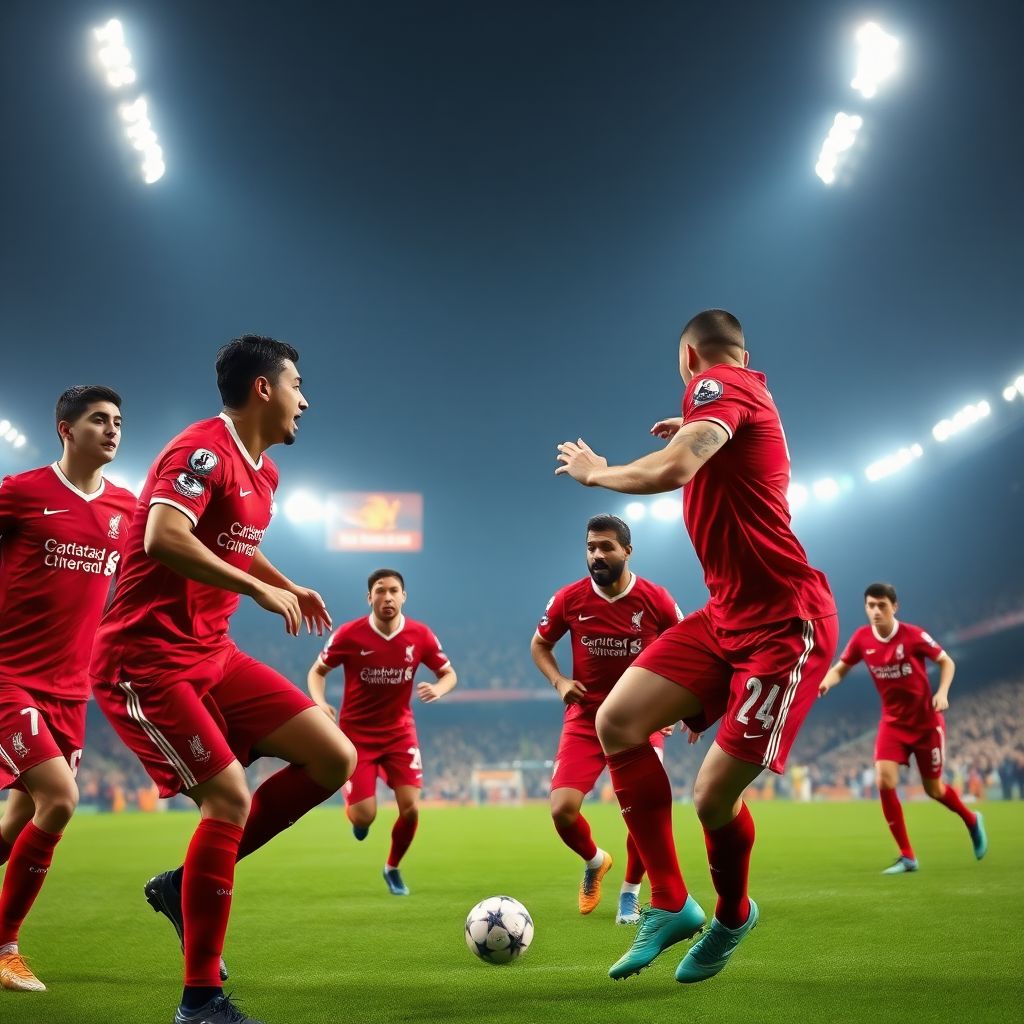
€5m carrot: Galatasaray handed huge bonus offer to finish off Liverpool at Anfield
Galatasaray’s dressing room has been given an extraordinary financial jolt ahead of their decisive trip to Anfield. After the 1-0 victory in the first leg, club president Dursun Özbek has approved a gigantic performance bonus designed to push the Turkish champions over the line against Liverpool.
Should Galatasaray protect or build on their narrow advantage in the return leg and book a place in the Champions League quarter‑finals, the squad will share a remarkable €5 million reward. The promise is not symbolic – it is an officially sanctioned figure, agreed face‑to‑face between players and president in the immediate aftermath of the first-leg win.
Osimhen the negotiator: from penalty box to boardroom
The unusual part of the story is how the deal came together. According to reports in Turkey, the driving force behind the bonus was not a board member but star striker Victor Osimhen. Riding the high of the win, the Nigerian forward is said to have taken the initiative in the dressing room, confronting the president not with a complaint but with a proposal.
Journalist Ali Naci Küçük reports that Osimhen seized the moment during the celebrations. He is quoted as telling Özbek: “Let’s make the bonus €5 million if we advance.” The president, still basking in the euphoria of a famous European night in Istanbul, is understood to have accepted the suggestion immediately, without haggling or delay.
The episode has already been dubbed “the Osimhen effect” behind the scenes: a marquee signing whose influence now extends beyond scoring goals to shaping the internal dynamics of the club. For teammates, the gesture reinforces Osimhen’s status as a dressing‑room leader, someone willing to use his clout to secure better terms for the entire squad rather than focusing solely on personal accolades.
Bonus pool swells to €9.5m after recent triumphs
This promised windfall does not stand alone. The new €5m pledge sits on top of existing performance bonuses the players have accumulated from a string of big matches in recent weeks. Victories in the Beşiktaş derby and the knockout triumph over Juventus have already triggered substantial payouts.
Taken together, those bonuses and the new Liverpool incentive bring the total potential package to around €9.5 million. Crucially, the club hierarchy has pledged that if Liverpool are eliminated, the full amount will be paid out by the end of the month. That timeline matters: it reassures the squad that the reward is not a vague future promise but a near‑term financial reality tied directly to their performance in this tie.
For a group already brimming with confidence after beating one of Europe’s most feared sides in the first leg, knowing that nearly eight figures are at stake adds a very concrete dimension to the idea of “giving everything” at Anfield.
Why money matters: motivation and message from the board
On one level, elite footballers at Champions League clubs are already well‑paid, so a bonus might appear almost symbolic. In reality, such incentives serve several purposes.
First, they align everyone’s interests. Players, coaches, and executives all stand to gain from progressing: prestige, ranking points, sponsorship leverage – and now a clear, shared financial target. Second, they send a powerful message from the boardroom: the club is all‑in on this European campaign and willing to back ambition with significant cash.
There is also a psychological aspect. In high‑pressure away nights, when fatigue and doubt can creep in, the knowledge that every tackle, sprint, and duel is part of a collective push towards a defined reward can sharpen focus. For squad players who may not command the highest salaries, a share of €5m represents an especially tangible prize.
Anfield factor: models still make Liverpool narrow favourites
Despite Galatasaray’s advantage on the scoreboard and their booming motivation package, prediction models still lean slightly towards Liverpool. Data from performance analysts gives the Premier League side a 51.36% probability of advancing to the quarter‑finals.
That edge is almost entirely rooted in Anfield’s reputation. In European knockout fixtures, Liverpool’s home record remains formidable. The stadium’s atmosphere, the tradition of comeback nights, and the team’s ability to play with relentless intensity in front of their own fans continue to influence both numbers and narratives.
From this perspective, the first leg is seen not as a decisive blow but as an obstacle Liverpool are still well equipped to overcome. For Galatasaray, that underdog framing may actually be helpful: they can approach the match with a clear plan and the knowledge that most of the external pressure is on their opponents.
Pundits split: respect for Gala, faith in Liverpool
Leading voices associated with Liverpool are, predictably, backing the hosts to turn the tie around. Former defender Jamie Carragher has expressed confidence that the Reds have enough quality and experience to overturn the deficit on home soil, arguing that the club’s history in Europe often defies first‑leg setbacks.
Phil Thompson has taken a slightly different angle. He acknowledged that the 1-0 loss in Istanbul was damaging, but suggested there is a silver lining: the scoreline leaves no room for confusion. At 1-0, Liverpool know they must win outright; a 1-1 draw in the first leg, he argued, could have created ambiguity over whether to attack or protect an away-goal advantage. Instead, Liverpool approach the second leg with a simple brief: victory or elimination.
From Galatasaray’s side, the public messaging has been quietly confident. The team recognizes that Anfield is one of football’s most intimidating venues, but the first-leg win has reinforced the belief that Liverpool can be hurt if the game plan is executed with discipline.
Tactical dimensions: how Gala might approach the return leg
Beyond the financial story, the tie is intriguing tactically. Protecting a 1-0 lead away from home in Europe is a classic dilemma: sit deep and invite pressure, or try to score an away goal that could psychologically deflate the hosts.
Galatasaray’s coaching staff are expected to strike a balance. The priority will be defensive structure – compact lines, minimal gaps between midfield and defence, and strict attention to Liverpool’s pressing triggers and wide overloads. At the same time, with a player like Osimhen up front, it would be wasteful to abandon counter‑attacking potential.
Quick transitions could be decisive. If Galatasaray can draw Liverpool’s full-backs high up the pitch and then release runners into the space behind, even a handful of dangerous counter‑attacks might be enough to tilt the tie. An away goal would force Liverpool to score at least three, dramatically shifting the emotional charge of the evening.
Psychological warfare: pressure on Liverpool, opportunity for Gala
From a mental standpoint, the pressure distribution is asymmetric. Liverpool are expected, almost obligated, to progress. Their fans demand deep Champions League runs; their global status is built on European nights; their recent domestic inconsistency has only heightened the sense that continental success is a necessity rather than a luxury.
Galatasaray, in contrast, arrive with less to lose and more to gain. They have already beaten Liverpool once. They have the security of a lead and the galvanizing narrative of a potential €5m reward. If they can survive the predictable early storm at Anfield and push the tension into the second half, anxiety may start to grip the home side and crowd alike.
This mental battle is where experienced campaigners in the Galatasaray squad become crucial. Managing tempo, taking the sting out of the game at key moments, slowing restarts, and refusing to be drawn into chaos will all be fundamental to preserving their edge.
High stakes for FSG: financial risk behind sporting narrative
For Liverpool’s owners, Fenway Sports Group, the match is more than just a test of sporting pride. It intersects directly with the club’s financial planning. With the domestic route to next season’s Champions League looking uncertain, this year’s edition represents a vital – perhaps the most realistic – path back into Europe’s top competition.
Failing to reach the latter stages would mean missing out on significant prize money, broadcast revenue, and all the commercial benefits that accompany deep European runs. Reports suggest that if those revenues do not materialize, FSG are prepared to lean on the club’s £350m credit facility to keep operations running smoothly, rather than injecting new equity themselves.
That approach underscores a cautious ownership model: the club is expected to be self‑sustaining, borrowing against future income streams if necessary rather than relying on open‑ended owner funding. Dropping out of the Champions League now would therefore not only be a sporting disappointment but also a financial complication, increasing reliance on credit at a time when long‑term squad rebuilding may be needed.
How a Galatasaray upset would reshape their future
On the other side, Galatasaray stand on the brink of a potentially transformative moment. Knocking out Liverpool and reaching the quarter‑finals would carry major implications beyond the already‑promised bonuses.
First, the immediate Champions League prize money and market pool share would significantly strengthen the club’s balance sheet, helping with wage commitments, transfer instalments, and future recruitment. Second, such a result would boost the club’s international profile, making it easier to attract high‑calibre players who might previously have hesitated about moving to Turkey.
For players already at the club, a win of this magnitude becomes a career‑defining highlight: something agents and clubs remember when negotiating contracts and transfer valuations. Even younger squad members and academy graduates would gain invaluable exposure to high‑pressure European football, accelerating their development.
Osimhen’s legacy moment?
For Victor Osimhen personally, the tie offers a chance to further expand his reputation. He has already become the protagonist of the off‑pitch bonus story; now, attention returns to his primary job on the pitch.
If he can lead the line effectively at Anfield – pressing intelligently, holding the ball under pressure, and threatening in behind – he will reinforce the narrative of a complete modern centre‑forward and a natural leader. Contributing a decisive goal or assist in one of Europe’s most intimidating arenas would add another powerful line to his growing CV.
Within the Galatasaray camp, his intervention with the president has likely earned him even more respect. Should the team complete the job and share out that €5m, Osimhen’s role as both striker and negotiator will become part of club folklore.
A night where everything is on the line
The second leg at Anfield is shaping up as one of those rare occasions where sporting drama, financial stakes, and personal narratives all intersect.
For Galatasaray, the equation is clear: defend a slender lead, seize moments on the counter, and they will walk away with not just a historic result but a massive €5m bonus pool and a powerful statement about their place in European football.
For Liverpool, it is equally stark: win convincingly or confront the sporting and financial consequences of an early Champions League exit, potentially forcing the owners to lean more heavily on credit and accelerating awkward decisions about the squad’s future direction.
Ninety minutes – perhaps more – will decide whether Galatasaray’s €5m carrot becomes reality and whether Liverpool’s faith in the fortress of Anfield remains justified.