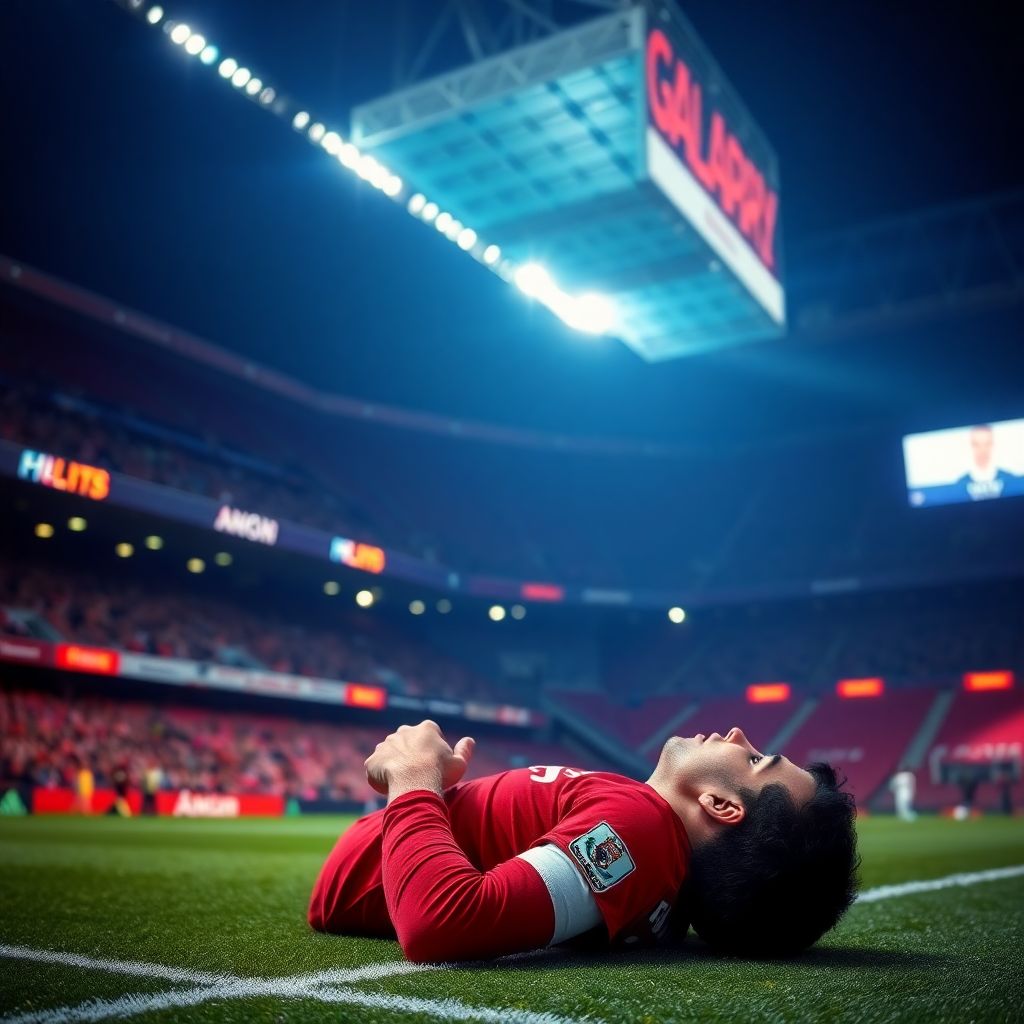
Galatasaray Poised to Sue UEFA After Noa Lang’s Horrific Anfield Injury
Turkish giants Galatasaray are preparing to take UEFA to court after winger Noa Lang suffered a shocking thumb injury during the Champions League encounter against Liverpool at Anfield on Wednesday night.
The match itself ended in a resounding 4-0 win for Liverpool, who cruised into the quarter-finals thanks to goals from Dominik Szoboszlai, Ryan Gravenberch, Hugo Ekitike and Mohamed Salah. Yet the scoreline quickly faded into the background as attention turned to a disturbing incident involving Lang late in the second half.
A “Freak” Collision With LED Boards
The 26-year-old Dutch international was injured in what has been described as a bizarre boundary collision near the byline. As he chased the ball, Lang’s hand became wedged between two advertising hoardings, with the impact causing catastrophic damage to his thumb.
Medical staff rushed onto the pitch, and the winger was stretchered off while receiving oxygen. The severity of the injury required immediate surgery at a local hospital shortly after the final whistle. Early reports indicated that his thumb was almost severed, prompting urgent reconstructive procedures.
Lang’s compatriot and international teammate, Liverpool defender Jeremie Frimpong, gave a chilling account of the moment he learned what had happened.
“When I went to check on Noa, I was told half of his finger had been torn off,” Frimpong said. “He was clearly in an immense amount of pain.”
Galatasaray’s Legal Offensive
Galatasaray’s reaction has been swift and uncompromising. The club is not only demanding financial compensation, but is also seeking to hold UEFA accountable for what it views as an avoidable failure in stadium safety.
The Turkish champions want UEFA to cover Lang’s wages for the duration of his absence, arguing that the accident occurred due to infrastructure under UEFA’s jurisdiction in a Champions League fixture.
Club General Secretary Eray Yazgan confirmed that formal steps had already been taken immediately after the game.
“We lodged a complaint with UEFA representatives right after the match,” Yazgan stated. “They have carried out their own inspections, and the matter is now under evaluation. We are currently working with our legal team to file a compensation claim so that the financial loss relating to the player’s salary does not fall on the club.”
According to local reports, Galatasaray’s legal department is preparing a comprehensive dossier that will include medical documentation, expert assessments of the advertising boards, and testimonies from witnesses and staff present at the scene.
Safety Standards Scrutinized
In the immediate aftermath of the incident, Liverpool personnel were seen closely examining the section of the touchline where Lang was hurt. Initial indications suggest the club and match officials view the event as a freak accident rather than the result of obvious negligence.
However, questions are now being raised about the design and installation of LED advertising boards used in top-level European competitions. Turkish outlets have circulated slow-motion footage showing the exact gap between the hoardings that trapped Lang’s hand, fuelling debate over whether the system meets the highest safety standards for players operating at full speed.
Typically, advertising boards in UEFA competitions must comply with rigorous technical and safety regulations to minimize risk. The Lang incident has renewed calls for a complete review of those guidelines, particularly regarding:
– The spacing and alignment of LED panels
– The padding and flexibility of structures near the touchline
– Emergency access for medical teams in crowded technical areas
If Galatasaray’s lawsuit progresses, it could set a significant precedent, forcing governing bodies and host clubs to reassess how close hard surfaces and electronic equipment are allowed to be to the field of play.
UEFA’s Potential Liability
From a regulatory standpoint, responsibility in such cases can be complex. While hosting clubs are typically in charge of stadium operations and on-site safety, UEFA oversees competition-wide requirements, branding, and advertising layouts.
Galatasaray’s argument is expected to focus on two main pillars:
1. Infrastructure mandated or approved by UEFA – claiming that the specific type or arrangement of the LED hoardings created an unreasonable risk.
2. Duty of care to participating clubs and players – asserting that UEFA must guarantee a safe environment for athletes in all official competitions.
Legal experts suggest that even if the incident is ultimately deemed accidental, UEFA could still face pressure to introduce new protocols or pay a settlement to avoid prolonged litigation. The outcome may influence how future Champions League and Europa League matches are staged, especially in older stadiums undergoing modernization.
The Human Cost: Lang’s Recovery and Galatasaray’s Season
Beyond the legal and financial aspects, Lang’s injury is a heavy blow for Galatasaray on the pitch. The winger has been a pivotal figure in their attacking system, providing pace, creativity, and a direct threat from wide areas.
The club has not provided a precise timeline for his return, as the extent of nerve and tissue damage will only become fully clear in the coming weeks. Thumb and hand injuries can be particularly delicate for footballers, affecting balance, falls, and physical duels, even if they do not directly involve the feet. Rehabilitation is likely to be lengthy and carefully managed.
In tactical terms, Galatasaray will now be forced to reshuffle their forward line. Options include pushing an existing central attacker out wide, giving more minutes to younger wingers, or looking to the transfer market if the window allows for emergency reinforcements in upcoming periods. For a team fighting on multiple fronts domestically and in Europe, losing a starter of Lang’s calibre could have ripple effects across their campaign.
Lang’s Response: Resilience Amid Trauma
Despite the severity of the trauma, Lang adopted a surprisingly defiant tone in his first public message after surgery. Posting a photo from his hospital bed, he accompanied it with a blunt “s*** happens” remark, while expressing gratitude to those who had sent messages of support.
His reaction has been widely interpreted as a sign of mental resilience, suggesting he is determined to return stronger rather than dwell on the misfortune. Inside the club, coaches and teammates are said to be rallying around him, emphasising that his long-term health comes before any sporting concerns.
Psychologically, such a grim and painful injury can be just as challenging as the physical recovery. Clubs at this level often provide sports psychologists and specialist staff to help players cope with trauma, anxiety about returning to contact situations, and frustration during rehabilitation. Galatasaray is expected to offer Lang full support in all these areas.
Wider Debate: Player Safety in Modern Football
This incident has intensified an ongoing conversation about player safety in elite football. In recent years, attention has mostly focused on concussion protocols, fixture congestion, and pitch quality. Lang’s injury has turned the spotlight toward the often-overlooked surroundings of the playing surface.
Many stadiums have embraced high-tech LED advertising systems to increase commercial revenue, enhance broadcast visuals, and support dynamic branding. Yet the push for more digital infrastructure around the pitch has raised questions about whether revenue considerations are overshadowing player welfare.
Some former players and analysts have already suggested several reforms:
– Increasing the minimum distance between hoardings and the white lines
– Mandating rounded edges and additional cushioning in high-speed zones
– Introducing standardized crash-testing for all pitch-side equipment
– Requiring independent safety audits before major European fixtures
If governing bodies take these proposals seriously, Lang’s injury could become a turning point that leads to stricter, more player-centric regulations.
Impact on Liverpool and the Competition Narrative
For Liverpool, the result against Galatasaray was one of their most commanding European performances of the season. Yet the injury and subsequent controversy have inevitably overshadowed the victory. Post-match discussions that might otherwise have focused on tactical brilliance or individual displays were instead dominated by replays of the incident and debates over stadium safety.
As Liverpool prepare for a blockbuster quarter-final tie against reigning European champions Paris Saint-Germain, they do so under a cloud of scrutiny that has little to do with their sporting form. UEFA, too, will be wary that the Lang case could dominate headlines in the weeks leading up to those high-profile fixtures, distracting from the competition’s showpiece narrative.
Financial and Insurance Dimensions
From a club management perspective, Galatasaray’s insistence that UEFA pay Lang’s wages highlights a broader financial concern each time a serious injury occurs in international or European competition. Top clubs commonly insure their players, but policies often involve complex conditions, caps, and exclusions.
Galatasaray is effectively arguing that the economic burden of an injury caused by competition infrastructure should not fall solely on the club. Should their claim succeed-or even lead to a negotiated settlement-it could push UEFA to clarify or expand its compensation mechanisms for catastrophic injuries occurring in its tournaments.
This might also encourage clubs to re-examine their own insurance coverage, particularly regarding injuries linked to external factors beyond normal match contact, such as equipment failures or environmental hazards.
What Comes Next
In the immediate term, three parallel processes are likely to unfold:
1. Medical and sporting – Lang’s recovery plan will be finalized, and Galatasaray’s coaching staff will adapt their tactics and squad rotation to cope with his absence.
2. Legal and administrative – Galatasaray’s lawyers will formalize their lawsuit, while UEFA’s legal team prepares a defence and conducts internal reviews of safety standards.
3. Regulatory and structural – Discussions may begin within UEFA about potential adjustments to pitch-side equipment rules, even before any court judgment is reached.
For now, the exact date of Noa Lang’s return to action is unknown, and Galatasaray face a challenging period without one of their key attackers. But the consequences of his “gruesome” injury may extend far beyond a single player or club, potentially reshaping how player safety is protected-and legally enforced-on the biggest stage of European football.