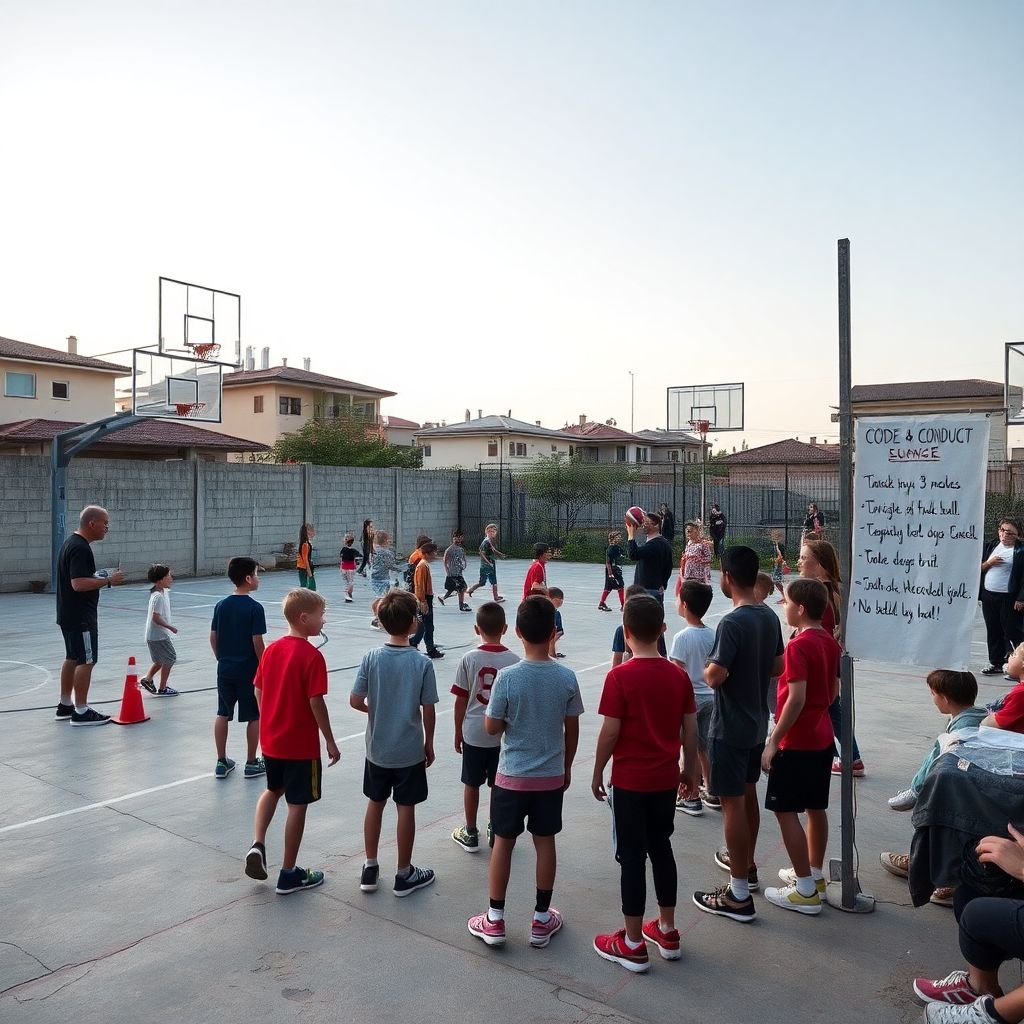
Grassroots basketball in Anatolia isn’t just about jump shots and layups; it’s become a very practical way to change how kids think about themselves, their future, and even their hometowns. If you’re wondering how to actually build something like that—or plug into what already exists—this guide walks you through the nuts and bolts, not just big ideas.
We’ll look at what you really need to start, how to structure daily work with kids, and what to do when things go wrong (because they will).
—
What Makes Grassroots Basketball So Powerful in Anatolia
In many Anatolian towns, there’s not a lot of structured after‑school activity: maybe a small football pitch, a schoolyard, and that’s it. Grassroots basketball programs fill that gap with something deceptively simple: a ball, a hoop, and a repeatable routine. But the impact is bigger than any single practice session.
These youth basketball programs in Anatolia are essentially micro “labs” for life skills. Kids learn to show up on time, listen, give and receive feedback, deal with losing, and support teammates from different backgrounds. It’s not theory. It’s drilled into them every Tuesday and Thursday at 17:00.
—
Necessary Tools: What You Actually Need to Start
You don’t need an NBA-level arena to launch a meaningful program. You do, however, need a clear minimum setup. Think of it in three layers: physical gear, human resources, and structure.
Long story short: get the basics right, and you can run surprisingly effective basketball training camps in Turkey even in modest conditions.
• Physical gear
– 6–12 basketballs (size 5 for younger kids, 6 or 7 for teens)
– At least one usable court (schoolyard, municipal court, even an old parking lot with lines)
– 2–4 portable rims or fixed hoops (regulation height if possible, but lower for younger ages is fine)
– Cones, floor markers or even plastic bottles for drills
– Simple first‑aid kit and drinking water access
• Human resources
– 1–3 committed volunteer coaches or PE teachers
– 1 coordinator (can be a coach) to handle schedules, parents, municipality contact
– A few older players or local youth leaders to help with warm‑ups and peer mentoring
• Structure and admin
– Basic attendance sheet (paper or Google Sheets)
– Written code of conduct for players, parents, and coaches
– Permission forms and emergency contacts
– Simple season plan: dates, age groups, and target skills
Grassroots basketball academies in Turkey that survive beyond one season usually have these three layers handled. The gear can be second‑hand; the structure cannot.
—
Step‑by‑Step: Building a Grassroots Program That Actually Works
Let’s go through a realistic process, assuming you’re starting in a mid‑sized Anatolian town with limited budget but some school or municipal support.
1. Map the local ecosystem
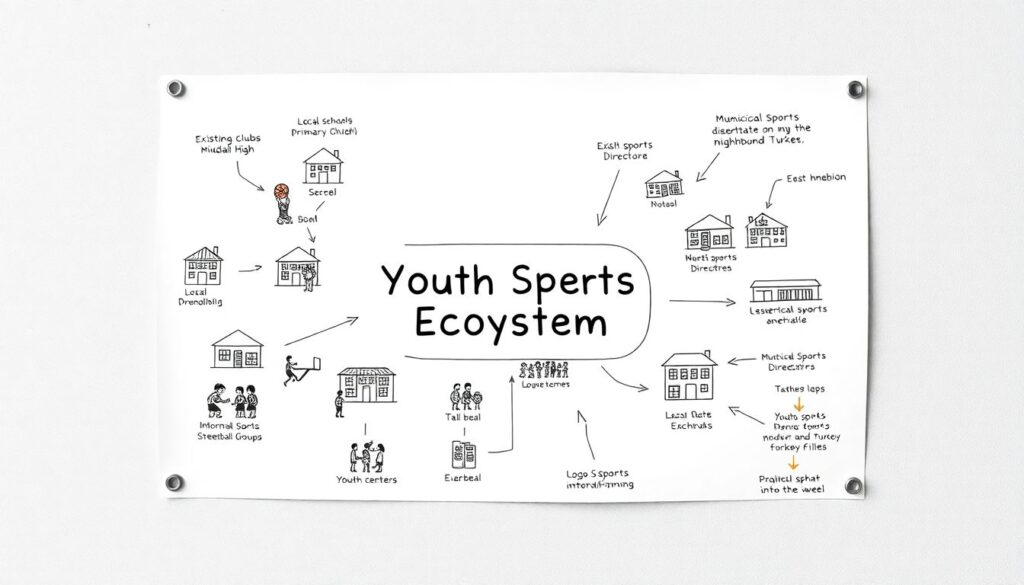
Start by mapping what already exists instead of reinventing the wheel. Identify:
– Local schools (primary, middle, high)
– Existing clubs or informal “streetball” groups
– Municipal sports directorate and youth centers
– Any youth sports development programs in Turkey that already have outreach in your province
Have short, focused conversations:
“Do you already have basketball? How many kids show up? What’s missing?”
You’re collecting constraints and opportunities: free court time, potential coaches, and real demand.
—
2. Define your target group and goals
Don’t try to serve “everyone” on day one. Pick a narrow group, for example:
– Boys and girls aged 10–13 who have no club experience
– Teenagers 14–17 at risk of dropping out of school
– Mixed‑ability after‑school group from one specific school
Set 2–3 concrete goals for the first season. For example:
– 20 regular participants with at least 70% attendance
– Every player can execute a basic layup with both hands
– One local 3×3 event with parents as spectators
These goals keep the project grounded and measurable rather than vague “development.”
—
3. Secure space, schedule, and permissions
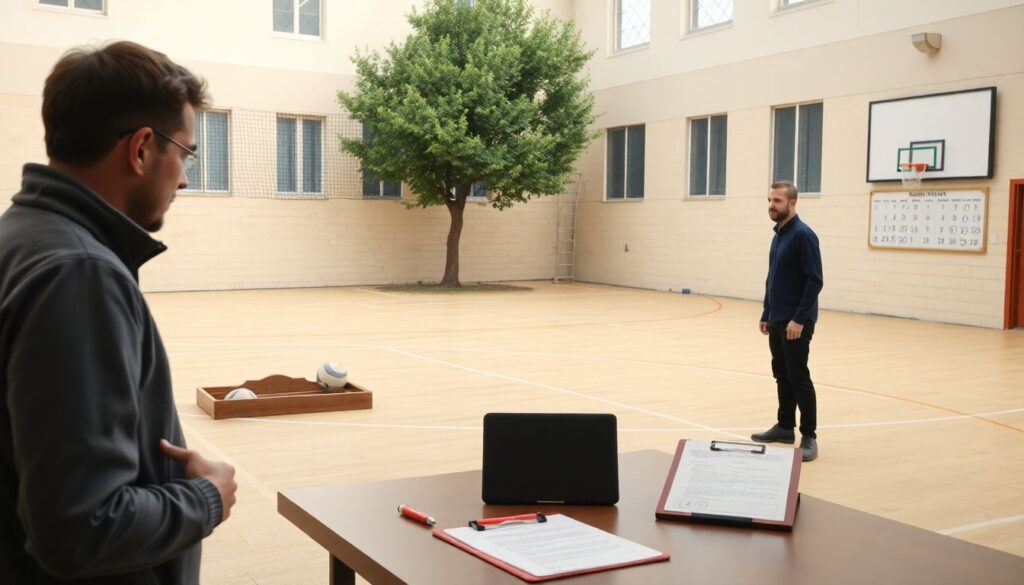
In Anatolia, the most practical starting point is usually a school court or municipal sports hall. Negotiate:
– Fixed weekly slots (e.g., Mon–Wed–Fri from 16:30 to 18:00)
– Storage space for balls and gear
– Written permission from the school or municipality
Lock in the schedule early. Consistency is a form of respect—for kids and for parents planning their day.
—
4. Design a simple practice template
You don’t need 100 different drills. You need a repeatable, well‑structured 60–90 minute practice that you can adapt on the fly.
Here’s a practical template you can reuse:
– 0–10 min: Arrival & warm‑up
Light jogging, dynamic stretches, fun tag game with the ball.
– 10–25 min: Ball‑handling basics
Stationary dribbling, change of direction, control with both hands.
– 25–40 min: Passing & spacing
Partner passing, 3‑player weave, learning to use the whole half‑court.
– 40–60 min: Finishing & decision‑making
Layup lines, 1‑on‑1 from the wing, simple pick‑and‑roll reads (for older kids).
– 60–75 min: Small‑sided games
2×2, 3×3, or constrained 4×4 where you emphasize one theme (e.g., “extra pass” only).
– Last 5–10 min: Cooldown & reflection
Stretching, quick group chat: “What did we learn today? Who helped a teammate?”
The key is to have a fixed skeleton with flexible content. Kids know what to expect, but it never feels stale.
—
How to Use Coaching Education Without Losing the Grassroots Soul
Many community leaders are ex‑players or PE teachers, but not all are trained coaches. To improve quality without becoming “over‑professional,” plug into existing basketball coaching courses in Turkey.
Look for courses that emphasize:
– Long‑term player development instead of early selection
– Age‑appropriate workload and injury prevention
– Communication skills and positive discipline
Then translate what you learn into simple daily habits:
– Limit lines and waiting time: more touches per kid
– Replace shouting with clear, short instructions and visual demos
– Use questions: “What could you try next time?” instead of only commands
This blend—formal knowledge plus local reality—is what makes community programs both safe and impactful.
—
Practical Ways These Programs Change Lives Day‑to‑Day
The “life‑changing” part can sound dramatic until you break it down into practical shifts you can actually observe.
In a typical Anatolian grassroots setting, you’ll often see:
– Kids who used to go straight home now staying active 3x per week
– Quieter children starting to give instructions in drills
– Parents who never attended school meetings showing up for games
The gym turns into neutral ground: village and town kids on the same team, Syrian and Turkish players sharing passes, girls earning respect via effort and skill. It’s social mixing backed by a whistle and a shot clock.
Over time, the structure of the program gives kids a different daily rhythm: less time in internet cafés, more time with a coach holding them accountable for being on time, wearing proper shoes, and treating peers decently.
—
Running Seasonal Camps and Events That Actually Develop Skills
Beyond weekly practices, short, intense events can accelerate growth. Well‑run basketball training camps in Turkey, even at local level, usually create three benefits: concentrated learning, exposure to new coaches, and a boost in motivation.
You can design a simple 3‑day camp like this:
• Day 1: Fundamentals & assessment
– Morning: ball‑handling, footwork, shooting form checks
– Afternoon: small‑sided games to see decision‑making
• Day 2: Role focus
– Morning: guards vs. bigs skill stations (but rotating so no one gets labeled permanently)
– Afternoon: themed scrimmages (e.g., “every possession must start with a pass”)
• Day 3: Competition & celebration
– Morning: shooting and skills challenges
– Afternoon: short tournament, informal awards, parents invited
Link the camp to your regular practices: each participant leaves with 2–3 specific things to work on in the next month.
—
Integrating with Wider Youth Sports Development
Grassroots basketball doesn’t need to operate in isolation. Many youth sports development programs in Turkey focus on multi‑sport exposure, nutrition education, or academic support. The trick is to connect your local program to these larger initiatives without drowning in bureaucracy.
Practical moves:
– Invite a nutritionist or local nurse once per season to talk about sleep and food, not supplements
– Coordinate with school counselors to keep an eye on kids at academic risk
– Join regional tournaments or festivals organized by federations or NGOs
This way, a small court in an Anatolian town becomes a doorway into a broader support system—for both sport and personal growth.
—
Troubleshooting: Common Problems and Practical Fixes
Things will go wrong. The difference between a short‑lived project and a lasting one is how you respond. Here are typical issues and straightforward ways to tackle them.
—
Problem 1: Irregular attendance
Kids disappear for weeks, then show up randomly. Skills don’t progress, and team cohesion suffers.
What to try:
– Use a visible attendance board or simple wall chart so kids see their own track record
– Call or message parents after two missed sessions: “Is everything okay? We’d love to see them back.”
– Add small rewards for consistency: participation certificates, team captain for the day, etc.
Attendance isn’t just a number; it’s a habit. You’re teaching reliability, not just basketball.
—
Problem 2: Not enough qualified coaches
Many Anatolian communities have only one experienced coach and several well‑meaning volunteers. The quality gap becomes obvious.
Practical fixes:
– Create a “coach in training” pathway for older players (16–18 years old)
– Share session plans and drill explanations via WhatsApp so volunteers feel prepared
– Rotate volunteers through specific, simple tasks first: warm‑up, managing a station, keeping score
Over time, some of these volunteers will be ready for more formal basketball coaching courses in Turkey, which strengthens the local pipeline of coaches.
—
Problem 3: Limited facilities and bad weather
Outdoor courts, rain, snow, or summer heat can disrupt schedules.
Options:
– Negotiate backup slots in a school gym or community center
– Develop “micro‑sessions” you can run indoors in a classroom: footwork, game theory, video breakdowns
– Use seasonal planning: more conditioning and outdoor games in spring/autumn, more classroom learning or light indoor drills in winter
The point is to maintain rhythm even when you can’t run full‑court practices.
—
Problem 4: Conflict between players or with parents
Tension is inevitable—over playing time, rough fouls, or cultural differences.
Try this approach:
– Set clear rules from day one: no insults, respect for referees, no interference from parents during practice
– When conflict happens, pause the drill, address the behavior (not the person), and restart
– Involve parents in positive ways: invite them to watch, help with logistics, or referee friendly games
You’re modeling how to handle disagreement with boundaries and respect, which might be the most valuable skill kids take away.
—
Measuring Impact Without Getting Lost in Paperwork
You don’t need complex data systems to know if your program is working. A few simple indicators, tracked regularly, are enough:
– Attendance rate: Who shows up consistently over 6–12 months?
– Skill snapshots: Short tests every 3 months (layups, basic dribbling, passing accuracy).
– School feedback: Ask teachers informally about kids’ behavior and focus.
– Player voice: Quick written or verbal check‑ins—“What do you like? What should we change?”
Grassroots basketball academies in Turkey that consciously track these basics can show real progress to municipalities, sponsors, or NGOs without drowning in admin.
—
Turning a Local Court into a Lifelong Launchpad
When done with intention, grassroots basketball in Anatolia is more than a pastime. It’s a low‑cost, high‑impact system that teaches routines, responsibility, and resilience in a language kids actually enjoy—games, competition, and belonging.
If you focus on the essentials—simple tools, clear structure, consistent coaching, and honest troubleshooting—you don’t just teach pick‑and‑rolls. You give young people a daily environment where effort matters, respect is enforced, and improvement is visible.
That’s how a cracked concrete court in a small Anatolian town quietly becomes a place where lives start to bend in a different direction.