Why These New Basketball Rules Matter More Than You Think
If you follow Turkish or European hoops, you’ve probably heard plenty of noise about basketball rule changes 2024 Turkish league discussions, FIBA tweaks, and how the NBA keeps nudging the game in a faster, more offense‑heavy direction. Instead of just shrugging and memorizing a few new whistle triggers, it’s worth treating these updates like a small software patch to the entire sport: they change the “operating system” behind coaching, player development, scouting, and even how fans interpret stats and results. In this article we’ll break down what’s changing, why it’s changing, how it re‑wires Turkish and international leagues, and what unusual tactics smart teams can use to exploit the gaps before everyone else catches up.
Key Terms You Actually Need to Understand
Core Vocabulary Behind the New Rules
Before diving into the effects, it helps to lock in a few precise definitions. That way, when you hear about a “transition take foul” or “semi‑circle contact,” you know exactly what that means in practice and how it alters a defender’s risk calculus. Think of this as a tiny glossary tailored to the current wave of changes rather than a generic rulebook summary, with an emphasis on how each term affects game flow, spacing, and advantage creation in Turkish and international leagues rather than just how it’s written in the handbook.
– Transition foul / take foul – A non‑basketball play (usually grabbing or wrapping) by a defender to stop a fast break when the offense has a clear advantage, typically now penalized by free throws plus possession, turning what used to be a “smart foul” into a costly bailout.
– Unsportsmanlike foul (FIBA) – A foul classified as excessive, dangerous, or purely tactical, with strict FIBA criteria (no legit play on the ball, contact from behind on a fast break, etc.), often resulting in two shots and possession and strongly shaping how defenders gamble in space.
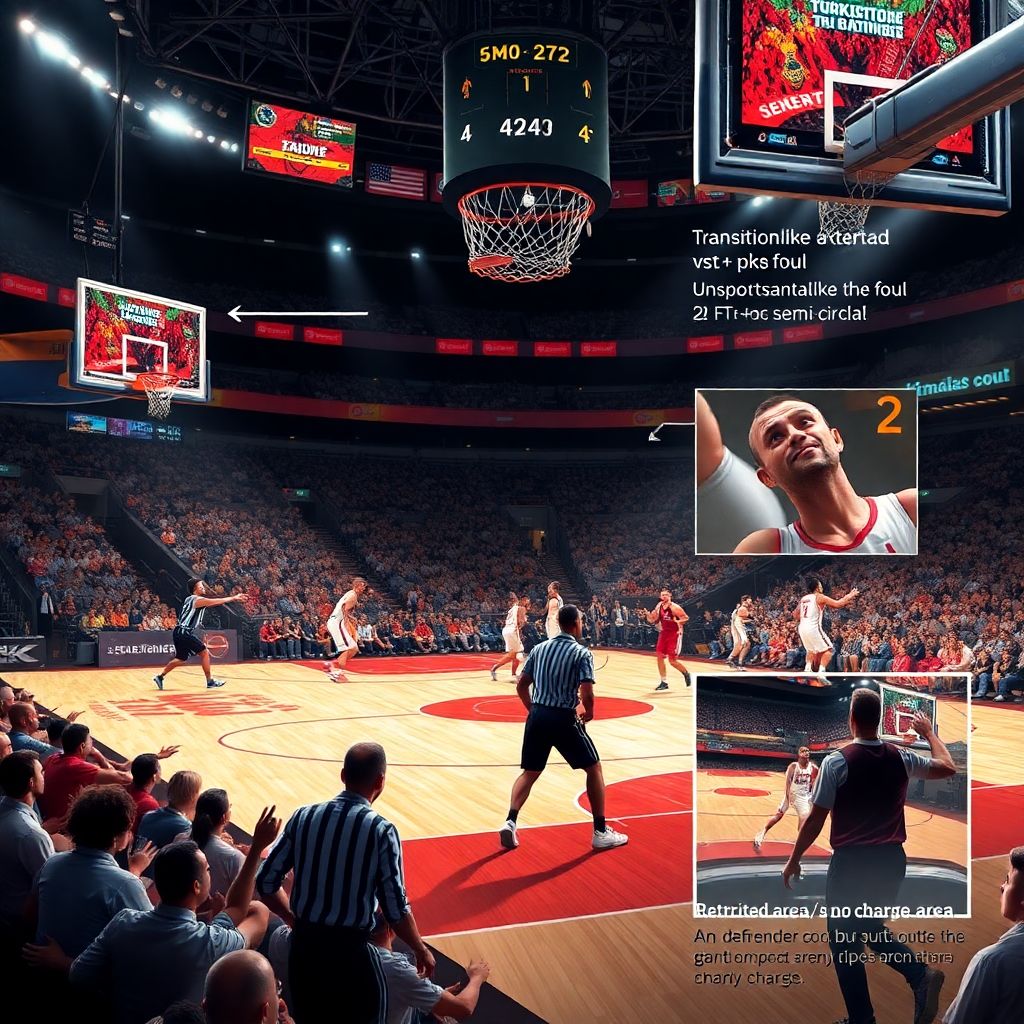
– Restricted area / no‑charge semi‑circle – The painted arc under the basket where defenders cannot legally draw a charge if they are inside it; small changes in its radius or interpretation dramatically shift rim protection techniques and how bigs position their feet.
– Coach’s challenge / instant replay – Formalized mechanisms for reviewing calls, often limited in number and scope, that can swing possessions, clutch free throws, and momentum, especially in tight playoff or EuroLeague games.
– Shot clock reset variants – Different leagues now reset to 14 seconds (not 24) after an offensive rebound, loose ball foul, or certain violations, accelerating decision‑making and rewarding teams that can execute quick-hitting sets rather than lumbering into full plays.
Simple Text Diagrams to Visualize the Changes
To keep this technical but not dry, picture a few basic diagrams in your head. No fancy graphics, just mental sketches that clarify what’s actually moving on the floor when rules change. Imagine each diagram as a tiny “debug view” of basketball: we strip away the noise to see how positions, lines, and angles adjust when FIBA or Turkish leagues tweak their specs, allowing you to anticipate where future advantages will appear before they show up on the stat sheet.
– Diagram 1 – Restricted Area Impact
Think of the key as a rectangle. At the bottom, draw a semi‑circle touching the baseline:
`Baseline`
`) ( semi‑circle under the rim`
Now imagine a defender with one foot inside the arc, one outside. Change the diameter by 10–20 cm and you change whether that defender is legally allowed to sacrifice his body for a charge or must instead jump vertically, and that small geometric shift alters entire defensive schemes, help timings, and the scouting report for attacking guards.
– Diagram 2 – 14‑Second Reset Off Offensive Rebound
Place five offensive circles “O” around the three‑point line, and five defenders “X” in man‑to‑man:
`O O O O O` vs `X X X X X`
After an offensive rebound, instead of spreading into a full 24‑second set, imagine those O’s collapsing tighter, two setting a quick stagger screen, while the ball stays in the same side. That compressed “micro‑possession,” forced by the 14‑second reset, becomes the new normal and demands a very different playbook.
FIBA’s New Rules and Their Ripple Effect on International Leagues
What FIBA Is Trying to Achieve
FIBA’s goal with its latest round of updates is fairly consistent: faster pace, better spacing, fewer ugly stoppages, and clearer penalties for dangerous or purely tactical fouls. When people talk about FIBA basketball new rules impact on international leagues, they’re really talking about how those philosophical levers—speed, safety, and offense‑defense balance—translate into actual coaching decisions. By tightening definitions for unsportsmanlike fouls, cleaning up transition take fouls, and clarifying contact in the air, FIBA is pushing teams toward a more open floor game where athleticism and quick reading of advantages matter more than grabbing or bumping your way to a stop.
Practical Effects: From Theory to the Box Score
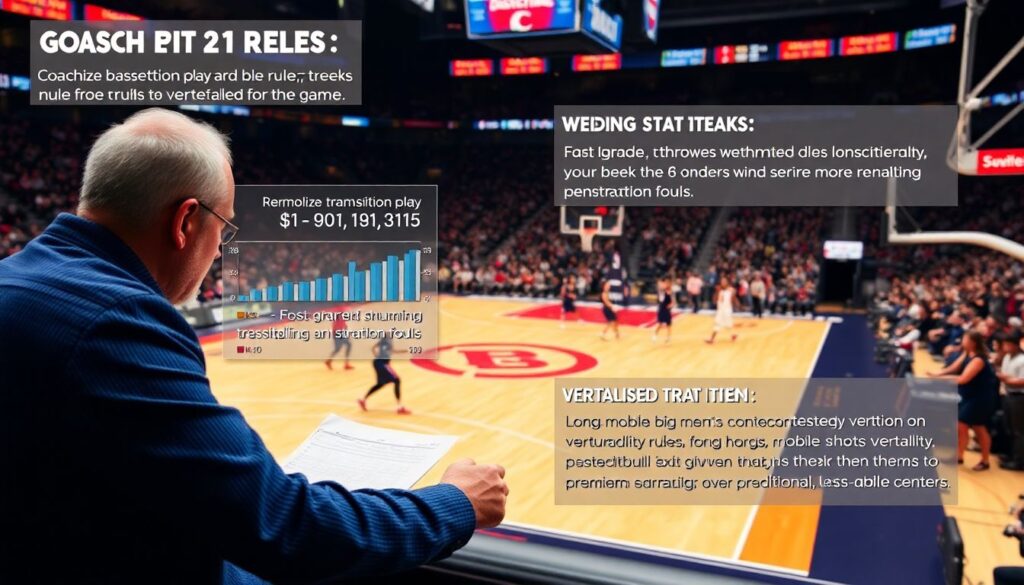
These tweaks don’t just live in the rulebook; they show up directly in the stat sheet and the type of players who get minutes. More severe penalties on transition fouls reward squads that can run lanes and throw long hit‑ahead passes. Clarified verticality rules give long, mobile bigs a premium over slower bruisers who used to rely on heavy contact in the paint. Combined with shot‑clock reset rules, this pushes pace without needing an explicit “increase possessions” mandate, nudging coaches to use more multi‑skill forwards, switchable lineups, and shorter, more intense defensive shifts. Over a season this subtly rewrites what “a modern FIBA rotation” looks like and which domestic prospects can realistically transition to EuroLeague or the NBA.
How NBA and FIBA Changes Filter into Turkish and European Basketball
Cross‑Pollination: NBA vs FIBA Logic
The ongoing conversation about how NBA and FIBA rule changes affect European basketball is more than a talking point on broadcasts; it’s a real feedback loop. The NBA’s crackdown on take fouls and “non‑basketball” contact in the perimeter has pushed FIBA to refine its own standards, while FIBA’s emphasis on strict interpretations and unified international guidelines nudges NBA scouts and coaches to consider how their players will function under different whistle patterns. For Turkish and European leagues, this means players are living in a hybrid ecosystem: domestic games follow FIBA logic, elite players see EuroLeague variations, and anyone with NBA aspirations needs to understand a third, slightly different environment. That mixture shapes training camps, conditioning plans, and even how young guards are taught to hunt or avoid contact.
Specific Transmission into Turkish Leagues
When people mention basketball rule changes 2024 Turkish league discussions, they’re really describing how the Turkish Basketball Super League and related competitions are aligning with updated FIBA standards while also responding to EuroLeague expectations. Turkish teams that regularly appear in European competitions are under pressure to maintain tactical consistency: the way they defend pick‑and‑rolls, transition, or paint touches in domestic play has to be portable to EuroLeague or Champions League games. That leads to a subtle homogenization: more 14‑second reset‑ready sets, more stress on early offense, and less tolerance for defenders who pick up cheap unsportsmanlike fouls in the open court, because those whistles become even more expensive in continental play.
Turkish Airlines EuroLeague: Where Rule Tweaks Become Strategy
Why EuroLeague Is the Laboratory
If you enjoy deep dives, Turkish Airlines EuroLeague rule changes analysis is almost like watching high‑end A/B testing in real time. Minor timing changes, instant‑replay usage, and technical interpretations are dissected by some of the smartest coaching minds in the world. EuroLeague sits between strict FIBA rules and the NBA’s entertainment‑driven logic, so when it tweaks interpretations of unsportsmanlike contact, flopping warnings, or bench conduct, you can often forecast what other European competitions will gradually normalize. Coaches in Turkey, Spain, and beyond scout not just players, but also how referees apply those standards in crunch time, then bake that into game scripts for their domestic leagues.
New Tension Points for Coaches
EuroLeague’s blend of physicality and stricter safety rules produces interesting dilemmas. For example: do you instruct wings to foul early in transition to prevent a dunk, risking an unsportsmanlike call and a two‑plus‑ball scenario? Or do you rely on your rim protectors and live with a few more high‑percentage shots? The increased value of every possession in tight EuroLeague games magnifies these choices. As instant replay and coach’s challenges grow more precise, timeouts and challenges effectively become part of a “resource management” game inside the game, demanding that staffs track not just fouls and timeouts but also challenge equity and potential swing value during high‑leverage possessions.
Concrete Changes Affecting Turkish and International Play
1. Transition Fouls and the Death of the “Smart Grab”
For years, wrapping a ball‑handler on a fast break was considered a practical, almost automatic choice—give up a sideline out-of-bounds instead of a dunk. With new interpretations, that habit is being taxed heavily. In many Turkish and FIBA competitions, grabbing a player with a clear scoring advantage now leads to free throws and continued possession, completely reversing the expected value of that decision. Turkish teams that relied heavily on “professional fouls” to stop runs are discovering that these same tactics now accelerate their opponents’ momentum and scoring, forcing a re‑education of defensive instincts at every level from youth to pros.
2. Shot‑Clock Resets and the New Micro‑Possession
The 14‑second reset after offensive rebounds and certain fouls looks tiny on paper, but it changes the real geometry of a possession. Instead of a reset into a full traditional offense, teams must compress creation into a shorter window: quick re‑screens, immediate post seals, or a rapid “re‑drive” from the same side. International leagues adopting or aligning with this principle are moving away from pure set‑play basketball toward layered concepts: actions that can be sequenced rapidly on top of each other, without starting from a dead stop. For Turkish teams, that means training a second shot‑creation rhythm: the first plan for the initial action, and a second, shorter menu for the reboot after an offensive rebound.
3. Restricted Area, Verticality, and Big Men’s Evolution
Subtle clarifications around the restricted area and verticality rules are reshaping what a “traditional center” can get away with. Feet placement relative to the semi‑circle, the timing of jumps, and whether arms go straight up or out now define the line between a great contest and a costly whistle. International refs are increasingly punishing bigs who slide in late under airborne players, while rewarding those who establish early position and contest vertically. For Turkish and European bigs this means learning almost “gymnast-like” body control: controlled jumps, chest‑to‑ball contests, and a shift from hunting charges to blocking or altering shots with minimal lateral movement at the last second. Over a few seasons, that pushes rosters toward taller, lighter, more agile frontcourt players at the expense of pure mass.
Nonstandard Tactical Responses Teams Can Use Right Now
Unusual Offensive Tweaks
Coaches who treat rule changes as a design challenge, not an annoyance, can cook up some genuinely unconventional solutions. Instead of simply running old systems faster, they can build entirely new offensive layers that exist only because of the updated rule environment. Here are a few practical but less common ideas that fit particularly well in Turkish and FIBA contexts where spacing and physicality must coexist:
– Design “14‑Second Packages” – Create a micro‑playbook used only after offensive rebounds: two or three pet sets your players can flow into automatically without looking at the bench, with simplified reads (shoot, attack, or swing) to maximize the compressed shot clock.
– Intentional Rim “Misses” in Late Clock – On some end‑clock plays, train players to choose shots that have a high offensive rebound probability (soft bank, short corner pull‑up) rather than just raw efficiency, since a miss with a live rebound and 14 seconds becomes a disguised two‑step possession.
– Pre‑Planned Transition Layers – Teach wings to run defined lanes not just on the first break, but also immediately after a defensive stop following a coach’s challenge or review, turning long pauses into ambush fast breaks while opponents mentally reset.
Unusual Defensive Adjustments
Defensively, teams need to abandon the old idea that “a foul to stop the break is always smart.” The cost‑benefit math has changed, especially in leagues that punish unsportsmanlike contact harshly. That invites more creative, less obvious counter‑solutions that still blunt transition without eating free throws and lost possessions. Consider these non‑orthodox ideas that match the modern whistle:
– “No‑Grab” Transition Rule – Implement a strict team rule that in the backcourt players either wall up early or commit a fully legitimate play on the ball, with video feedback sessions where every borderline foul is reviewed to train instincts and avoid automatic reaches.
– Foul Early in the Halfcourt, Not on the Break – If you foresee a mismatch or run brewing, teach veterans to commit a soft, legitimate foul during a dead‑ball baseline or sideline inbound instead of desperate grabs in the open floor.
– Hybrid Zone/Matchup on Offensive Rebounds – When the opponent secures an offensive board, some teams immediately switch into a compact, low‑help shell to kill off quick 14‑second plays, making the second chance feel more like a late‑clock isolation than a free-flowing re‑attack.
Data, Scouting, and Even Betting: Off‑Court Consequences
Analytics Departments Have to Recalibrate
When possession structures and foul values change, your spreadsheets lie if you don’t adjust them. Expected points per possession, foul rates, and offensive rebound value all shift. Teams that integrate tracking data from Turkish and international leagues can now build specific models for micro‑possessions, transition fouls, and unsportsmanlike risk. Those models, in turn, inform rotation choices: who can survive in late‑game situations without gifting unsportsmanlike free throws, who converts the most second‑chance opportunities in a 14‑second window, and which lineups produce the cleanest transition defense without grabbing, holding, or reaching. Ignoring the rules layer in analytics is like ignoring weather in outdoor sports; it’s part of the context, not a side note.
Impact on Odds, Markets, and Fan Perception
Outside the locker room, professional basketball rule updates 2024 and betting odds are more connected than many fans realize. As pace, foul rates, and offensive efficiency move, so do totals, spreads, and live in‑game numbers. A league that sharply penalizes take fouls will see more fast‑break points and potentially higher variance in scoring runs. Early in a rule cycle, markets can misprice those swings, which is why serious analysts model not only team quality but also whistle environment. For spectators, understanding the logic behind a late unsportsmanlike or a quick 14‑second action makes watching Turkish or EuroLeague games far more coherent: you stop thinking “Why did he foul there?” and start asking “Given these rules, what was the least harmful choice?”—a much sharper lens for appreciating high‑level basketball.
How Turkish and International Leagues Can Stay Ahead of the Curve
System‑Level, Not Patch‑Level Thinking
Rule changes are not isolated patches; they’re pushes in a particular direction. For Turkish leagues and other international competitions, the smartest response is not to chase each amendment separately, but to design an overall playing and development philosophy that anticipates the next five to ten years: more speed, more space, stricter safety, and higher punishment for tactical fouls. That might mean reorganizing youth programs to focus on decision‑making in short clocks, training bigs for vertical contests from day one, and educating coaches to think probabilistically about fouls, challenges, and possessions rather than working off old “rules of thumb” that no longer map to the actual rulebook. When administrators, coaches, and players align around that mindset, every new FIBA bulletin becomes an opportunity to steal an edge rather than a headache.
Practical Next Steps for Teams and Federations
To convert all this theory into action, Turkish and international organizations don’t need massive budgets; they need disciplined experimentation. Film rooms can tag every transition foul and second‑chance possession. Practices can include dedicated “14‑second segments” and live‑ball scrimmages with strict no‑grab rules. Federations can produce short video explainers that connect rules to game logic, rather than just listing text updates. If each level of the pyramid—from youth academies to EuroLeague contenders—absorbs these shifts consciously, future rule waves will feel like smooth refinements instead of yearly revolutions, and the clubs that embraced that mindset first will quietly stack competitive advantages season after season.