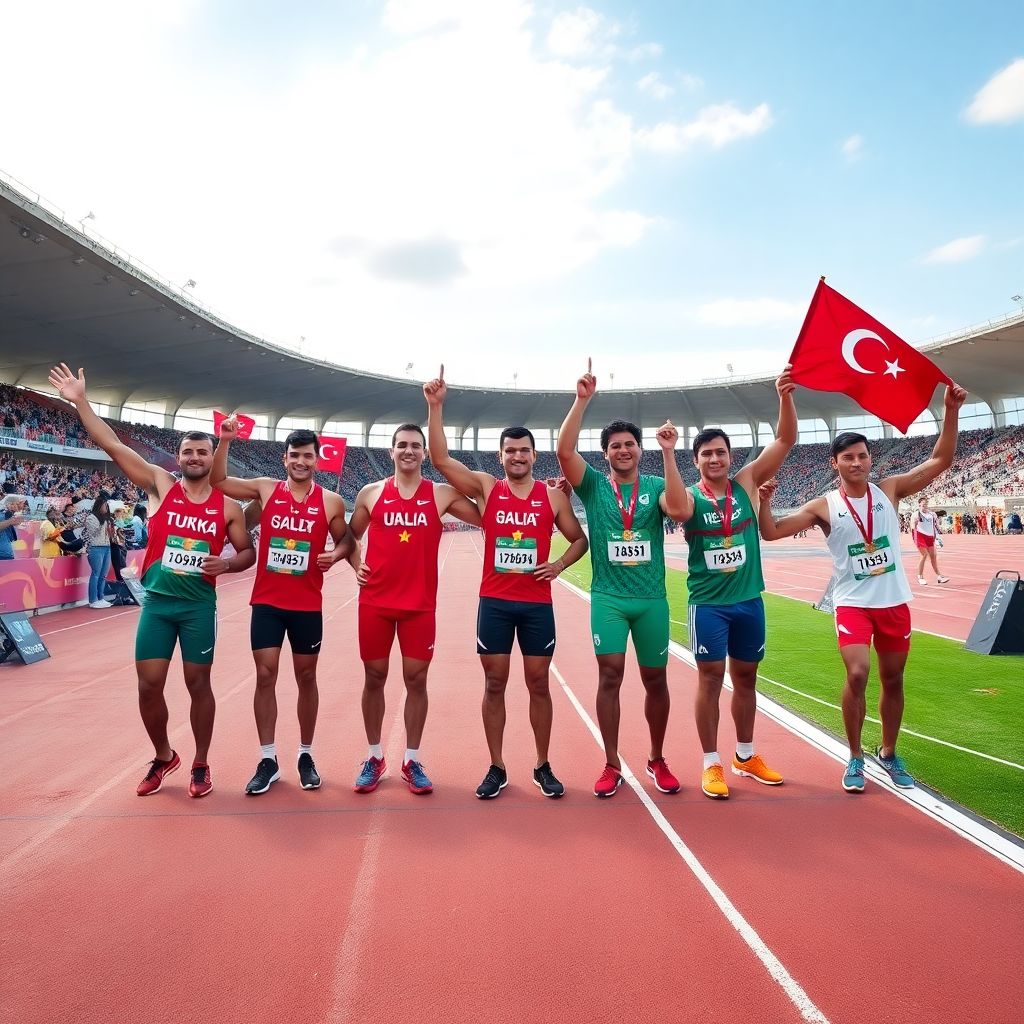
Turkish track and field athletes are increasingly visible at European and world level thanks to stronger youth systems, targeted investment in sprint and middle-distance events, and smarter international competition planning. Consistent medals, national records, and presence in global finals show that Turkey has moved from regional participant to credible contender in several athletics disciplines.
Executive snapshot: Turkey’s ascent in international track and field
- Modern Turkish athletics combines state-backed sports schools, club systems, and regional camps to locate and develop raw speed and endurance talent.
- Focus disciplines include sprints, middle distance, race walking, and selected throws, where medal chances and ranking jumps are realistic.
- Turkey athletics national team stars benefit from better coaching education, sports science support, and upgraded tracks and indoor facilities.
- Strategic use of European circuits, plus careful foreign training camps, helps athletes adapt to global competition standards and travel demands.
- Governance, anti-doping culture, and long-term funding stability will determine whether recent successes become a sustainable, clean legacy.
- Simple performance-check algorithms now guide athletes and coaches when comparing results with qualification standards and record lists.
Historical trajectory: how Turkish athletics reached the global stage
Modern Turkish athletics refers to the organised system that develops, selects, and fields Turkish track and field athletes in national and international competition. It covers grassroots running in schools, professional club structures, national team selection, and participation in European Championships, World Championships, and the Olympic Games.
Historically, Turkey was better known for wrestling and weightlifting, while track and field had only isolated successes. Gradually, improved stadium infrastructure, university programs, and military sports clubs created wider access to training tracks and coaching. This enabled more systematic identification of speed, power, and endurance talents across the country.
Over the last two decades, international exposure has increased rapidly. Turkish athletes moved from occasional appearances to regular qualification for semifinals and finals at major championships. Famous Turkish Olympic runners and race walkers became role models, giving younger athletes a clear picture of what world-class performances look like and how to plan a long career.
At the same time, the federation refined its focus. Instead of trying to be average in every event, strategy shifted toward disciplines where genetic profiles, geography, and existing expertise aligned. This selective approach made it easier to plan medal projects, set realistic targets, and monitor Turkish track and field records and results in a structured way.
Talent identification and youth pathways: structures producing elite competitors
Turkish athletics now relies on several linked mechanisms to transform raw potential into international performers. The goal is to catch talent early, offer age-appropriate competition, and then gradually narrow the pyramid toward elite levels while keeping education and health in balance.
- School and community running programs: PE teachers and regional festivals highlight children with unusual speed or endurance. Basic time trials on 60-100 m, 600-1000 m, and simple jumping tasks filter the first layer of talent.
- Sports high schools and club academies: Identified athletes join structured programs where they receive regular coaching, medical checks, and competition calendars. Clubs in big cities often run sprint or middle-distance groups with year-round training.
- Regional and national youth championships: Age-group events (U16, U18, U20) provide standardised environments to compare performances. Here, selectors watch for consistency, technical quality, and ability to handle pressure.
- Training camps and performance centres: Promising athletes attend federation camps, where national coaches assess biomechanics, strength, and recovery habits. This helps decide who moves into specialised sprint, mid-distance, or throws pathways.
- Scholarships and dual-career support: Universities and public institutions offer flexible study and work arrangements for high-potential athletes so that education does not collapse under elite training demands.
- National team integration stages: Junior caps in Balkan, Mediterranean, and European youth competitions prepare athletes for senior-level travel, call-room procedures, and anti-doping controls.
To evaluate whether this pathway works, coaches often apply a short, repeatable algorithm to check if a performance is on track for elite level:
- Record the official time/distance with wind and venue data.
- Compare it against the athlete's personal best and seasonal best; mark improvement or regression.
- Compare it with national age-group standards and national team selection criteria.
- Check recent Turkish track and field records and results lists for the same age group and event.
- Estimate world or European ranking position using publicly available ranking tables.
- Decide one action: maintain the current plan, adjust training load, or revise event focus.
Disciplines of impact: sprints, middle distance, throws and race walking
Turkey does not try to dominate every event group. Instead, it prioritises specific disciplines where physiological profiles and coaching expertise are strongest, and where the best Turkish sprinters in the world and endurance specialists can realistically compete for finals and medals.
- Short sprints (100-200 m): Focus on explosive speed, block starts, and acceleration mechanics has produced sprinters who regularly reach European finals. Urban clubs with indoor facilities provide stable winter training, while international camps in warmer climates refine top-end speed.
- Long sprints and hurdles (400 m, 400 mH): Combination of speed, rhythm, and lactate tolerance suits athletes with strong general fitness backgrounds. Relays offer extra opportunities for Turkey athletics national team stars to gain championship experience together.
- Middle distance (800-1500 m): Altitude training locations within Turkey support aerobic development, while regular racing in European meets sharpens tactics and finishing speed. Famous Turkish Olympic runners in these events showed that smart pacing and positioning can defeat faster-on-paper rivals.
- Race walking: Technical events like 20 km and 35 km walk have become medal targets. Structured technique feedback, frequent judging in domestic competitions, and long-term aerobic planning help walkers match global standards despite modest media attention.
- Selected throws (shot put, hammer, javelin): Strength traditions from wrestling and weightlifting transfer well into throws. Specialist centres with circles, cages, and video analysis support throwers who may peak later than sprinters or middle-distance runners.
- Multi-event crossovers: Some athletes start in general athletics programs and later specialise when test results indicate better fit, for example moving from 400 m to 400 m hurdles or from sprint-jump combinations to decathlon or heptathlon.
These focus areas make planning more efficient: federations can assign expert coaches, invest in specific equipment, and build competition calendars that match the needs of each discipline group instead of spreading resources too thinly.
High-performance ecosystem: coaching, sports science and facilities
The current high-performance model in Turkey mixes centralised and decentralised elements. National training centres and federation camps coexist with strong city-based clubs and university programs, giving athletes multiple environments to choose from as they progress.
Structural strengths of the Turkish high-performance setup
- National and regional tracks (outdoor and some indoor) allow year-round technical and speed work across many climate zones.
- Coach education programs share updated knowledge on sprint mechanics, endurance periodisation, and strength training, reducing outdated practices.
- Access to sports science is improving, with more routine use of lactate testing, GPS, force platforms, and video analysis during training camps.
- International collaboration, including joint camps with other nations, exposes coaches and athletes to best practices without leaving their domestic support networks completely.
- Targeted support for Turkey athletics national team stars, including medical screening and physiotherapy, lowers the risk of losing top athletes to preventable injuries.
Limitations and current constraints on performance
- Sports science and medical resources are unevenly distributed; provincial clubs may lack regular access to physiotherapists or biomechanics labs.
- Coach-to-athlete ratios are still high in some youth programs, making individualisation of training loads and technique feedback difficult.
- Budget cycles can be short-term, pushing for quick medals rather than long-term development of homegrown juniors into stable seniors.
- Not all facilities meet international standards for lighting, wind protection, and surfaces, which can affect performance consistency and injury risk.
- Balancing academic or work obligations with elite training remains complex, especially for athletes outside major metropolitan centres.
International integration: competition strategy, transfers and federation roles
Reaching and staying at world level requires more than good training. It demands intelligent scheduling, transparent rules on nationality changes, and strong communication between clubs, athletes, and the national federation about priorities and workloads.
- Myth: More races are always better. In reality, too many competitions, especially at high travel stress, can stall progress. Strategic peaks for championships and ranking events are more effective than constant racing.
- Myth: Success depends mainly on imported athletes. While some naturalised athletes have contributed to medals, long-term health of Turkish athletics depends on domestic development systems that create sustainable depth in multiple events.
- Mistake: Ignoring second-tier international meets. Continental Tours, Balkan and Mediterranean events offer ideal stepping stones. Skipping them leaves athletes under-prepared for the intensity of major championships.
- Mistake: Weak data feedback from competitions. Treating a race only as a result, not as data, wastes information. Video, split times, and post-race debriefs should feed back into technical and tactical adjustments.
- Myth: Only medals matter. For many developing athletes, goals like reaching semifinals, breaking national records, or securing qualification standards are crucial success markers on the path to podiums.
When managed correctly, international integration turns championships into learning laboratories. Each season, athletes and coaches can verify whether progress in training appears on the stopwatch or measuring tape against world-class opposition.
Challenges and levers: anti-doping, funding, and pathways to sustainable growth
Turkey's athletics rise must remain credible and stable. That means strict anti-doping efforts, predictable funding, and clear steps for turning talented juniors into senior finalists without burnout or ethical shortcuts.
A practical mini-case illustrates how Turkish track and field athletes and coaches can apply a simple algorithm to monitor progress and keep ambitions realistic:
- Set a target: For a national-level 400 m runner, the goal might be qualifying for a European Championship semi-final within two seasons.
- Collect data: After each race, log official time, lane, wind (if relevant), competition level, and subjective feeling (easy, normal, very hard).
- Run the check algorithm:
- If season best improves versus last year, keep the main training plan.
- If performance stagnates for three consecutive races, review training intensity, recovery, and travel load.
- If time moves further away from qualifying standards, schedule a diagnostic block (medical check, biomechanics, mental skills session).
- Compare externally: Review Turkish track and field records and results for the 400 m, plus current European qualifying marks, to see how big the performance gap is.
- Decide action: Continue the path, adjust event focus (for example, 4×400 m relay), or redesign the yearly training plan with input from federation experts.
Simple, repeatable checks like this, along with a strong anti-doping culture and transparent funding, help ensure that the best Turkish sprinters in the world and endurance specialists progress in a way that is both competitive and sustainable.
Common inquiries and practical clarifications about Turkey’s athletic rise
Which events are currently strongest for Turkish track and field athletes internationally?
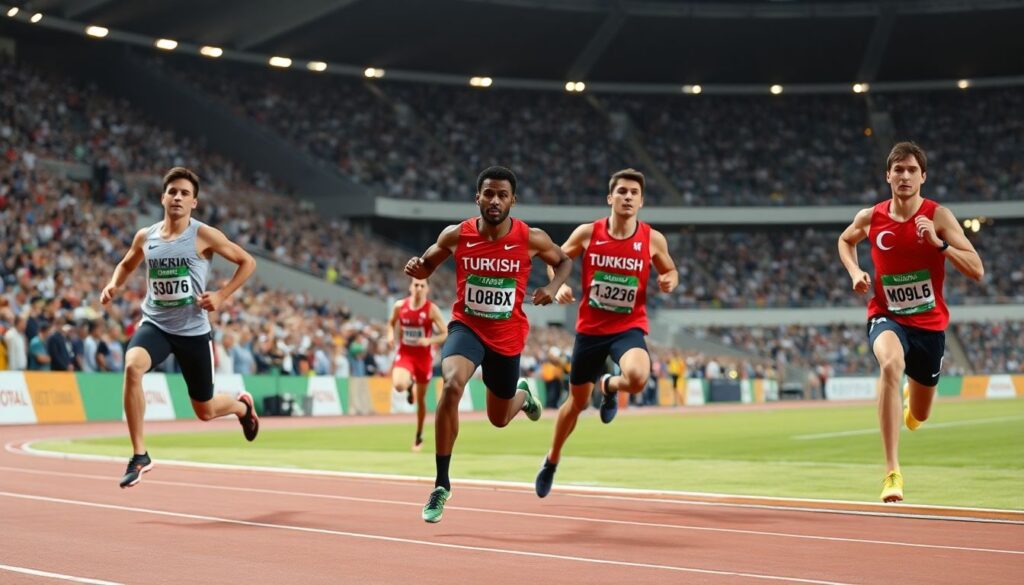
Sprints, middle-distance races, race walking, and selected throws show the most consistent impact. In these events, Turkish athletes are more likely to appear in European and world finals, set national records, and score points in team competitions.
How do Turkish athletes typically qualify for major championships?
They must meet qualification standards or ranking criteria set by World Athletics and European Athletics, and then be selected by the national federation. Consistent performances in domestic championships and international meets are critical for earning these spots.
Are there many famous Turkish Olympic runners at the moment?
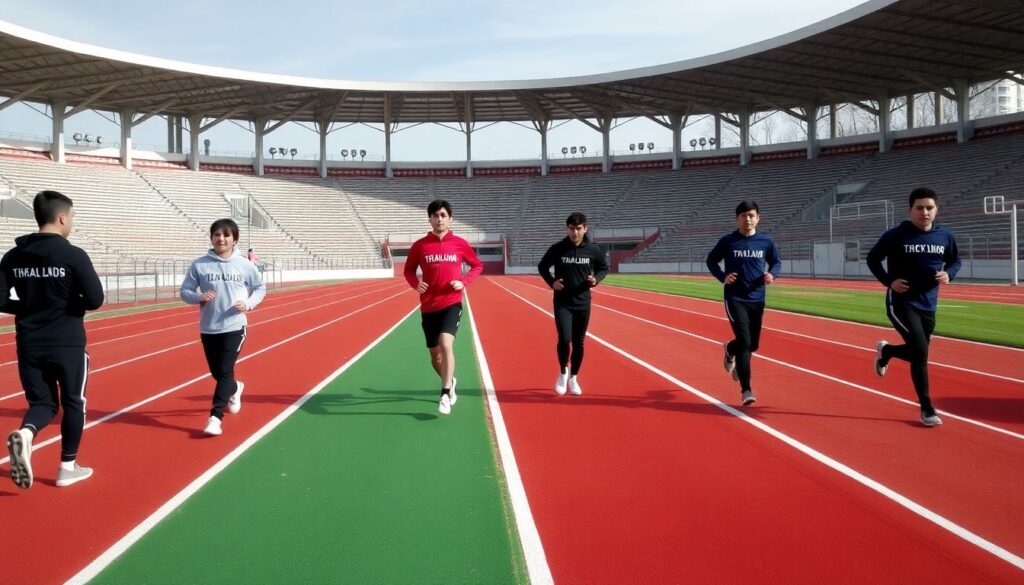
Several Turkish runners have reached Olympic and world finals in recent cycles, especially in sprints, middle distance, and race walking. Their visibility in global broadcasts has made athletics more attractive to young athletes across Turkey.
What role do clubs play compared to the national team?
Clubs handle day-to-day coaching, local competition, and early career support, while the national team oversees championship selection, funding for major events, and coordination of medical and sports science services for elite athletes.
How can a young athlete or coach track progress objectively?
Use a simple algorithm: log every official performance, compare with personal and seasonal bests, check national ranking lists, and contrast results with relevant qualification standards. Regularly revisiting this data helps keep goals realistic and training decisions evidence-based.
Is Turkey focusing on developing homegrown talent?
Yes. While some naturalised athletes contribute at senior level, the long-term strategy emphasises schools, clubs, and youth championships to build a large base of homegrown athletes who can perform internationally.
Where can I see Turkey athletics national team stars in action outside the Olympics?
They frequently compete in European Championships, European Team Championships, Balkan events, and Continental Tour meets, as well as national championships that are often streamed or covered by local sports media.