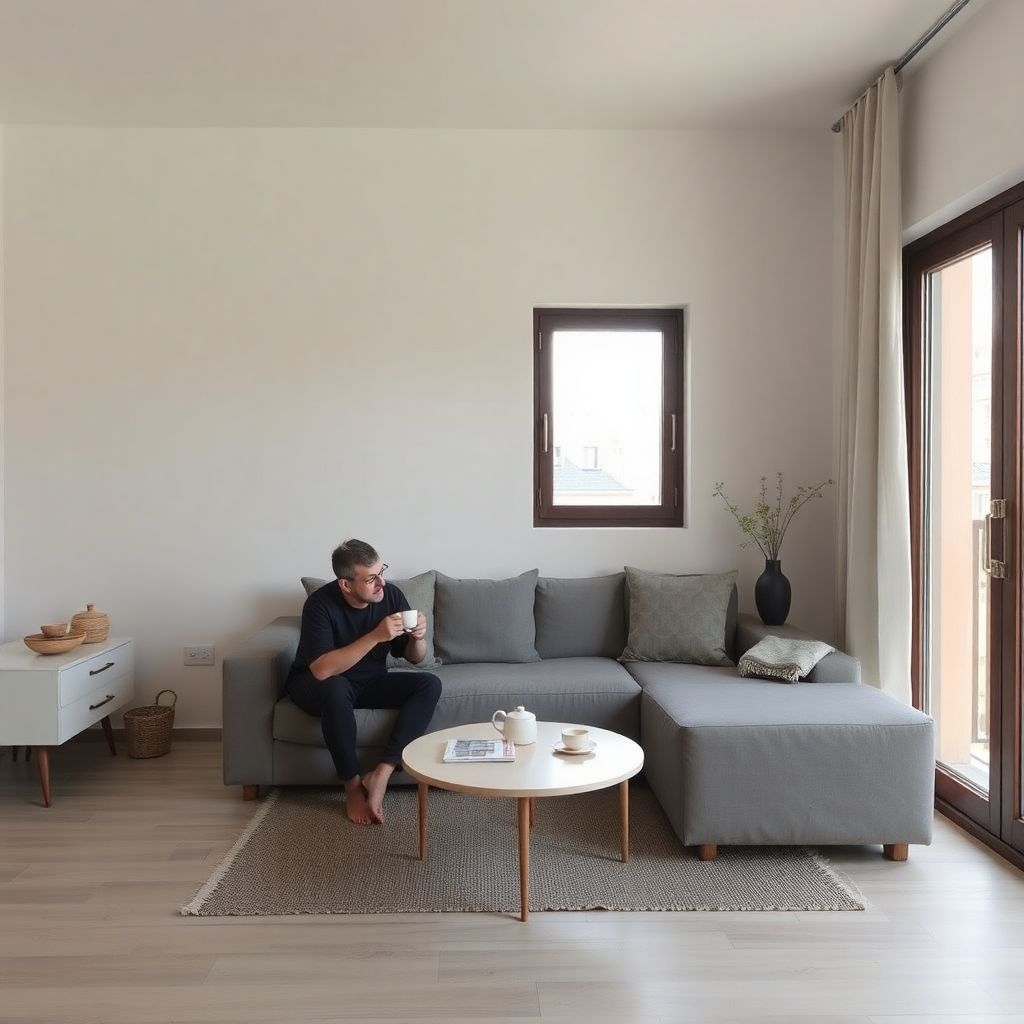
Minimalism and a Calmer Life: Is It Really Possible?
As life in modern cities accelerates, many people are feeling an increasing need to slow down. In Turkey, especially in large metropolitan areas, a growing number of people see minimalism not just as a trend in interior design, but as a more balanced, intentional way of living. The urge to simplify is no longer only about how our homes look; it is about how we feel and function in them.
Studies show that most of us live with far more belongings than we realize. Professional home-organization companies report that an average home can easily contain more than 300,000 individual items. From clothes we no longer wear to kitchen tools we never use, these objects silently accumulate. Over time, this build‑up does more than take up physical space; it also occupies mental space and contributes to daily distraction.
When our surroundings are overloaded, our attention is constantly pulled in different directions. Every pile of papers, every overflowing drawer or cluttered shelf sends a small signal to the brain: “There’s something here you haven’t handled yet.” Even if we are not consciously thinking about it, our mind keeps track of all these unfinished tasks. The result is a subtle but persistent feeling of mental noise.
At the same time, free time today rarely means real rest. Many people fill almost every spare minute with digital activities: streaming sports, scrolling through social media, checking news, or exploring online games. The number of digital entertainment options is growing rapidly, which can be enjoyable but also overwhelming. Without conscious limits, our days can become a sequence of small, scattered stimuli rather than focused, meaningful experiences.
Minimalism offers an alternative. It does not reject comfort or pleasure; instead, it encourages people to choose more carefully how they spend time and what they allow into their lives-both physically and digitally. By reducing excess, minimalism aims to create space for what truly matters: rest, relationships, health, creativity, and personal growth.
Why Minimalism Has Become So Popular
Minimalism has gained remarkable popularity worldwide over the last decade. One of the main reasons is that modern life has become increasingly intense and complex. We are expected to be constantly reachable, productive, informed, and socially active. Against this background, the idea of “less but better” feels deeply attractive.
People who adopt a minimalist lifestyle often mention similar benefits:
– Feeling mentally lighter and less overwhelmed at home
– Spending less time cleaning, tidying, and looking for things
– Saving money by avoiding unnecessary purchases
– Having more energy for hobbies, family, and personal goals
– Experiencing a clearer sense of priorities and values
Importantly, minimalism is not only about throwing things away. It is about asking a simple but powerful question: “What actually adds value to my life?” This question applies to objects, habits, commitments, and even relationships. The goal is not to reach a specific number of items, but to align your environment with what is genuinely meaningful to you.
The Link Between Clutter and Stress
Scientific research helps explain why minimalism resonates with so many people. Several studies on work and home environments suggest that visual clutter can impair focus and reduce productivity. When our eyes and brain are confronted with too many stimuli, attention becomes fragmented.
Analyses published in respected business and psychology outlets show that messy desks and crowded spaces make it harder for people to complete tasks efficiently. Excessive visual information competes for our brain’s limited capacity, increasing cognitive load. In simple terms, the brain must work harder just to filter out the noise before it can concentrate on what matters.
This is why entering a tidy, organized room often feels calming, even if we do not fully understand why. The brain has fewer elements to process, so it can relax. In this sense, a minimalist environment is not simply an aesthetic preference; it can be a practical tool for supporting mental clarity and emotional stability.
Minimalism: One Concept, Many Versions
Minimalism does not have a single, strict definition. It looks different for everyone. Some people focus mainly on physical belongings: decluttering their wardrobes, simplifying furniture, and keeping only items they use regularly. Others expand the concept to include digital minimalism: limiting screen time, cleaning up email inboxes, reducing the number of apps on their phones, or unsubscribing from unnecessary notifications.
There are also people who practice “schedule minimalism.” Instead of filling every hour with obligations, they intentionally say no to some social events, side projects, or extra responsibilities. The aim is to protect time for rest and activities that are truly nourishing-whether that is reading, exercising, spending time outdoors, or being with loved ones.
While the methods differ, the core idea remains the same: fewer distractions, more mental space, and a more conscious way of living.
Can a Simpler Life Really Make You More Peaceful?
The central question is whether minimalism genuinely leads to a more peaceful life, or if it is just another lifestyle trend. Evidence from both research and everyday experience suggests that a simpler environment often supports a calmer mind, but only when minimalism is applied thoughtfully.
Decluttering an entire home overnight or forcing yourself to live with the absolute minimum can actually create new stress. True minimalism is not about punishment or deprivation. It is about alignment: bringing your surroundings, habits, and choices closer to what you actually value.
For example, someone who loves reading might own more books than another minimalist, but far fewer decorative items. A person who enjoys cooking might keep a well‑equipped kitchen while simplifying other areas. Peace comes not from having an arbitrarily low number of possessions, but from feeling that what you own and how you live genuinely serve your life, instead of controlling it.
Practical Ways to Start a More Minimal Life
For those curious about a calmer, more minimal lifestyle, small, realistic steps are often more effective than radical changes. Some practical approaches include:
1. Start with one area
Choose a single drawer, shelf, or corner of a room. Remove everything, then put back only what you use regularly or truly appreciate. This creates an immediate sense of progress and motivation.
2. Use simple questions
When deciding what to keep, ask:
– Do I use this at least once a year?
– Would I buy this again today?
– Does it support a hobby, value, or responsibility that is important to me?
3. Set limits instead of strict rules
For example, decide that all your clothes must fit comfortably in one wardrobe or that all digital files must be organized into a limited number of clearly named folders. These boundaries help prevent new clutter from forming.
4. Apply minimalism to your time
Look at your weekly schedule and identify one activity you can reduce or remove. This does not have to be something you dislike; sometimes even enjoyable commitments can become too many. The goal is to create intentional empty space.
5. Simplify digital life
Turn off non‑essential notifications, remove apps you haven’t used in months, and create specific times for checking messages instead of reacting immediately to every alert. This alone can significantly lower mental tension.
Emotional Challenges of Letting Go
Minimalism is not only a physical process; it is also an emotional one. Many objects carry memories, hopes, or a sense of security. Letting go can feel like closing a chapter or admitting that some past plans will never be realized.
To handle this more gently, some people find it useful to:
– Keep a small “memory box” for truly meaningful items
– Take photos of sentimental objects before donating or recycling them
– Involve family members in the decision process, especially for shared items
– Remind themselves that memories stay even when objects leave
Recognizing that emotional attachment is natural-and not a sign of weakness-helps make the transition to a simpler life more compassionate and sustainable.
Minimalism and Financial Well‑Being
Another often overlooked aspect of minimalism is its impact on money. When you buy fewer things and shift from impulsive purchases to conscious decisions, spending tends to decrease naturally. Over time, this can create financial breathing room.
Some people use the money they save to:
– Pay off debts more quickly
– Build an emergency fund
– Invest in experiences such as travel, learning, or quality time with loved ones
– Improve health through better food, sports, or wellness activities
This financial stability further reduces stress. Not only is the home less cluttered, but the mind is also less burdened by financial worries.
Does Minimalism Fit Turkish Urban Life?
In dense, fast‑paced Turkish cities, where housing costs are high and living spaces are often limited, minimalism can be particularly practical. Small apartments become much more functional and pleasant when they are not overflowing with unnecessary items. Public transportation, long working hours, and family obligations already demand a lot of energy; a simpler home can act as a protective buffer against urban pressure.
Moreover, traditional Turkish culture has strong elements that align naturally with minimalism: valuing hospitality over luxury, cherishing shared meals more than expensive objects, and focusing on family bonds and community support. When approached thoughtfully, minimalism does not conflict with these values; it reinforces them by freeing up time and attention for what truly matters.
Finding Your Own Balance
Ultimately, minimalism is a tool, not a rule. It is not necessary to count every item you own or to live in an almost empty space to enjoy its benefits. For many people, the most peaceful version of minimalism is a flexible one: clear enough to reduce stress and clutter, but warm and personal enough to feel like home.
A calmer life becomes more possible when you regularly ask yourself:
– What in my environment creates unnecessary pressure or distraction?
– Which activities or possessions genuinely support my well‑being?
– What can I gently let go of to create more space for rest, connection, and purpose?
When these questions guide your choices, minimalism stops being just a design style and becomes a path toward a more conscious, peaceful way of living-adapted to your own needs, culture, and rhythm.