Internal Turmoil at Real Madrid: Arda Guler’s Flash of Anger Steals Spotlight from Lisbon Defeat
Real Madrid’s 3–2 collapse against Benfica in the Champions League did more than dent their European ambitions. The loss in Lisbon peeled back the surface of a seemingly stable squad and revealed mounting tension, with one moment of visible anger from Arda Guler turning into the main talking point of the night.
On a purely sporting level, the defeat was damaging. Madrid were chasing the game, struggling to impose control, and once again looked fragile in key phases. Yet the decisive scene came not from a goal or a defensive error, but from the touchline in the final stages of the match.
Guler’s Substitution Sparks Controversy
In the 79th minute, with Real Madrid still searching desperately for an equalizer, head coach Álvaro Arbeloa made a decision that would ignite the post-match narrative. He chose to withdraw Arda Guler, one of the team’s most influential attacking players this season, in favor of fresh legs.
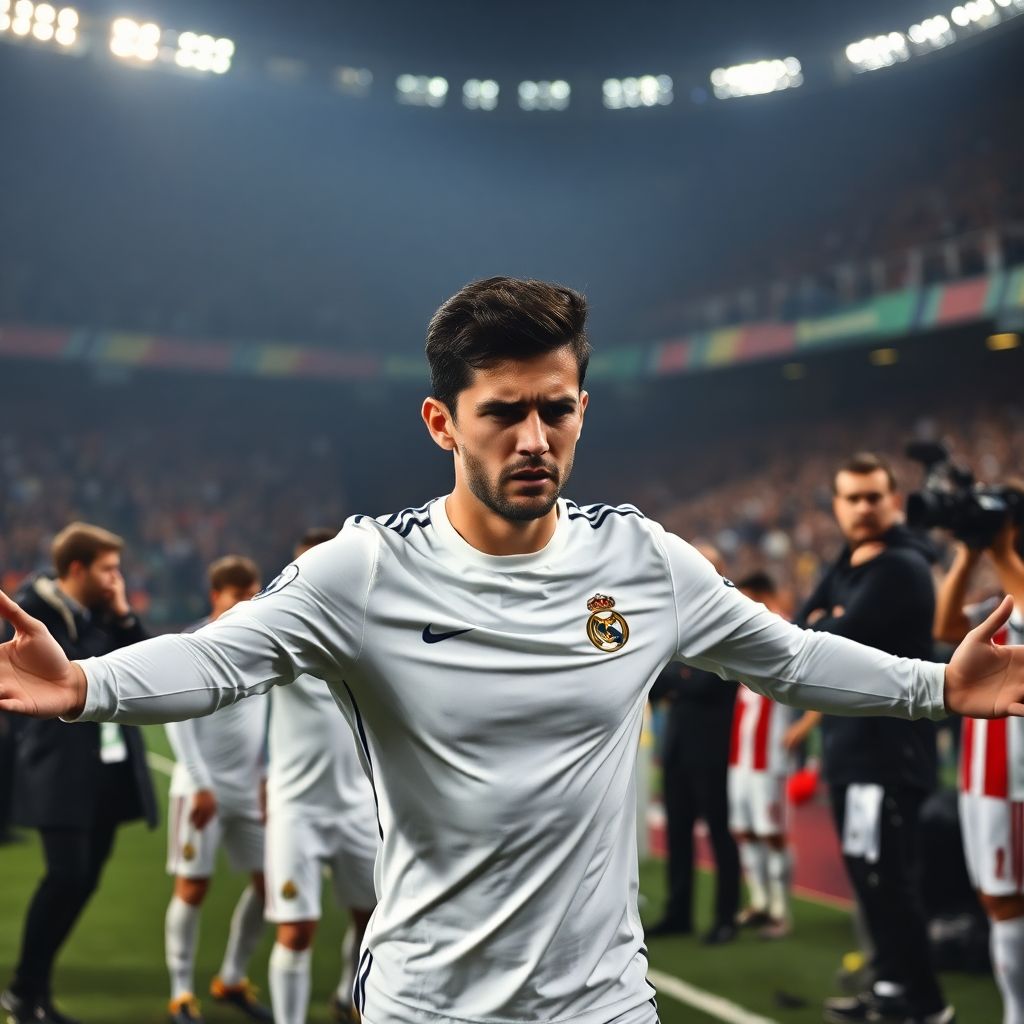
The reaction was immediate and impossible to ignore. As Guler walked off, television cameras zoomed in on his face, capturing a mix of disbelief and irritation. He opened his arms in an exasperated gesture, then clearly mouthed the words twice: “Always me, always me.”
Those three syllables were enough to send shockwaves through the club. The phrase sounded less like a passing complaint and more like a pointed accusation, suggesting a pattern in Arbeloa’s decisions that Guler clearly resents.
A Young Leader Who Feels Targeted
Guler is not just another squad member. Over the course of this season, the 21-year-old Turkish midfielder has grown into a central figure in Madrid’s creative play. Trusted to dictate tempo, link midfield with attack, and unlock compact defenses, he has slowly evolved from “promising youngster” into a de facto leader in possession.
From his perspective, being taken off in one of the highest-pressure moments of the campaign felt like an act of mistrust. For a player of his mentality and ambition, the substitution was interpreted less as a tactical tweak and more as a vote of no confidence. The visible frustration, therefore, did not come out of nowhere—it was the release of a buildup of emotion.
Pressure Intensifies on Arbeloa
The timing of the incident could hardly be worse for Álvaro Arbeloa. Already under scrutiny for erratic results and a lack of clear identity in big games, the coach now finds himself in the middle of a man-management storm.
Criticism is mounting on several fronts:
– Control of the dressing room: The episode has rekindled doubts about Arbeloa’s authority and leadership. When a key player openly challenges a decision in front of cameras, it raises uncomfortable questions about how aligned the squad really is with the coach’s methods.
– Handling of young stars: Guler is not just any youngster; he is a long-term project and marketing asset for the club. Mismanaging his development is seen internally as a strategic error, not merely a sporting one.
In elite clubs, managers are not only judged by results, but also by how they maintain harmony, especially when tensions rise after setbacks.
Team Unity Under the Microscope
Football history at Real Madrid is filled with examples where internal tension has either destroyed a season or fueled a response. For critics, Guler’s outburst is a red flag. A squad that needs to project unity in difficult moments instead projects frustration and division.
Some voices argue that his emotional reaction damages the collective image of the group. A dressing room under stress requires public solidarity—even if there are disagreements behind closed doors. When those disagreements erupt in front of millions, the narrative quickly shifts from tactics and lineups to politics and power struggles.
Yet others see it differently. Guler’s anger can also be read as evidence of his competitive character. He wanted to remain on the pitch, to be the player who changed the match. For this camp, his reaction is the natural consequence of a winning mentality clashing with a decision he deeply disagreed with.
Symptom of a Deeper Disconnect?
The key question now is whether this was an isolated emotional flare-up or the visible tip of a larger iceberg. Within any top-level squad, there are always individuals who are unhappy with playing time, roles, or tactical instructions. What worries observers is not that a player got angry—but that this particular player, at this particular moment, chose to make that anger so public.
If Guler feels repeatedly singled out—“Always me” being the revealing phrase—it suggests a perception of unfair treatment. Even if Arbeloa’s choices are based solely on tactical logic, once a player believes they are being systematically sacrificed, trust begins to erode.
At a club like Real Madrid, that erosion is dangerous. Once one star feels alienated, others may quietly question decisions too. It rarely stays about a single substitution.
The Fine Line Between Authority and Flexibility
Arbeloa now walks a tightrope. On one side is the need to assert his authority and show that no player, however talented, is above the team. On the other side lies the risk of turning a frustrated talent into a disillusioned one.
How he responds will be crucial:
– A harsh, public reprimand could backfire, casting Arbeloa as inflexible and punitive.
– A complete capitulation to Guler’s emotions could undermine the coach’s standing with the rest of the group.
The optimal path likely lies in private dialogue, clear communication of expectations, and a tactical explanation that respects Guler’s status without conceding the coach’s authority.
How This Affects Guler’s Role Going Forward
From a sporting standpoint, the incident may also influence how Guler is used in upcoming matches. If relations are patched up quickly, the episode could serve as a turning point—either driving the player to even higher standards or inspiring Arbeloa to build more consistently around his qualities.
If tensions linger, the consequences could be more subtle but no less damaging:
– Fewer minutes in decisive matches, framed as “rotations” or “tactical choices.”
– A shift in responsibility, with Guler asked to do more defensive work and given less freedom, as a way to “discipline” his game.
– A colder, more transactional relationship, where mutual trust is replaced by minimal cooperation.
For a player of Guler’s profile, who thrives on confidence and feeling important, such a scenario could stall his trajectory.
The Mental Side: Young Star, Huge Expectations
It is easy to forget Guler is only 21. He carries the weight of being one of the brightest talents from Turkey, playing at a club where every touch is judged and every gesture is magnified. The pressure to perform, justify expectations, and maintain his place among established stars is immense.
Emotional reactions in that context are almost inevitable. The challenge for both player and coach is to channel that emotion productively. If Guler can turn his anger into added focus and maturity, this controversy could become a footnote in his rise. If not, it may mark the beginning of a more complicated chapter.
Lessons for Real Madrid’s Broader Project
Beyond the immediate drama, this episode highlights a larger structural issue: how Real Madrid integrates and protects its young talents while demanding instant results. The club wants future stars to grow in a high-pressure environment without being crushed by it.
Incidents like this force the hierarchy to ask hard questions:
– Are the pathways for young players clearly defined and communicated?
– Do coaches receive enough backing and guidance on balancing short-term success with long-term development?
– Is there enough psychological support to help players cope when they feel unfairly treated or underused?
Real Madrid cannot afford a scenario where prized assets feel alienated precisely at the moment they should be blossoming.
What Happens Next
In the immediate future, the spotlight will remain fixed on two things: Arbeloa’s public comments and Guler’s behavior in training and upcoming matches. A conciliatory statement from the coach, paired with visible effort and discipline from the player, would calm the waters.
If, however, subtle signs of coldness persist—short answers in interviews, distant body language on the bench, or unexpected tactical decisions—the story will keep growing, feeding speculation about a fractured relationship.
At this stage, the defeat to Benfica is already fading as a sporting memory. What remains vivid is the image of Arda Guler on the touchline in Lisbon, arms outstretched, repeating “Always me” in a mixture of disbelief and defiance. Whether that moment becomes an anecdote in a long, successful partnership or the first chapter of a rift between star and coach depends entirely on how Real Madrid handles the fallout in the days and weeks ahead.